
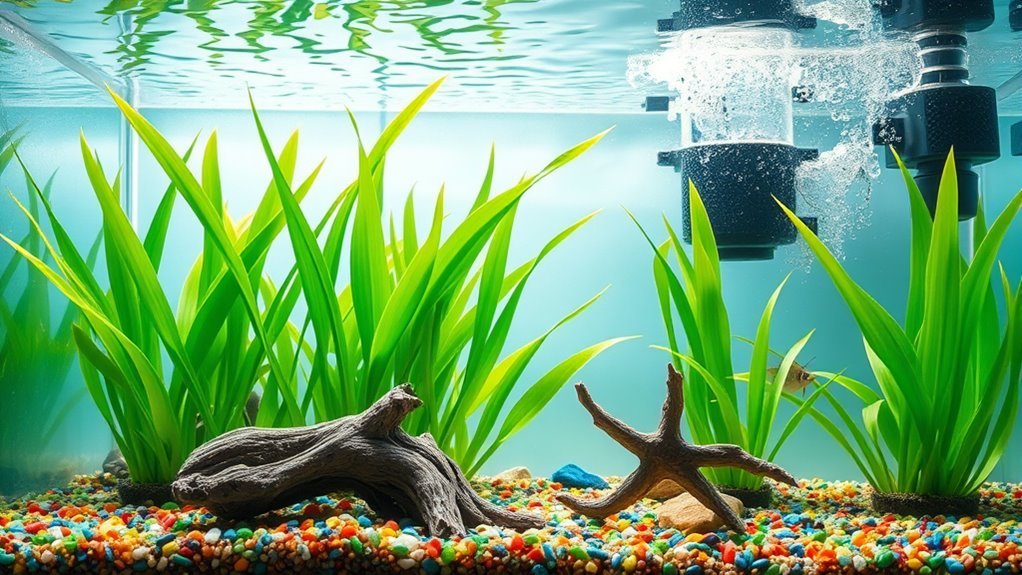
3 Best Ways to Lower Nitrates in Fish Tanks
You can lower nitrates in your fish tank by controlling feeding and waste—avoid overfeeding and remove uneaten food promptly. Managing nitrate levels is essential for a healthy aquarium environment.
Regular water changes, replacing 10-20% weekly, help dilute nitrate buildup and keep levels below 10 ppm. This simple routine effectively reduces nitrate concentration and improves water quality.
Adding biological filtration, like live rock or deep sand beds, supports bacteria that convert nitrates into harmless nitrogen gas. These steps maintain a healthy environment for your fish. Keep these practices consistent, and you’ll discover how to further improve your tank’s water quality.
Understand Why Nitrates Build Up in Your Fish Tank
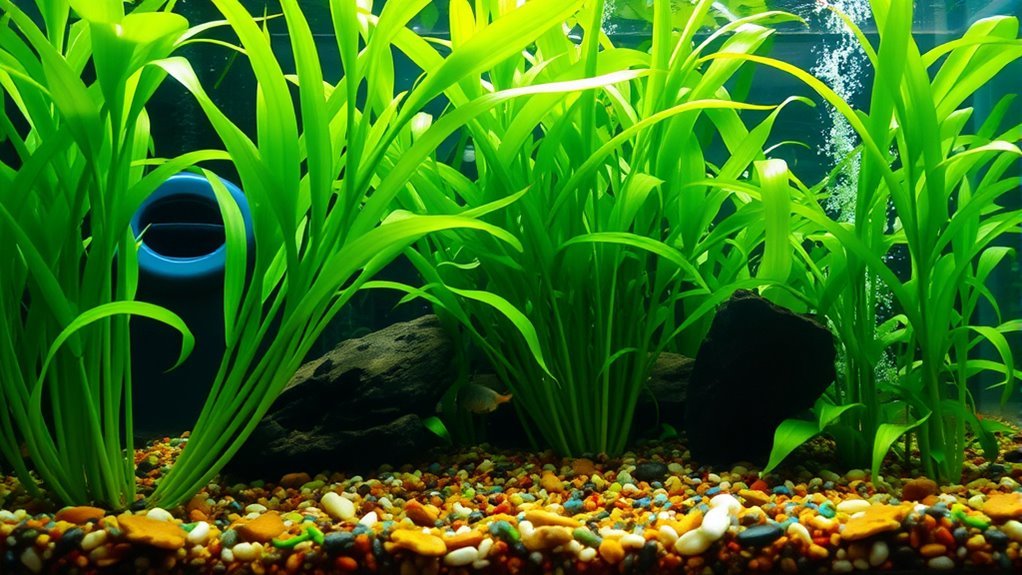
Because nitrates form as the final step in the nitrogen cycle, they naturally accumulate in your fish tank from fish waste, uneaten food, and decaying organic matter. Beneficial bacteria convert harmful ammonia into nitrites and then into nitrates, causing nitrate buildup over time.
Nitrates build up naturally in tanks as bacteria convert waste through the nitrogen cycle.
Without adequate biological filtration or denitrification zones, these nitrates can’t break down further and start to raise nitrate levels.
Organic waste and organic matter add to this accumulation, especially if not regularly removed. You can control nitrate buildup by performing consistent water changes to dilute nitrates and maintain water quality.
Understanding how these processes interact helps you manage your fish tank effectively and keep nitrate concentrations in check.
Proper tank maintenance prevents harmful nitrate accumulation and ensures a healthy environment for your aquatic life.
Reduce Nitrate Sources by Controlling Feeding and Waste
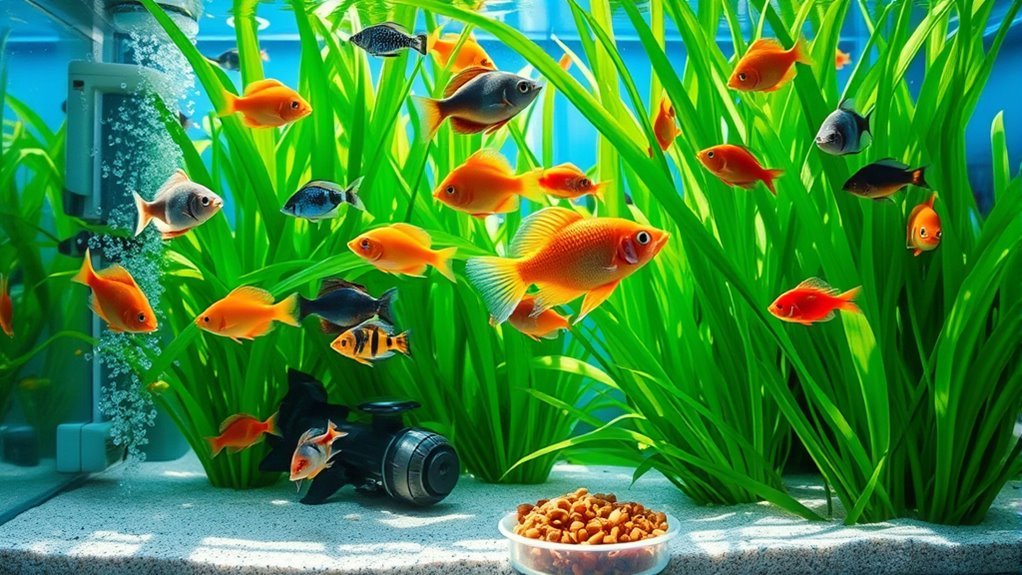
While feeding your fish is crucial, controlling how much and how often you feed them plays a key role in reducing nitrate buildup. Overfeeding leads to excess food that decomposes, increasing organic waste and fish waste in the tank.
To maintain good water quality, avoid overfeeding by offering smaller portions more frequently.
Remove uneaten food promptly to prevent organic debris from breaking down and contributing to nitrate levels.
Adopting targeted feeding practices, such as using feeding stations, helps guarantee your fish consume only what they need, limiting waste.
Additionally, including detritivores like snails and shrimp can aid in waste removal by consuming leftover organic material.
Use Regular Water Changes and Biological Filtration to Lower Nitrates
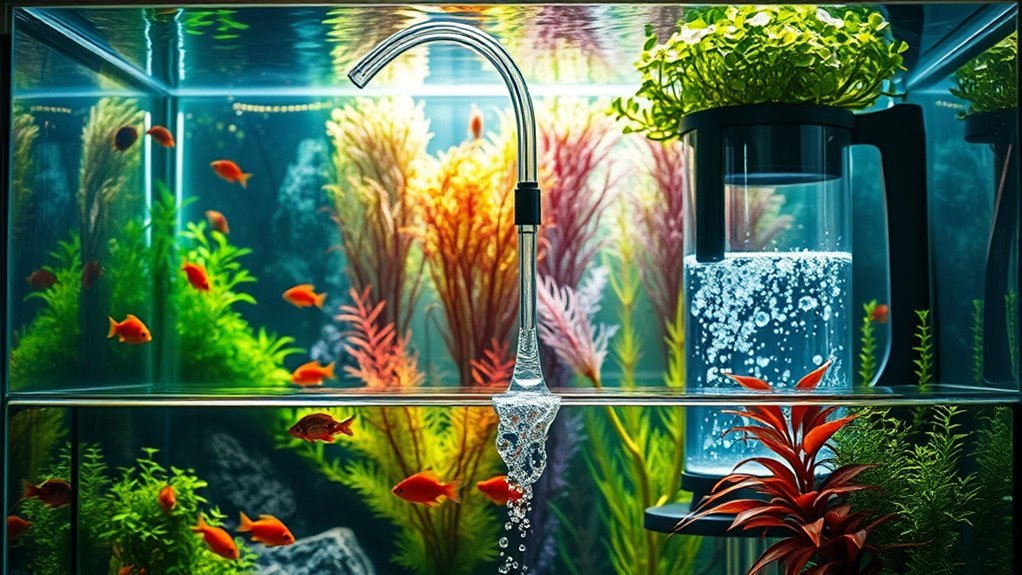
Controlling feeding and waste sets a strong foundation, but managing nitrate levels also requires regular water changes and effective biological filtration.
Here’s how you can lower nitrates efficiently:
- Perform regular water changes by replacing 10-20% of your aquarium water weekly. This dilutes nitrates and keeps nitrate levels safe without stressing your fish.
- Use biological filtration media like live rock and deep sand beds. These support beneficial bacteria that convert nitrates into harmless nitrogen gas, promoting nitrate reduction.
- Consider sequential water changes in increments (e.g., 20 gallons over several days) for gradual nitrate reduction.
Maintaining these practices guarantees your aquarium water stays healthy, with nitrate levels consistently below 10 ppm, supporting a thriving aquatic environment.
Frequently Asked Questions
How to Lower Nitrates in a Fish Tank Immediately?
You can immediately lower nitrates by performing a large, partial water change and using nitrate-absorbing media like activated carbon.
Also, reduce feeding temporarily and remove uneaten food to prevent further nitrate buildup quickly.
Is Overfeeding Causing High Nitrates?
Imagine your tank as a bustling city—overfeeding dumps piles of uneaten food like trash in the streets.
Yes, you’re causing high nitrates by overwhelming the system, letting waste decompose and poison your aquatic environment.
Can Fish Recover From High Nitrites?
Yes, your fish can recover from high nitrites if you act fast. Do immediate water changes, boost oxygen levels, and stabilize the environment.
Shorter exposure means better recovery chances, so don’t delay your response.
Does Lava Rock Reduce Nitrates?
Lava rock can help reduce nitrates, but only if you create low-oxygen zones for denitrifying bacteria to thrive. Without proper placement and water flow, it won’t effectively lower nitrate levels in your tank.
Ensuring the right environment within the lava rock is key to supporting these beneficial bacteria. Otherwise, the nitrate reduction will be minimal or nonexistent.
Conclusion
Lowering nitrates in your fish tank is like clearing a foggy window—you’ll see your aquatic world sparkle again. By controlling feeding, managing waste, and committing to regular water changes, you’ll keep nitrate levels in check and create a healthier home for your fish.
Think of biological filtration as your tank’s natural guardian, tirelessly working behind the scenes. With these steps, you’ll nurture a vibrant, clear underwater paradise that thrives with life and color.
Incorporating these best ways to lower nitrates in fish tanks ensures a balanced environment. Maintaining proper nitrate control supports fish health and promotes a thriving aquatic ecosystem.