
How to Cycle a 20 Gallon Fish Tank in 3 Simple Steps
To cycle your 20-gallon fish tank effectively, start by adjusting the pH to around 7.3–8.0 and dosing ammonia to 2-4 ppm. This feeds the beneficial bacteria necessary for establishing a healthy aquarium environment.
Next, test ammonia, nitrite, and nitrate levels daily. Only add ammonia once the levels drop to zero, and keep nitrite under 0.2 ppm to ensure safe water conditions.
Finally, wait until ammonia and nitrite stay at zero for 24 hours and nitrate rises. This signals a fully cycled, fish-ready tank. Keep following this approach to confidently maintain a healthy setup.
How to Add Ammonia to Start Cycling Your 20-Gallon Tank
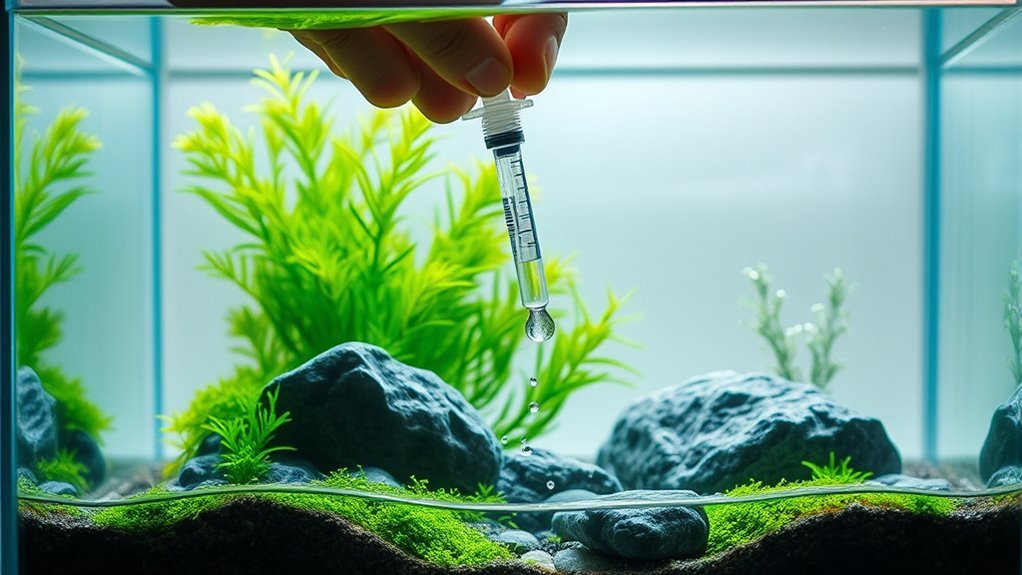
Before adding ammonia to your 20-gallon tank, make sure the pH is adjusted to between 7.3 and 8.0 to promote ideal nitrifier activity.
Ensure your 20-gallon tank pH is 7.3–8.0 before adding ammonia for optimal nitrifier growth.
Use the fishless cycling method by dosing ammonium chloride to reach 2-4 ppm of ammonia.
Check your water temperature is stable, as it influences beneficial bacteria growth.
Use a reliable test kit daily to monitor ammonia levels and prevent exceeding 16 ppm.
During the cycling process, only add ammonia after both ammonia and nitrite drop to zero, usually every 24-48 hours.
Maintain consistent ammonia levels to encourage beneficial bacteria development.
Avoid large water changes early on, as they can disrupt the cycling method.
This careful ammonia management sets the foundation for a healthy, cycled tank ready for your fish.
How to Test and Control Ammonia, Nitrite & Nitrate in Your 20-Gallon Tank
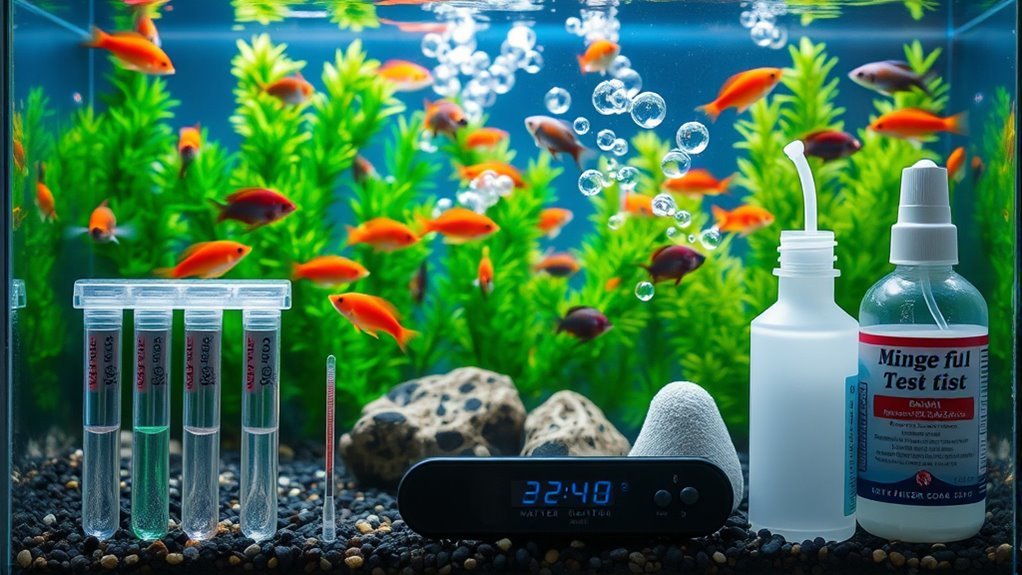
While cycling your 20-gallon tank, you need to test ammonia, nitrite, and nitrate levels regularly to keep water quality in check. Use reliable test kits to monitor ammonia levels, aiming for 2-3 ppm during fishless cycling.
Only add ammonia after both ammonia and nitrite drop to zero within 24 hours.
Keep nitrite below 0.2 ppm to maintain safe conditions, and don’t dose ammonia if nitrite isn’t at zero.
Avoid water changes during cycling to prevent disrupting nitrifier growth, but if nitrate levels spike excessively, perform a water change after confirming readings.
For effective fish tank monitoring, consider ammonia alert monitors like Seachem or Seneye, which provide real-time warnings.
Consistent testing and regulation of ammonia, nitrite, and nitrate ensure successful cycling and maintain ideal water quality throughout.
How to Know When Your 20-Gallon Tank Is Fully Cycled and Fish-Ready
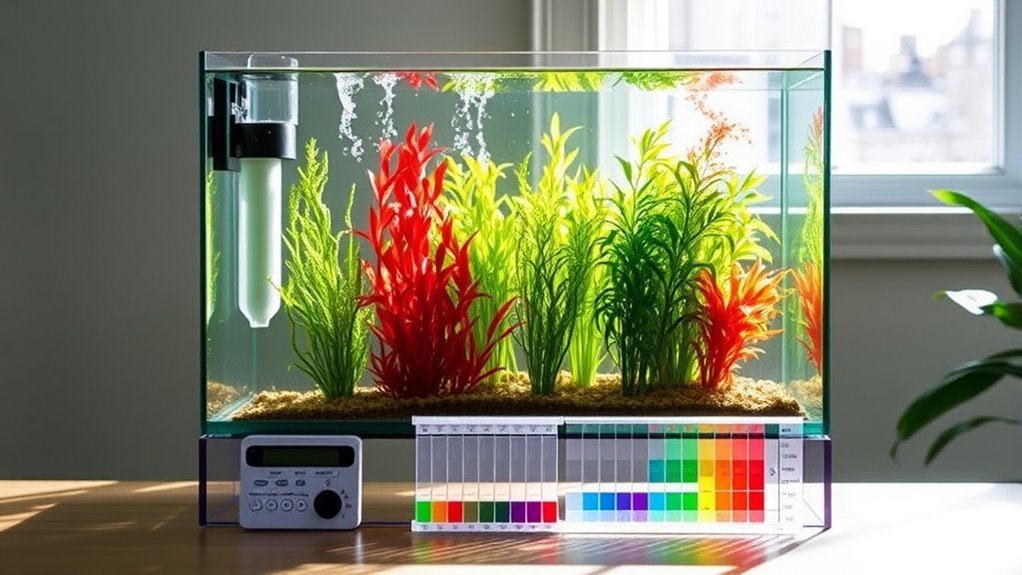
Once your 20-gallon tank consistently shows zero ammonia and nitrite levels for 24 hours after dosing, you know the nitrogen cycle has fully established. This means nitrification is complete, and biological filtration can handle fish waste.
Regular testing confirms stable water parameters, ensuring tank readiness and fish survival. You’ll notice nitrate levels rising, signaling a fully cycled tank.
| Parameter | Ideal Level |
|---|---|
| Ammonia (NH3) | 0 ppm |
| Nitrite (NO2) | 0 ppm |
| Nitrate (NO3) | 10-20 ppm |
| pH | 6.5-7.5 |
| Cycle Duration | 4-6 weeks |
Keep testing daily during cycling. When ammonia and nitrite stay at zero after dosing, your tank is fish-ready and stable.
Frequently Asked Questions
How Long Should I Cycle My 20 Gallon Fish Tank?
You should cycle your 20-gallon tank for about 6 to 8 weeks, but using fishless methods or supplements can shorten it to 8-12 days.
Keep testing water regularly, and don’t rush the process.
How Do You Cycle a Fish Tank for Beginners?
You start by adding ammonia to kickstart bacteria growth, then test water regularly. Use biological media for bacteria to colonize.
Don’t add fish until ammonia and nitrite stay at zero consistently. Be patient throughout the process.
Can You Cycle a Fish Tank in 3 Days?
You can’t rush a garden to bloom in three days, and you can’t cycle a tank that fast either.
Trust the process, let beneficial bacteria grow patiently, or risk harming your aquatic ecosystem.
How Do I Tell When My Fish Tank Is Fully Cycled?
You’ll know your tank’s fully cycled when ammonia and nitrite levels stay at zero within 24 hours of dosing, while nitrates appear.
Regular testing confirms beneficial bacteria are established and your tank can safely support fish.
Conclusion
Cycling your 20-gallon tank might seem tricky, but with these simple steps, you’re well on your way to creating a healthy home for your fish. By adding ammonia, regularly testing water parameters, and knowing when your tank is fully cycled, you’ll avoid common problems and keep your aquatic friends happy.
So, why wait? Start cycling today and watch your tank transform into a thriving underwater world! Properly cycling your 20-gallon fish tank ensures a safe environment for your fish and promotes a balanced aquatic ecosystem. Follow these steps carefully for successful fish tank cycling.