
How to Spool a Fishing Reel in 7 Easy Steps
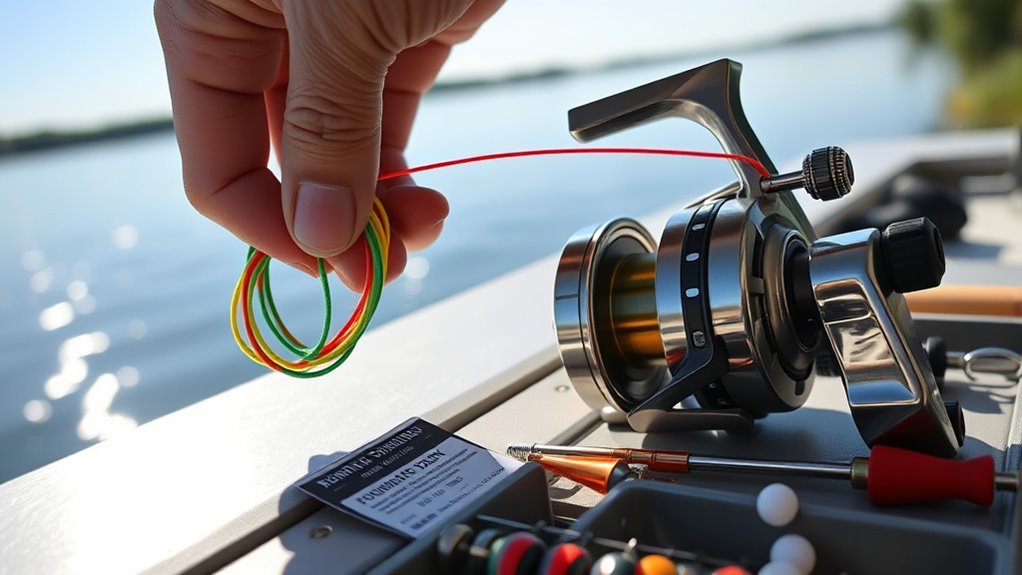
To spool your fishing reel in 7 easy steps, start by carefully removing the old line to avoid any damage. Properly spooling your reel ensures smooth casting and prevents line tangles. Set your filler spool so it unwinds counterclockwise, matching your reel’s retrieval direction.
Next, thread the line through all rod guides and tie it securely to the reel spool. Close the bail gently and maintain steady tension as you wind the line evenly around the spool. This helps create a uniform layer that reduces the chance of tangles.
Finally, cut and secure the line to prevent slips and knots. Following these simple steps will help you achieve a perfectly spooled fishing reel. Keep going to discover tips for smooth, tangle-free casting.
Remove Old Line From Your Reel
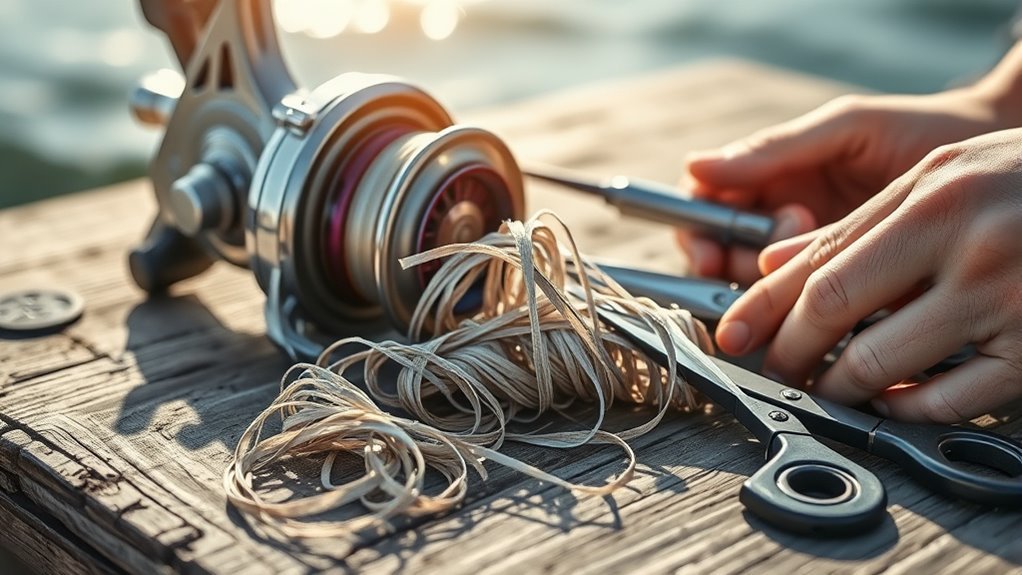
Before you spool a new line, you need to remove the old one carefully. To remove old line from your reel without damaging the spool, unwind it slowly and steadily.
Line removal tools like a line stripper or a drill with a metal hanger or plastic bottle attachment can help you wind off the old line quickly and smoothly.
Using tools like a line stripper or drill attachments makes removing old fishing line faster and easier.
For monofilament or fluorocarbon lines, soaking them in water or applying a lubricant loosens stubborn knots, making removal easier.
As you wind off the old line, make sure to collect it neatly onto a spool or container to avoid tangles and keep your workspace organized.
Using the right tools and techniques guarantees you remove old line from reel efficiently and prepare it for spooling new line.
Set Up the Filler Spool for Counterclockwise Unwinding
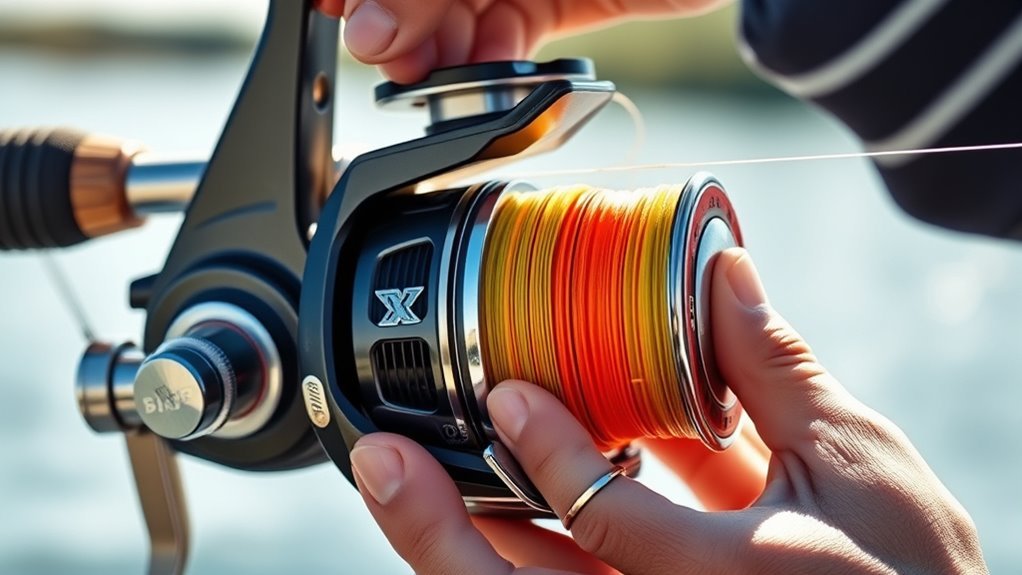
When you set up the filler spool, make certain the line unwinds in a counterclockwise direction to match your reel’s retrieval. This helps prevent line twists and ensures smooth casting.
To get it right, follow these steps:
- Place the filler spool upright with the label facing up. This position helps confirm the correct unwinding direction.
- Lay the spool flat on a surface and observe the line on the spool. Make sure it unwinds counterclockwise.
- Keep the filler spool stationary during spooling to avoid line twists and coils.
Thread the Line Through All Rod Guides
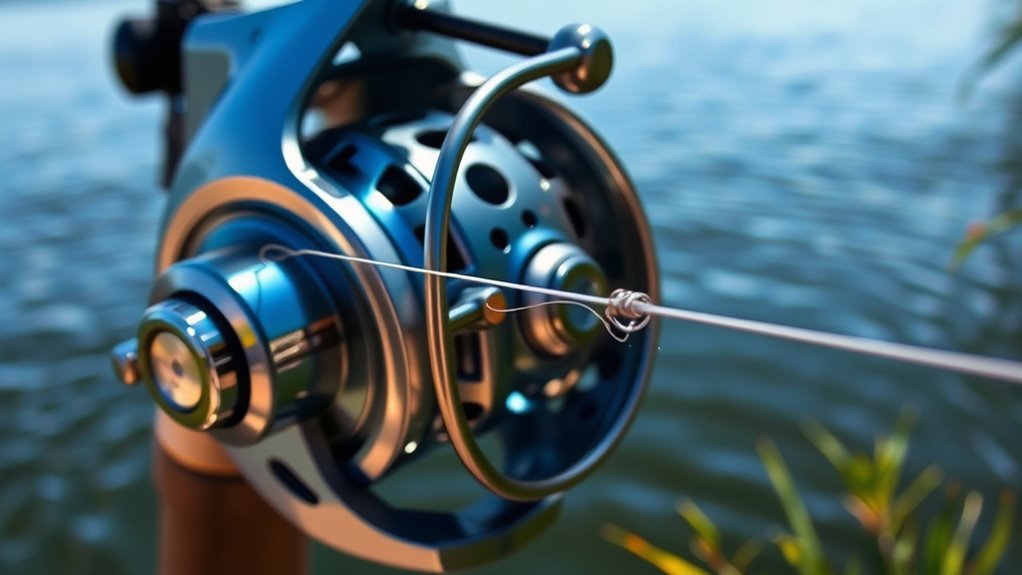
Although it might seem simple, threading the line through every rod guide is essential for smooth casting and even line distribution.
Start by threading the line through the tip-top guide at the rod’s tip, then carefully pass it through each line guide down to the reel. Don’t skip any rod guides—each one plays a role in guiding the line evenly during casting.
As you thread the line, maintain smooth, consistent tension to prevent line twist and memory. Double-check that the line passes cleanly through all line guides before spooling the line onto the reel.
Following this sequence ensures your line lays evenly on the spool and reduces the risk of tangles, setting you up for better casting performance.
Tie the Line Securely to the Reel Spool
Since a secure attachment prevents line slippage during spooling, you’ll want to tie the line firmly to the reel spool using a reliable knot like the arbor or an overhand knot.
Here’s how to tie the line securely:
- Wrap the line around the spool, then pass the tag end through the loop of the arbor knot or overhand knot.
- Tighten the knot snugly against the spool to prevent slipping when you spool onto the reel.
- Double-check the knot’s security, especially if you’re using braided line; consider adding backing or tape to improve grip.
Taking these steps ensures your knot holds firm, so the line won’t slip off during retrieval.
This is key before you start spooling onto the reel.
Close the Bail and Maintain Consistent Tension
Before you start spooling, make sure to close the bail securely to keep the line in place.
Keep consistent tension on the line with your fingers to guarantee it winds evenly.
Avoid letting the line go slack, or you might end up with loose coils and tangles.
Proper Bail Closure
When you close the bail, do it gently to protect your line and the line roller from damage. Proper bail closure is key to a smooth spool and prevents fraying or twists.
Here’s how to guarantee it:
- Close the bail slowly—avoid slamming it shut to keep the line lay even across the spool.
- Maintain tension on the line with your fingers as you reel in to ensure even spooling.
- Keep an eye on the line’s tightness; slack can cause uneven winding and tangles.
Consistent Line Tension
How do you guarantee your fishing line winds smoothly and evenly onto the spool? First, always close the bail before you spool a spinning reel. This ensures the line onto the reel is guided correctly.
Then, maintain consistent tension by holding the line steadily with your fingers as you turn the handle. This steady pressure helps imprint proper line memory, reducing tangles and wind knots later.
If you fail to keep this tension, you risk loose coils and uneven line lay, which can cause problems during casting.
Regularly check the tension throughout the process to avoid line slack and assure the line stays tight and neatly wound.
Avoid Line Slack
Making sure you close the bail before turning the reel handle is essential to prevent line slack and guarantee an even spool. If you leave the bail open, the line will spool unevenly, causing tangles and frustration.
To avoid line slack and maintain tension, follow these steps:
- Always close the bail before starting to wind the line onto the spool.
- Use your fingers to gently apply pressure on the line, keeping consistent tension as you reel in.
- Regularly check the line between the reel and the guide to ensure it stays tight and avoid loose loops.
Wind the Line Evenly to Prevent Tangles and Twist
Although it might seem simple, winding the line evenly takes careful attention to prevent tangles and twists that can ruin your fishing experience.
To fill the reel properly, make sure the line feeds smoothly through all the guides, maintaining consistent tension with your fingers as you turn the reel handle. This even winding helps the line coils lay flat and prevents line twist.
Avoid skipping any guides since that causes uneven line lay and cone-shaped spools.
Fill the reel gradually, stopping now and then to check the line coils are evenly distributed across the spool surface.
Using a line winding tool or having a helper hold the line spool steady can make this process much easier and guarantee the line winds uniformly, reducing the risk of tangles and twists.
Cut and Secure the Line After Spooling the Reel
Once you’ve filled the reel, leave about 12 to 18 inches of line before cutting it to give yourself enough length to tie secure knots for attaching leaders or lures.
To properly cut and secure the line after spooling the reel, follow these steps:
- Use electrical tape or a line clip to temporarily secure the line to the reel spool, preventing it from unraveling while you cut the line.
- Cut the line carefully, leaving the extra length needed for tying a strong knot like the Palomar or improved clinch knot.
- After tying the knot, trim excess line close to the knot and optionally apply a small amount of superglue or nail polish to secure the knot and prevent slipping.
This guarantees your line stays secure and ready for fishing.
Frequently Asked Questions
How to Spool a Reel Easily?
You’ll spool a reel easily by keeping the filler spool stationary, applying steady tension with your fingers, and winding the line smoothly in a counterclockwise direction.
Stop when the line’s about 1/8 inch from the spool’s edge.
Which Way Does Spool Go?
You’ll want to position the spool so the line unwinds counterclockwise.
Lay it flat with the label facing up to guarantee the line feeds off naturally, reducing twists and making your casting smoother and easier.
Why Do You Soak Fishing Line Before Spooling?
You soak fishing line before spooling to soften it, reduce friction, and minimize twists or tangles. It also helps remove residues, lowers static buildup, and lets you spot any weak spots before you start fishing.
How to Spool a Spinning Reel Step by Step?
First, don’t panic—it’s not rocket science. Thread the line through guides, tie it to the spool, keep tension, and crank slowly.
Stop when you’re a tiny 1/8 inch from the edge. Voilà, you’re ready!
Conclusion
Now that you’ve mastered these steps, imagine the thrill of casting out with perfectly spooled fishing line—no tangles, no twists, just smooth, seamless fishing.
But here’s the secret: the real test comes when you feel that first bite. Will your fishing line hold strong?
With your reel spooled just right, you’re ready for whatever the water throws at you. Get out there and experience the difference for yourself!