How to Take Care of Betta Fish Simply
To take care of your betta fish simply and ensure its health, start by choosing a healthy betta and a tank of at least 5 gallons with a gentle filter. Keeping the right environment is key to betta fish care.
Keep the water warm, around 78-80°F, and change it regularly to stay clean. Provide safe decorations and hiding spots to reduce stress and create a comfortable habitat.
Feed your betta high-quality food in small amounts once or twice daily. Watch for signs of illness and avoid overcrowding. Get these basics right, and you’ll keep your betta happy and thriving with ease.
Pick the Right Betta for Your Tank
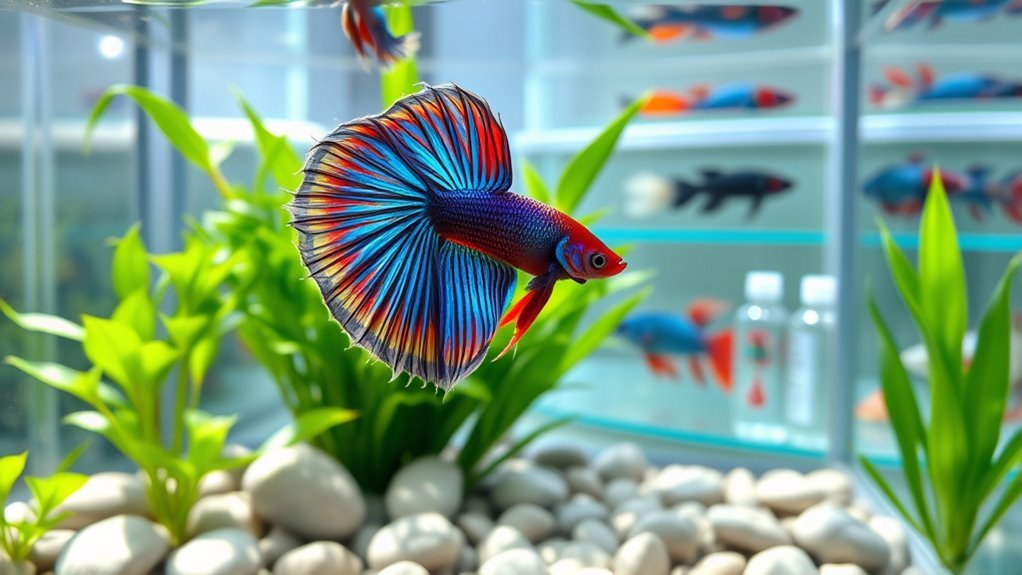
When you pick the right betta for your tank, you’ll want to look for vibrant colors, healthy fins, and clear eyes—all signs of a healthy fish.
Selecting a betta involves checking its fin condition carefully; full fins without tears or fraying indicate good health. Choose an active fish that swims confidently, avoiding any that seem lethargic or stressed.
Also, consider store quality—buy your betta fish from reputable breeders or shops that maintain a clean tank, as this often reflects better genetic stock and overall health.
Set Up the Perfect Betta Tank Size
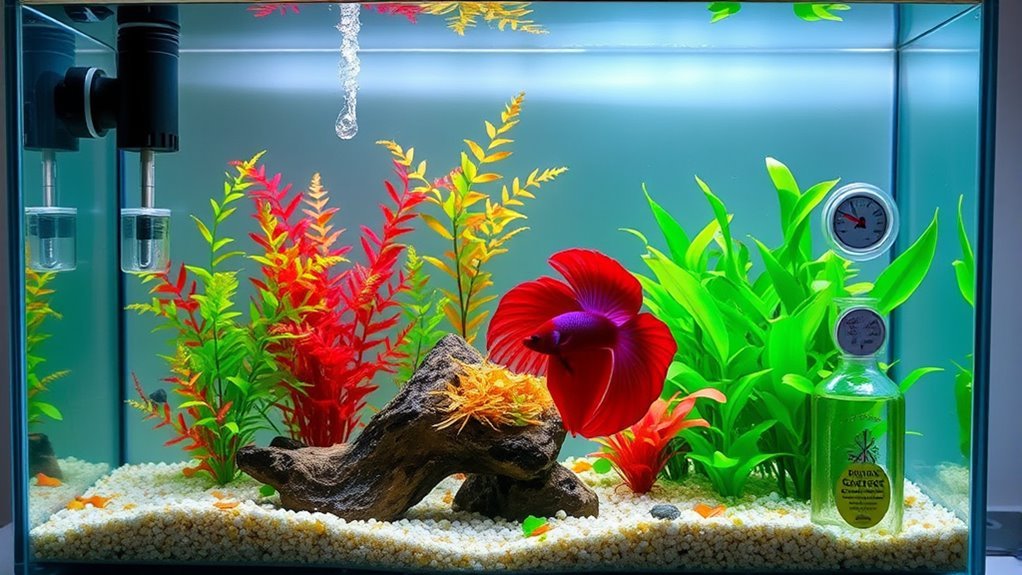
Although bettas can survive in smaller containers, you’ll give your fish the best chance to thrive by providing a tank of at least 5 gallons. This tank size ensures enough swimming room and reduces stress by offering ample space.
Larger tanks, like 10 gallons or more, improve water quality and create a stable environment with consistent water parameters. They also give you more room for decorations and hiding spots, which help your betta feel secure and active.
Small bowls or containers limit natural behaviors and quickly accumulate toxins, harming your fish. Choosing the right betta tank size not only supports better health but also makes maintenance easier by stabilizing the aquarium environment.
Keep Your Betta’s Water Clean and Warm
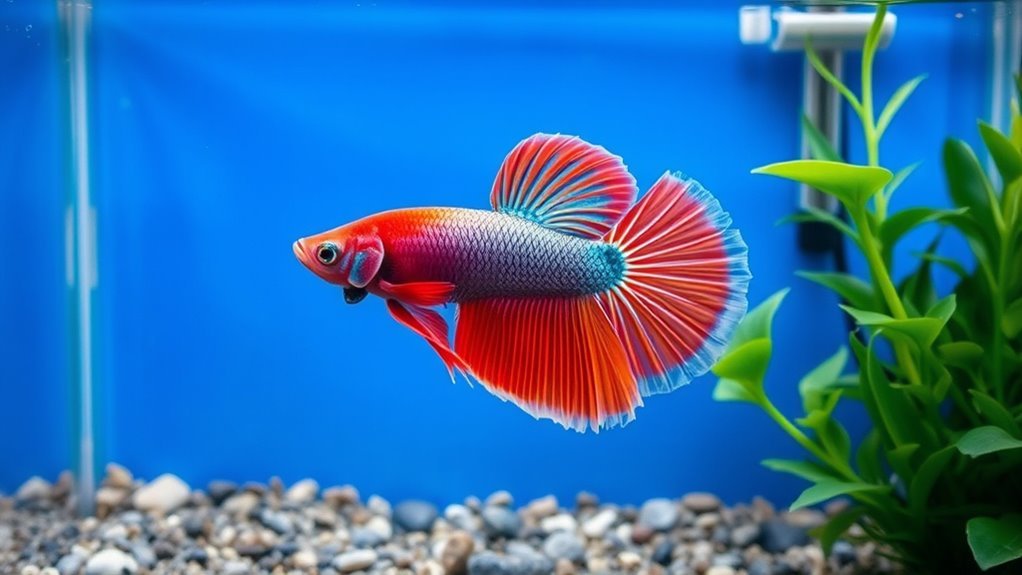
To keep your betta healthy and active, you’ll need to maintain clean, warm water that mimics their natural environment. Focus on stabilizing the water temperature between 75-81°F using an aquarium heater to guarantee your betta feels comfortable.
Regular water changes are essential to preserve water quality and reduce toxins that can harm your fish.
Here’s how to keep your betta’s water clean and warm:
- Perform 25% water changes weekly with dechlorinated water treated with a water conditioner to remove harmful chemicals.
- Use a low-flow filter to circulate water gently, supporting beneficial bacteria without stressing your betta.
- Conduct regular water testing to keep ammonia and nitrite at 0.0 ppm and nitrates below 40 ppm, ensuring ideal tank temperature and water quality.
Add Safe Betta Decorations and Hiding Spots
Maintaining clean, warm water sets the foundation for your betta’s well-being, but creating a comfortable environment goes beyond just water conditions. Adding safe decorations like silk plants and ceramic caves provides your betta with essential hiding spots and hiding spaces, helping reduce stress. Choose decorations without sharp edges to prevent fin injuries.
Dense plants offer natural shelter, letting your betta explore while feeling secure. Arrange decorations thoughtfully to balance open swimming areas with cozy retreats.
Regular cleaning and inspection are crucial to avoid algae buildup and remove any damaged items that might harm your fish.
Avoid painted or rough plastic ornaments, as they can cause fin tears. Keeping your betta’s tank safe and enriched encourages healthy behavior and a happier fish.
Feed Your Betta Right: Food and Schedule
When you feed your betta fish the right amount at consistent times, you help keep them healthy and active. Stick to a feeding schedule that offers 2-4 betta pellets or flakes once daily, only what your fish can consume within two minutes. Avoid overfeeding, as it harms digestion, causes bloating, and degrades water quality.
Enhance their diet with frozen foods or live foods like bloodworms once or twice a week to provide essential nutrients.
Occasionally, fast your betta for one or two days to support digestion and prevent swim bladder issues.
Key feeding tips include:
- Feed only what your betta can eat quickly to maintain a healthy weight
- Supplement fish food with nutritious frozen or live foods
- Monitor behavior and water quality to avoid overfeeding consequences
Select Compatible Betta Tank Mates
When choosing tank mates for your betta, pick peaceful species like Corydoras catfish or neon tetras that won’t trigger aggression.
Avoid aggressive fish, fin-nippers, or small fish that might stress your betta.
Make sure the tank is spacious enough to give everyone room and watch for any signs of tension.
Ideal Tankmate Species
Although Betta fish are known for their territorial nature, you can successfully house them with compatible tank mates that won’t provoke aggression. Choosing the right species helps avoid territorial disputes and promotes fish compatibility.
Focus on peaceful fish and invertebrates that coexist well in a well-planted tank with proper filtration.
Consider these ideal tank mates:
- Small fish like neon tetras and ember tetras that stay out of the Betta’s direct territory
- Bottom dwellers such as Corydoras catfish and dwarf loaches, which avoid confrontation by occupying different tank levels
- Invertebrates including nerite snails, Amano shrimp, and cherry shrimp that add diversity without triggering aggression
Avoid Aggressive or Small
Since male bettas are highly territorial, you should always keep them alone or with carefully chosen, non-aggressive tank mates. Avoid housing your betta with small or slow-moving fish, like tiny tetras or guppies, as their fish behavior can provoke aggression or fin-nipping.
These small fish often get chased or harmed due to the betta’s territorial nature.
Instead, opt for compatible tank mates such as peaceful bottom dwellers like Corydoras or small snails, which don’t trigger aggression. Providing ample hiding spots in a properly sized tank helps with stress reduction and prevents territorial disputes.
Spot and Prevent Common Betta Health Issues
You should watch for early signs like lethargy, fin damage, or unusual behavior to catch health issues before they worsen.
Keeping the water clean and stable is key to preventing diseases like fin rot and ich.
When problems arise, treatments like aquarium salt can help your betta heal quickly.
Recognizing Early Symptoms
When you notice your betta’s colors fading or its fins looking torn, these early signs often point to health issues that need attention. Recognizing symptoms early helps you prevent serious problems.
Keep an eye out for:
- Dull coloration, white spots, or cloudy eyes, which often signal infections or parasites.
- Lethargy, hiding, or loss of appetite, indicating stress or illness.
- A fuzzy coating or excess slime, an early warning of bacterial or fungal infections.
Maintaining Water Quality
Noticing early signs of illness in your betta is only part of keeping it healthy. Maintaining water quality is essential to prevent problems before they start. Regularly perform water testing to monitor key water parameters like ammonia, nitrate, and pH level.
Keep ammonia and nitrate levels low by ensuring your tank has beneficial bacteria that break down waste efficiently. Perform small, frequent water changes—about 15-25% weekly—to remove toxins and keep the environment stable.
Always treat tap water with a dechlorinator or water conditioner before adding it to the tank to neutralize chlorine and chloramine.
Avoid sudden pH level fluctuations by maintaining a steady range between 6.5 and 7.5.
Effective Disease Treatments
How can you quickly spot and treat common betta diseases like fin rot, Ich, or velvet? Early signs include ragged fins, white spots, or a dusty gold sheen. Prompt disease treatment is essential.
Use aquarium salt at 1 teaspoon per gallon to combat fin rot and bacterial infections.
For Ich, combine aquarium salt with a high water temperature around 80°F to speed parasite elimination.
Always maintain excellent water quality and perform regular water changes to prevent outbreaks.
Avoid overusing medications like Melafix without veterinary advice, as misuse can harm your betta.
- Treat fin rot with aquarium salt and keep water clean.
- Manage Ich by raising water temperature and using salt.
- Prevent velvet through strict water quality control and quarantine new fish.
These steps keep your betta healthy and disease-free.
Maintain Clean Water With Regular Changes
To keep your betta fish healthy, you’ll need to perform regular water changes that remove harmful toxins like ammonia, nitrite, and nitrate before they accumulate. A weekly water change of 15-25% helps maintain water quality and supports beneficial bacteria that break down waste.
Always use a water conditioner to treat tap water before adding it, ensuring harmful chemicals are neutralized. Use a siphon to remove waste and uneaten food from the substrate, improving waste removal efficiency.
Regularly test your tank water’s parameters to keep ammonia levels and nitrite at 0.0 ppm.
| Task | Frequency | Purpose |
|---|---|---|
| Water Changes | Weekly (15-25%) | Reduce toxin buildup |
| Waste Removal | Weekly | Remove uneaten food & waste |
| Water Testing | Weekly | Monitor ammonia & nitrate |
| Water Conditioning | Every change | Neutralize harmful chemicals |
Keep Your Betta Engaged With Enrichment
Maintaining clean water sets the foundation for your betta’s health, but keeping your fish mentally stimulated is just as important. You can create environment enrichment by adding various decorations like live plants and tank ornaments that provide hiding spots. These encourage your betta’s natural behaviors and promote exploration.
To keep things fresh, try tank rearrangement periodically, which prevents boredom and stimulates mental activity.
Consider these ideas for stress reduction and engagement:
- Incorporate live plants for shelter and a natural feel
- Use caves or floating objects as hiding spots
- Introduce mirrors briefly to trigger flare displays
Frequently Asked Questions
How Do I Care for a Betta Fish for Beginners?
You’ll keep your betta in a heated, filtered 5-gallon tank, feed small amounts daily, maintain warm water, and perform regular cleanings.
Watch for vibrant colors and activity, and avoid housing males together to keep fish healthy.
Can I Put 2 Betta Fish in 1 Tank?
No, never nestle two male bettas in one tank—they’ll battle brutally. You can try separated spaces with clear dividers, but always watch for warring ways.
For peace, keep them solitary or carefully monitored!
What Makes a Betta Fish Happy?
A happy betta feels secure in a spacious tank with stable temperature and clean water. You’ll want to add plants and hiding spots, feed balanced meals, and avoid stressful tank mates or sudden disturbances to keep it content.
What Are the Do’s and Don’ts of a Betta Fish?
Do keep male bettas separate, provide at least 5 gallons with clean, filtered water, and offer hiding spots.
Don’t overfeed or use small bowls. Regularly monitor water and change it partially to keep your betta healthy.
Conclusion
Taking care of your betta fish is like nurturing a tiny, living jewel—delicate but full of life. By choosing the right fish, setting up a cozy tank, keeping the water clean and warm, feeding properly, and offering safe decorations, you create a happy home.
Don’t forget to watch for health signs and keep your betta entertained. With consistent care, your vibrant companion will thrive, turning your tank into a sparkling underwater paradise.
Remember, proper betta fish care is essential for a healthy, happy pet. Follow these simple steps to enjoy a beautiful and thriving betta fish aquarium.