How You Can Safely Refreeze Fish Step by Step
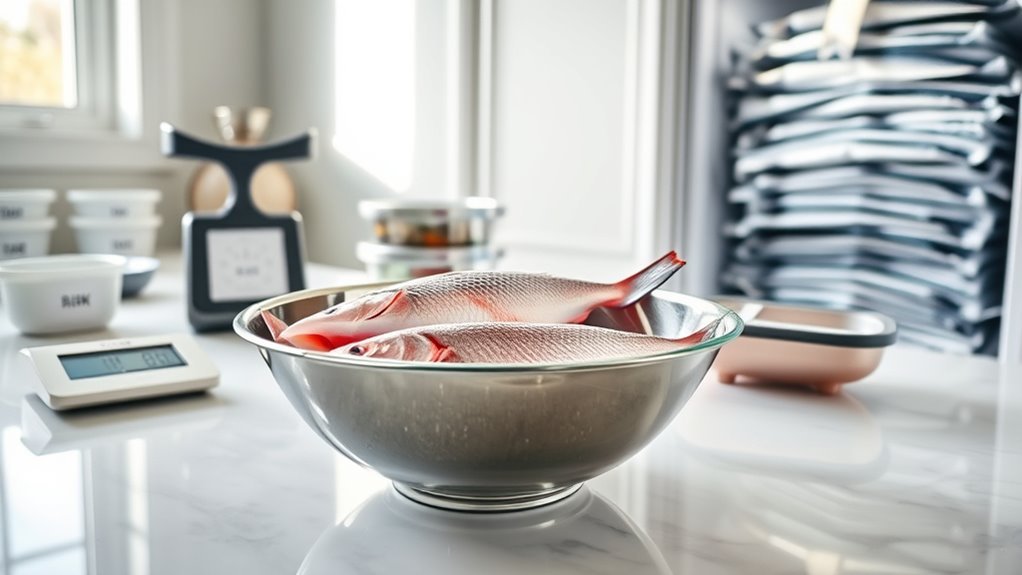
You can safely refreeze fish by first thawing it in the refrigerator at 40°F or below, which is crucial for maintaining fish quality and safety. Never thaw fish at room temperature or in warm water, as this can promote bacterial growth and spoilage. Make sure the fish shows no signs of spoilage like off smells or sliminess before considering refreezing.
Wrap the fish tightly in airtight, moisture-resistant packaging to prevent freezer burn and preserve its freshness. Refreeze only if it’s been refrigerated no longer than 1–2 days to ensure safety and maintain taste.
Follow these steps, and you’ll keep your fish fresh and tasty while avoiding waste—there’s more to know for best results.
When Is It Safe to Refreeze Fish?
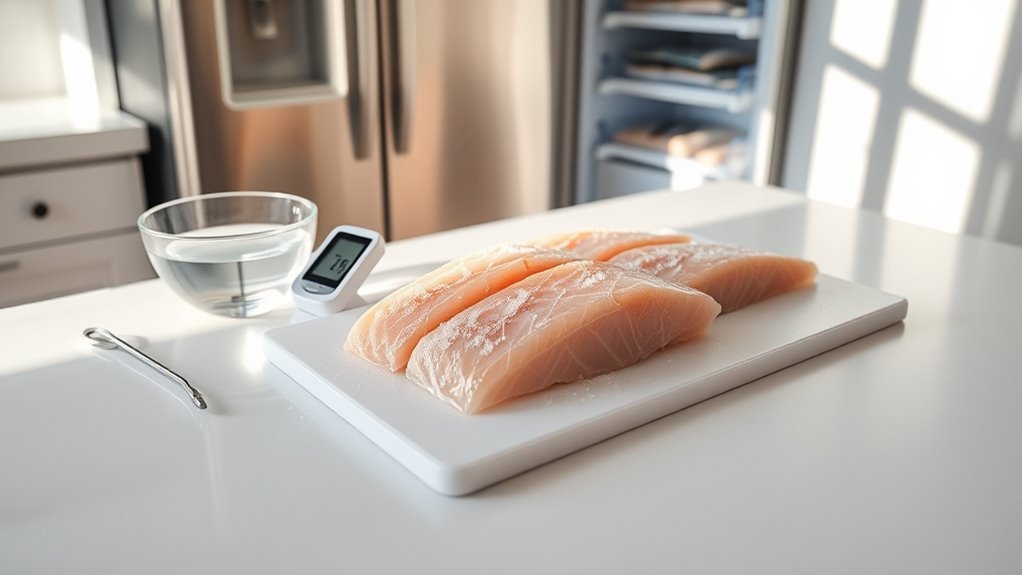
Although refreezing fish might seem convenient, you should only do it if the fish was thawed in the refrigerator at or below 40°F and shows no signs of spoilage.
Refreeze fish only if thawed in the fridge at 40°F or below and fresh without spoilage.
If your fish thawed at room temperature or in warm water, it’s best not to reconvert it because bacteria can multiply rapidly in those conditions.
You can safely refreeze fish thawed in the fridge as long as it doesn’t have off odors or a slimy texture.
Also, avoid refreezing fish left out for more than two hours—or just one hour if it’s above 86°F.
When properly packaged and handled this way, refrozen fish maintains quality and safety.
Always check your fish before refreezing to ensure it’s fresh and safe to eat.
How Long Can You Keep Thawed Fish Before Refreezing?
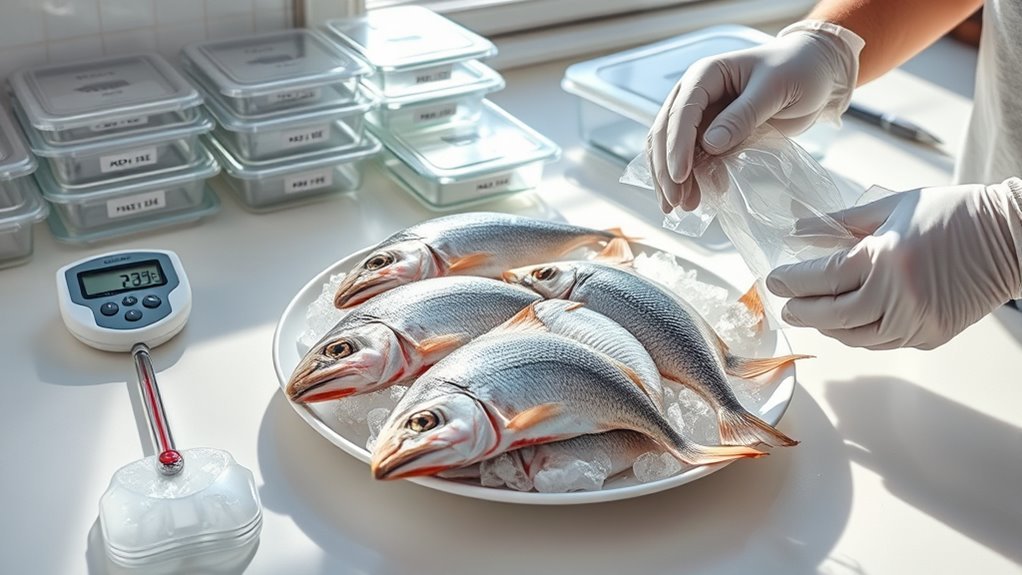
Knowing when to refreeze thawed fish is just as important as understanding when it’s safe to do so. You should refreeze fish within 1 to 2 days if you’ve kept it refrigerated at 40°F or below. This timeframe helps maintain the fish’s safety and quality.
Avoid refreezing fish left out at room temperature for more than 2 hours—or just 1 hour if it’s above 30°C—since bacteria can multiply rapidly.
If your thawed fish has been handled properly in the fridge, refreezing fish can keep it safe for up to 8 months.
Always check for spoilage signs like off odors or sliminess before refreezing fish. Fish thawed outside refrigeration should be used immediately and never refrozen to avoid health risks.
How Does Thawing Method Affect Fish Safety and Quality?
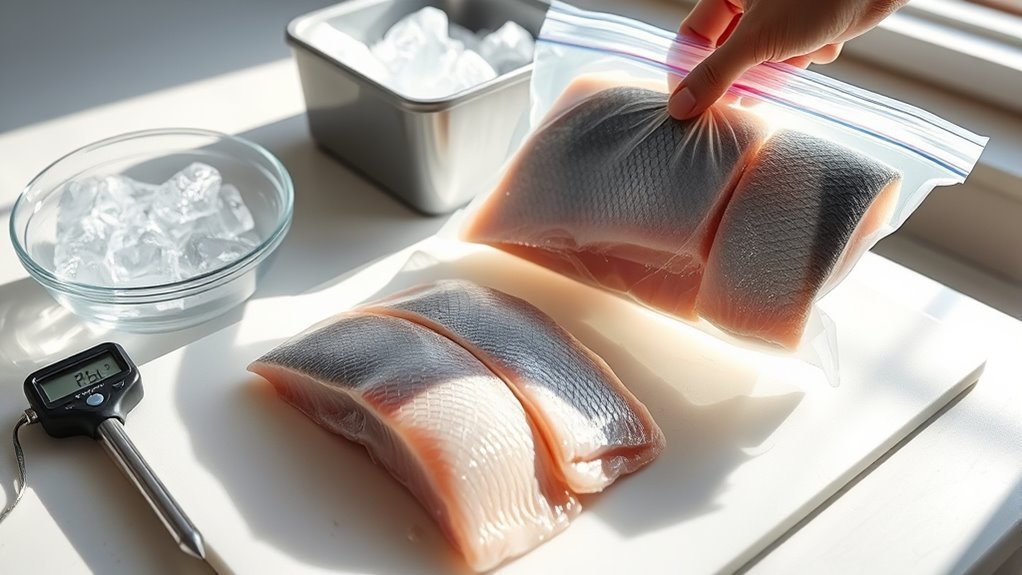
Because the way you thaw fish directly affects both its safety and quality, choosing the right method is essential. When fish is thawed in the refrigerator, it stays below 40°F, which limits bacterial growth and reduces the risk of foodborne illness.
Thawing at room temperature or in warm water speeds up bacteria growth, making the fish unsafe. Using a microwave can partially cook the fish, harming texture and safety unless cooked immediately.
| Thawing Method | Safety Impact | Quality Impact |
|---|---|---|
| Thawed in Refrigerator | Minimizes foodborne illness | Preserves moisture & texture |
| Room Temperature | High risk of foodborne illness | Texture degradation |
| Microwave | Risk if not cooked immediately | Partial cooking, poor texture |
How to Package Fish Properly for Refreezing
When you prepare fish for refreezing, sealing it properly is key to preserving its quality and preventing freezer burn. Start by wrapping the fish tightly in plastic wrap, aluminum foil, or freezer paper to minimize air exposure.
Then, place it in a freezer-safe bag or container.
If you have a vacuum sealer, use it to remove excess air and create an airtight seal, which helps maintain freshness longer.
Lay the fish flat and evenly spaced to ensure it freezes quickly and uniformly. Don’t forget to squeeze out as much air as possible before sealing to reduce freezer burn risk.
Finally, label each package with the refreeze date to keep track. Proper packaging guarantees your fish stays safe and delicious for your next meal.
How to Thaw Refrozen Fish Safely and Effectively
To thaw refrozen fish safely, move it from the freezer to your refrigerator and let it thaw slowly at 40°F or below.
Avoid thawing at room temperature or in warm water, as this can harm the fish’s texture and increase bacteria risks.
Make sure the fish is fully thawed before cooking to keep its flavor and cook evenly.
Recommended Thawing Methods
Although thawing refrozen fish requires care, you can safely do it by placing the fish in the refrigerator at or below 40°F (4°C). This gradual thawing method is the safest and guarantees the fish stays safe to refreeze if needed.
Avoid thawing fish at room temperature or in warm water, as these promote bacterial growth and compromise quality. For faster thawing, use your microwave’s defrost setting, but remember to cook the fish immediately afterward. Only cook fish thawed this way before refreezing.
Below is a quick guide to the recommended thawing methods:
| Method | Speed | Safe to Refreeze? |
|---|---|---|
| Refrigerator | Slow | Yes |
| Cold Water Bath | Moderate | No |
| Room Temperature | Fast | No |
| Microwave | Very Fast | Only if cooked after thaw |
| Cooked Fish | N/A | Yes |
Timing And Temperature Control
Since maintaining safe temperatures is essential, you should always thaw refrozen fish in the refrigerator at or below 40°F (4°C) to prevent bacterial growth. Proper timing and temperature control are key to safely refreeze fish without risking food safety.
Follow these steps:
- Use a food thermometer to verify your refrigerator stays at or below 40°F (4°C).
- Thaw fish only in the fridge, never at room temperature.
- Refreeze thawed fish within 1 to 2 days if it has been kept at safe temperatures.
- Avoid refreezing fish left out more than 2 hours (or 1 hour if above 86°F).
Maintaining Texture And Flavor
When you thaw refrozen fish in the refrigerator at or below 40°F, you help preserve its delicate texture and flavor. Always thaw fish slowly to avoid moisture loss and maintain quality.
After thawing, choose gentle cooking methods like baking, steaming, or poaching to keep the texture tender and the flavor intact.
Avoid pan-frying or high-heat cooking immediately, as these can dry out the fish and diminish its taste.
If you refreeze fish more than once, extend cooking times by about 15 minutes to ensure it’s thoroughly cooked without compromising texture.
Also, use proper packaging and quick refreezing to prevent freezer burn, which negatively affects flavor and moisture.
Following these steps will help you enjoy refrozen fish that tastes fresh and satisfying.
How to Choose the Best Cooking Methods for Refrozen Fish
When cooking refrozen fish, choose methods like baking, steaming, or poaching to keep it moist and tender.
You’ll need to add about 15 extra minutes to the cooking time compared to fresh fish to guarantee it’s fully cooked.
Avoid pan-frying, as it can dry out the fish and ruin its texture.
Moisture-Retaining Cooking Techniques
Although refrozen fish can lose some moisture during freezing cycles, choosing the right cooking methods helps you preserve its delicate texture and flavor. To keep your fish moist and tasty, focus on moisture-retaining techniques that gently cook without drying it out.
Here’s how you can do it:
- Bake fish wrapped in foil or parchment to lock in moisture.
- Steam fish to maintain tenderness and natural juices.
- Poach fish in broth or seasoned water for a gentle heat method.
- Avoid pan-frying, as it browns quickly and causes moisture loss.
Adjusting Cooking Time
Keeping moisture locked in during cooking helps maintain the quality of refrozen fish, but you’ll also need to modify your cooking times to guarantee it’s properly cooked through.
When you refreeze fish, extend cooking times by about 15 minutes to ensure thorough doneness and safety.
Opt for baking, steaming, or poaching—these methods help retain moisture and preserve the delicate texture of refrozen fish.
Avoid pan-frying, as it can cause rapid browning, dryness, and uneven cooking.
If you refreeze fish twice, use longer cooking times and lower temperatures to protect flavor and prevent overcooking.
Always check that the internal temperature reaches at least 145°F (63°C) to confirm safety after refreezing.
Adjusting cooking times thoughtfully ensures your refreeze fish stays delicious and safe.
How Refreezing Impacts Fish Quality and Texture
Because ice crystals form during freezing, refreezing fish damages its cell structure and causes moisture loss. When you refreeze frozen fish, you’ll notice a decline in quality and texture due to this refreezing impact. Here’s what happens:
- Moisture escapes from the fish, making it drier.
- The texture becomes mushier and less firm.
- Flavor diminishes as the natural succulence fades.
- Each freeze-thaw cycle speeds up degradation.
Initially, quick freezing helps keep the fish’s texture intact, but repeated refreezing breaks down its delicate consistency.
How to Prevent Freezer Burn When Refreezing Fish
When you refreeze fish, taking steps to prevent freezer burn is essential to preserving its quality. First, wrap your fish tightly in freezer paper, plastic wrap, or vacuum-seal it to block air exposure, which causes freezer burn.
Refreezing fish? Wrap it tightly to block air and prevent freezer burn, preserving quality.
Squeeze out as much air as possible from freezer bags before sealing to minimize moisture loss and ice crystal formation.
Use packaging that’s moisture-resistant and airtight to reduce dehydration. Freeze fish quickly in a single layer; this forms smaller ice crystals, helping maintain texture and preventing freezer burn.
Finally, label and date your packaging so you can use the fish within about eight months, ensuring it stays fresh.
Following these steps every time you refreeze will keep your fish tasting great and avoid freezer burn damage.
How Refreezing Fish Can Save You Money and Reduce Waste
If you’ve thawed fish in the refrigerator and refreeze it properly, you can substantially cut down on waste and save money. Refreezing fish helps prevent freezer burn and keeps your seafood fresh longer.
Here’s how it benefits you:
- You extend your fish’s usability, reducing the chance of spoilage.
- You make the most of bulk or sale purchases by saving unused portions.
- You avoid throwing away expensive seafood, promoting economical food habits.
- You contribute to sustainability by minimizing food waste.
Frequently Asked Questions
Can I Refreeze Fish That Has Been Previously Frozen?
Yes, you can refreeze fish if you thawed it in the fridge and it shows no spoilage signs.
Just make sure to refreeze it within a couple of days and keep it properly wrapped to maintain quality.
What Is the 10 Minute Rule for Fish?
Imagine you took fish out for dinner and it sat on the counter for 12 minutes. The 10-minute rule means you shouldn’t refreeze it because bacteria could have grown, risking your health if you do.
Can You Put Fish Back in the Freezer Once It’s Defrosted?
Yes, you can put fish back in the freezer if you thawed it in the fridge and it hasn’t spoiled.
Just make sure to refreeze it within 1-2 days and package it tightly for best quality.
Is It Safe to Eat Fish That Has Been Thawed and Refrozen?
Eating fish thawed and refrozen can be a roll of the dice. If it’s been handled properly and shows no spoilage signs, you’re safe.
Otherwise, bacteria might have thrown a party you don’t want to crash.
Conclusion
Now that you know the ins and outs of safely refreezing fish, you can confidently preserve your catch without sacrificing quality. Just remember to thaw it properly, package it well, and cook it wisely.
Like a trusty pocket watch ticking through time, these steps keep your fish fresh and flavorful, saving you money and reducing waste. Embrace these tips, and you’ll always have delicious seafood ready when you need it.
By following these safe refreezing fish practices, you ensure optimal taste and texture every time. Keep your seafood fresh, reduce food waste, and enjoy your catch with confidence.