
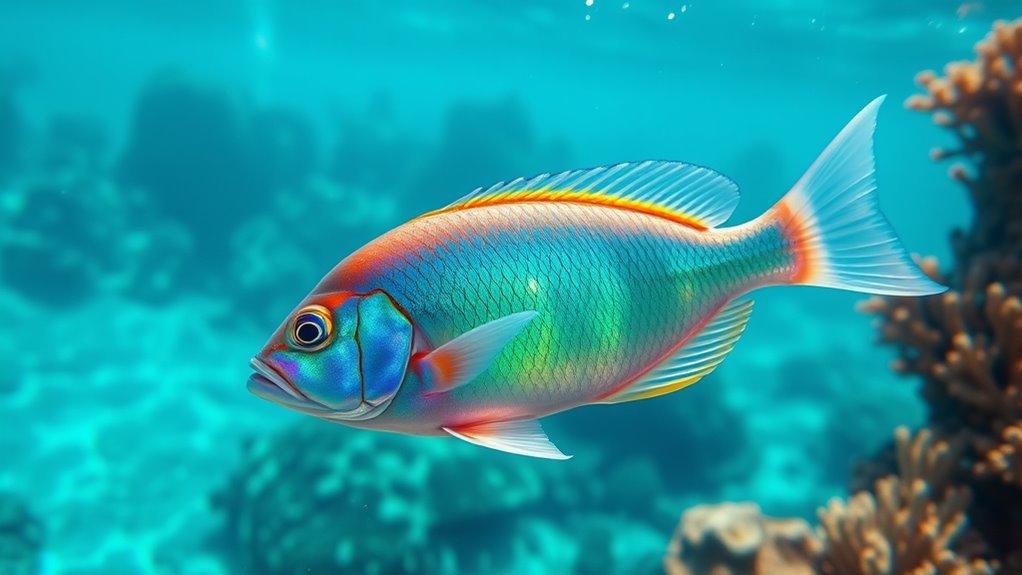
How Do Fish Produce Slime Coats That Help Healing?
You produce fish slime coats through specialized skin cells that secrete mucus rich in glycoproteins, enzymes, and antimicrobial peptides. These components are essential in creating a slimy shield that protects fish from harmful microorganisms and environmental stressors.
This slime forms a protective barrier that traps pathogens, prevents infections, and speeds wound healing by promoting tissue regeneration and collagen production. Healthy water conditions and good nutrition help maintain this slime’s protective qualities.
If you want to understand how this slimy shield adjusts after injury and supports recovery, there’s more fascinating detail ahead.
How the Slime Coat Protects Fish From Infection and Aids Healing
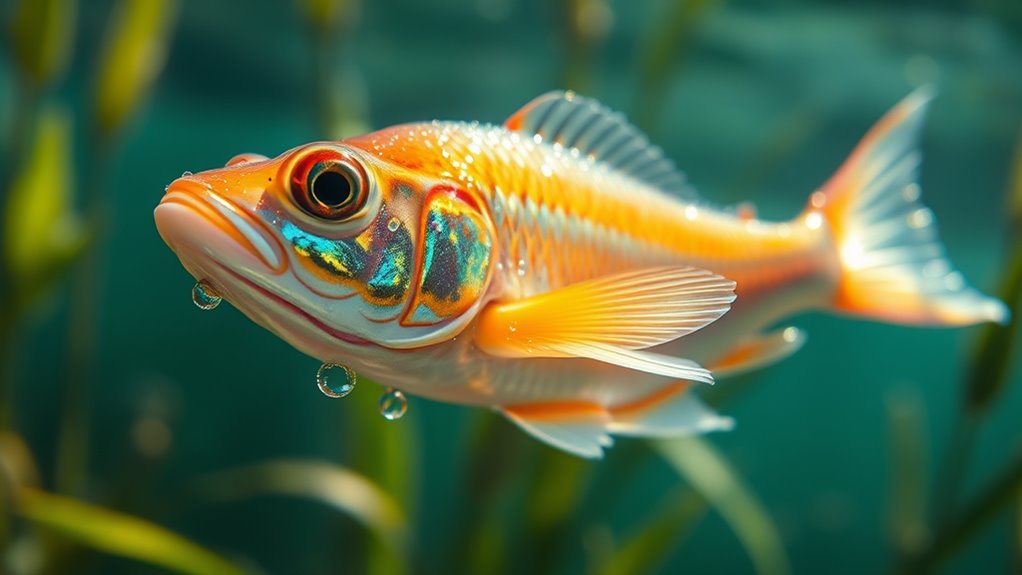
Although you mightn’t notice it at first, a fish’s slime coat plays a crucial role in protecting it from infection and speeding up healing. This slime coat acts as a physical barrier made of mucous glycoproteins, shielding injured areas from harmful microbes and contaminants.
You’ll find it packed with antimicrobial agents like lysozyme and C-reactive protein that trap and neutralize pathogens, preventing infections before they start.
When a fish gets hurt, the slime coat enhances its antimicrobial properties by releasing alarm chemicals that trigger immune responses. Plus, it contains specialized compounds and enzymes that actively promote tissue regeneration, accelerating the healing of wounds.
The Role of Antimicrobial Peptides in Fish Slime Wound Recovery
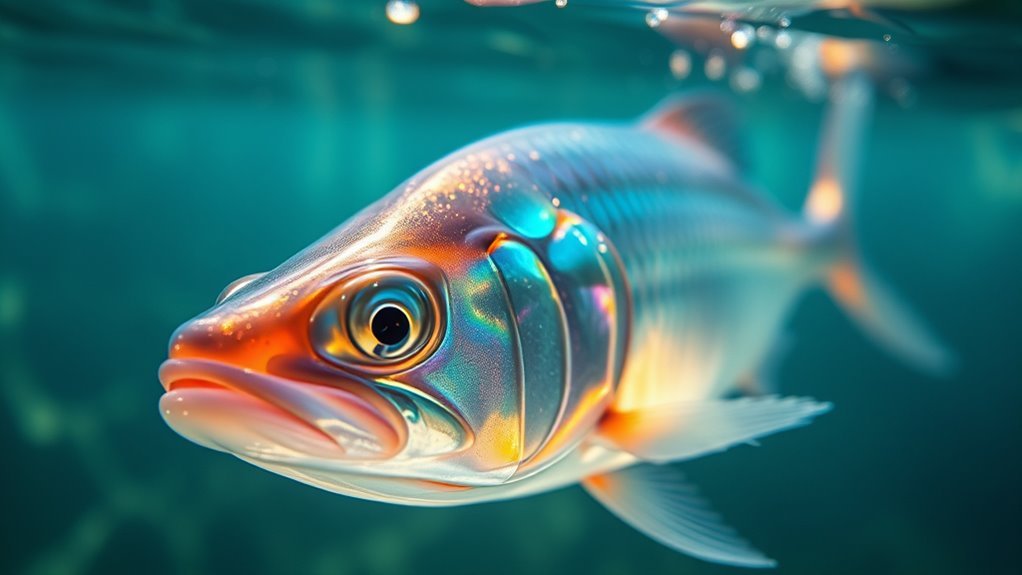
You’ve seen how the slime coat acts as a protective shield and healing aid, but a vital part of this defense lies in the antimicrobial peptides it contains. These peptides, like lysozyme and C-reactive protein, actively disrupt microbial cell membranes, preventing infections and speeding up wound healing.
When a fish gets injured, the concentration of antimicrobial peptides in the slime coat increases, boosting its ability to fight off harmful pathogens. Not only do these peptides inhibit bacteria and fungi, but they also help modulate the immune response, supporting tissue regeneration.
This powerful biochemical defense within the slime coat plays an essential role in keeping wounds clean and promoting faster recovery, making antimicrobial peptides essential to fish wound healing.
How Fish Skin Glands Produce the Slime Coat
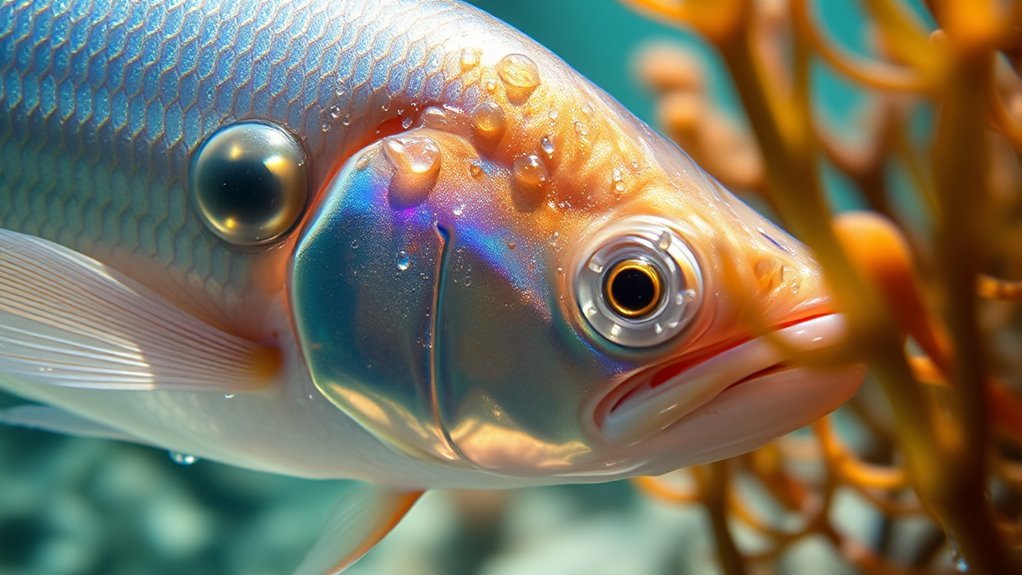
When fish need to protect their skin, specialized glands called mucous or goblet cells produce the slime coat. These mucous cells reside within the epidermis and continuously secrete glycoproteins that form a protective mucous layer.
Specialized mucous cells in fish skin continuously secrete glycoproteins to create a protective slime coat.
The secretion happens through exocytosis, where mucous granules inside the cells fuse with the cell membrane and release their contents outside.
This mucus isn’t just a sticky barrier—it contains antimicrobial peptides, enzymes, and antibodies that help fight infection and support healing.
When fish face injury or stress, these mucous cells ramp up their mucus production, ensuring the slime coat thickens to better shield and heal damaged skin.
Functions of Mucins and Enzymes in Fish Slime
You’ll find that mucins create a protective gel-like barrier in fish slime, shielding the skin from harm.
At the same time, enzymes like lysozyme work to destroy harmful microbes, keeping infections at bay.
Together, these components speed up healing and support tissue regeneration after injuries.
Mucin’s Protective Role
Although fish slime might seem simple, its mucins play a crucial role in protecting your fish’s skin. These glycoproteins form a gel-like matrix that acts as a strong protective barrier against harmful microbes. The carbohydrate chains in mucins trap bacteria and other pathogens, preventing infections and supporting wound healing.
This mucin layer creates an antimicrobial environment that limits microbial growth, helping your fish stay healthy. Additionally, mucins’ viscoelastic properties absorb mechanical damage, cushioning minor injuries and promoting faster recovery.
By maintaining this slimy shield, mucins guarantee your fish’s skin remains intact and resilient.
Enzymatic Antimicrobial Action
How exactly does fish slime fend off harmful microbes? It’s all thanks to the powerful combination of mucins and enzymes working together. Mucins, the glycoproteins in the slime, form a viscous barrier that not only traps microbes but also has antimicrobial properties.
Meanwhile, enzymes like lysozyme actively break down bacterial cell walls, stopping infections before they start. Additionally, C-reactive protein in the slime tags microbes, helping immune cells recognize and destroy them faster.
This enzymatic antimicrobial action creates a robust biochemical defense system that inhibits microbial growth. So, when you think about fish slime, remember it’s not just a slimy coating—it’s a complex shield where mucins and enzymes team up to protect fish from harmful invaders.
Healing and Regeneration Support
Beyond fending off microbes, fish slime plays an essential role in healing and tissue repair. The mucus layer formed by mucins creates a protective barrier that shields wounds from harmful invaders while supporting tissue repair.
When fish get injured, they ramp up mucus secretion, delivering extra mucins and enzymes like proteases and lysozymes to clean wounds and prevent infection.
Antimicrobial peptides in the slime actively combat bacteria and fungi, reducing infection risks and speeding healing.
Additionally, regenerative factors in the slime stimulate cell growth, helping damaged tissues recover faster.
How Fish Boost Slime Coat Production After Injury
When fish get injured, they quickly ramp up slime production by activating mucous-secreting skin glands. This response helps protect wounds and speeds healing.
Here’s how they boost slime production after injury:
- Chemical signals trigger mucous cells to multiply, increasing slime secretion.
- The slime thickens and becomes more viscous, forming a stronger protective layer over the injury.
- Antimicrobial peptides in the slime are produced in higher amounts to fight infection.
- Stress-induced cortisol elevates mucous gland activity, accelerating slime coat regeneration.
Nutritional and Environmental Factors Affecting Slime Quality
After injury, fish ramp up slime production to protect and heal wounds, but the quality of that slime depends heavily on what’s happening in their environment and diet.
You need to guarantee fish get enough nutrients, especially amino acids, vitamins like C, and minerals such such as zinc, to maintain a healthy slime coat. Poor nutrition can weaken mucus production, slowing healing.
Water quality plays a vital role, too—stable temperature, proper pH, and adequate dissolved oxygen all support ideal slime secretion. Pollutants and toxins in the water can damage slime glands, reducing the slime coat’s effectiveness.
Defensive Slime Functions That Aid Wound Protection
Although fish increase slime production to cover wounds, the slime itself plays an active role in defense by containing antimicrobial peptides like lysozyme and C-reactive protein that help prevent infections. When you consider how fish protect their injuries, the defensive slime functions are vital.
Here’s what it does for wound protection:
- Mucus secretion spikes at injury sites, forming a protective barrier against pathogens.
- Antimicrobial compounds in the slime actively kill bacteria and fungi.
- The slime coat physically shields wounds from parasites and harmful microbes.
- Its chemical properties maintain a moist environment essential for healing.
How Slime Supports Faster Tissue Repair and Barrier Restoration
Because fish ramp up slime production at injury sites, they create an environment that speeds tissue repair and restores the skin’s protective barrier. You’ll find that the slime coat contains growth factors and antimicrobial peptides which promote cell regeneration while fighting infection, accelerating tissue repair.
Fish increase slime at wounds, boosting cell growth and fighting infection to speed skin repair.
This mucous layer also holds cytokines and enzymes that clear away damaged cells, supporting healing efficiently.
When an injury occurs, increased slime secretion keeps the wound moist and shields it from microbes, preventing further damage. The slime’s bioactive compounds stimulate collagen production, essential for faster tissue regeneration.
By boosting slime production, fish quickly restore their skin’s barrier function, cutting down healing time and reducing the risk of secondary infections.
This natural process highlights how the slime coat is indispensable for barrier restoration and speedy tissue repair.
Maintaining a Healthy Slime Coat for Optimal Healing
The slime coat plays an essential role in healing, but keeping it healthy takes ongoing care. You need to focus on maintaining the slime coat on fish skin to support effective tissue repair. Here’s how you can help:
- Guarantee excellent water quality by maintaining balanced pH and low ammonia levels to promote steady slime production.
- Provide fish with a nutritious diet rich in vitamins and minerals to support slime regeneration.
- Minimize handling and avoid abrasive contact to preserve the slime layer’s integrity.
- Recognize that the slime contains antimicrobial enzymes and peptides, so protecting it helps prevent infections and aids healing.
Frequently Asked Questions
Does Fish Skin Actually Help Heal Wounds?
Yes, fish skin helps heal wounds by producing a slime coat packed with healing compounds. You’ll find it keeps injuries moist, fights infection, and speeds tissue repair.
It protects and restores the damaged area effectively.
Why Do Fish Have Slime Coats?
You know when they say “better safe than sorry”? Fish have slime coats to protect themselves from germs, parasites, and injuries. This slippery shield keeps you safe underwater, helping fish heal and stay healthy in tough conditions.
Can Fish Regenerate Their Slime Coat?
Yes, fish can regenerate their slime coat quickly. When damaged, their skin glands ramp up mucus production, restoring the protective layer while antimicrobial peptides help heal wounds.
You’ll see faster recovery with good water and nutrition.
Is Fish Slime Good for Your Skin?
Yes, fish slime can be good for your skin. It contains natural antimicrobial peptides and antioxidants that help fight bacteria, soothe irritation, and boost healing.
Many skincare products now use these benefits for hydration and protection.
Conclusion
You can see how essential the slime coat is when a fish like a coral reef wrasse gets injured—its mucus, rich in antimicrobial peptides and enzymes, kicks into overdrive, protecting wounds from infection and speeding healing.
When you understand how fish naturally boost slime production after injury, you appreciate the incredible defense and repair system they have.
Keeping their slime healthy means helping them survive and thrive, just like that wrasse recovering swiftly in the wild.
This natural slime coat production is key to fish healing, highlighting the importance of their antimicrobial peptides and enzymes in the process.