How to Fry Fish at the Ideal Temp
To fry fish perfectly, maintaining the ideal temperature is key. Heat your oil to a steady 350–375°F and keep it consistent throughout the frying process. Use neutral oils with high smoke points like canola or peanut to avoid off-flavors.
Fry small, boneless fillets in batches to ensure the oil stays hot. Watch for a golden brown crust and reduced sizzling as signs that the fish is done. Drain the fish on a wire rack to keep it crisp.
Season immediately after frying to maintain crispness. Properly handle and store your oil for the best results. There’s more to mastering the technique for crispy, tender fish every time.
Choose the Best Fish for Frying
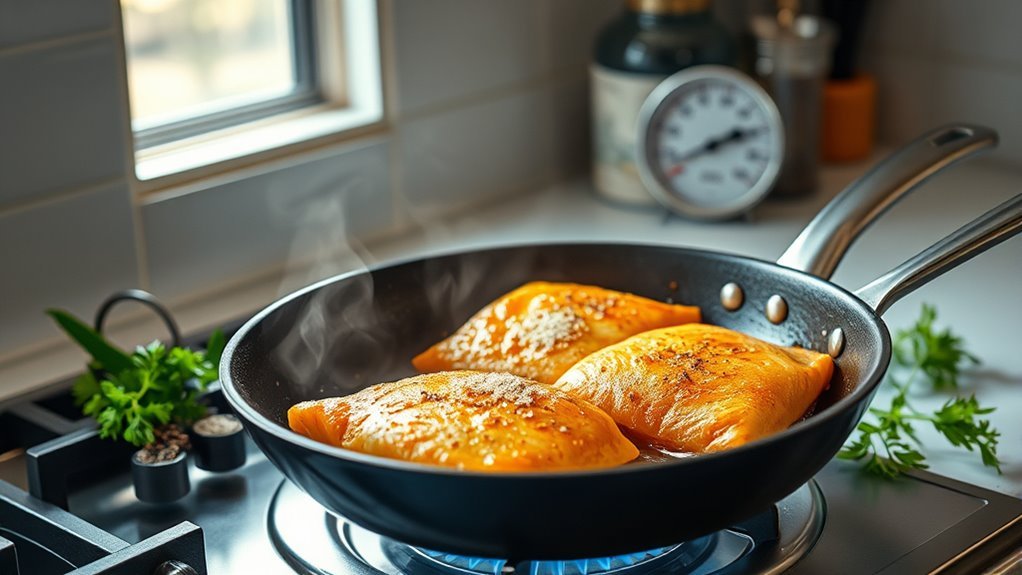
When choosing fish for frying, you’ll want to focus on varieties that cook evenly and offer great flavor. The best fish for frying often come from the sunfish family—bluegills, redears, crappies, and bass are excellent choices because of their manageable size and tasty meat.
Larger fish like catfish, red snapper, and whiting are also popular for southern-style fish fry.
If you’re new to frying, start with small, boneless fish fillets; they’re easier to handle and cook uniformly. Freshwater fish generally provide better flavor and texture compared to oily or dense species.
Fish like walleyes, saugers, and Asian carp also shine when fried southern style, making your meal both delicious and satisfying every time.
Prepare and Trim Your Fish Properly
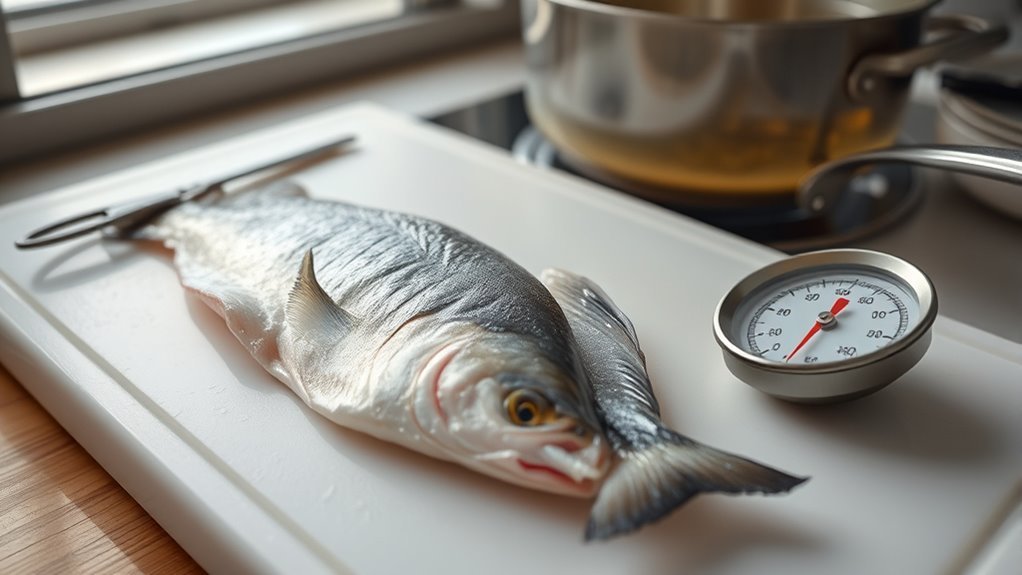
Although trimming and preparing your fish might seem simple, doing it properly guarantees an even cook and better texture. Start by trimming away any red, yellow, or brown meat from larger fish fillets with a sharp fillet knife. This helps the fish cook evenly and improves the final texture.
Keep your fish chilled in ice water immediately after cleaning to maintain firmness and avoid mushiness.
For added flavor and firmness, soak your fish overnight in heavy saltwater. You can also soak fillets in buttermilk or a milk and hot sauce mixture for a few hours to tenderize and enhance flavor.
For sunfish fillets, minimal trimming is usually needed—just remove any red or fatty areas before cooking. Following these steps guarantees your fish is ready for perfect frying.
Make a Crispy Breading or Batter
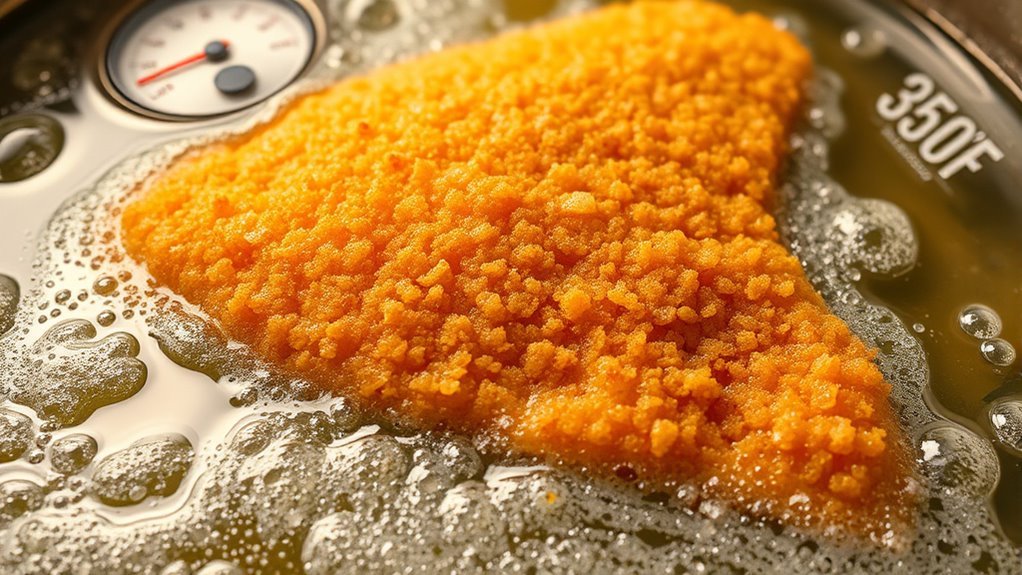
To get that perfect crispy crust, mix about two-thirds cornmeal with one-third flour for your breading.
If you’re using a batter, keep it smooth but thick enough to stick well to the fish. These simple ratios and textures help guarantee your coating fries up golden and crunchy every time.
Breading Ingredients Ratio
If you want a crispy breading, use a ratio of about two-thirds cornmeal to one-third flour. This blend creates a crunchy texture that holds up well when frying fish in hot oil.
Add spices like paprika, garlic powder, and onion powder to the dry mix for extra flavor.
To evenly coat your fish fillets, put them in a seasoned Ziploc bag with the breading mixture and shake gently. This method *assures* every piece is covered without clumps.
When you drop the breaded fish into the oil, the cornmeal crisps up nicely, while the flour helps the coating stick.
Mastering this ratio guarantees a golden, crunchy exterior every time you fry fish, enhancing both taste and texture.
Batter Consistency Tips
When you mix batter for frying fish, aim for a roughly equal ratio of liquid to flour to get a smooth, pourable consistency that clings just right. Using carbonated liquids like club soda or beer makes your batter lighter and crisps up beautifully at the right oil temperature.
If your batter feels too thick, add a bit more liquid for a thinner, crispier coating; add more flour if it’s too runny and won’t stick. Season your batter with salt, pepper, and optional spices to boost flavor without sacrificing crispiness.
Always dip your fish just before frying to ensure the batter forms a smooth, even layer. Maintaining the ideal oil temperature helps the batter set quickly, locking in that perfect crunch.
Choose the Best Oil for Frying Fish
You’ll want to pick an oil with a high smoke point to handle frying temperatures without breaking down.
Choosing a neutral-flavored oil like canola or peanut helps keep your fish’s delicate taste intact.
Plus, oils like peanut prevent flavors from transferring between batches, ensuring consistent results every time.
Oil Smoke Point
Why does the smoke point of oil matter so much when frying fish? Because it determines how hot the oil can get before it starts to burn, smoke, and break down. Using oil with a high smoke point means you can fry your fish at the ideal temperature without ruining the flavor or safety of your meal.
Look for oils with these qualities:
- Smoke points above 375°F to handle frying heat
- Examples like canola, peanut, cottonseed, and coconut oils
- Avoid oils like extra virgin olive oil with low smoke points
High smoke point oil ensures crispy, evenly cooked fish.
Choosing the right oil smoke point helps you fry fish perfectly, keeping the oil stable and your dish delicious.
Flavor Neutrality
Selecting an oil with a high smoke point is just one part of frying fish well; the oil’s flavor plays an equally important role. You want a vegetable oil that offers flavor neutrality to preserve the fish’s delicate taste. Oils like canola and refined peanut oil are excellent choices because they won’t overpower the seafood’s natural flavors.
| Oil Type | Smoke Point (°F) | Flavor Profile |
|---|---|---|
| Canola Oil | 400 | Neutral |
| Refined Peanut Oil | 450 | Mild/Neutral |
| Cottonseed Oil | 420 | Light, Neutral |
| Extra Virgin Olive | 375 | Strong, Distinctive |
Avoid oils with strong flavors like extra virgin olive oil to keep your fish tasting pure and fresh.
Preventing Flavor Transfer
Although choosing the right oil is essential, preventing flavor transfer during frying matters just as much to keep your fish tasting fresh. When you fry fish in hot oil, unwanted flavors can easily transfer, ruining the delicate taste.
To avoid this, focus on these key practices:
- Use neutral-flavored oils like canola, peanut, or cottonseed oil to keep flavors clean.
- Select oils with high smoke points (350°F or higher) to prevent breakdown and flavor transfer.
- Avoid reusing oil that’s absorbed strong flavors from previous frying sessions.
- Maintain a consistent frying temperature between 350°F and 375°F to reduce oil degradation and flavor transfer.
Heat Oil to the Ideal 350–375°F Frying Temperature
When you heat oil for frying fish, maintaining the temperature between 350°F and 375°F guarantees a crispy exterior without absorbing excess oil.
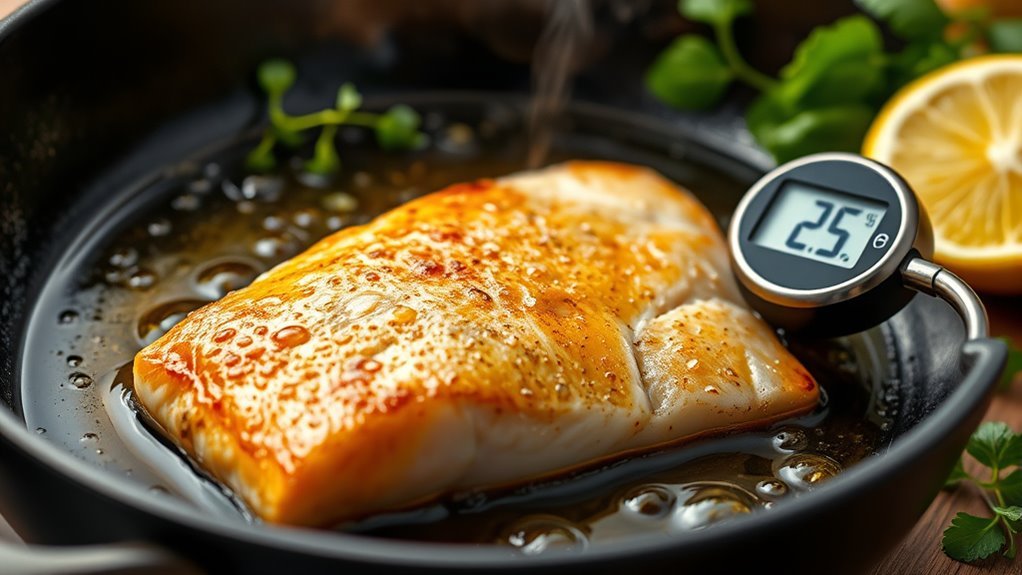
To fry fish perfectly, preheat your frying oil to this ideal range before adding the fish. Use a reliable thermometer to monitor the temperature constantly, especially when you add fish, as this often causes the temperature to drop.
Adjust your burner or heat source as needed to keep the frying oil within the suitable range.
Avoid letting the oil exceed 375°F, since overheating can burn the fish and degrade the oil’s quality, ruining the texture and taste.
Keeping your frying oil steady at the right heat ensures crispy, delicious fish every time.
Fry Fish in Small Batches to Maintain Oil Temperature
To keep your oil temperature steady between 350°F and 375°F, fry fish in small batches. Adding too many pieces at once causes the oil temperature to drop, resulting in greasy, soggy fish. Stick to small batches to keep the heat consistent and your fish crispy.
Here’s how to maintain the ideal oil temperature:
- Use a thermometer to monitor oil temperature before and during frying.
- Add only a few pieces at a time to avoid temperature drops.
- Allow the oil to reheat to the target temperature between batches.
- Wait for the oil temperature to recover fully before adding more fish.
How to Tell When Your Fish Is Done
You’ll know your fish is done when it turns golden brown and develops a crispy crust.
The texture should feel firm, and cooking time varies—small fillets take about 3 minutes while larger pieces need more time.
Keep an eye on these signs to pull your fish at the perfect moment.
Visual Doneness Indicators
Although cooking fish to the ideal doneness might seem tricky, you can rely on several clear visual and auditory cues to know when it’s ready. Watching for these signs helps you nail the perfect fish fry every time without overcooking.
- Look for a golden brown crust; it signals the fish is cooked through and crispy.
- Notice when bubbles around the fish slow and stop, showing moisture has escaped.
- Listen for the sizzling sound to diminish, indicating the fish is ready to be taken out.
- Watch small fillets float to the surface and turn golden and crispy, a natural doneness indicator.
These visual and sound clues ensure your fish fry hits that ideal temperature and texture without guesswork.
Texture and Feel
Visual and auditory cues give you a great starting point, but feeling the texture of your fish can confirm its doneness with confidence.
When frying, look for a golden brown, crispy crust—that firm exterior signals the fish is cooking perfectly. Gently press the fish; it should feel firm yet yield slightly under pressure.
If it’s too soft, it needs more time. As the sizzling noise fades and bubbles around the fish become clear and subside, the moisture has cooked out, indicating doneness.
Finally, test with a fork: your fish should flake apart easily, showing it’s tender and fully cooked.
These tactile checks guarantee your fried fish is perfectly cooked, crispy outside, and tender inside every time.
Cooking Time Guidelines
When frying fish, knowing the right cooking time helps you avoid undercooking or drying it out. Whether you use a deep fryer or a pan to fry, keeping an eye on these signs will guarantee perfectly cooked fish every time. Most seafood cooks in about 3 minutes or less, depending on thickness.
Look for these key indicators to tell when your fish is done:
- The fish floats to the surface, and bubbles around it diminish.
- The sizzling sound decreases or stops completely.
- A crispy, golden crust forms and separates easily from the flesh.
- The internal temperature reaches 140-145°F.
Drain and Rest Fish on a Wire Rack
After frying your fish, place it immediately on a wire rack to let excess oil drain away and keep the crust crispy. The wire rack allows air to circulate evenly around the fish, preventing sogginess and maintaining that perfect crunch.
Avoid stacking or covering the fish while it rests; trapped steam will soften the crust, undoing your hard work.
Let the fish rest on the wire rack for at least 2-3 minutes to ensure it stays crisp right up to serving. Once done, discard any residual oil collected on the wire rack to prevent flavor transfer and keep future batches tasting fresh.
Using a wire rack to drain and rest your fried fish is a simple step that makes a big difference in texture and quality.
Season Fish Immediately After Frying for Best Flavor
Because the fish’s surface is still hot and crispy right out of the oil, seasoning it immediately helps the salt and spices stick better, locking in maximum flavor without sogging the crust. When you season fish right after removing it from the fryer, you prevent moisture from softening the batter.
Season fish immediately after frying to lock in flavor and keep the crust crispy and delicious.
To get the best results, remember to:
- Use table salt instead of kosher salt for even adhesion
- Sprinkle salt and spices while the fish is still hot and fresh
- Avoid waiting, as delayed seasoning draws moisture and sogs the crust
- Season fish immediately after frying to maximize taste and presentation
How to Store and Reuse Frying Oil for Frying Fish
Wondering how to get the most out of your frying oil without compromising flavor? After frying fish, strain the frying oil through a fine mesh or cheesecloth to remove food particles. This step prevents spoilage and keeps the oil fresh for reuse.
Store the strained oil in an airtight container in your refrigerator to slow oxidation. Before frying again, reheat the oil to the ideal temperature of 350-375°F to guarantee your fish stays crispy.
Label and date the container, and discard the oil after 1-2 uses or if it smells off, tastes rancid, or darkens. Avoid reusing oil that’s been overheated or has smoked, as it degrades quality and creates harmful compounds.
Proper care helps you reuse frying oil safely and effectively.
Frequently Asked Questions
What Temperature Is Best to Fry Fish?
You want to fry fish between 350°F and 375°F. Keeping the oil around 375°F gives you a crispy, golden crust without greasiness.
Use a thermometer to maintain this temperature consistently for perfect results.
How to Cook Fish for High Cholesterol?
You should bake, steam, or grill fish instead of frying to keep cholesterol low.
If frying, use healthy oils with high smoke points, remove skin and fat, and serve with plant sterol-rich sides to manage cholesterol.
Is Pollock Good for Fish Fry?
Yes, pollock is great for fish fry! Its mild flavor and flaky texture let you get a crispy, tender result.
You’ll enjoy its versatility with different seasonings and affordable availability in many markets.
What Is the 10 Minute Rule for Fish?
The 10-minute rule means you fry fish about 10 minutes per inch of thickness. You’ll get perfectly cooked fish by adjusting time based on size, then double-check with a thermometer hitting 145°F for safety.
Conclusion
Now that you’ve mastered frying fish at the perfect 350–375°F, imagine biting into golden, crispy fillets with flaky, tender insides. The sizzle of the oil, the aroma of seasoning—it’s pure delight.
Remember, choosing fresh fish, prepping well, and seasoning right after frying keeps every bite bursting with flavor. Keep your oil clean and ready for next time, and you’ll always have that perfect crunch waiting for you.
Happy frying! With the ideal temp, fresh fish, and proper seasoning, your fried fish will be flavorful and crispy every time.