
How to Do Cycle My Fish Tank in 10 Easy Steps
To cycle your fish tank in 10 easy steps, start by dechlorinating your water and adjusting pH to 7.3–8.0. Adding beneficial bacteria and ample biomedia for colonization is essential to establish a healthy environment. This process, known as cycling your fish tank, helps create a safe habitat for your aquatic pets.
Choose fishless cycling with bottled ammonia for safety or fish-in cycling with careful monitoring. Test ammonia, nitrite, and nitrate daily, expecting spikes then drops. Re-dose ammonia once levels hit zero to maintain bacteria growth.
Watch for stable parameters indicating a full cycle. Keep following along to uncover tips for troubleshooting and perfect timing. Cycling your fish tank properly ensures a thriving aquatic ecosystem for your fish.
What Is Aquarium Cycling and Why It Matters
Although it might seem complicated at first, aquarium cycling is essential for creating a healthy environment for your fish. The cycling process establishes beneficial bacteria that convert toxic fish waste, like ammonia, into less harmful substances.
Aquarium cycling fosters beneficial bacteria that transform harmful fish waste into safer compounds for a healthy tank environment.
These nitrifying bacteria first turn ammonia into nitrite and then into nitrate, which is much safer for your aquatic pets.
Without this process, dangerous spikes of ammonia and nitrite can occur, putting your fish at serious risk. By properly cycling your tank, you guarantee stable water quality that mimics natural nitrogen recycling.
You can start cycling using fishless methods, plants, or even fish-in techniques, each with its own pros and cons.
Understanding and completing the cycling process is the foundation of a thriving aquarium.
Understanding the Nitrogen Cycle and Cycling Timeline
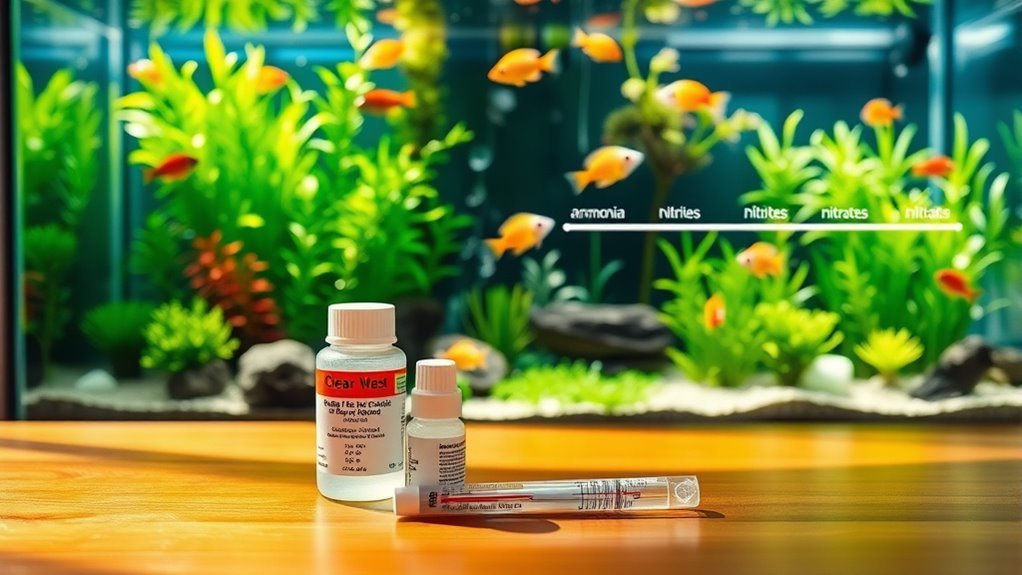
When you set up a new aquarium, understanding the nitrogen cycle is essential because it governs how harmful substances like ammonia transform into safer compounds through beneficial bacteria. This process relies on nitrifying bacteria that convert toxic ammonia first into nitrite, then into nitrate, which is less harmful.
The cycling timeline typically spans 4 to 8 weeks, depending on conditions and methods used.
During this time, you’ll notice ammonia levels rise initially, followed by a spike in nitrite. As nitrifying bacteria establish, both ammonia and nitrite levels drop to zero.
The cycle completes once these readings stay at zero within 24 hours of dosing.
Regularly monitoring your water parameters helps you track progress and know when your tank is fully cycled and safe for fish.
How to Choose Between Fishless and Fish-In Cycling
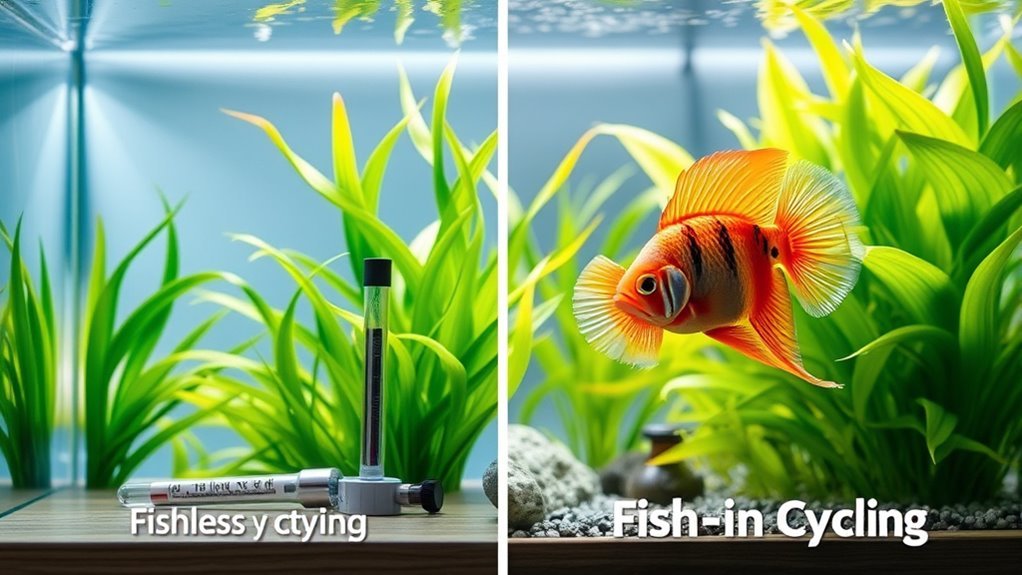
You’ll need to weigh the pros and cons of fishless and fish-in cycling to decide which fits your situation best.
Fishless cycling is safer for your fish but takes longer.
While fish-in cycling is faster but riskier.
Consider your experience level, patience, and the health of your aquatic pets before choosing a method.
Pros and Cons
How do you decide between fishless and fish-in cycling for your tank? Fishless cycling is safer because it establishes beneficial bacteria without exposing fish to toxic ammonia and nitrite spikes, ensuring better water quality. It typically takes 4-6 weeks but lets you control ammonia levels precisely, reducing risks.
On the other hand, fish-in cycling can be faster if managed carefully, but it increases the chance of stress or death due to harmful chemical spikes during the bacteria buildup.
While fish-in cycling might save time initially, it demands experience and constant monitoring to protect your fish.
Ultimately, you’ll weigh the safety and patience of fishless cycling against the quicker but riskier fish-in method to find what fits your setup and comfort level.
Suitability Factors
Choosing between fishless and fish-in cycling comes down to your experience and comfort level with managing water conditions.
If you’re new or want to avoid stressing fish, fishless cycling is your best bet. It uses bottled bacteria and ammonia, eliminating the risk of toxic spikes and the need for frequent water changes.
On the other hand, fish-in cycling requires you to carefully monitor ammonia and nitrite levels to keep hardy fish safe, which is more suitable if you’re experienced and patient.
This method involves more frequent water changes to maintain safe conditions, increasing stress risks for fish.
Ultimately, your choice hinges on how much effort you’re willing to invest and whether you want a safer, low-risk process or are comfortable managing the challenges of fish-in cycling.
Preparing Your Tank and Water for Cycling Success
Before adding water to your tank, always dechlorinate it with a water conditioner to eliminate harmful chlorine and chloramine. This step protects the beneficial bacteria essential for breaking down ammonia.
Next, adjust your water’s pH to between 7.3 and 8.0, creating an ideal environment for nitrifying bacteria to thrive.
Make certain your tank has plenty of filter media, such as ceramic noodles or bioballs, to provide surface area where bacteria can colonize effectively.
During cycling, regularly test ammonia, nitrite, and nitrate levels to track progress and guarantee safety.
- Use a reliable test kit to monitor water parameters.
- Dechlorinate water before adding it to the tank.
- Maintain excellent pH for bacterial growth.
- Provide ample filter media for bacteria colonization.
Adding Beneficial Bacteria and Biomedia for Cycling
To speed up cycling, start by choosing a reliable bottled bacteria with active nitrifiers to introduce into your tank.
Pair this with effective biomedia like ceramic noodles or bio-balls, which provide plenty of surface area for bacteria to grow.
Make sure you add ammonia afterward so the bacteria have food to establish and multiply quickly.
Choosing Effective Bacteria
Although cycling a fish tank naturally takes time, you can speed up the process by adding beneficial bacteria and biomedia. Choosing effective bacteria is key to a smooth cycling process. Start by selecting a bottled bacteria product that introduces nitrifying bacteria directly into your tank.
Next, add biomedia with a large surface area to support bacteria colonization. Using biomedia from an established aquarium can transfer existing beneficial bacteria, cutting down cycling time.
Make sure the bacteria and biomedia suit your tank’s pH and water conditions for ideal growth.
To keep your cycle stable, regularly supplement beneficial bacteria.
- Use trusted bottled beneficial bacteria like FritzZyme TurboStart
- Add biomedia such as ceramic noodles or bioballs
- Source biomedia from healthy, established tanks
- Match bacteria and biomedia to your tank’s conditions
Best Biomedia Options
Several types of biomedia can dramatically improve your fish tank’s cycling process by providing ideal surfaces for beneficial bacteria to thrive. Ceramic noodles, bioballs, live rock, and lava rock are excellent choices, offering plenty of porous areas for beneficial bacteria to colonize.
Porous biomedia speeds cycling by maximizing bacteria attachment and growth.
You can also use established biomedia from a healthy aquarium to introduce mature nitrifying bacteria, notably accelerating the process. Just make sure to clean new biomedia properly to remove debris without harming any beneficial bacteria already present.
Mixing different biomedia types promotes bacterial diversity, which strengthens your tank’s nitrogen cycle.
How to Dose Ammonia Safely and Effectively
Since dosing ammonia correctly is essential for establishing beneficial bacteria, you’ll want to use a safe source like ammonium chloride, such as Dr. Tims ammonium chloride. This avoids the toxic effects of fish waste and guarantees you control ammonia levels precisely.
When dosing, aim for 1-4 ppm ammonia, as this encourages bacteria growth without overwhelming your tank.
Keep these tips in mind:
- Measure ammonia carefully after each dose to hit your target concentration.
- Add ammonia gradually to avoid harmful spikes.
- Wait to re-dose until both ammonia and nitrite levels drop to zero, showing bacteria are processing waste.
- Maintain pH between 7.3–8.0 to help nitrifying bacteria convert ammonia efficiently.
Following these steps helps you build a strong bacterial colony for a healthy tank cycle.
Monitoring Ammonia, Nitrite, and Nitrate During Cycling
You’ll need to test ammonia, nitrite, and nitrate levels daily using reliable kits to track toxicity during cycling.
Make sure ammonia and nitrite drop to zero within 24 hours after dosing before adding more ammonia.
Keeping detailed records helps you see when beneficial bacteria are thriving and when to adjust your schedule.
Tracking Toxicity Levels
Although cycling a fish tank might seem straightforward, tracking toxicity levels is essential to guarantee a healthy environment for your fish. You’ll need a reliable test kit to regularly check ammonia, nitrite, and nitrate.
Initially, ammonia and nitrite levels will rise, then drop as beneficial bacteria develop.
Nitrate increases later but only measure it once ammonia and nitrite hit zero. Keep detailed records to notice trends and verify the cycle is progressing well.
- Use your test kit to measure ammonia levels daily.
- Expect ammonia and nitrite to spike then fall to zero.
- Only dose ammonia again after both ammonia and nitrite reach zero.
- Track nitrate levels after confirming ammonia and nitrite are gone.
This careful monitoring helps you maintain a safe tank for your fish.
Testing Schedule Guidelines
How often should you test your water during the fish tank cycling process? You should test ammonia, nitrite, and nitrate levels at least once daily during the initial stages. This testing schedule helps you monitor progress accurately and catch any issues early. Use reliable test kits or digital testers for precise readings.
Record your test results consistently to track trends and know when ammonia and nitrite drop to zero within 24 hours of dosing. If you see unexpected spikes in ammonia or nitrite, increase your testing frequency immediately.
Always wait until ammonia and nitrite readings are consistently zero before adding more ammonia to continue cycling.
Sticking to this testing schedule guarantees a safe environment for your fish once cycling finishes.
When and How to Re-Dose Ammonia Throughout Cycling
Once both ammonia and nitrite levels drop to zero, you can safely re-dose ammonia to keep the beneficial bacteria thriving. This step guarantees the cycle continues smoothly as bacteria convert ammonia to nitrate.
Before adding more ammonia, wait at least 24 hours after confirming zero readings to avoid overwhelming your tank’s bacteria.
Remember not to re-dose ammonia if nitrite is above 2 ppm, since the cycle still needs time to stabilize.
Keep these tips in mind when you re-dose ammonia:
- Use a consistent dose, typically 1-4 ppm, for stable bacterial growth
- Avoid fluctuating ammonia levels to prevent cycling delays
- Re-dose only after confirming both ammonia and nitrite are zero
- Continue dosing periodically until ammonia and nitrite clear within 24 hours
This approach helps your tank complete the cycle efficiently.
Troubleshooting Common Cycling Problems and Delays
Maintaining stable ammonia and nitrite levels is key to cycling your tank, but sometimes the process stalls or takes longer than expected. If ammonia or nitrite levels stay high after weeks, check you’re not overfeeding—excess waste can still cause problems by overwhelming bacteria.
Also, improper use or insufficient amounts of beneficial bacteria products can delay cycling; follow instructions carefully and consider adding mature filter media.
Confirm your pH stays between 7.3 and 8.0, as outside this range, bacteria struggle to thrive.
Using tap water with chloramine without detoxifying it will kill nitrifiers and stall progress.
Lastly, a lack of sufficient surface area for bacteria colonization can still cause delays, so add bio-balls or ceramic noodles to boost bacterial growth.
How to Know When Your Aquarium Is Fully Cycled
Although cycling a fish tank can take time, you’ll know it’s fully cycled when ammonia and nitrite levels drop to zero within 24 hours after dosing. This means the nitrifying bacteria are efficiently processing waste, completing the nitrogen cycle.
A fish tank is fully cycled when ammonia and nitrite drop to zero within 24 hours after dosing.
To make sure your aquarium is fully cycled, watch for these signs:
- Ammonia and nitrite remain consistently at zero over several days
- Nitrate levels stay stable and non-toxic
- No spikes in ammonia or nitrite during routine testing
- Rapid conversion of re-dosed ammonia to nitrate within 24 hours
When these conditions are met, your tank’s beneficial bacteria can handle a full bioload without harmful buildup. This confirms your nitrogen cycle is established and your aquarium is ready for healthy fish.
Frequently Asked Questions
How Do You Cycle a Fish Tank for Beginners?
You start by adding beneficial bacteria or fish food to produce ammonia, then test daily for ammonia, nitrite, and nitrate.
Keep dosing ammonia, avoid water changes, and wait until ammonia and nitrite stay zero before adding fish.
How to Instantly Cycle an Aquarium?
Want to instantly cycle your aquarium? Start by adding established filter media or a powerful nitrifying bacteria product.
Then, optimize water conditions, test regularly, and watch as ammonia disappears faster than you expected—your tank cycles quickly!
How Fast Can I Cycle a Fish Tank?
You can cycle your fish tank in as little as 2 to 4 weeks using fishless methods with bottled bacteria.
Fish-in cycling takes longer, about 6 to 8 weeks, depending on temperature, pH, and monitoring ammonia levels closely.
Can I Cycle a Tank in 3 Days?
You can’t rush cycling a tank in 3 days—it’s like baking bread: you can’t skip the rising time.
Beneficial bacteria need weeks to grow, so trying to speed it up risks harming your fish with toxins.
Conclusion
Cycling your fish tank is like planting a garden—you’re nurturing tiny life forces that create a balanced, thriving ecosystem. With patience and care, you watch ammonia and nitrites fade like shadows at dawn, making way for clear, healthy waters.
Remember, this process sets the foundation for your aquatic friends’ new home. Stay attentive, trust the cycle, and soon you’ll see your tank bloom with vibrant life, a true underwater sanctuary you’ve lovingly cultivated. Following these steps to cycle your fish tank ensures a safe and stable environment for your fish to thrive.