How Long Can Fish Go Without Food?
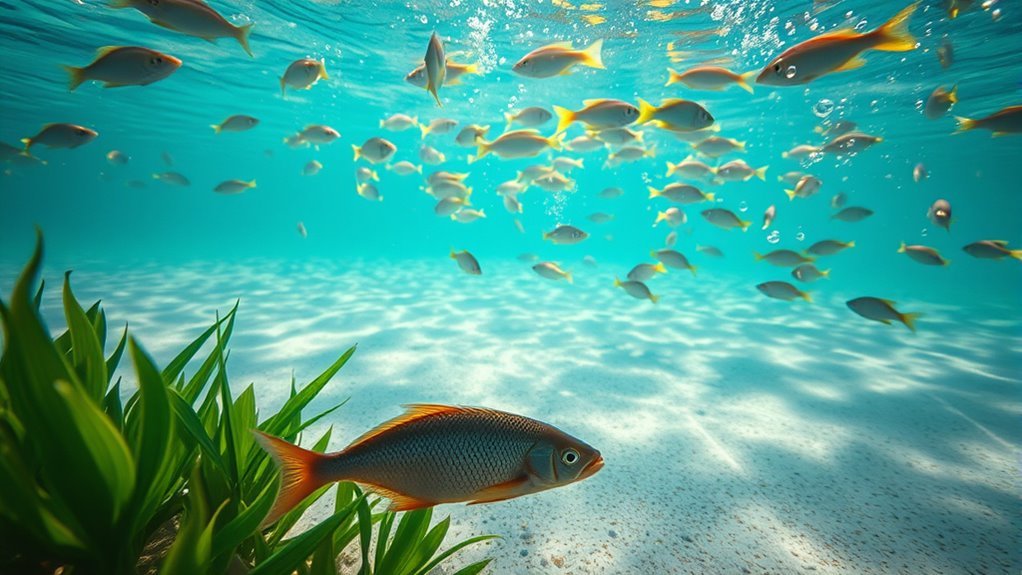
You can leave most healthy adult fish without food for three to five days safely. Knowing how long fish can go without food is important for their care and well-being. Coldwater species or larger fish can handle up to two weeks due to slower metabolisms.
Keep in mind, warmer water speeds metabolism, reducing their fasting tolerance. Watch for signs like increased activity or lethargy that signal hunger or stress. Planning feeding carefully when you’re away helps keep your fish healthy and water stable.
There’s more to take into account about size, health, and temperature factors to guarantee their well-being. Understanding these elements ensures your fish remain in good condition even during fasting periods.
How Long Can Fish Go Without Food?
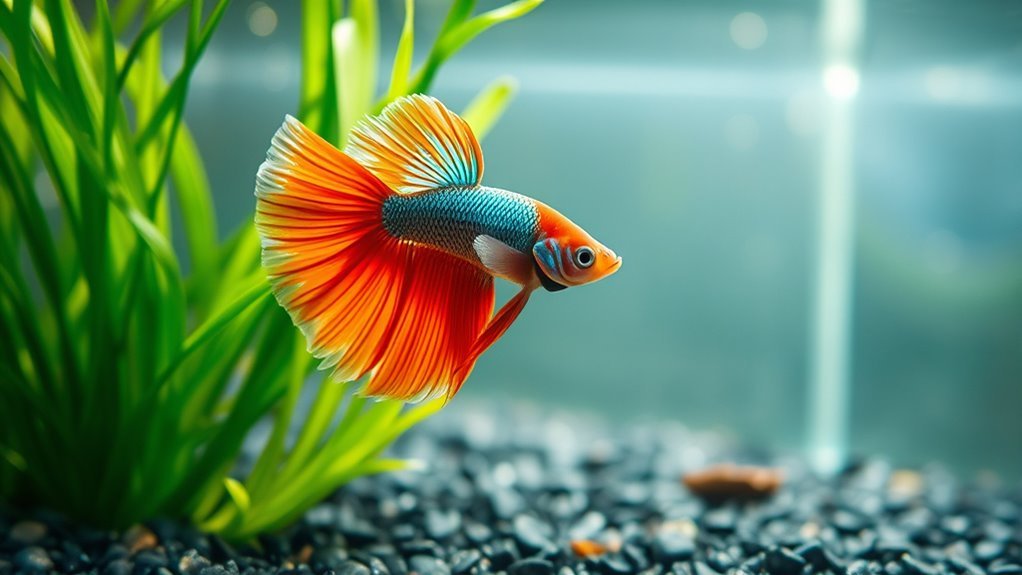
Although it varies by species and conditions, most healthy adult fish can go without food for about 3 to 5 days. You might wonder how long can fish survive when left unfed.
Some fish, especially those with slower metabolic rates like coldwater species, can survive longer without food, sometimes up to 10 or 14 days.
Coldwater fish with slower metabolisms may survive without food for up to two weeks.
However, extended fasting isn’t ideal for keeping your fish healthy. The quality of water plays a critical role; well-maintained tanks with natural microbial life can help fish survive longer without eating.
Still, going beyond two weeks without feeding risks health deterioration.
What Affects Fish Fasting Duration? (Size, Age, Health, Temperature)
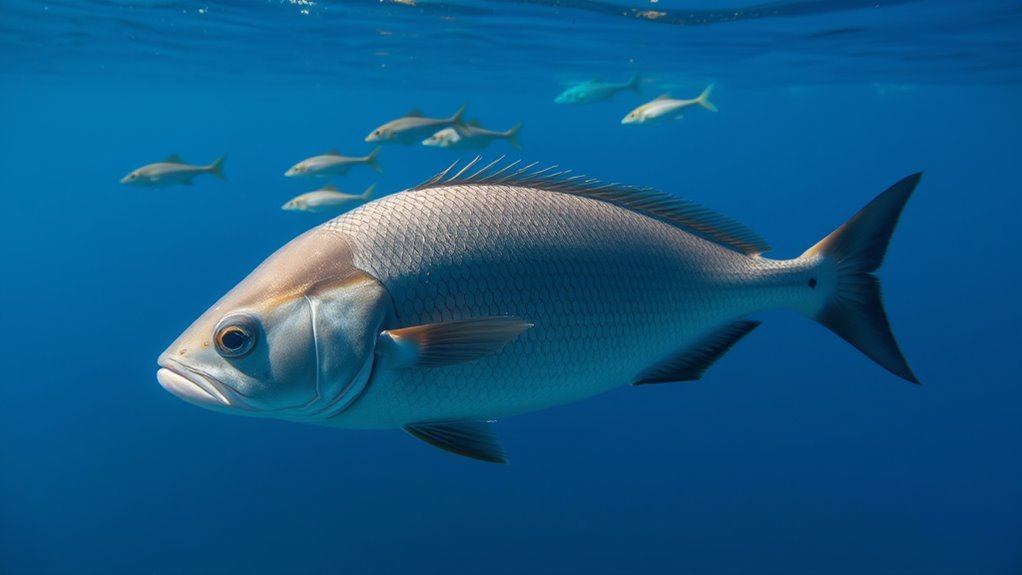
Because fasting tolerance varies widely among fish, several key factors influence how long your fish can go without food. Fish size and age directly affect metabolism; smaller or younger fish need more frequent feeding and have shorter fasting durations. Fish health plays a crucial role, as healthy fish withstand fasting better than stressed or sick ones.
Water temperature also impacts fasting tolerance—higher temperatures boost metabolism, reducing how long fish can fast. Additionally, fish species and aquarium conditions shape fasting duration, with coldwater or larger species generally enduring longer fasts.
| Factor | Effect on Fasting Duration |
|---|---|
| Fish Size & Age | Smaller/younger fish fast less time |
| Health | Healthy fish tolerate fasting longer |
| Water Temperature | Higher temps shorten fasting duration |
Signs Your Fish Are Hungry or Stressed
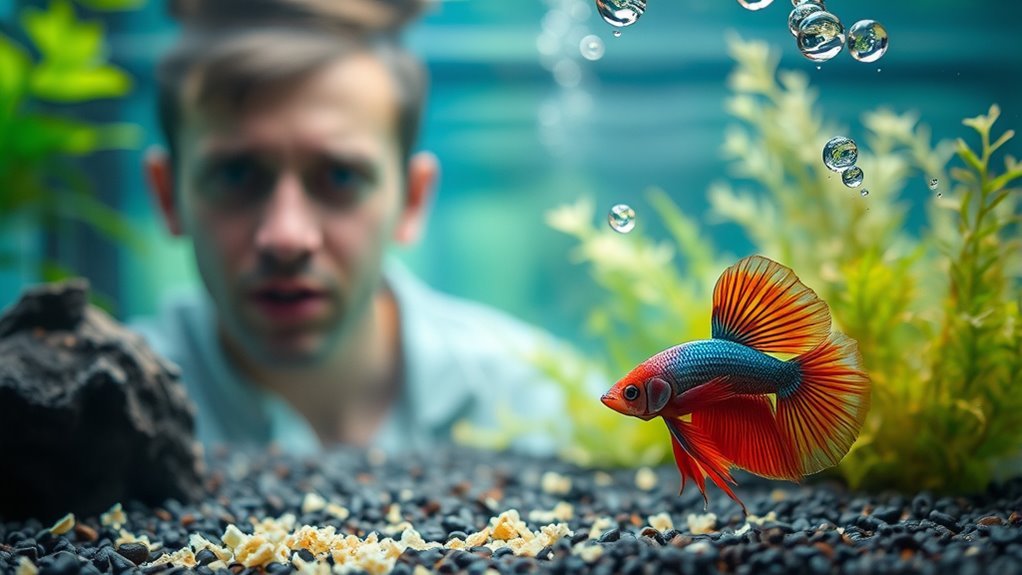
Understanding how factors like size, health, and temperature affect your fish’s fasting tolerance helps you recognize when they might be struggling.
You’ll notice hunger signs through increased activity level, such as darting around or actively searching for food. Conversely, fish stress may show as behavior change like hiding behavior, lethargy, or reduced movement.
Pay attention to unusual swimming patterns—erratic or spiraling motions often signal discomfort or hunger. Loss of coloration or a pale appearance can indicate malnutrition or stress indicators.
If your fish suddenly become sluggish or hide more frequently, it’s a warning they’re not thriving.
Recognizing these signs early helps prevent prolonged fasting effects, keeping your fish healthy and responsive to their needs.
Best Feeding Practices When You’re Away
When you plan to be away, preparing a reliable feeding routine is essential to keep your fish healthy and stress-free. Good feeding practices guarantee your fish stay well-nourished and maintain stable water quality in your absence. Here’s what you can do:
Planning a reliable feeding routine is key to keeping your fish healthy and stress-free while you’re away.
- Use automatic feeders set to dispense small amounts of fish food for up to a week. Test them before leaving to avoid overfeeding or missed meals.
- For short trips, vacation feeders that dissolve slowly provide a steady food source without risking water contamination.
- If you’ll be gone longer without food for your fish, assign a trusted sitter or hire a professional experienced in fish care. Leave clear instructions and perform a partial water change beforehand to support healthy fish and tank conditions.
These steps help guarantee your fish thrive while you’re away.
How Water Temperature Impacts Fish Feeding Needs
Although water temperature might seem like a simple factor, it plays a crucial role in how often your fish need to eat. The water temperature impact on fish metabolism is significant: warmer water speeds up metabolism, increasing digestion rate and fish activity.
This means tropical fish in warmer water (above 75°F) have higher feeding needs and lower fasting tolerance.
In contrast, cooler water slows digestion and activity, allowing fish to survive longer without food. Maintaining stable, ideal water temperatures helps fish preserve energy reserves, extending their fasting tolerance.
Sudden fluctuations in water temperature can stress your fish and reduce their ability to endure fasting periods.
Frequently Asked Questions
How Long Can Fish Live With No Food?
You can expect most fish to live without food for about 3 to 5 days, though some species and conditions let them last up to two weeks.
Keep them comfortable to help them endure longer fasting.
What Is the 10 Minute Rule for Fish?
Wondering what the 10 minute rule for fish is? It means you should feed your fish only what they can eat within 10 minutes, then remove leftover food to keep their tank clean and healthy.
Do Fish Have to Be Fed Every Day?
You don’t have to feed fish every day. Many fish do fine with feeding every other day or less, which helps maintain water quality and supports their natural eating habits.
Just avoid overfeeding to keep them healthy.
How Does a Fish Act Before It Dies?
You’ll notice your fish act lethargic, lose color, and swim erratically. It might stop eating, float near the surface, and ignore your presence.
When it’s near death, it loses reflexes and appears weak.
Conclusion
You might think your fish will starve in hours without food, but they’re tougher than you imagine! Fish can often go days, even weeks, without a meal if conditions are right.
Still, don’t push their limits—stress and poor water temperature can turn a simple fast into a disaster. So, plan ahead, keep their environment cozy, and remember:
your fish are surprisingly resilient, but they’re counting on you to keep them happy and healthy! Understanding how long fish can go without food will help you provide the best care possible.