
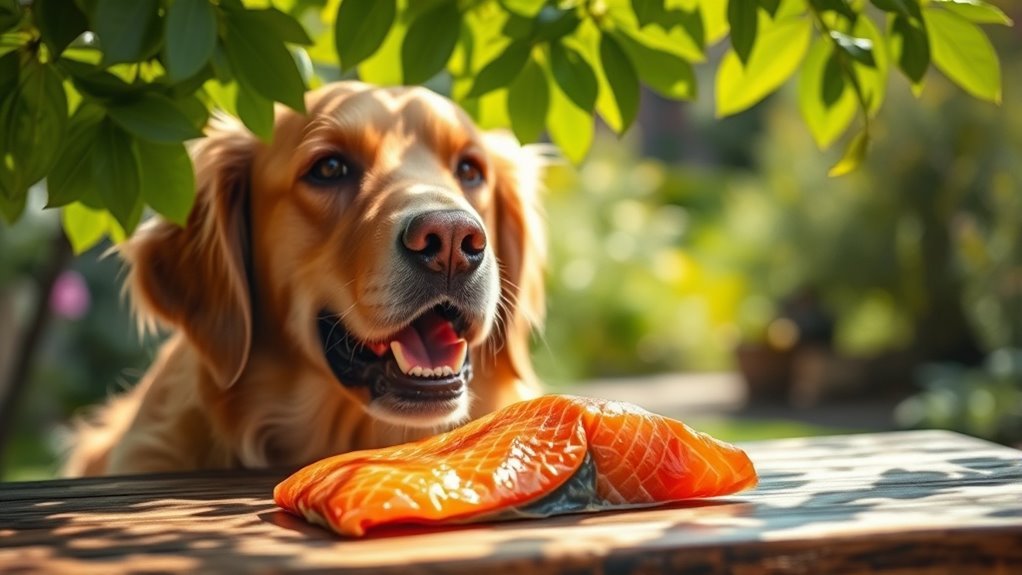
Can Dogs Eat Salmon Fish Skin?
Yes, your dog can eat salmon fish skin if it’s properly cooked and free from seasonings or additives. Salmon fish skin is rich in omega-3 fatty acids and protein, which support your dog’s skin, coat, and overall health. Make sure to bake, grill, or dehydrate it thoroughly, removing all bones and serving it in small, manageable pieces.
However, be cautious of parasites and contaminants. Proper preparation is essential to keep your furry friend safe. Keep going to discover how to prepare, serve, and source salmon skin safely for your dog.
Is Salmon Skin Safe for Your Dog?
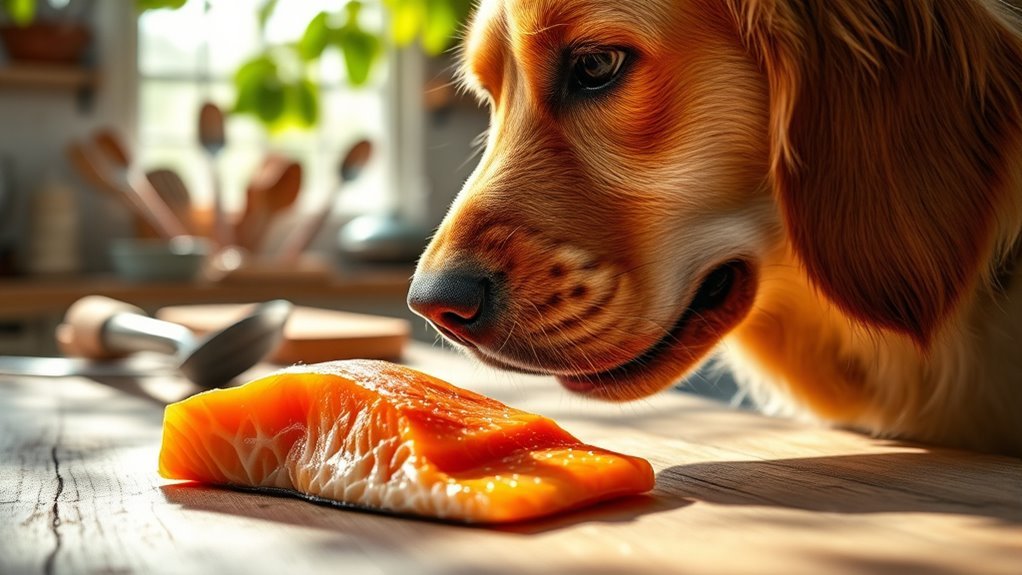
Although salmon skin can be a healthy treat for your dog, you must guarantee it’s thoroughly cooked and free from seasonings or additives. Salmon skin is safe for dogs only when properly prepared, as raw or undercooked salmon skin may contain parasites that cause serious health issues like salmon poisoning disease.
You should avoid giving your dog salmon skin with small bones or cooked with spices, garlic, or butter, since these can lead to choking hazards or toxicity. Always serve salmon skin plain and in moderation, and supervise your dog while they chew to ensure safety.
How Does Salmon Skin Benefit Your Dog’s Health?
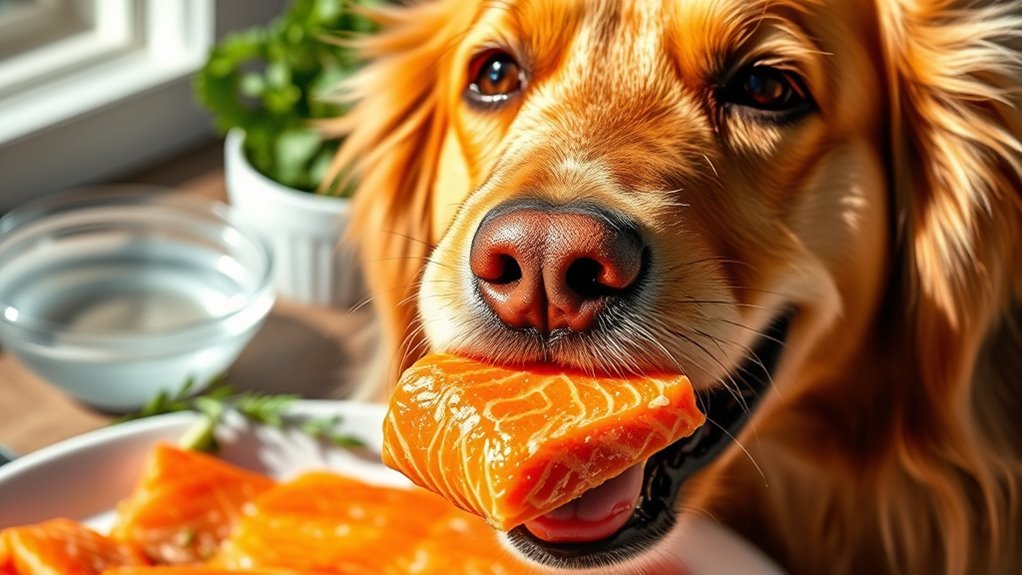
When you include salmon skin in your dog’s diet, you provide a powerhouse of nutrients that support their overall health. Salmon skin is packed with omega-3 fatty acids, which play an essential role in promoting skin health by reducing inflammation and improving hydration. These healthy fats help your dog maintain a shiny coat and can ease dry, flaky skin.
Beyond skin health, salmon skin offers high-quality protein essential for muscle maintenance and overall bodily functions. It also contains important vitamins and minerals like B12, selenium, and zinc, which boost immune health and energy levels.
Regularly feeding salmon skin can support joint health and cognitive function, thanks to its rich nutritional benefits, making it a smart addition to your dog’s diet.
What Risks Should You Know Before Feeding Salmon Skin?

Before feeding your dog salmon skin, you need to be aware of potential parasite risks and toxic contaminants that can harm their health. Proper preparation and storage are essential to keep the salmon skin safe and free from harmful bacteria or additives.
Taking these precautions helps protect your dog from serious illnesses linked to salmon skin consumption.
Parasite Risks In Salmon
Why should you be cautious about feeding your dog salmon skin? Salmon can carry parasite risks, especially Neorickettsia helminthoeca, which causes salmon poisoning disease in dogs. If your dog eats raw salmon skin, it’s at risk of contracting this serious illness, leading to vomiting, diarrhea, and lethargy.
To reduce these risks, freezing salmon at -4°F (-20°C) for at least 24 hours helps kill parasites. However, freezing salmon may not eliminate all toxins, so it’s important to handle the fish properly.
Always avoid feeding your dog raw or undercooked salmon skin. Instead, confirm it’s thoroughly cooked or properly frozen before offering it to your dog to minimize the chances of parasite infection and keep your furry friend safe.
Toxic Contaminants Concerns
Although salmon skin can be a tasty treat for your dog, you need to be aware that it may contain harmful contaminants like mercury, PCBs, and dioxins. These toxins often accumulate more in larger fish and farmed salmon, which are generally more exposed to pollution and antibiotics than wild-caught varieties.
While freezing salmon skin helps kill parasites, it doesn’t remove these chemical contaminants.
Feeding your dog contaminated salmon skin regularly can lead to toxin buildup and health risks over time.
So, before offering salmon skin as a snack, consider the source carefully and be mindful of potential contaminants.
Understanding these risks will help you protect your dog from both parasites and harmful toxins found in some salmon skin.
Proper Preparation Importance
When you decide to give your dog salmon skin, proper preparation is essential to avoid health risks like parasites, salmon poisoning, and harmful additives.
Raw or undercooked salmon skin can carry parasites and lead to salmon poisoning disease, so cooking it thoroughly at 325°F for 20-30 minutes helps eliminate these dangers.
You also need to avoid parasites by ensuring the salmon skin is fresh and properly stored to prevent bacterial growth.
Never feed seasoned or salted salmon skin, as additives like garlic and spices are toxic to dogs.
Serving small, boneless, and unseasoned portions minimizes choking hazards and digestive upset.
How to Prepare and Serve Salmon Skin Safely
You’ll want to cook salmon skin thoroughly by baking, grilling, or dehydrating to keep your dog safe from parasites.
Serve it in small, bite-sized pieces that match your dog’s size and never add seasonings or harmful ingredients like garlic or salt.
Making these simple adjustments helps guarantee your furry friend enjoys a tasty and safe treat.
Cooking Methods To Use
Because salmon skin can carry parasites and small bones, you must cook it thoroughly before offering it to your dog. Baking salmon skin at 325°F for 20-30 minutes until crispy is a reliable method to guarantee safe dog-safe preparation.
You can also use a food dehydrator to make chewy salmon skin treats without adding any oil or seasonings. Avoid frying or using butter, garlic, or onion, as these can harm your dog.
After cooking, let the skin cool completely, then carefully remove any small bones and cut it into bite-sized pieces to prevent choking. Properly cooked salmon skin is a nutritious, tasty treat when prepared correctly, so focus on these safe cooking methods to keep your furry friend healthy and happy.
Portion Control Guidelines
After cooking salmon skin thoroughly and removing any small bones, it’s important to serve it in appropriate portions to keep your dog safe and healthy. Follow portion control by offering small amounts based on your dog’s size—1 to 2 small pieces for small dogs, and up to 4 pieces weekly for larger breeds.
Always let the salmon skin cool completely before feeding to avoid burns.
Stick to feeding guidelines that recommend gradually introducing salmon skin into your dog’s diet while monitoring for any digestive issues. Use safe cooking methods like baking or dehydrating, and avoid seasoning.
Avoiding Harmful Additives
How can you guarantee the salmon skin you give your dog is truly safe? Start by cooking it thoroughly—bake, grill, or dehydrate without any seasonings or salt. This eliminates parasites and reduces harmful fats.
Always remove spices, garlic, onions, or artificial flavorings before serving, as these toxins can be dangerous to dogs. Use only plain, unseasoned salmon skin, avoiding oils or marinades that contain harmful additives or excessive salt.
After cooking, practice proper storage by keeping the salmon skin in airtight containers and refrigerating or freezing it promptly to prevent spoilage and bacterial growth.
Finally, cut the skin into small, manageable portions suitable for your dog’s size to ensure safe consumption and avoid choking hazards.
Following these steps keeps your furry friend safe and healthy.
How Much Salmon Skin Can You Give Your Dog?
While salmon skin can be a tasty treat for your dog, you should limit the amount based on their size to keep them safe and healthy. Portion sizes matter to guarantee your dog enjoys salmon skin without any health risks.
For small dogs (2–20 lbs), 1–2 small pieces per week are safe. Medium dogs (21–50 lbs) can have 2–3 pieces weekly, while large dogs (51–90 lbs) may get up to 4 pieces. Extra-large dogs over 90 lbs can tolerate 4–6 pieces per week.
Always remember to introduce salmon skin gradually and consult your veterinarian before increasing portion sizes or making it a regular treat. Keeping portions appropriate helps your dog benefit safely from this flavorful snack.
Where to Find Quality Salmon Skin Treats
If you want to give your dog the best salmon skin treats, start by choosing products made from wild-caught salmon to guarantee higher quality and fewer contaminants.
To find quality salmon skin treats, focus on these key points:
- Look for dehydrated or air-dried salmon skin without added preservatives, salts, or artificial flavors to assure natural goodness.
- Select single-ingredient treats made solely from salmon skin for purity and safety.
- Buy from reputable brands sourcing wild-caught salmon sustainably and verifying their products through customer reviews and certifications.
Frequently Asked Questions
What Happens if My Dog Eats Salmon Skin?
If your dog eats salmon skin, they might be fine if it’s cooked and plain, but raw or seasoned skin could cause upset or illness.
Watch for vomiting or diarrhea and contact your vet if symptoms appear.
What Taste Do Dogs Love the Most?
You know what they say, “Variety is the spice of life.” Your dog loves savory, smoky flavors, especially rich, oily tastes like salmon skin, which satisfy their natural cravings and keep them happily chewing and licking for more.
Why Can’t Dogs Have Mashed Potatoes?
You shouldn’t feed dogs mashed potatoes because they contain high starch, added fats, and seasonings that upset digestion.
Dogs also can’t properly break down potatoes, risking bloating, toxicity, and long-term health issues like obesity or pancreatitis.
Are Bananas Good for a Diabetic Dog?
Wondering if bananas can be a sweet treat for your diabetic dog? They can help with fiber, but you shouldn’t overdo it.
Always check with your vet first to keep your pup’s health on track.
Conclusion
Feeding your dog salmon skin can be like offering a treasure chest of health, packed with omega-3s that shine like a beacon for their coat and heart. But remember, not all that glitters is gold—watch for bones and seasoning that could turn this treat into a stormy sea.
By preparing salmon skin carefully and in moderation, you’re giving your furry friend a delicious gift that dances with flavor and wellness.
In conclusion, salmon fish skin can be a healthy addition to your dog’s diet when served properly. Always ensure it is free of bones and seasoning to keep your pet safe and happy.