
Why Does My Dog’s Breath Smell Like Fish?
If your dog’s breath smells like fish, it could be due to dental issues, impacted anal glands, or a diet high in fish-based ingredients. Dental disease causes bacteria that release foul sulfur compounds, while anal gland problems produce a strong fishy odor. Certain diets and internal health problems may also contribute.
Taking care of their teeth, glands, and food can help freshen breath. Keep going to uncover the key steps to manage and prevent this unpleasant smell.
What Causes a Dog’s Breath to Smell Like Fish?
If your dog’s breath smells like fish, it could be a sign of several underlying issues. One common cause is impacted or infected anal glands, which release a distinct fishy odor.
Dental disease also plays a big role; plaque buildup and tartar produce sulfur compounds that lead to fishy breath.
Dental disease causes plaque and tartar buildup, releasing sulfur compounds that result in fishy breath.
Your dog’s diet might contribute too—foods rich in fish or fish-based ingredients can cause a fishy odor during digestion.
Gastrointestinal issues, like acid reflux or imbalances in gut bacteria, often result in digestive problems that affect breath quality.
Systemic health concerns, such as kidney or liver disease, can further cause a fishy or ammonia-like smell.
Understanding these factors helps you identify why your dog may have persistent fishy breath.
When Does Fishy Dog Breath Signal a Health Problem?
If your dog’s fishy breath sticks around or worsens, especially with symptoms like red gums or scooting, it could mean a health problem.
Common causes range from dental disease to more serious issues like kidney or liver trouble.
Don’t wait—if you notice sudden changes or other signs like vomiting or lethargy, it’s time to see your vet.
Recognizing Concerning Symptoms
When your dog’s breath carries a persistent fishy odor that worsens or comes with symptoms like vomiting, diarrhea, or weight loss, it’s a clear sign you should seek veterinary care.
Fishy breath paired with behavioral changes such as lethargy or a reduced appetite often points to systemic health issues or infections.
You might also notice signs of dental disease or anal gland problems, which can contribute to the odor.
Watch for these concerning symptoms:
- Excessive licking or swelling near the anal sacs
- Scooting or discomfort around the anus
- Persistent vomiting or diarrhea
- Respiratory issues like coughing or difficulty breathing
Recognizing these signs early helps prompt veterinary evaluation, ensuring your dog gets the care needed to address underlying health problems.
Common Health-Related Causes
Although occasional bad breath is normal, persistent fishy breath in your dog often signals underlying health problems like dental disease, anal gland issues, or systemic conditions such as kidney or liver disease.
Fishy breath can result from plaque buildup leading to dental disease or from anal gland problems causing infections. These underlying health issues may also indicate systemic infections affecting your dog’s overall health.
If your dog’s breath smells fishy and you notice signs like red gums or scooting, it’s time for a veterinary evaluation.
Kidney disease, for example, can cause a distinct fishy or ammonia-like odor in breath.
Maintaining good oral hygiene helps, but persistent fishy breath often points to deeper problems requiring prompt professional attention to prevent serious complications.
When To Seek Help
Persistent fishy breath in your dog often signals more than just a minor issue and should prompt you to watch for other warning signs. When persistent fishy breath appears alongside symptoms like oral discomfort or behavioral changes, it’s time to seek help. Ignoring these signs can allow an underlying health problem to worsen.
Look out for:
- Difficulty eating, drooling, or other signs of dental disease
- Vomiting, diarrhea, or lethargy indicating gastrointestinal issues
- Increased thirst, urination, or other signs of systemic illness
- Scooting, licking, or swelling around the anal glands
If you notice any of these, don’t hesitate to get veterinary attention. Early diagnosis can prevent serious complications and ensure your dog’s health stays on track.
How Dental Disease Leads to Fishy Dog Breath
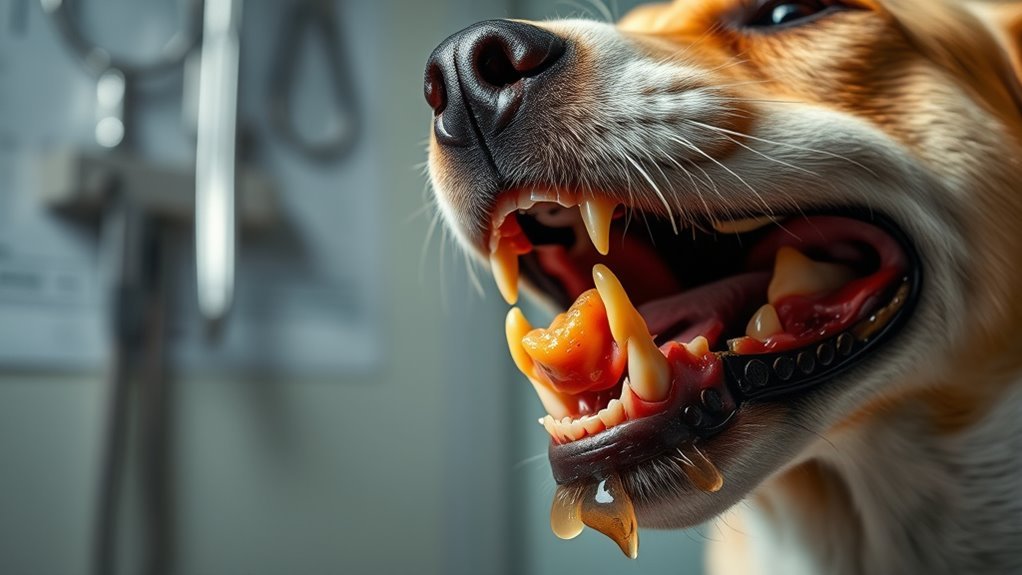
When plaque and tartar build up on your dog’s teeth, they create the perfect spot for bacteria to grow. These bacteria produce sulfur compounds that cause that strong fishy smell in your dog’s breath.
Keeping your dog’s teeth clean helps stop these odor-causing bacteria from taking over.
Plaque And Tartar
Because plaque starts forming on your dog’s teeth within hours of eating, it’s important to address it quickly. Plaque is a sticky film that harbors bacterial growth, which produces sulfur compounds causing bad breath with a fishy smell.
If plaque isn’t removed, it hardens into tartar—a yellow or brown buildup along the gumline. This tartar buildup can lead to gum inflammation and progress to periodontal disease, worsening your dog’s breath and oral health.
To help prevent plaque and tartar problems, focus on:
- Regular brushing to remove plaque early
- Scheduling professional dental cleanings
- Maintaining good oral hygiene consistently
- Monitoring for signs of gum inflammation or tartar buildup
Keeping up with these steps helps reduce bad breath and protects your dog’s dental health.
Bacterial Odor Compounds
As plaque and tartar build up on your dog’s teeth, they create an environment where odor-causing bacteria thrive. This bacterial buildup leads to gingivitis and periodontal infection, which further encourage bacterial proliferation.
These bacteria produce sulfur-containing compounds, specifically volatile sulfur compounds like methyl mercaptan and hydrogen sulfide. These bacterial odor compounds are the main culprits behind your dog’s fishy breath.
The bacterial metabolites released during this process emit foul smells that you notice.
Without proper dental care, plaque and tartar continue to accumulate, allowing bacteria to multiply and intensify the odor. Regular brushing and professional cleanings reduce bacterial populations, limiting the production of these volatile sulfur compounds and improving your dog’s breath.
Understanding bacterial odor compounds helps you tackle the root cause of fishy dog breath effectively.
How Anal Gland Problems Cause Fishy Dog Breath
If your dog’s breath suddenly develops a strong fishy smell, anal gland problems might be the cause. The anal glands produce a fishy-smelling fluid that can transfer odor to your dog’s breath when the glands are impacted or infected.
This fishy dog breath often signals underlying anal gland problems that need attention. You might notice symptoms like swelling, discomfort, or your dog scooting and licking its rear.
Fishy breath can indicate anal gland issues like swelling, discomfort, or your dog scooting and licking its rear.
If untreated, these issues can worsen, potentially causing abscesses.
Watch for signs of anal gland issues:
- Impacted glands causing persistent fishy odor
- Infection leading to swelling and pain
- Odor transfer from full or irritated anal glands
- Relief through veterinary expression to prevent abscesses
Addressing anal gland problems promptly helps keep your dog comfortable and odor-free.
How Diet Affects Fishy Dog Breath
When your dog’s diet includes fish-based ingredients or high levels of omega-3 fatty acids, you might notice a persistent fishy smell in their breath. High-protein diets rich in fish can produce nitrogen compounds, like trimethylamine, that contribute to that fishy smell.
Poor food quality or processed diets with artificial preservatives can cause digestive upset, worsening your dog’s breath. Dietary imbalances or food intolerances may disrupt gut bacteria, further intensifying the odor.
To improve your dog’s breath, focus on feeding high-quality, minimally processed foods with natural ingredients. These support a balanced gut environment and reduce digestive issues.
Paying attention to your dog’s diet is key to managing fishy breath caused by what they eat.
How to Improve Your Dog’s Breath With Dental Care
Although diet plays a big role, you can greatly improve your dog’s breath by maintaining a consistent dental care routine. Regular brushing with canine-specific toothpaste helps reduce plaque, the main culprit behind bad breath.
Scheduling professional cleanings removes tartar and bacteria, preventing dental disease and keeping your dog’s breath fresh.
Dental chews support oral health by mechanically scraping off plaque, while water additives inhibit bacteria between brushings. To boost your dog’s dental hygiene and enjoy fresh breath, try these tips:
- Brush your dog’s teeth daily with dog-safe toothpaste
- Use dental chews to reduce plaque buildup
- Schedule regular professional cleanings with your vet
- Add water additives designed for oral health
Consistent dental care is key to preventing bad breath and maintaining overall oral health.
How to Manage Anal Gland Health for Fresh Breath
Because your dog’s anal glands play a role in scent communication, issues with these glands can cause a strong fishy odor that sometimes affects their breath.
Impacted glands or infection can lead to swelling, scooting, and a foul odor that’s hard to ignore.
To manage anal gland health, watch for signs of anal gland issues like licking or biting near the rear.
Regular expression by a veterinarian or groomer helps prevent impaction and reduces odor.
If you notice swelling or persistent foul odor, seek veterinary care promptly to avoid infection.
Keeping your dog’s glands healthy stops the fishy smell from transferring to their breath, ensuring your furry friend stays comfortable and odor-free.
Diet Tips for Fresh Breath and Healthy Digestion
Improving your dog’s diet can play a major role in combating bad breath linked to digestive issues. If your dog’s breath has a fishy odor, focusing on diet tips that promote healthy digestion and gut health is essential. Feeding a balanced diet with real, minimally processed ingredients supports fresh breath and reduces digestion issues.
Incorporate probiotics with at least 80 million CFU per pound to eliminate odor-causing bacteria. Avoid artificial fillers and mystery meats that disrupt gut health.
- Choose single-source protein diets tailored to your dog’s sensitivities
- Include adequate fiber and hydration for better digestion
- Add probiotics to enhance gut health
- Avoid artificial preservatives and fillers
Good oral care combined with these diet tips can considerably improve your dog’s breath and overall wellbeing.
Frequently Asked Questions
Should I Be Worried if My Dog’s Breath Smells Like Fish?
You should be cautious if your dog’s breath smells like fish, especially if it’s persistent or worsens.
Check for other symptoms and visit your vet to rule out dental issues or serious health problems like kidney or liver disease.
What Can I Give My Dog to Get Rid of Fishy Breath?
You can give your dog dental chews, water additives, and canine toothpaste to freshen breath.
Regularly brushing their teeth and scheduling professional cleanings will help reduce bacteria and eliminate that fishy smell effectively over time.
What Dog Breeds Are Prone to Fishy Breath?
You might think all dogs are the same, but small breeds like Chihuahuas, brachycephalic ones like Bulldogs, and curly-coated dogs like Shih Tzus are more prone to fishy breath due to their unique dental and health issues.
Their distinct mouth shapes and dental structures can trap food and bacteria more easily. This buildup often leads to bad breath that smells fishy.
Regular dental care is especially important for these breeds to keep their breath fresh and their mouths healthy.
Is Fishy Dog Breath a Dental Problem?
Yes, fishy dog breath usually signals a dental problem. You’ll want to check for plaque, gum disease, or infections, and keep up with regular brushing and vet cleanings to prevent bad odors and maintain your dog’s oral health.
Conclusion
When your dog’s breath smells like fish, don’t just brush it off—“an ounce of prevention is worth a pound of cure.” Fishy breath can hint at dental issues, anal gland problems, or diet imbalances.
You can keep your pup’s breath fresh by maintaining good dental care, managing anal gland health, and feeding a balanced diet.
Stay proactive, and your furry friend will thank you with happier, healthier kisses every day. Remember, addressing fishy breath in dogs early helps ensure their overall health and well-being.