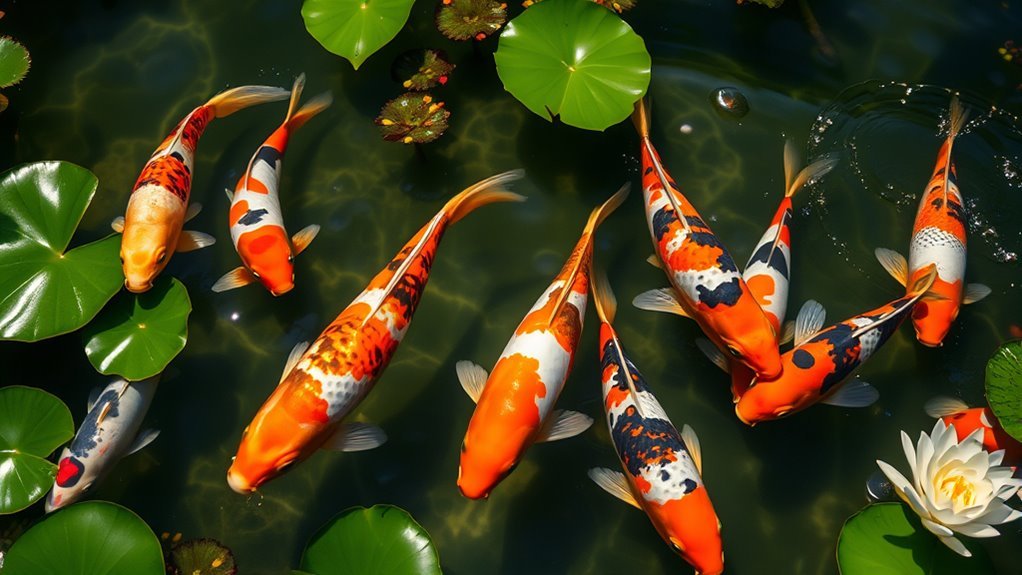
What Will Koi Fish Eat for a Healthy Diet?
You should feed your koi high-quality pellets packed with 30-40% protein, tailored for their age and the season. Providing a balanced koi fish diet is essential for their vibrant health and growth.
In warmer months, increase feeding with protein-rich pellets; during cooler times, reduce or switch to easily digestible foods like wheat germ. Offer occasional treats like shrimp, krill, or safe fruits and veggies in moderation.
Avoid overfeeding to keep water clean and fish healthy. Keep these basics in mind, and you’ll find the best ways to support your koi’s vibrant health.
What Are the Best Staple Foods for Koi?
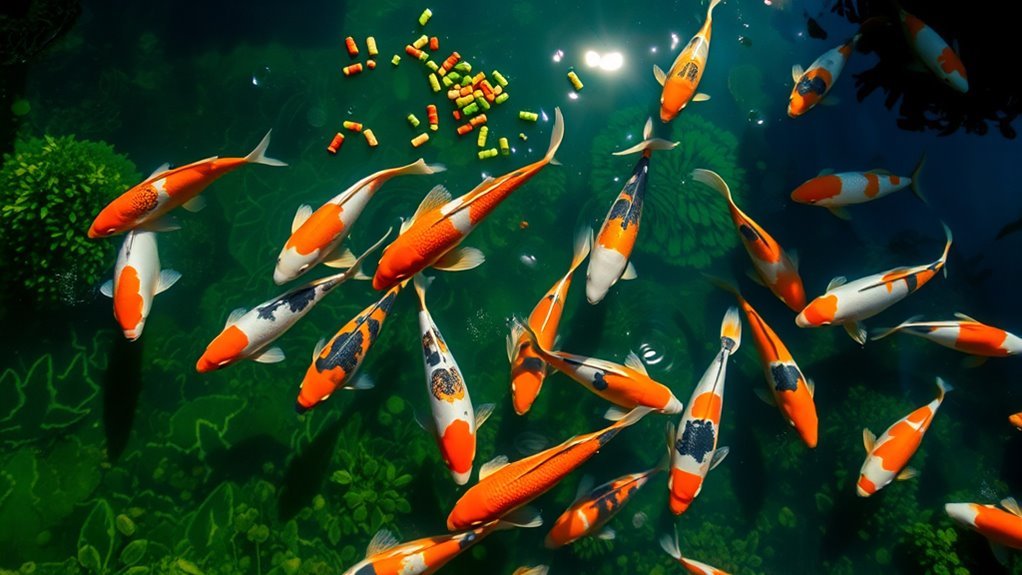
When you want to provide the best staple foods for your koi, high-quality pellets made specifically for their dietary needs are crucial. These pellets, often floating pellets, deliver a balanced diet that meets your koi’s nutritional needs with 30-40% crude protein, vitamins, and minerals.
Choosing the right koi food ensures proper feeding that supports healthy growth, vibrant coloration, and overall vitality.
You’ll find formulas tailored for growth, maintenance, or color enhancement, allowing you to customize the koi diet based on their life stage.
Feed multiple small meals daily, offering food for about five minutes to avoid waste and maintain water quality.
Sticking to nutritionally complete pellets is key to keeping your koi healthy and thriving year-round.
How Should You Adjust Koi Feeding by Season and Temperature?
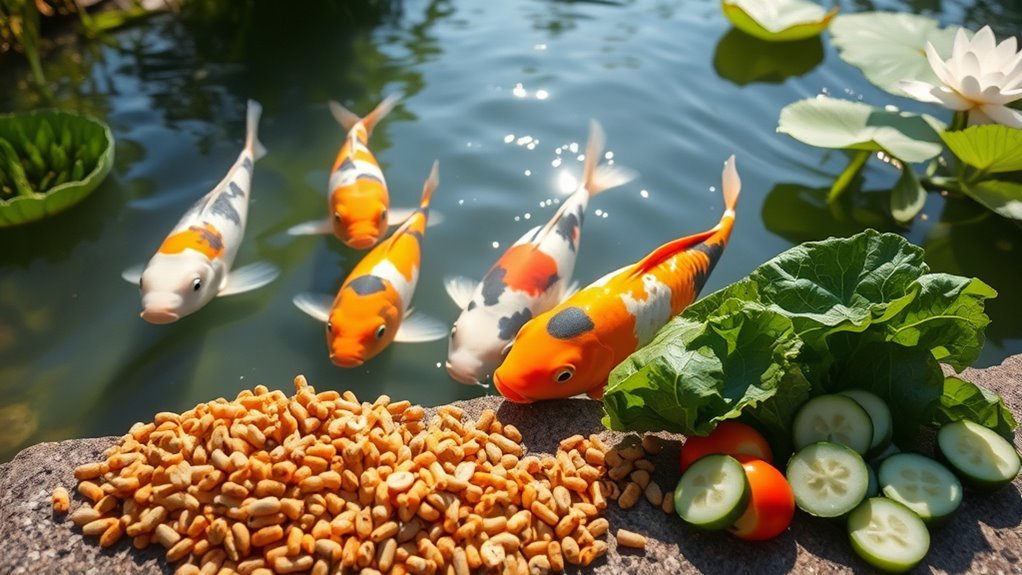
You should adjust your koi’s feeding based on the water temperature and season to keep them healthy.
Feed more often and increase protein during warmer months, but reduce or stop feeding when it gets cold.
Also, switch to easily digestible foods like wheat germ in spring and fall to support their digestion.
Temperature-Based Feeding Adjustments
Since koi metabolism changes with water temperature, adjusting their feeding schedule throughout the year is crucial.
When water temperatures rise between 75°F and 85°F, feed your koi 2-4 times daily to support a healthy koi metabolism.
As temperatures drop below 60°F, reduce feeding to once daily, and stop entirely if it falls below 50°F, since koi digestion slows markedly.
Make gradual temperature adjustments during spring and fall, increasing or decreasing feeding amounts accordingly.
Offering smaller portions in colder months helps maintain water quality and prevents pollution.
By tailoring feeding amounts and frequency to water temperatures, you guarantee your koi stay healthy without stressing their system.
These temperature-based feeding adjustments are essential before you dive into the seasonal diet details that further optimize your koi’s nutrition.
Seasonal Diet Composition
Adjusting your koi’s feeding routine based on the season helps match their nutritional needs to changes in water temperature and metabolism. Your seasonal diet composition should focus on carbohydrate-rich foods like wheat germ and vegetables during spring and fall when water temperatures hover between 50°F and 60°F, supporting digestion.
In summer, as water temperature exceeds 75°F, increase protein and lipid intake with high-quality pellets to promote growth and vigor.
When winter arrives and water drops below 50°F, stop koi feeding entirely since their metabolism slows and they rely on stored fats.
As water warms to about 60°F, gradually resume feeding with small portions of easily digestible food.
Feeding Frequency Variations
When water temperatures rise above 60°F, feeding your koi multiple times a day becomes vital to match their increased metabolism and activity levels. During summer, increase feeding frequency to three or four times daily using high-protein foods to support active growth.
In spring and fall, when water temperature hovers between 50°F and 60°F, reduce feeding frequency to once or twice daily. Focus on easily digestible foods to maintain a healthy diet.
Below 50°F, stop feeding entirely since koi’s metabolism slows, and they rely on stored energy.
Always practice portion control by offering only what koi can consume within five minutes to avoid water pollution. Adjust your feeding routine according to water temperature to guarantee ideal growth and maintain a balanced, healthy diet year-round.
How Often and How Much Should You Feed Koi?
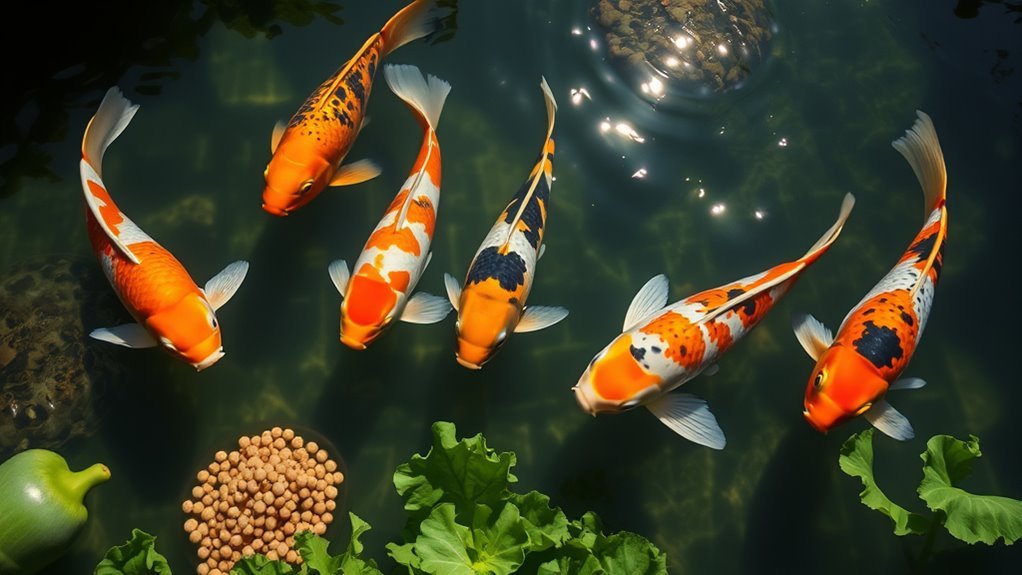
Although koi can eat up to four times a day, you should only feed them as much as they can finish within five minutes. Proper feeding frequency and portion size depend heavily on water temperature. Here’s how to manage it:
Feed koi only what they can eat in five minutes, adjusting frequency and portions by water temperature.
- Feed small portions multiple times daily during warm months (above 75°F) to support activity and growth.
- Reduce feeding frequency as water temperature drops, especially in cold months below 50°F.
- Stop feeding entirely when water temperature falls below 60°F, as koi slow their metabolism.
- Remove any uneaten food after 20 minutes to protect water quality and prevent pollution.
Why Consistent Feeding Helps Your Koi Thrive
Because koi rely on routine to feel secure, feeding them consistently helps reduce their stress and encourages natural foraging behavior. Sticking to a feeding schedule supports koi health by promoting proper digestion and steady growth.
A consistent routine also improves water quality by preventing overfeeding and excess waste. When you feed at the same times daily, koi develop trust and you can easily monitor their appetite, spotting health issues early.
| Benefit | Why It Matters |
|---|---|
| Stress Reduction | Koi feel secure and less anxious |
| Steady Growth | Consistent nutrition supports growth |
| Improved Digestion | Regular feeding aligns with biological rhythms |
| Better Water Quality | Prevents food buildup and toxins |
Keeping a consistent feeding schedule helps your koi thrive in every way.
Best Treats to Boost Koi Feeding Health and Color
You’ll want to offer protein-rich treats like freeze-dried shrimp and krill to boost your koi’s health and vibrant colors.
Adding fruits and vegetables in small amounts can enhance their diet with natural vitamins and fiber.
Just remember to feed treats in moderation and remove any leftovers promptly to keep the water clean.
Protein-Rich Treat Options
How can you naturally boost your koi’s health and vibrant colors? Offering protein-rich treats is key. These high-quality options provide vital nutrition, amino acids, and omega-3 fatty acids that support your koi’s vitality and immune system.
Consider these top treats:
- Freeze-dried krill and shrimp – packed with astaxanthin to enhance red and orange hues.
- Bloodworms – dense protein and essential amino acids for growth.
- Black soldier fly larvae – excellent for fin condition and overall health.
- Freeze-dried shrimp – natural protein and omega-3 source.
Feed these treats in moderation, about once or twice weekly, to avoid overfeeding and water pollution. Incorporating protein treats thoughtfully will keep your koi vibrant and thriving.
Color-Enhancing Supplement Foods
Along with protein-rich treats, incorporating color-enhancing supplement foods can take your koi’s vibrancy to the next level. Spirulina, a natural blue-green algae, is packed with carotenoids that boost red, orange, and yellow pigmentation, making your koi’s colors really pop.
Feeding spirulina-based foods 2-3 times a week delivers essential vitamins, antioxidants, and amino acids that support immune health and improve skin shine.
These supplements not only enhance coloration but also contribute to a balanced, healthy diet. Remember to remove any uneaten spirulina foods within five minutes to keep your pond water clean.
Feeding Frequency And Portions
When should you feed your koi to keep them healthy and vibrant? Proper feeding frequency and portions are key to a healthy diet and maintaining water quality. To feed koi effectively:
- Feed up to four times daily, offering only small amounts of food they can consume within five minutes.
- Distribute portions evenly during each feeding time, ensuring koi actively come to the surface.
- Adjust portions based on water temperature, season, and koi size, using high-quality floating pellets.
- Remove uneaten food after 20 minutes to prevent water pollution.
Which Fruits and Vegetables Are Safe for Koi?
Although koi primarily thrive on a balanced pellet diet, you can safely offer them certain fruits and vegetables as occasional treats to add variety and nutrients.
Koi mainly need balanced pellets but enjoy occasional fruits and veggies for extra nutrition and variety.
Koi safe fruits like watermelon, oranges, cantaloupe, honeydew, and strawberries should be cut into small pieces before feeding.
Vegetables for koi such as lettuce, peas, zucchini, broccoli, spinach, cabbage, and kale are great options but must be washed thoroughly to remove pesticides.
Including these koi treats supplements their koi nutrition and mimics their natural diet, including aquatic plants.
However, always remove uneaten fruits and vegetables within 10-15 minutes to protect water quality.
How Overfeeding Harms Koi and Pond Water Quality
If you feed your koi more than they can eat in about five minutes, you risk harming both the fish and your pond’s water quality. Overfeeding leads to excess food decomposing, which produces ammonia and raises nitrate levels, damaging water quality.
This organic waste fuels algae blooms and causes oxygen depletion, stressing your pond ecosystem.
Here’s how overfeeding harms your koi and pond:
- Uneaten food decomposes quickly, increasing ammonia and toxic compounds.
- Organic waste promotes algae blooms that cloud water and reduce oxygen.
- Oxygen depletion stresses koi, making them vulnerable to disease.
- Filtration systems get overwhelmed, disrupting the pond ecosystem balance.
Common Feeding Mistakes to Avoid With Koi
Since maintaining your koi’s health depends heavily on proper feeding, avoiding common mistakes is essential. One common mistake is overfeeding, which leads to excess waste and poor water quality. Always offer portions your koi can finish within five minutes to prevent food decay and water pollution.
Ignoring signs of overfeeding, like cloudy water or bloated fish, can harm both your koi and pond environment. Another error is frequently changing the feeding routine without considering water temperature, which stresses your koi and disrupts digestion.
Keep your feeding consistent and adapt amounts based on water temperature to support their metabolism.
How to Choose Quality Koi Food Brands and Products
When choosing koi food, you’ll want to focus on reputable brands like Blue Ridge COLOR-RICH, Danichi, and Hikari that offer high-quality ingredients and balanced nutrition.
To pick the best koi food brands and products, consider these key points:
To pick the best koi food, focus on key factors like nutrition, seasonality, pellet size, and ingredient quality.
- Look for nutritional completeness with proteins, fats, vitamins, and minerals to support vibrant coloration and health.
- Choose season-specific formulas—wheat germ for cooler months and growth blends for warmer seasons—to match koi dietary needs.
- Select floating pellets sized for your koi’s age and size, making it easier to monitor feeding and prevent overfeeding.
- Always read ingredient labels, avoiding fillers like wheat or soy, and opt for natural ingredients that provide nutrient density.
This approach guarantees you feed your koi high-quality koi food that promotes longevity and vigor.
Frequently Asked Questions
What Human Food Can Koi Fish Eat Every Day?
You can feed your koi small amounts of peeled, seedless vegetables like lettuce, peas, and zucchini every day.
Avoid sugary, salty, or seasoned human foods to keep them healthy and maintain clean water in their pond.
Why Add Baking Soda to Koi Pond?
You add baking soda to your koi pond to keep the water’s pH steady, preventing sudden swings that stress your fish.
What Makes Koi Happy?
You make koi happy by providing a balanced diet, consistent feeding, clean water, and a stable environment. Variety in food and seasonal adjustments keep them active, while proper care reduces stress and supports their vibrant health.
What Is the Best Thing to Feed Koi Fish?
You should feed koi high-quality pellets made for them; they digest these efficiently. Fun fact: koi grow up to 10% faster on specialized diets.
Don’t forget to add seasonal treats like spirulina to boost their color.
Conclusion
Feeding your koi right is key to their health and vibrant colors. Did you know koi can eat up to 2% of their body weight daily? By adjusting their diet with seasons, offering balanced staple foods, and avoiding overfeeding, you help them thrive.
Remember, consistent feeding builds trust and supports growth, while treats like fruits and veggies add excitement. Stick to quality brands, and your koi will reward you with beauty and importance all year long. A healthy diet for koi fish ensures their well-being and enhances their natural charm.