
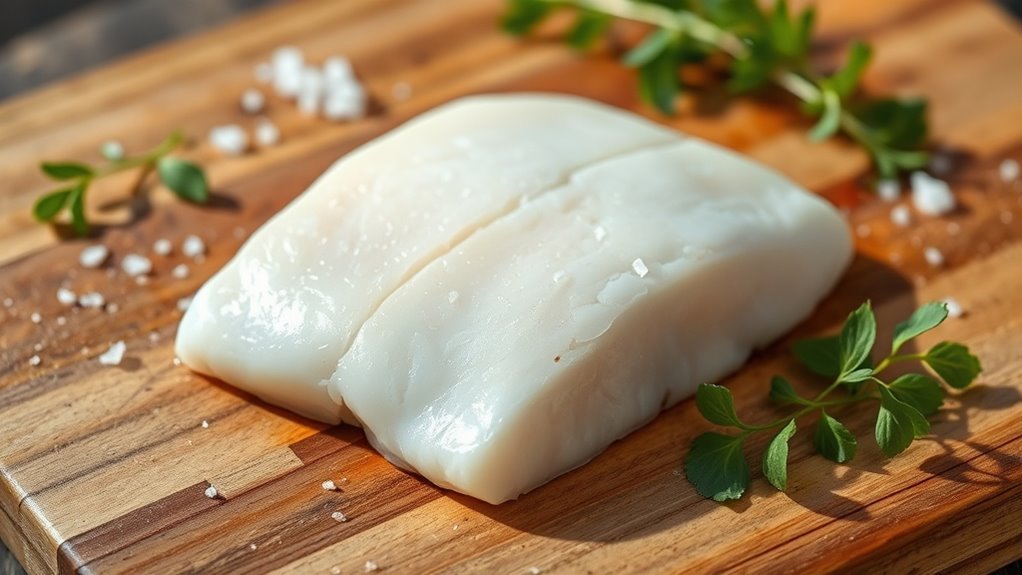
Is Cod Fish Fattening?
You won’t gain weight from cod fish since it’s a low-calorie, lean protein with just 70-90 calories per serving. Cod fish fattening concerns are minimal because its fat content is very low, which supports weight control and keeps you feeling full longer.
When you cook it healthily—like baking or steaming—you preserve its nutritional benefits without adding extra calories. Cod also provides key nutrients that boost metabolism.
If you want to understand how it compares to other fish and how to include it best, there’s more useful info ahead.
Is Cod Fish a Low-Calorie Option for Weight Loss?
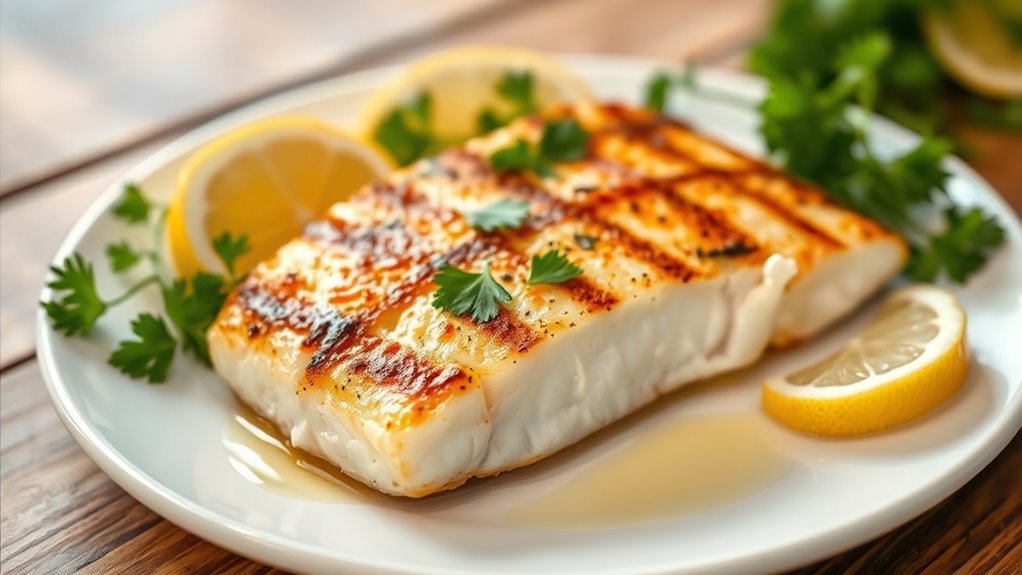
Wondering if cod fish fits into your weight loss plan? Cod is an excellent low-calorie choice, with just 70-90 calories per 3-ounce cooked serving.
Its high lean protein content, around 15-20 grams per serving, helps keep you full and reduces overall calorie intake, which is essential for weight loss.
Because cod has very little fat—only about 0.5-1 gram per serving—it’s a smart option for those watching their calorie count.
Plus, cod’s mild flavor lets you prepare it healthily by baking or steaming, avoiding added fats.
With its impressive nutrient density and low energy content, cod supports a balanced, calorie-controlled diet perfectly aligned with your weight loss goals.
How Much Protein Does Cod Provide to Support Weight Management?
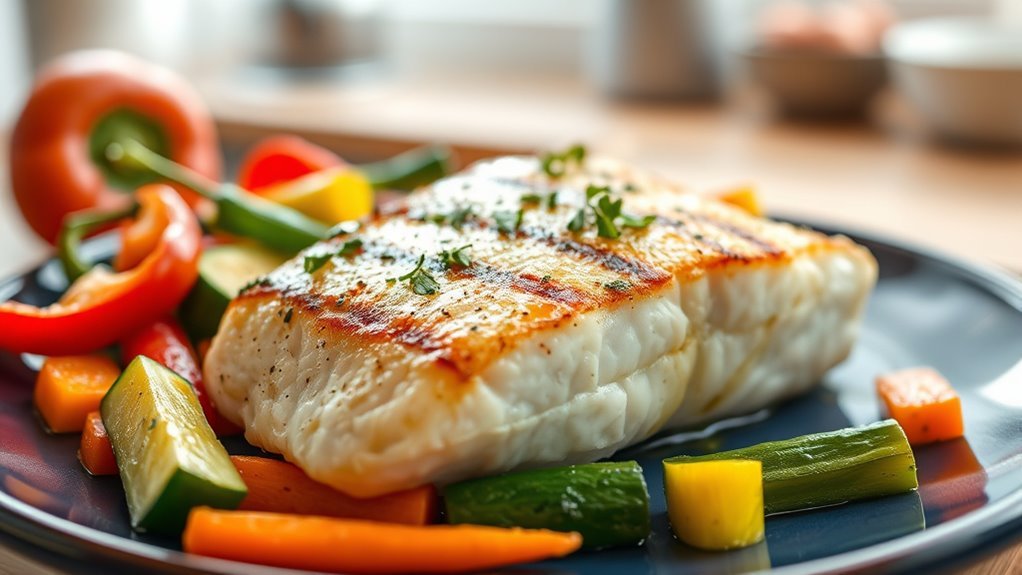
Besides being low in calories, cod packs a solid protein punch that helps keep you feeling full and supports muscle maintenance during weight management. Its lean, high-quality protein content is ideal for those aiming to control calorie intake while meeting protein needs.
A 3-ounce serving offers 15-20 grams of protein, promoting satiety and aiding in muscle preservation. This efficient protein source supports your metabolic health and weight management goals by helping you reach daily protein targets without excess fat.
| Serving Size | Protein Content (grams) | Fat Content (grams) |
|---|---|---|
| 3 oz cooked | 15-20 | 0.5 |
| 6 oz cooked | 30-40 | 1.0 |
| 9 oz cooked | 45-60 | 1.5 |
Does Cod’s Fat Content Affect Weight Gain?
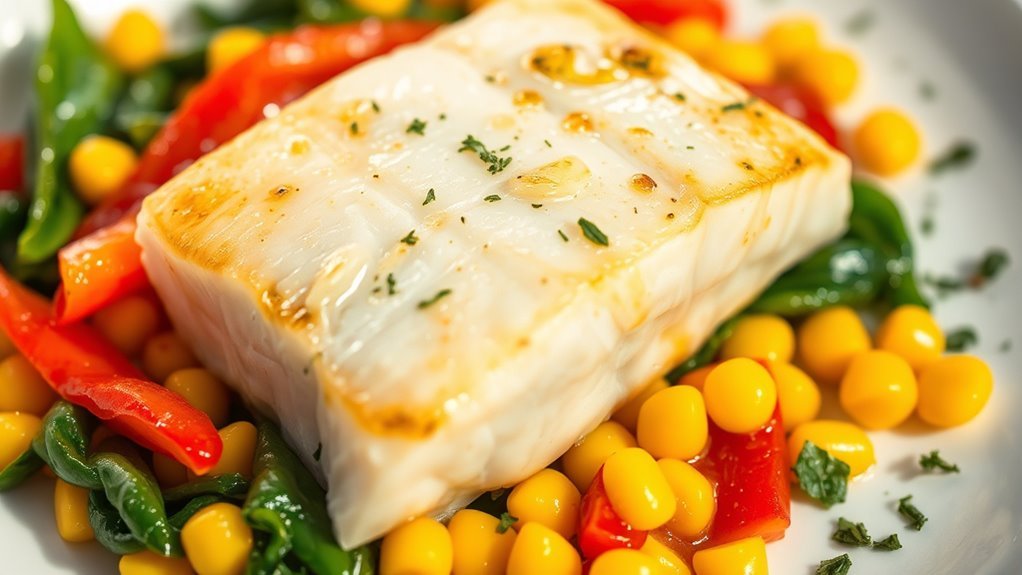
You’ll find cod has a very low fat content, with only about 0.5 to 1 gram per serving, so it’s unlikely to add extra calories that lead to weight gain.
Its minimal fat means you get fewer calories compared to fattier fish, making it easier to manage your weight.
While overeating anything can cause weight gain, cod’s fat content itself won’t make you gain fat.
Cod’s Low Fat Profile
Although some might worry about fish contributing to weight gain, cod’s naturally low fat content makes it a smart choice for those watching their calories.
With only about 1 gram of fat per 3-ounce serving, cod fits well into a healthy diet focused on weight management.
Its low fat profile means it provides fewer calories than fattier fish, helping you avoid excess calorie intake that can lead to fat accumulation.
Plus, the small amount of omega-3 fatty acids in cod supports overall health without adding significant fat or calories.
When you include cod in a balanced, calorie-controlled diet, you’re less likely to see unwanted weight gain, making it an excellent option for those mindful of fat and calorie consumption.
Caloric Impact Of Cod
How much does cod really affect your calorie intake? Cod is low in fat and contains about 70-90 calories per 3-ounce cooked serving size. This makes it a smart choice if you’re watching your calorie intake and trying to avoid weight gain.
Because cod’s fat content is minimal—around 0.5 to 1 gram per serving—it doesn’t add many calories that could contribute to fat accumulation.
Plus, the small amount of omega-3 fatty acids offers health benefits without increasing calories markedly.
If you prepare cod using healthy methods like baking or steaming, you’ll keep its calories low.
Fat Content And Weight
Does the fat content in cod fish affect your chances of gaining weight? Not really. Cod is a lean fish with a very low fat content—about 0.5 to 1 gram per 3-ounce cooked serving. Its low-calorie nature, roughly 70-90 calories per serving, makes it an excellent choice for weight management.
Since cod is low in fat and calories, it won’t contribute considerably to fat accumulation. The small amount of omega-3 fatty acids it contains supports heart health but doesn’t impact your body fat levels much.
If you’re looking to maintain or lose weight, cod’s lean profile fits perfectly into a balanced diet.
How Do Cod’s Calories Compare to Other Popular Fish?
When you compare cod’s calories to other popular fish, you’ll find it ranks among the lowest. A 3-ounce cooked serving of cod contains about 70-90 calories, making it a low-calorie fish choice.
Cod is one of the lowest-calorie fish, with just 70-90 calories per 3-ounce serving.
In comparison, oily fish like salmon have roughly 180-200 calories per serving, more than double cod’s count.
Lean fish such as tilapia and flounder share similar low calorie levels, generally around 70-100 calories per 3-ounce portion.
Fatty fish like mackerel and sardines have higher calories—often exceeding 200—due to their fat and omega-3 content.
What Cooking Methods Keep Cod Healthy and Low-Calorie?
Although cod is naturally low in calories, the way you cook it can make a considerable difference in keeping it healthy. To maintain its healthy, low-calorie benefits, try steaming or baking cod with minimal added fats. These methods preserve the fish’s natural flavors and nutrients without adding extra calories.
Wrapping cod in foil while baking helps retain moisture, so you won’t need butter or creamy sauces. Instead, use lemon juice, herbs, and spices to enhance flavor without increasing fat.
Grilling is another option that allows excess fat to drip away, keeping your meal lean and nutritious.
Avoid deep-frying cod, as it substantially raises calorie and fat content, negating its health benefits. Stick to these cooking techniques to enjoy cod in the healthiest way possible.
Can Eating Cod Help You Maintain a Healthy Weight?
How can cod fit into your weight management plan? Cod is low in calories, with just 70-90 calories per 3-ounce cooked serving, making it an excellent protein choice when you want to maintain a healthy weight.
Its high protein content, around 15-20 grams per serving, helps you feel full longer and supports muscle maintenance, which is vital during weight management.
Because cod is naturally low in fat, especially saturated fat, it fits seamlessly into a balanced diet without adding excess calories that could lead to weight gain.
Plus, its mild flavor and versatile preparation make it easy to include in portion-controlled meals.
How Do Cod’s Nutrients Boost Your Metabolism?
Because cod is packed with high-quality protein and essential nutrients, it can give your metabolism a significant boost. The high-quality protein in cod increases thermogenesis, meaning your body burns more calories during digestion.
Plus, its rich B vitamins, especially B12 and B6, are key players in energy production and help regulate your metabolism efficiently.
Selenium in cod supports your thyroid function, which is vital for maintaining a healthy metabolic rate.
Together, these nutrients help your body convert food into energy more effectively.
Additionally, cod’s nutrients promote muscle repair and growth, further enhancing calorie burn and metabolic activity.
Could Eating Too Much Cod Impact Your Weight or Health?
If you eat too much cod, it probably won’t cause significant weight gain since it’s low in calories and fat. Each 3-ounce serving contains just 70-90 calories and about 1 gram of fat, making cod a lean protein source ideal for weight management.
Protein helps you feel full longer, which can reduce overall calorie intake.
However, eating cod in excess can still contribute to weight gain if it pushes your total calorie intake beyond what you burn.
Plus, consuming too much cod regularly may cause mineral imbalances, like excess selenium.
To avoid any negative effects on your weight or health, enjoy cod in moderation as part of a balanced diet.
This way, you benefit from its nutritional value without risking calorie overload or health issues.
Why Choosing Sustainably Sourced Cod Matters for Your Health
When you choose sustainably sourced cod, you support fishing methods that protect marine ecosystems and keep fish populations healthy.
This means you’re more likely to enjoy cod with better nutritional quality and fewer contaminants.
Environmental Impact Awareness
Why should you care about choosing sustainably sourced cod? Because your choice directly impacts the health of our oceans and future seafood availability. Sustainable cod fishing combats overfishing, which threatens vulnerable populations like Atlantic cod.
When you pick cod with certified eco-labels, such as the Marine Stewardship Council (MSC), you support responsible fishing methods that protect marine biodiversity.
Choosing sustainable cod means you:
- Help prevent overfishing and stock depletion
- Support fishing practices that avoid habitat destruction
- Reduce bycatch and protect other marine species
- Promote healthier and balanced marine ecosystems
- Encourage long-term availability of quality seafood
Nutritional Integrity Preservation
Choosing sustainably sourced cod doesn’t just benefit the environment—it also protects your health. When you opt for cod caught responsibly, you reduce your exposure to environmental contaminants and pollutants often found in overfished or polluted waters.
Sustainably sourced cod retains its nutritional integrity, preserving essential nutrients like omega-3 fatty acids and essential vitamins that support your well-being. Wild-caught cod from clean, cold waters typically offers higher nutrient levels compared to farmed or contaminated fish.
Responsible Fishing Practices
Because sustainable fishing practices protect ocean ecosystems, you help guarantee cod remains a reliable, healthy food source for years to come. Choosing sustainably sourced cod means you support responsible sourcing that prioritizes conservation and minimizes environmental impact.
This approach keeps fish populations balanced and water quality high, ensuring long-term food security. When you pick certified sustainable cod, you’re often choosing fish caught through eco-friendly methods like hook-and-line fishing, which reduce habitat damage and bycatch.
Here’s why it matters:
- Supports balanced cod populations
- Minimizes harm to marine habitats
- Reduces bycatch of non-target species
- Maintains biodiversity and water quality
- Promotes long-term ocean health
Tips for Including Cod in a Weight-Friendly Diet
When you include cod in your meals, you get a low-calorie, high-protein option that supports muscle maintenance and keeps you feeling full longer. To keep cod weight-friendly, focus on healthy preparation methods like baking, steaming, or grilling without added fats.
Season with herbs, lemon, or garlic to boost flavor without extra calories. Pair cod with vegetables and whole grains for balanced meals that promote weight management.
| Preparation Method | Calories (per 3 oz) | Benefits |
|---|---|---|
| Baking | 70-90 | Low in calories, easy |
| Steaming | 70-90 | Retains nutrients |
| Grilling | 70-90 | Adds flavor, low fat |
Following these tips helps you enjoy cod’s benefits while staying on track.
Frequently Asked Questions
Is Cod a Good Fish for Weight Loss?
Yes, cod is great for weight loss. You’ll get lean protein with very few calories and fat, helping you feel full while preserving muscle.
It’s easy to cook and fits well into a healthy diet.
What Are the Disadvantages of Cod Fish?
Cod contains only about 85 calories per 3-ounce serving, but relying on it too much can cause nutrient gaps.
Also, fried or processed cod adds unhealthy fats and calories, which might harm your diet and health.
Which Is Healthier, Salmon or Cod?
Salmon’s healthier overall because it’s rich in omega-3s, boosting heart and brain health.
But if you want fewer calories and lean protein, cod’s a great choice. It depends on your nutritional goals.
Which Fish Is Best for Belly Fat Loss?
You’ll love this: omega-3-rich fish like salmon can reduce visceral fat by up to 15%.
For belly fat loss, choose salmon or mackerel over leaner fish, and prepare them baked or steamed for best results.
Conclusion
If you’re aiming to keep your diet on track, cod is your trusty compass—low in calories and high in protein, it guides you toward weight-friendly choices. Just remember, how you cook it matters, and balance is key. Don’t let overindulgence steer you off course.
By choosing sustainably sourced cod and preparing it wisely, you’ll fuel your body without the extra fat, keeping your health journey smooth and steady. Cod fish is not fattening when eaten in moderation and cooked healthily, making it an excellent option for those mindful of their weight.