Do Betta Fish Need a Filter and How to Set Up the Perfect Tank
Yes, your betta fish needs a gentle, low-flow filter like a sponge filter to keep the water clean without stressing its delicate fins. A proper filtration system is essential to maintaining a healthy environment for your betta.
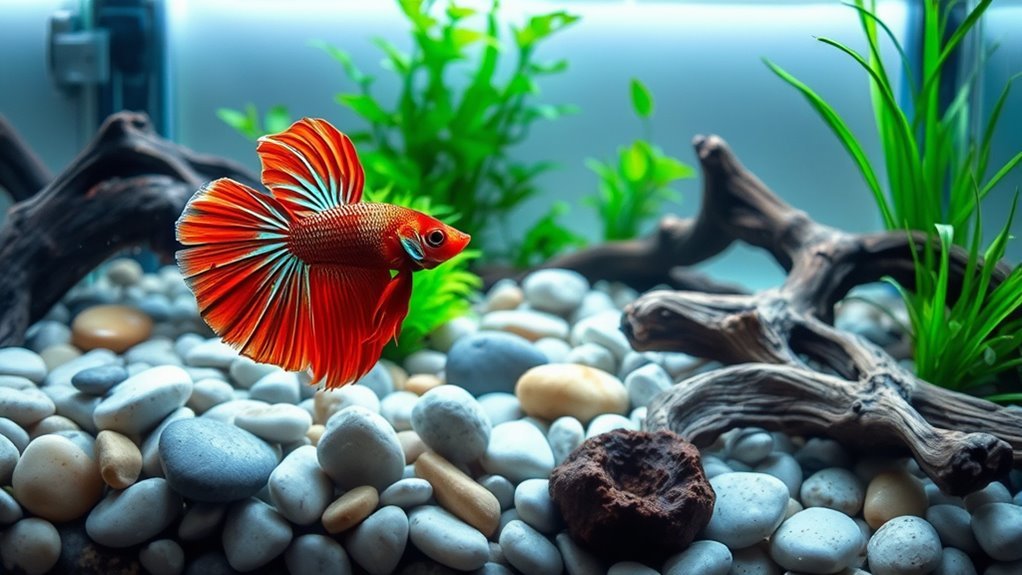
Set up a tank of at least 3 gallons with live or soft plants and hiding spots to mimic a natural habitat. These elements help reduce stress and provide comfort for your betta fish.
Maintain a stable temperature between 77-82°F using a heater, and provide consistent lighting. Regular water changes using water conditioners are also crucial. These steps create a comfortable, healthy home—keep going to discover how to perfect every detail.
Betta Fish Tank Size Recommendations
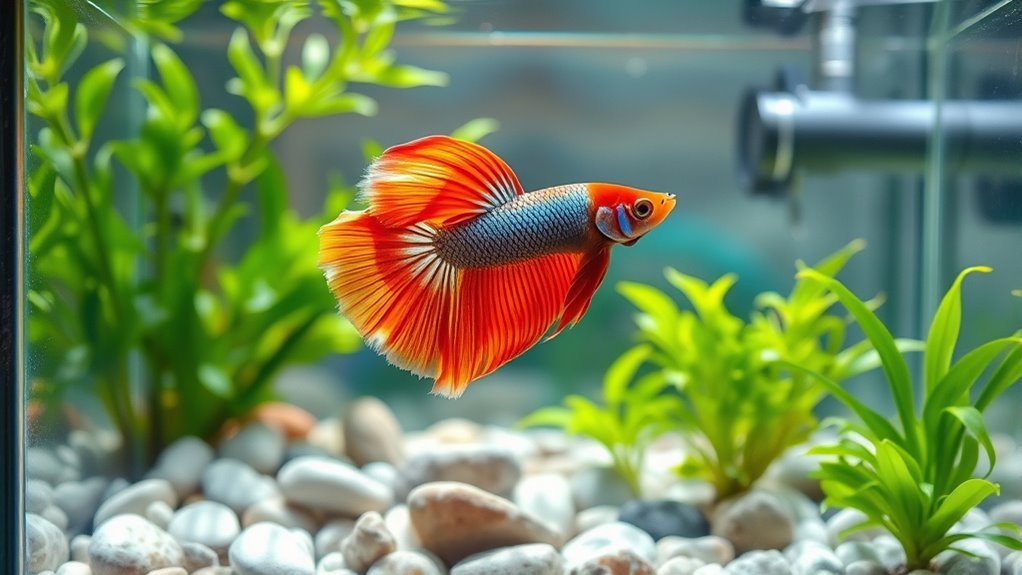
When setting up a tank for your betta fish, you should provide at least 3 gallons (12 liters) of water to guarantee enough space for swimming. This betta fish tank size ensures your fish has room to move freely and display natural behaviors.
While 3 gallons is the minimum, opting for a larger tank—like 5 gallons or more—helps maintain stable water conditions and lowers maintenance needs.
Choosing a 5-gallon or larger tank promotes stable water conditions and reduces maintenance efforts.
Avoid small bowls or vases, as they restrict movement and can stress your betta, leading to health problems. A proper betta fish tank size not only supports your fish’s well-being but also promotes better water quality.
Choosing the right size tank is essential for a happy, healthy betta fish.
Choosing a Betta-Friendly Filter
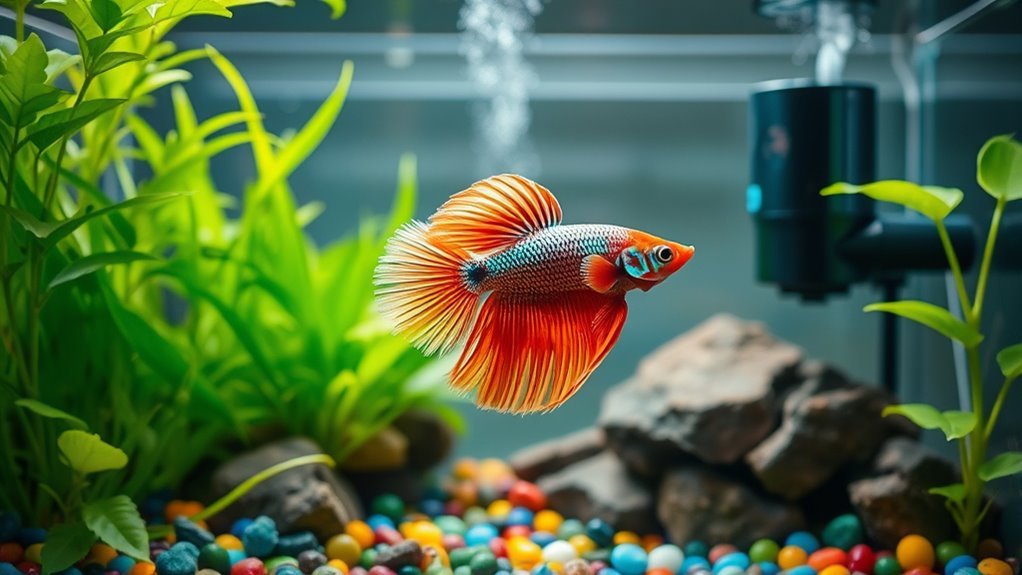
Although betta fish need clean water, you’ll want to choose a filter that provides gentle, low-flow filtration to avoid stressing your fish or damaging their delicate fins.
Betta fish need filters that maintain water clarity without creating strong currents. Sponge filters are ideal because they offer effective biological filtration while keeping the water flow mild.
Make certain to pick a filter appropriately sized for your tank to guarantee proper water circulation and filtration.
Regular cleaning and maintenance of the filter are essential to keep the environment healthy for your betta.
Maintaining Stable Temperature and Lighting for Bettas
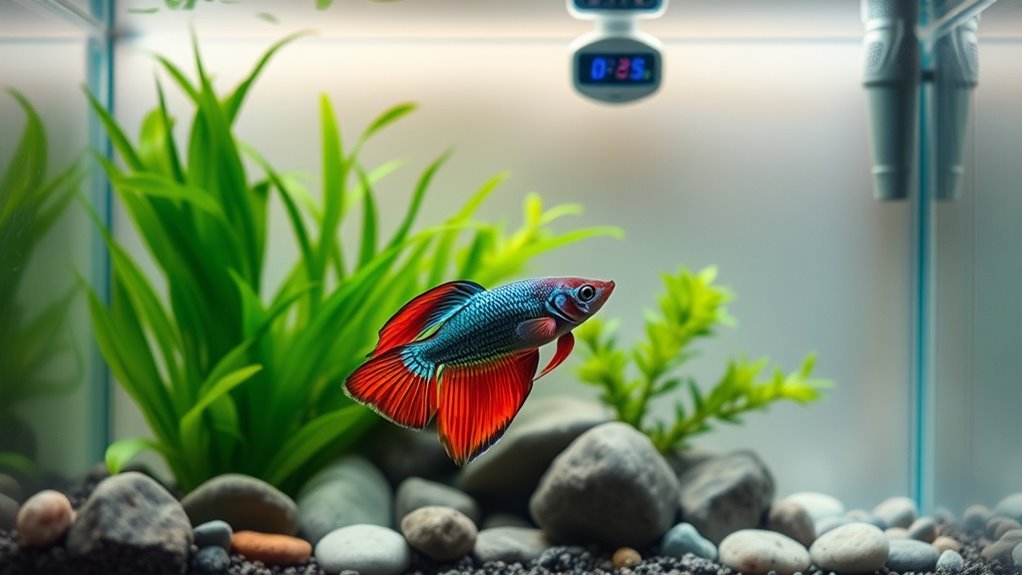
To keep your betta healthy and stress-free, you’ll need to maintain a stable water temperature between 77-82°F (25-28°C). Fluctuations can cause stress, leading to illness. Use a reliable heater with a built-in thermostat to keep the water temperature consistent.
Regularly check it with a thermometer or temperature gauge to ensure ideal conditions.
Proper lighting is just as important. Aim for a 12-hour day/night cycle to support your betta’s natural behaviors and circadian rhythms. Avoid direct sunlight, which can cause temperature spikes and promote algae growth.
Tips for maintaining stable temperature and lighting:
- Use a heater with a thermostat for accurate water temperature control
- Monitor water temperature daily with a thermometer
- Set up a timer for consistent, natural lighting cycles
Creating a Natural Betta Environment With Plants and Hiding Spots
Maintaining stable temperature and lighting sets the foundation for your betta’s comfort, but creating a natural environment with plants and hiding spots truly enhances their well-being.
Start by incorporating live plants like Anubias and Hornwort, which improve water quality and provide essential cover. Soft, silk plants also add to the habitat without risking fin damage.
Enhance your betta’s habitat with live plants like Anubias and Hornwort for natural cover and cleaner water.
Creating multiple hiding spots using caves or tunnels helps your betta feel secure and reduces stress.
A substrate of soil or natural materials supports plant growth and beneficial bacteria, making the environment more authentic.
Water Changes and Conditioners for Betta Health
Since bettas rely on clean water to thrive, you should perform regular water changes, usually replacing 25-50% of the tank weekly. This helps remove toxins like ammonia and nitrites that can harm your betta.
Always use water conditioners to neutralize chlorine and chloramine in tap water before adding it to the tank.
Skipping this step can stress your fish and lead to health problems.
To maintain ideal water quality, remember to:
- Use water testing kits to monitor pH, ammonia, nitrite, and nitrate levels
- Dechlorinate new water with proper water conditioners
- Keep a consistent water change schedule to prevent toxin buildup
What to Feed Your Betta for Optimal Health
Keeping your betta’s environment clean is just one part of ensuring its well-being; what you feed your fish plays an equally important role. Bettas are carnivorous and need a high-protein diet, so feed them specialized betta flakes or pellets designed for their nutritional needs.
Feeding your betta a high-protein, specialized diet is essential alongside maintaining a clean environment.
Supplement their meals with frozen or freeze-dried brine shrimp, bloodworms, or tubifex worms to boost their health and robustness. Be careful not to overfeed, as uneaten food can harm water quality and cause health problems.
Feed only what your betta can eat within 2-3 minutes, once or twice daily.
Avoid live foods that might carry parasites, and stick to high-quality commercial options. A varied, balanced diet improves coloration, fin health, and strengthens your betta’s immune system.
Common Betta Tank Setup Mistakes to Avoid
You might be tempted to use a smaller tank or skip proper filtration, but these mistakes can harm your betta’s health.
Ignoring temperature control also stresses your fish and affects their well-being.
Let’s look at how to avoid these common setup errors.
Inadequate Tank Size
Why does tank size matter so much for your betta’s health? A small tank under 3 gallons can quickly lead to poor water quality and stress, even if you use a filter. Inadequate space restricts your betta’s natural movement and increases the risk of fin damage or stunted growth.
Plus, tiny tanks can’t maintain stable temperatures, which harms your fish.
Avoid these issues by choosing the right tank size and providing:
- Enough room for swimming and exploration
- Stable water conditions with a reliable filter
- Adequate hiding spots to reduce stress
Neglecting Proper Filtration
Although many betta owners focus on tank size, neglecting proper filtration can create toxic conditions by allowing harmful ammonia and nitrite to build up quickly. If you skip proper filtration, water quality will deteriorate fast, forcing you into frequent, stressful water changes.
Many common betta tank setups miss adequate filtration, which raises the risk of fin rot and other health issues. Using a gentle, low-flow sponge filter helps maintain stable water parameters essential for your betta’s health and stress-free environment.
Just remember, not all filters are suitable—choosing an overly strong filter can harm your betta’s delicate fins. Avoid neglecting proper filtration to keep your betta thriving in a safe, clean tank.
Ignoring Temperature Control
When you overlook temperature control, your betta faces stress and a weakened immune system that can lead to illness. Maintaining a stable temperature between 77-82°F (25-27°C) is essential to mimic their natural tropical environment.
Ignoring this need or failing to use a heater puts your fish at risk of sudden temperature drops, which can cause fin rot, lethargy, or other health problems.
To avoid these issues, focus on:
- Installing a reliable heater to keep water within the ideal temperature range
- Using a temperature gauge to monitor fluctuations accurately
- Avoiding sudden temperature changes by maintaining consistent heating
Keeping Your Betta’s Water Clean and Stress-Free
To keep your betta healthy, you need a gentle filter that controls toxins and maintains clear water.
Regularly testing and changing the water helps manage quality without stressing your fish.
This balance reduces illness risks and keeps your betta comfortable and active.
Importance Of Filtration
Why is filtration so essential for your betta fish tank? Filtration keeps your betta’s water clean and stress-free by removing harmful toxins and maintaining clarity. Without proper filtration, waste buildup can quickly harm your betta’s health.
Using a softflow filter prevents strong currents that might stress or damage your betta’s delicate fins.
To get the most out of filtration, you should:
- Regularly clean and maintain the filter to ensure efficient biological filtration
- Use a gentle filter to mimic natural water conditions, reducing stress-related health issues
- Rely on filtration to decrease how often you change the water, making tank upkeep easier
With proper filtration, you create a healthier environment where your betta can thrive comfortably.
Managing Water Quality
Filtration plays a big role in keeping your betta’s water clean, but managing water quality goes beyond just filtering. You need to perform regular water changes, ideally 25-50% weekly, to remove toxins and maintain a healthy environment.
Always treat new water with a water conditioner to eliminate harmful chlorine and chloramine, which can stress your fish.
Testing your water parameters frequently ensures ammonia, nitrite, and nitrate levels stay safe, preventing potential health issues.
Keep the water temperature steady between 77-82°F and maintain a pH of 6.5-7.5 for ideal conditions.
Together, these steps will help you maintain excellent water quality, creating a clean, comfortable home for your betta to thrive.
Reducing Fish Stress
Although maintaining clean water is essential, reducing your betta’s stress involves more than just water quality. A well-designed tank setup with a proper filtration system plays a vital role in stress reduction. Using a soft-flow filter ensures gentle currents, mimicking your betta’s natural environment, which helps prevent fin damage and anxiety.
Regularly monitoring water parameters keeps conditions stable, avoiding stress-related illnesses. To further minimize stress, consider these tips:
- Provide hiding spots and live plants to create a secure space and reduce territorial aggression.
- Maintain consistent water temperature and cleanliness to support immune health.
- Perform regular water changes alongside your filter to keep water quality ideal.
Frequently Asked Questions
Will My Betta Fish Be Ok Without a Filter for a Day?
Your betta fish will be okay without a filter for a day if the water is clean and stable. Just perform a water change beforehand to reduce toxins and waste, minimizing stress and health risks during that time.
Can I Have 2 Betta Fish in 1 Tank?
You shouldn’t keep two male bettas in one tank; they’ll fight.
You can house two females if the tank is large, divided, and secure. Always watch closely to prevent stress and aggression between them.
What Stresses Out a Betta Fish?
Sudden water shifts hit your betta like a storm, loud noises shake their calm, and aggressive tank mates act like bullies.
Poor water quality and lack of hiding spots leave them feeling exposed and stressed out.
What’s the Rarest Betta Color?
The rarest betta color you’ll find is metallic or iridescent blue, prized by collectors. Dragon scale bettas with their shimmering scales and unique color combos like red-blue or yellow-purple also rank among the rarest and most valuable.
Conclusion
Setting up the perfect betta tank isn’t rocket science, but it does take care and attention. You’ll want a proper-sized tank with a gentle filter, stable temperature, and cozy plants to make your betta feel right at home. Regular water changes and a balanced diet keep your fish swimming happily.
Avoid common mistakes, and you’ll create a stress-free oasis where your betta can truly flourish—like a jewel shining bright in its own little world. Remember, a filter is essential for maintaining clean water and a healthy environment. With the right setup, your betta fish will thrive in their perfect tank.