How Should You Pass a Fishing Boat?
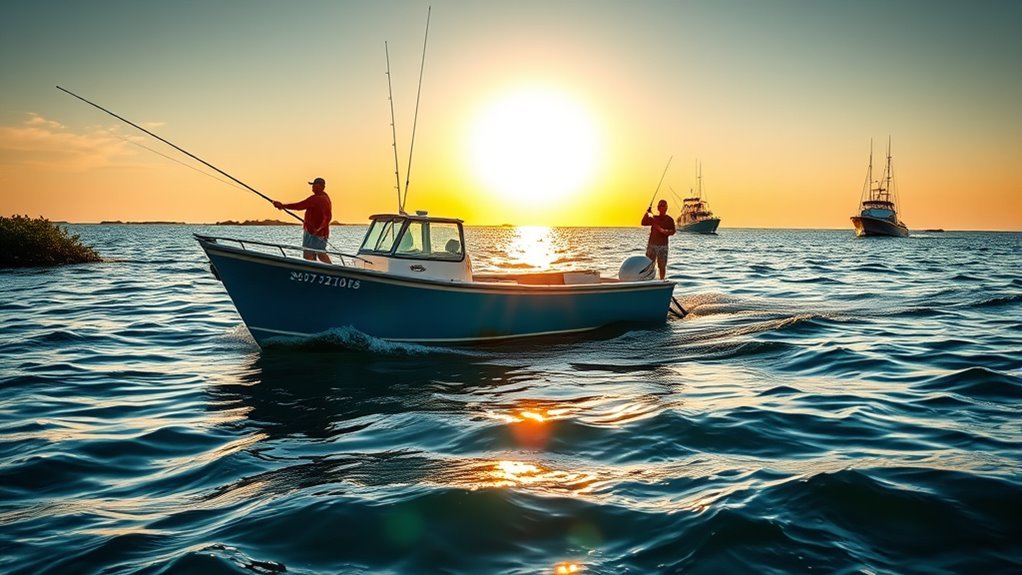
When passing a fishing boat, maintaining a safe distance and showing caution is essential for safety and respect on the water. You should stay at least 100 feet away and slow down to minimize your wake, protecting their gear and safety. Signal your intentions clearly with horn blasts and wait for acknowledgment before maneuvering.
Pass on the starboard side unless otherwise communicated. Be extra cautious in narrow channels or when multiple boats are nearby. Taking these steps keeps everyone safe and respectful on the water.
Keep going to uncover more detailed tips for passing fishing boats safely.
Why Passing Fishing Boats Safely Matters

When you pass a fishing boat safely, you protect their gear and lines from damage that can be costly and dangerous. Passing too close or at high speed causes water disturbance that risks anglers losing control or spilling equipment.
By maintaining a safe distance and reducing your vessel’s speed, you minimize these hazards and prevent accidents that could injure people or damage boats.
Respecting this space also helps preserve the fishing environment, ensuring anglers can work without interference.
Safe passing isn’t just about avoiding collisions; it’s about respecting the fishing boat’s operations and keeping everyone on the water safe.
When you prioritize safe distance and responsible passing, you contribute to a safer and more cooperative boating community.
How to Signal Your Passing Intentions Clearly
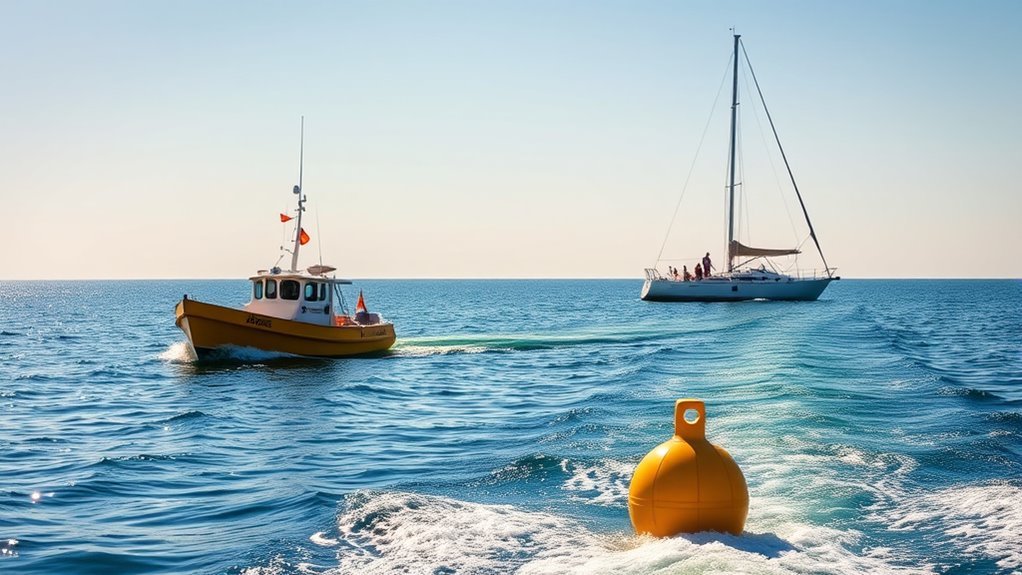
Respecting a fishing boat’s space means more than just keeping your distance; it requires clear communication to guarantee both vessels understand each other’s intentions.
To signal your passing intentions clearly, start by using horn signals: a single blast signals passing on the starboard side, while a double blast means you intend to pass on the port side.
Send these signals well in advance so the fishing boat has time to respond. Wait for an acknowledgment signal—usually a return horn blast—before you begin vessel maneuvering.
Once acknowledged, maintain a steady speed and create minimal wake to ensure a safe, courteous pass.
Clear, early communication through horn signals prevents misunderstandings and helps both boats navigate safely during the passing process.
How to Choose Which Side to Pass a Fishing Boat
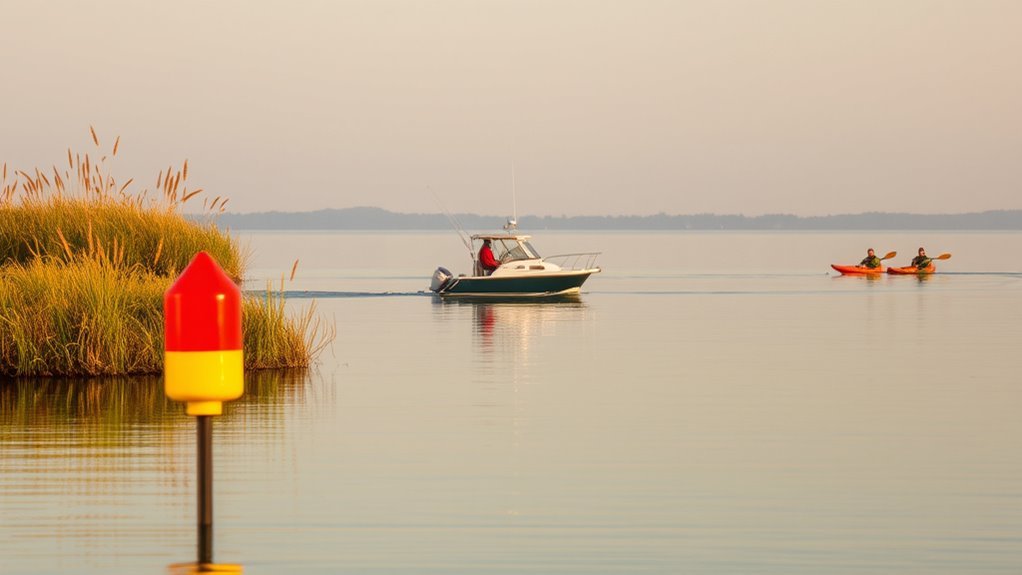
How do you decide which side to pass a fishing boat safely? The standard rule is to pass on the starboard (right) side, keeping consistent with navigation norms. If passing starboard isn’t feasible, use proper communication—like horn signals—to pass on the port (left) side.
Always assess water conditions and fishing gear before choosing your side.
| Condition | Preferred Side | Action Required |
|---|---|---|
| Clear starboard side | Starboard | Pass with caution |
| Obstructed starboard | Port | Use horn signals, communicate |
| Gear extending port | Starboard | Avoid gear, maintain distance |
| Gear extending starboard | Port | Communicate, confirm safety |
| Unclear conditions | Communicate | Wait and reassess |
Good communication and observation guarantee safe passing.
Keeping Your Speed and Wake Safe When Passing
When passing a fishing boat, you need to keep your speed slow and steady to avoid creating a large wake.
Minimizing your wake helps protect the anglers and their gear from unnecessary disturbance.
Staying mindful of your speed guarantees everyone’s safety and keeps the water calm around the fishing boat.
Maintain Controlled Passing Speed
Although it might be tempting to pass quickly, you should always keep your speed slow and controlled when passing a fishing boat. Maintaining a controlled speed helps minimize your wake, preventing it from upsetting the fishing boat or creating safety hazards.
Keeping your speed steady also allows you to maneuver easily if the fishing vessel signals or changes course unexpectedly. The Coast Guard advises greatly reducing speed near fishing boats to protect everyone on the water.
Adjust your speed based on water conditions, the size of your vessel, and how close you’re to the fishing boat.
Minimize Wake Impact
Why does minimizing your wake matter when passing a fishing boat? A large wake can cause water disturbance that destabilizes the fishing boat and interferes with gear. To keep your wake small, pass at a slow speed and maintain a steady throttle.
Avoid sudden acceleration or deceleration, which can create bigger wakes.
Here’s how your speed and throttle affect wake size:
| Action | Effect on Wake |
|---|---|
| Slow speed | Smaller wake |
| Steady throttle | Consistent wake size |
| Sudden acceleration | Larger wake |
| Sudden deceleration | Larger wake |
Ensure Angler Safety
Minimizing your wake not only protects the fishing boat’s stability but also keeps anglers safe. To guarantee angler safety, maintain a slow speed well before you reach the fishing boat, allowing for smooth wake management. Keep your wake small and gentle to avoid water spilling over the boat’s lower freeboard or disturbing fishing gear.
Always stay at least 100 feet away to prevent accidental gear entanglement. Clear communication is essential—use horn signals to announce your passing intentions and wait for acknowledgment before proceeding.
By controlling your speed, managing your wake carefully, and communicating effectively, you help create a safe environment for anglers focused on their catch.
Prioritizing these steps ensures everyone enjoys the water without unnecessary risks.
How to Safely Pass Multiple Fishing Boats
When you need to pass multiple fishing boats, keep a safe distance of at least 100 feet to avoid interfering with their activities. Prioritize safety by communicating clearly and passing cautiously.
Follow these key steps:
- Communicate Your Intentions: Use horn signals—one honk if you’re passing on the starboard side, two for port side—to alert fishing boats of your approach.
- Maintain Slow Speed: Approach slowly to minimize wake, protecting anglers from disturbance and preventing water turbulence.
- Yield Right of Way: Remember, fishing boats usually have the right of way, especially when gear extends into the water. Stay alert and watch watercraft positions closely.
How to Pass Fishing Boats in Narrow Channels
When passing fishing boats in narrow channels, you should always keep to the starboard side to avoid collisions.
Make sure to communicate your intentions clearly with horn signals and wait for acknowledgment before proceeding.
Staying predictable and visible helps keep everyone safe in tight spaces.
Maintain Starboard Course
Although narrow channels can make passing fishing boats challenging, you should always keep to the starboard side to follow maritime rules. When you pass on the starboard in a narrow channel, maintaining your course is essential to guarantee safety for both vessels.
Here’s what you need to focus on:
- Maintain course steadily without sudden changes to avoid confusion.
- Keep a safe distance of at least 100 feet to protect the fishing gear and anglers.
- Pass on the starboard side clearly, signaling your intention properly to prevent mishaps.
Communicate Passing Intentions
How do you guarantee both vessels understand each other’s intentions while passing in narrow channels? You start by using horn signals to clearly signal your passing side—one honk means starboard, two means port. Make sure to clearly signal your intent well before you reach the fishing boat, giving plenty of time for them to react.
Then, wait for their acknowledgment with the appropriate horn reply to confirm mutual understanding. If conditions or obstacles make standard passing tricky, switch to radio or visual signals for clear communication.
Throughout the maneuver, keep your communication consistent and clear, ensuring the fishing boat knows and agrees with your plan before you proceed. This approach minimizes risk and keeps the passage safe for both vessels.
How to Respect Fishing Gear When Passing
Because fishing gear can easily get damaged or cause hazards, you should never pass over lines or equipment without explicit permission from the crew.
When passing a fishing boat, respect their fishing lines and gear by following these essential steps:
- Maintain safe distance: Stay at least 100 feet away to prevent snagging or damaging fishing lines and nets.
- Communicate passing: Use horn signals or radio to clearly inform the crew of your intentions before approaching.
- Avoid entangling: Slow down considerably and keep a careful lookout for any lines or gear extending into the water.
Frequently Asked Questions
How Should You Pass Fishing Boat?
You should pass a fishing boat on its starboard side, signal with one horn blast, wait for acknowledgment, and keep at least 100 feet away.
Slow down to reduce wake, and communicate clearly to guarantee safety.
How Should You Pass a Fishing Boat Boaters’ Ed?
You should pass a fishing boat at least 100 feet away, signaling your intentions with horn blasts. Slow down to avoid wakes, yield right-of-way, and communicate if passing near lines or gear to keep everyone safe.
What Is the Top Cause of Death for Boaters?
The top cause of death for boaters is drowning. You should always wear a life jacket and avoid alcohol to stay safe.
Staying alert and learning proper boating skills also helps prevent accidents and keeps you safe on the water.
What Is the 3 R Rule in Boating?
The 3 R Rule in boating means you reduce your speed, abstain from creating big wakes, and respect other boats’ space.
Following it keeps everyone safe and guarantees you navigate responsibly and courteously on the water.
Conclusion
So, you want to pass a fishing boat without causing a scene? Just breeze by at full speed, create a massive wake, and ignore those delicate fishing lines. Because nothing says “respect” like ruining someone’s catch and risking safety, right?
Or, you could do the smart thing: signal clearly, choose the right side, slow down, and give those anglers the space they deserve. Your smooth, safe pass will make everyone happier—especially the fish.
Remember, how you pass a fishing boat matters. Respect, caution, and giving space ensure a safe and enjoyable experience on the water for all.