
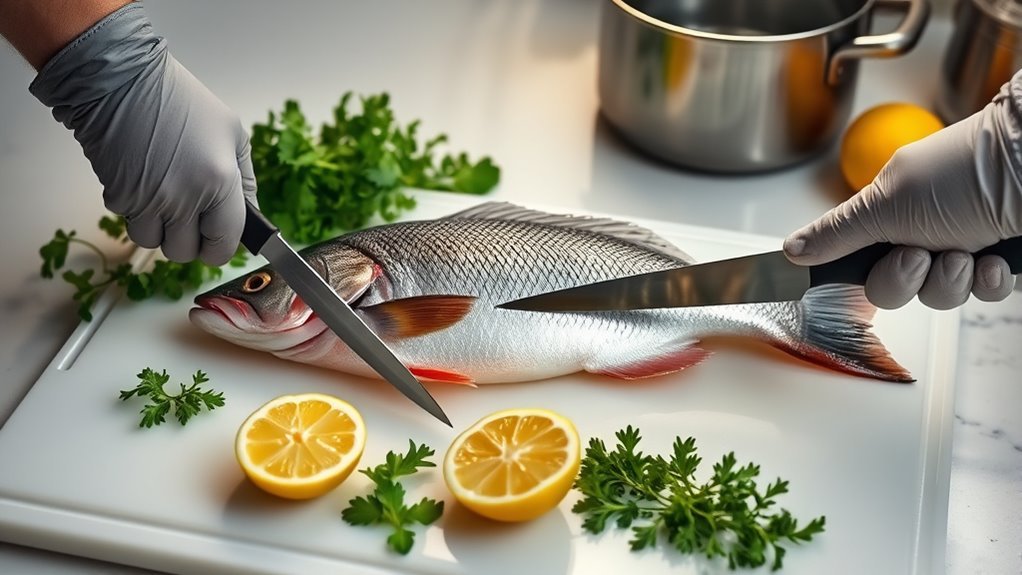
How You Can Safely Eat Bass Fish Step by Step
To safely eat bass fish, start by choosing a fresh, river-caught bass about 8-15 inches long. Selecting the right fish ensures the best quality and taste.
Dispatch the bass humanely with a sharp blow behind the eyes, then quickly scale it, remove the fins, and gut it thoroughly. This preparation helps maintain safety and freshness.
Next, fillet the bass carefully using a sharp knife. Rinse the fillets well and optionally brine them to boost flavor and improve texture.
Cook the fillets in hot oil until they reach an internal temperature of 145°F. Proper cooking is essential to ensure the fish is safe to eat.
Finally, store any leftovers properly to keep them fresh. Keep following these steps to master eating bass fish safely and enjoy the best quality and flavor.
Choosing Healthy Bass: Size and Source Guidelines
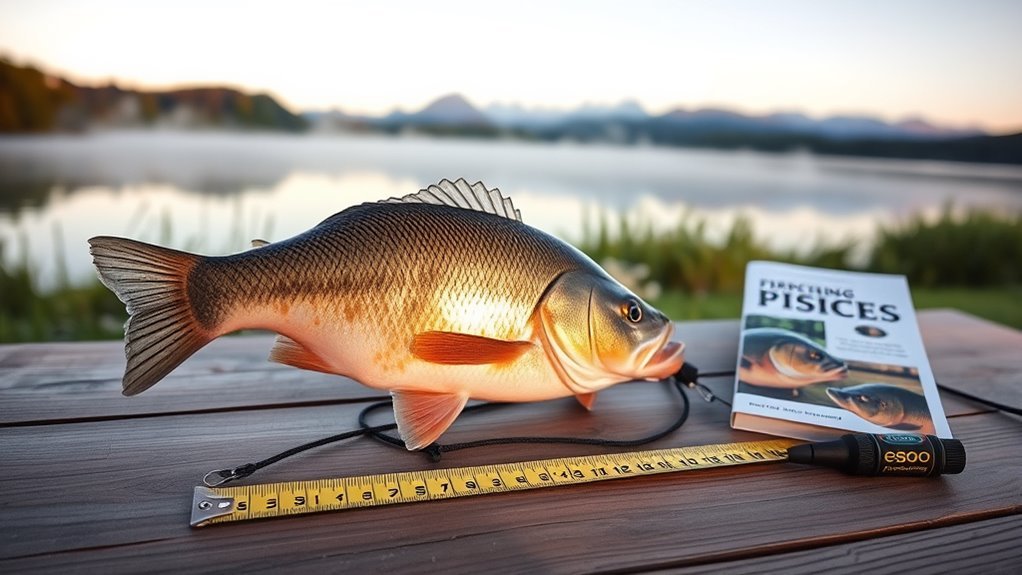
When choosing bass to eat, focus on fish between 8 and 15 inches long, as they grow quickly, have firmer meat, and contain less mercury. Size matters because larger bass over 3 pounds often have coarse meat and can carry parasites like worms, which you want to avoid.
Choose bass 8 to 15 inches long for firmer meat and lower mercury levels.
It’s best to select bass caught in rivers rather than ponds since river bass typically have a firmer texture and less muddy flavor.
Also, make sure the fish comes from clean, well-managed waters where fish health is monitored, ensuring you get a healthier catch.
To keep your bass fresh, handle and store it properly by chilling it immediately after the catch.
Quickly and Humanely Dispatch Bass
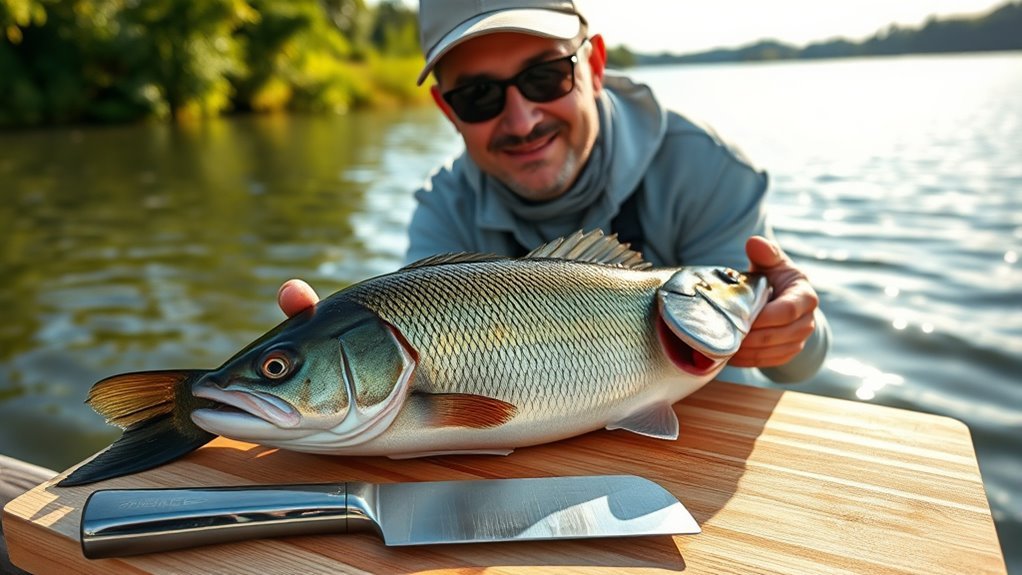
Although it can be difficult, you should dispatch bass quickly and humanely to minimize stress and preserve meat quality.
To ensure your bass is properly dispatched, follow these steps:
- Use a sharp, firm blow to the skull just behind the eyes to dispatch the bass instantly.
- Immediately cut through the gills to drain blood, which improves the taste and texture.
- Rinse the bass thoroughly with cold water to remove any residual blood and debris.
- Handle the fish gently throughout to avoid damaging the flesh and maintain its quality.
After dispatching, keep the bass cold in a cooler with ice until you’re ready to process it.
This helps preserve its freshness and ensures a better eating experience.
Scale and Remove Bass Fins
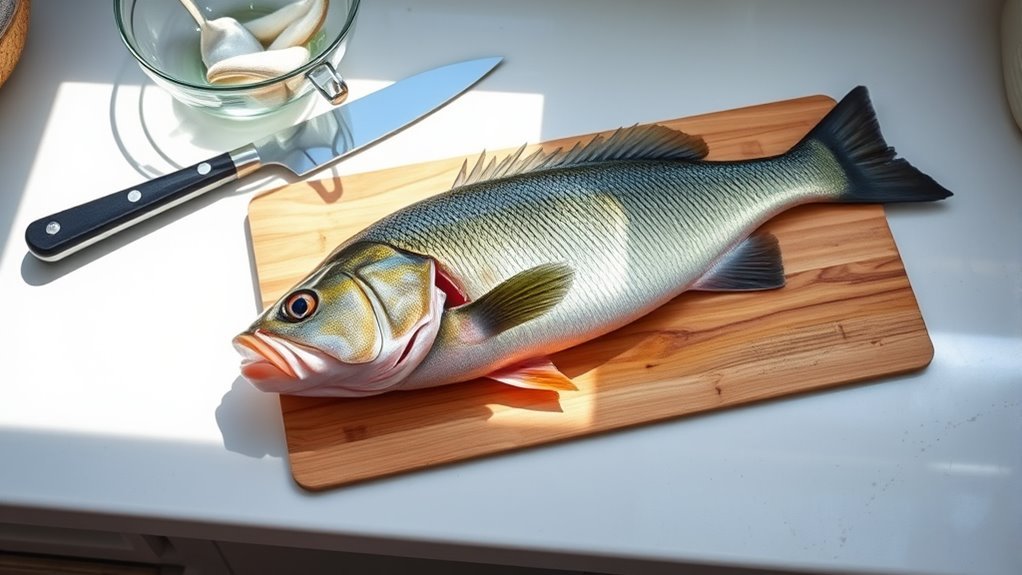
After dispatching and chilling your bass, the next step is to remove its scales and fins to prepare it for cooking. Use a fish scaler or the back of a knife, scraping firmly from tail to head against the scale growth to loosen them efficiently. Hold the fish securely with gloves or a towel to prevent slipping.
Be thorough—scale the entire surface, including fins, belly, back, and around the head.
Once done, rinse under cold water to wash away loose scales and debris. Removing the fins carefully completes this step, making your bass ready for the next phase.
Clean and Gut Your Bass
How do you make sure your bass tastes fresh and clean? The key is to clean and gut it properly right after catching. Follow these steps:
- Cut through the gills immediately to bleed the fish, enhancing flavor and texture.
- With a sharp fillet knife, make a careful incision along the belly from anus to chin, avoiding puncturing internal organs.
- Gently pull and cut to remove all internal organs—intestines, stomach, swim bladder, and gills—so the bass is fully gutted.
- Rinse the bass thoroughly inside and out under cold running water, then pat dry with paper towels.
Cleaning and gutting your bass this way *guarantees* it stays fresh and ready for cooking or freezing.
Fillet Bass for Cooking
Once your bass is thoroughly cleaned and gutted, the next step is to fillet it for cooking. Use a sharp, long, thin fillet knife to carefully cut behind the gills and along the backbone, following the fish’s natural contours.
Lift the fillet away from the ribs and backbone, minimizing meat loss and avoiding bones.
Rinse the fillet under cold water to complete the cleaning process, removing any blood, scales, or debris, then pat it dry.
For larger bass, consider skinning the fillet to reduce any muddy flavor and improve texture, especially if the fish is from a pond.
If you’re not cooking immediately, store the prepared fillets in a cold, ice-filled cooler to keep the fish fresh and prevent mushy meat during preparation.
Brine Your Bass to Boost Flavor and Texture
You can boost your bass’s flavor and texture by soaking it in a simple brine made with kosher salt and cold water. This process firms the meat, reduces fishy odors, and helps remove impurities for a cleaner taste.
Just soak the bass for 15-30 minutes, then rinse it well before cooking to enjoy the best results.
Benefits Of Brining
Although bass boasts a naturally mild flavor, brining it in a saltwater solution gives you a simple way to boost both taste and texture.
When you brine your bass, you:
- Infuse seasoning evenly throughout the meat, enhancing its natural flavor.
- Reduce any fishy or muddy off-flavors, especially in pond-caught bass.
- Improve moisture retention, resulting in juicier, more tender fillets.
- Firm up the texture, making it perfect for frying, grilling, or other cooking methods.
Using about 2 tablespoons of kosher salt per quart of water creates an effective brine.
This process guarantees your bass tastes better and cooks to a desirable texture every time.
Brining is a simple step that elevates your bass from ordinary to delicious.
Brine Preparation Tips
When preparing your brine, dissolve 2 tablespoons of kosher salt in a quart of cold water to guarantee the bass absorbs flavor evenly while maintaining its firm texture. Use cold water to keep the fish from partially cooking and preserve its integrity.
Fully submerge the cleaned and gutted bass in the brine, making sure every part is covered.
Refrigerate it for 30 minutes to 1 hour to reduce fishy odors, improve texture, and help the meat hold moisture during cooking.
After brining, rinse the bass thoroughly with cold water to remove excess salt and pat it dry.
Following these brine preparation tips will boost your bass’s flavor and enhance its texture, making your dish both safe and delicious.
Cook Bass Fillets Perfectly
To cook bass fillets perfectly, start by coating them with seasoned flour or breadcrumbs to create a crispy exterior.
Begin by coating bass fillets with seasoned flour or breadcrumbs for a deliciously crispy crust.
Then, follow these steps:
- Heat oil in a pan over medium-high heat until hot.
- Cook the bass fillets for 3-4 minutes on each side until golden brown and flaky.
- Use a food thermometer to check the internal temperature; it should reach at least 145°F (63°C).
- Remove the fillets promptly from heat to avoid overcooking, which dries out the fish.
This method ensures your bass fillets are crispy on the outside, tender inside, and safe to eat.
Enjoy your perfectly cooked bass fillets with confidence!
Store and Serve Your Cooked Bass
After you’ve cooked your bass fillets to perfection, storing and serving them properly helps maintain their flavor and safety.
To store your cooked bass, promptly cool it within two hours, then refrigerate in airtight containers at or below 40°F (4°C). Consume within 2-3 days for the best food safety and quality.
If you want to keep it longer, freeze the bass in vacuum-sealed or tightly wrapped packaging and use it within 3-6 months to preserve taste and texture.
When you serve your cooked bass, always heat it to an internal temperature of at least 165°F (74°C) to kill any bacteria or parasites.
Use clean plates and utensils, avoiding cross-contamination with raw ingredients, to guarantee safe and delicious meals every time.
Frequently Asked Questions
What Is the Best Way to Eat Bass?
The best way to eat bass is by filleting it carefully, then frying or grilling with the skin on. You’ll enjoy enhanced flavor and texture, especially if you brine it briefly before cooking.
Keep it cold!
Is Bass Fish Safe to Eat?
Yes, bass fish is safe to eat when you handle it properly, clean it well, and cook it thoroughly to 145°F.
Just avoid eating large bass too often due to potential mercury, especially if you’re pregnant or young.
Is Bass Healthier Than Salmon?
Like choosing between a sturdy oak and a blossoming cherry tree, bass is healthier if you’re avoiding mercury and contaminants, but salmon offers richer omega-3s.
You’ll benefit more depending on your nutritional focus and risks.
Why Do Some People Not Eat Bass?
You might avoid bass because larger ones can have higher mercury, and those from polluted waters may taste off.
Plus, visible parasites or strict fishing limits can make you steer clear for health and legal reasons.
Conclusion
Now that you know how to safely prepare bass, you’re ready to enjoy a delicious meal. Did you know that bass can contain up to 50% less mercury when sourced from cleaner waters? Choosing the right fish and handling it properly not only boosts flavor but also keeps you safe.
Follow these steps, and you’ll serve a tasty, healthy dish every time. Enjoy your bass with confidence and great taste! Safe bass fish preparation ensures a flavorful and healthy dining experience.