
Do Ducks Eat Fish?
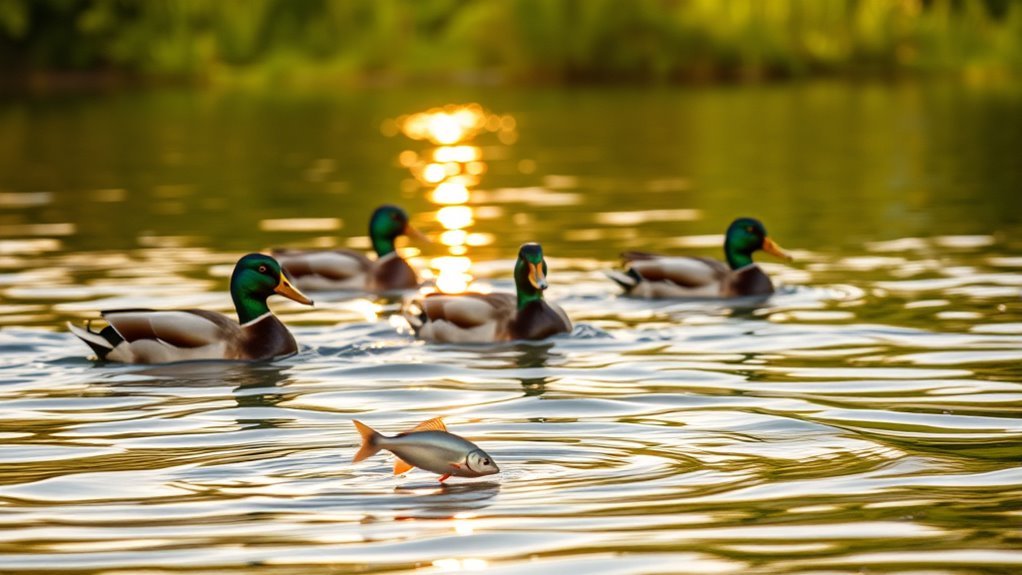
Yes, ducks do eat fish, especially species like mergansers, scaup, and canvasbacks that dive to catch them. Ducks rely on fish for protein and energy, particularly during warmer months when small fish are plentiful near shorelines.
While mallards and dabblers eat fish less often, ducks near lakes and ponds often target small fish in shallow waters. Curious about how ducks hunt fish and protect pond populations? Keep exploring to find out.
Which Ducks Eat Fish and Why?
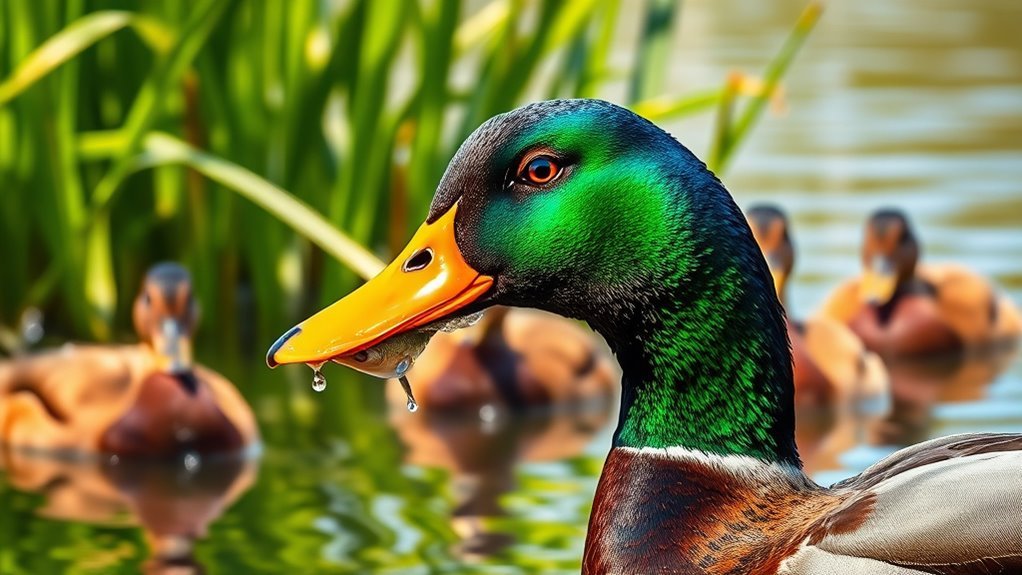
While not all ducks eat fish regularly, certain species like scaup, canvasbacks, and mergansers rely on fish as a crucial part of their diet, especially during migration or in deep-water habitats.
You’ll notice that diving ducks excel at hunting fish underwater, thanks to their streamlined bodies and lobed feet that help them dive efficiently. Mergansers, for example, have serrated bills perfectly designed to catch and hold slippery fish.
Even mallards will eat fish opportunistically when other food is scarce or when small fish are abundant. If you observe these ducks near large lakes, rivers, or coastal areas, you’ll see them diving below the surface to catch their prey.
Why Fish Are Essential in Ducks’ Diets
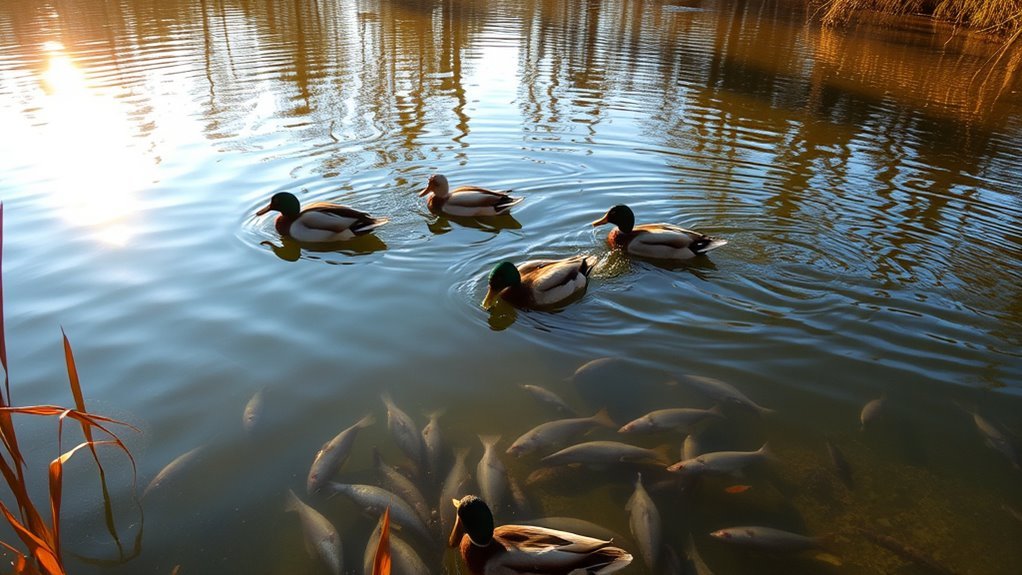
Because fish provide ducks with essential proteins and omega-3 fatty acids, they play a critical role in supporting growth, development, and overall health.
If you observe ducks, especially diving species like mergansers, you’ll notice their diet often includes fish due to their specialized bills designed for catching them.
Including fish in their diet helps ducks meet high-energy demands during migration and breeding seasons.
You’ll find that the availability of fish in aquatic habitats greatly influences what ducks eat, shaping their feeding behavior.
When and Where Do Ducks Eat Fish?
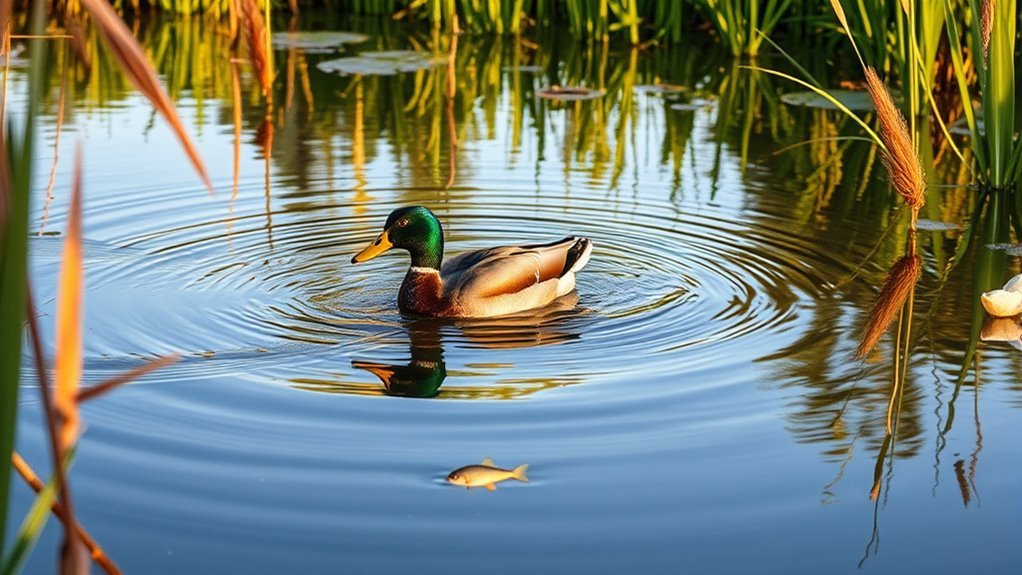
You’ll notice ducks eat fish mostly during warm months when young fish gather near shorelines. They prefer shallow ponds or tidal pools where fish are easy to catch.
Understanding these seasonal and habitat factors helps explain when and where ducks target fish.
Seasonal Fish Consumption
When do ducks most often eat fish? You’ll notice their seasonal fish consumption peaks in warmer months, especially summer. During this time, shallow creeks and tidal pools teem with fry like minnows and fish eggs, making it easier for ducks to forage.
In spring, ducks also eat small fish alongside soft shoots in thawed wetlands, taking advantage of the seasonal availability.
However, fish become a less common part of their diet in winter when water bodies freeze, pushing ducks to focus on seeds, grains, and marsh plants instead.
You’ll find ducks targeting ponds with shallow depths and little cover more frequently since fish are more vulnerable there.
Understanding this seasonal pattern helps explain when and where ducks rely on fish as a food source.
Preferred Fish Habitats
As fish become more available in warmer months, ducks focus their feeding efforts on specific habitats that make catching prey easier. You’ll find ducks hunting in their preferred fish habitats like tidal pools, marsh edges, and shallow ponds.
These areas offer plenty of fry and small fish near the shoreline or in shallow water, which makes it easier for ducks to catch their meals.
Ducks avoid deep lakes or fast-moving rivers because larger fish there are harder to catch. Instead, they prefer shallow, slow-moving ponds with muddy or vegetated margins where fish are more accessible.
Fish Accessibility Factors
Where do ducks find the easiest fish meals? They prefer spots where fish accessibility is high, especially in shallow waters or tidal pools. These environments make it simple for ducks to spot and catch fish.
You’ll notice ducks feeding on fish mainly in warmer months when small fish linger near the shoreline.
Three key factors influence fish accessibility for ducks:
- Shallow or slow-moving ponds with trapped or submerged fish offer easier prey.
- Clear water and minimal vegetation improve visibility and hunting success.
- Deeper or murkier waters reduce the chances of ducks accessing fish.
Do Backyard Ducks Eat Fish in Ponds?
Although backyard ducks don’t always eat fish, they readily catch small fish in shallow ponds where water is less than a foot deep. If you have such a pond, ducks will find it easy to snatch vulnerable fish like neon goldfish.
You can reduce this by increasing the pond depth to around two feet and adding floating vegetation, which offers cover for the fish.
Ducks tend to avoid fish in ponds with strong water movement, so installing solar fountains or other devices that create currents can help scatter fish and make them harder targets.
How Ducks Impact Fish Populations in Ponds
You’ll notice ducks often prey on small fish, especially in shallow ponds where it’s easy to catch them.
The design of your pond—like its depth and vegetation—plays a big role in how much ducks impact fish populations.
Understanding these factors can help you protect young fish from being eaten.
Fish Predation by Ducks
When ducks forage in shallow ponds, they often prey on small fish like fry and juveniles, especially during warmer months when fish swim near the surface. Feeding ducks in these environments can directly affect fish populations.
Here’s how fish predation by ducks impacts your pond ecosystem:
- Ducks target easily accessible fish, such as neon goldfish, especially in shallow, uncovered ponds where fish have little shelter.
- Species like mallards and northern shovelers opportunistically feed on fish when available, increasing predation pressure during warmer seasons.
- Excessive predation can reduce small fish numbers, disrupting the balance of your pond’s aquatic life.
Understanding these points helps you see how feeding ducks influences fish populations and the overall health of your pond.
Pond Habitat Factors
Since shallow, uncovered ponds make fish easy targets, you can reduce duck predation by adjusting your pond’s habitat. Shallow ponds less than a foot deep with little cover let ducks easily spot and catch small fish like fry and juvenile koi.
By increasing pond depth to around two feet, you create refuge zones where fish can escape.
Adding floating vegetation or aquatic plants also disrupts ducks’ line of sight and provides shelter for fish.
Calm, slow-moving water without cover encourages fish predation, especially during warmer months when fry stay near shorelines.
Modifying your pond habitat with deeper areas and plant cover helps protect fish populations from ducks, balancing the ecosystem and reducing fish losses caused by predation.
How to Protect Your Pond Fish From Duck Predation
Although ducks add charm to your pond, they can pose a threat to your fish by preying on them. To protect your fish from duck predation, consider these effective strategies:
Ducks enhance your pond’s beauty but may threaten fish by preying on them. Protect your aquatic life wisely.
- Increase pond depth to at least 2 feet and add floating vegetation. This makes fish less accessible and reduces the risk of fish predation.
- Install solar-powered fountains or water movement devices. Moving water scatters fish and discourages ducks from targeting shallow, calm areas.
- Use submerged or floating barriers around fish habitats. These physical barriers prevent ducks from reaching and preying on your fish.
How Do Ducks Catch Fish in the Wild?
How exactly do ducks catch fish in the wild? You’ll notice that some ducks, like mergansers, have narrow, serrated bills designed to grip slippery fish underwater tightly. These specialized bills act like built-in fishhooks, preventing their prey from escaping.
Diving ducks, such as canvasbacks and scaup, use powerful strokes to propel themselves beneath the surface, chasing fish and aquatic invertebrates with agility. You’ll also find species like the harlequin duck diving to forage for fish eggs and small aquatic creatures during breeding seasons.
While dabbling ducks rarely target fish, they might seize small fry near shorelines. Overall, ducks rely on their unique bill shapes and underwater diving skills to hunt effectively in lakes, rivers, and coastal waters.
Frequently Asked Questions
Do Normal Ducks Eat Fish?
Yes, normal ducks eat fish occasionally, especially small ones near shallow waters. You’ll find them mostly eating plants and insects, but they’ll catch fish when it’s easy and plentiful during warmer months.
What Kind of Fish Can Ducks Eat?
You can expect ducks to eat small fish like minnows, fry, gizzard shad, and young trout. They prefer fish that are easy to catch and swallow, avoiding larger or deep-dwelling species that are too big for them.
What Type of Duck Eats Fish?
You’ll find that diving ducks like mergansers, canvasbacks, redheads, and scaup eat fish regularly.
Mallards might snack on fish too, especially fry near shorelines during warm months when fish are easier to catch.
Where Do Ducks Sleep at Night in the Winter?
You’ll find ducks sleeping in sheltered spots like reeds, shrubs, or tree branches during winter nights. They often huddle together to stay warm and safe, sometimes resting on water if it’s protected from predators.
Conclusion
If you’re wondering whether ducks eat fish, the answer is yes—some species do, especially diving ducks that catch up to 60% of their diet from fish. Knowing this helps you understand their role in pond ecosystems and how they impact fish populations.
If you have backyard ducks, you’ll want to protect your fish, especially during feeding times. Understanding their behavior lets you enjoy both ducks and fish in harmony.
By recognizing that ducks eat fish, you can better manage your pond environment and maintain a balanced ecosystem where ducks and fish coexist peacefully.