How to Lower Ammonia in a Fish Tank Step by Step
To lower ammonia in your fish tank effectively, start by testing ammonia levels weekly with reliable kits. Regular monitoring helps you catch issues early and maintain a safe environment for your fish.
Next, perform a 25-50% water change using dechlorinated water and add an ammonia-neutralizing conditioner to reduce toxins quickly. Remove uneaten food promptly and temporarily stop feeding to minimize waste buildup.
Boost aeration to increase oxygen levels and support beneficial bacteria. Maintain your biological filter carefully by rinsing filter media only in tank water to preserve helpful microbes. Incorporate live plants and adjust feeding habits to prevent future ammonia spikes.
Stick to these steps, and you’ll soon see healthier water and fish. Further strategies can help refine your approach and keep your tank thriving long-term.
Why High Ammonia Levels Are Dangerous for Fish
Because ammonia is odorless and colorless, you mightn’t realize when its levels rise in your fish tank, but even small increases can seriously harm your fish.
Ammonia negatively impacts fish health by causing gill and tissue damage, which makes it harder for your fish to breathe. This damage, combined with higher pH and temperature, worsens ammonia toxicity, putting your fish at greater risk.
Elevated ammonia also weakens their immune systems, making infections more likely.
Maintaining good water quality is essential because beneficial bacteria help break down ammonia, keeping it at safe levels. Without enough of these bacteria, ammonia can quickly accumulate, stressing your fish and leading to long-term health problems or even death.
Monitoring and managing ammonia is key to a healthy tank environment.
How to Test Ammonia Levels in Your Fish Tank
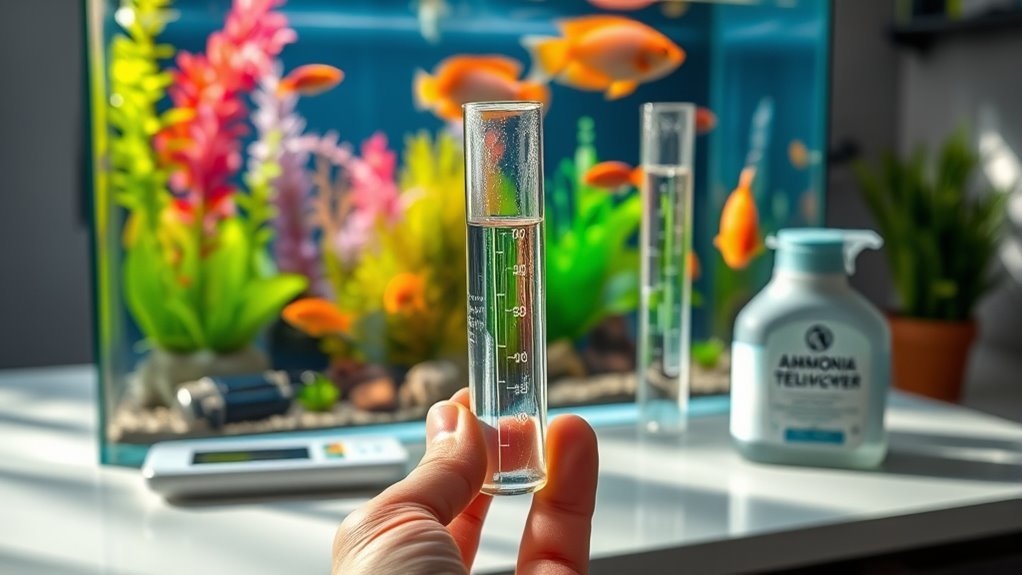
How often should you check the ammonia levels in your fish tank? You should perform water testing at least once a week, and more often during ammonia spikes or after water changes.
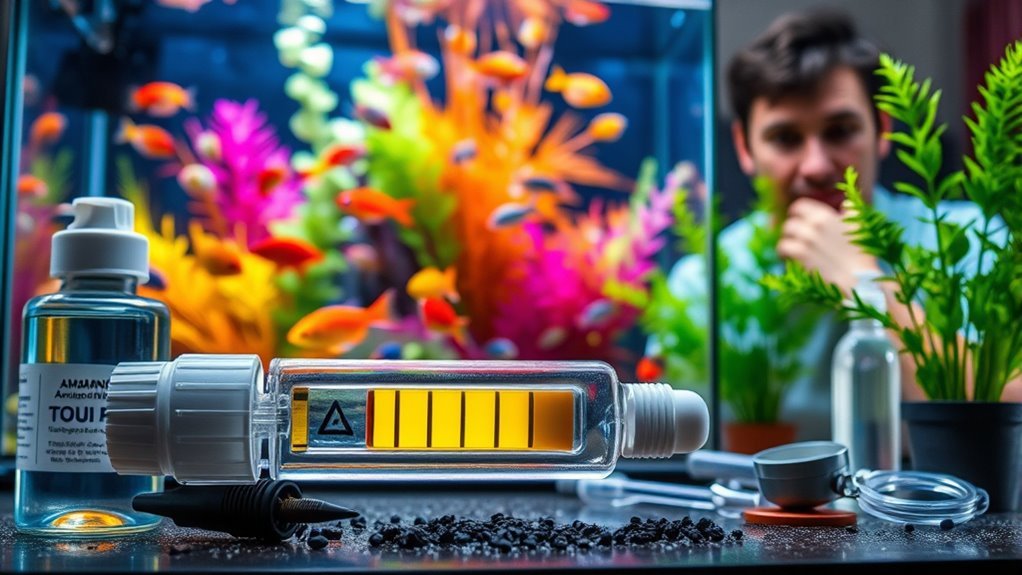
Start by using a reliable ammonia test kit—either liquid reagent-based or digital—for accurate measurements.
Begin with a trusted ammonia test kit, whether liquid reagent or digital, for precise readings.
Collect a water sample at eye level and follow the kit’s instructions carefully to guarantee correct test results.
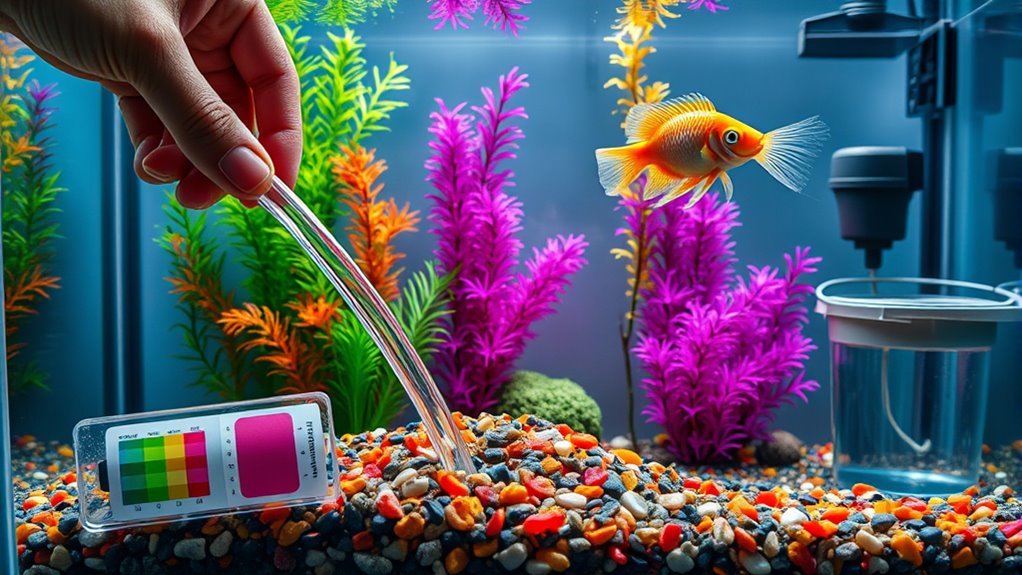
Once you complete the test, compare the results to the provided color chart to determine ammonia concentration in parts per million (ppm).
It’s important to record your test results regularly; this helps you track ammonia trends and gauge how well your strategies are working to maintain a safe environment for your fish.
Immediate Steps to Reduce Ammonia Quickly
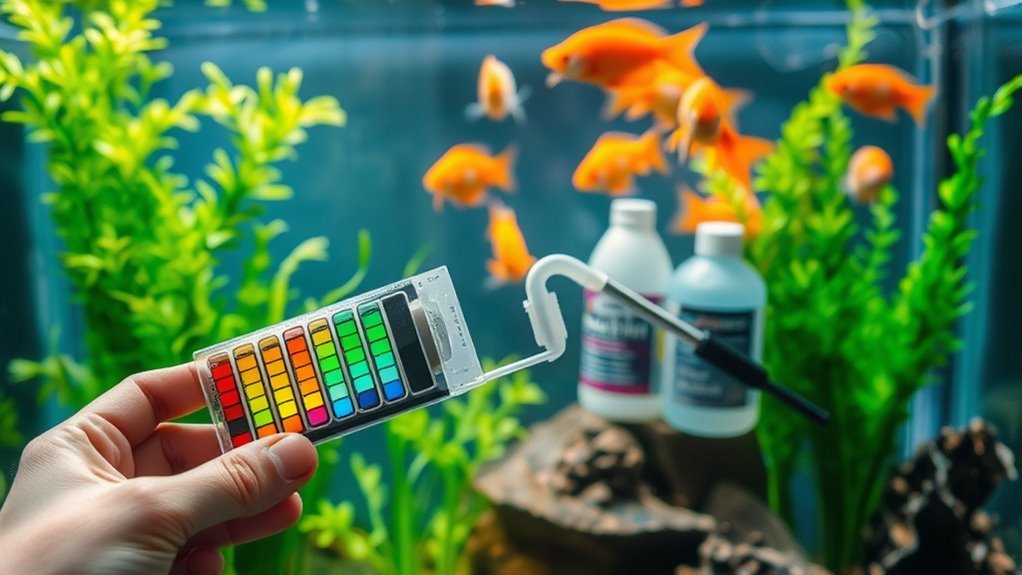
When ammonia levels spike in your fish tank, you need to act fast to protect your aquatic life. Start by performing a partial water change of 25-50% using dechlorinated water to quickly dilute ammonia levels.
Next, add a water conditioner designed to neutralize ammonia, like Seachem Prime, to detoxify the water immediately.
Increase aeration by placing an air stone or creating surface agitation to boost oxygen levels and help your fish recover.
Stop feeding your fish temporarily to reduce waste and prevent further ammonia buildup.
Continue testing ammonia levels regularly to track progress and determine if additional treatments are necessary.
These immediate steps help stabilize your tank and buy time while you work on long-term ammonia control.
How to Remove Uneaten Food and Debris Safely
You’ll want to spot uneaten food quickly and remove it before it breaks down and raises ammonia levels.
Use a siphon or gravel vacuum to safely clean debris from the substrate without harming beneficial bacteria.
Keeping a regular cleaning routine helps maintain a healthy environment for your fish and keeps ammonia in check.
Identifying Uneaten Food
Although uneaten food might seem harmless at first, it quickly decomposes and raises ammonia levels, harming your fish. To keep your fish tank healthy, you need to identify uneaten food early and act promptly. Watch for leftover pellets or flakes that sink to the substrate or float on the surface.
Check water clarity and smell during water changes; any murkiness or foul odor can signal decomposing food.
To manage uneaten food effectively:
- Remove leftovers within 2-3 minutes after feeding.
- Use a siphon or fine net during water changes.
- Feed only small portions your fish can eat quickly.
- Regularly inspect the substrate for hidden food debris.
Safe Debris Removal
Removing uneaten food is just the start of keeping ammonia levels low in your fish tank. For effective debris removal, use a siphon or gravel vacuum during water changes to gently lift uneaten food and waste from the substrate.
Don’t forget to skim floating debris and uneaten food off the surface with a fine net or filter sponge to prevent decay.
Overfeeding only worsens ammonia spikes, so feed your fish sparingly.
Regular filter maintenance is essential—clean filter media to stop trapped debris from breaking down and raising ammonia.
Also, spot clean tank walls and decorations to remove algae and biofilm buildup that can release ammonia when decayed.
This careful approach to debris removal helps maintain a safer, healthier environment for your fish.
Regular Cleaning Routine
When you stick to a regular cleaning routine, you keep ammonia levels in check and create a healthier environment for your fish. To effectively remove debris without stressing your aquatic pets, follow these key steps:
- Use a siphon or gravel vacuum during partial water changes to remove uneaten food and waste.
- Gently stir the substrate to loosen trapped debris before siphoning.
- Clean tank walls and decorations to eliminate surface film and algae buildup.
- Perform weekly partial water changes (25-50%) with dechlorinated water to dilute ammonia and maintain stable water parameters.
Consistent regular cleaning helps prevent ammonia spikes and keeps your tank’s ecosystem balanced.
How to Use Ammonia Detoxifiers Safely
If you want to keep your fish safe while lowering ammonia levels quickly, using ammonia detoxifiers correctly is crucial. Always follow the manufacturer’s instructions to avoid harming beneficial bacteria. Use detoxifiers mainly during water changes to bind ammonia and prevent toxicity spikes.
Avoid overdosing, as it can disrupt water chemistry and beneficial bacteria. Regularly test ammonia levels to ensure the detoxifiers are working effectively.
| Step | Action | Purpose |
|---|---|---|
| 1. Read Instructions | Follow dosing guidelines | Safe, effective use |
| 2. Add During Water Change | Dose before or during change | Neutralize residual ammonia |
| 3. Avoid Overdosing | Stick to recommended amounts | Protect beneficial bacteria |
| 4. Test Water | Monitor ammonia levels | Confirm detoxifier effectiveness |
How to Maintain Filters to Control Ammonia
To keep ammonia levels low, you need to clean your filter regularly without harming the beneficial bacteria that break down waste.
Rinse the filter media gently in tank water during water changes, and replace it when it starts to lose effectiveness.
Maintaining your filter properly guarantees it continues to process ammonia efficiently.
Regular Filter Cleaning
Maintaining your filter regularly plays an essential role in controlling ammonia levels in your fish tank. Proper cleaning ensures your filter media stays effective without harming beneficial bacteria critical for ammonia breakdown.
When performing water changes, rinse filter media gently in dechlorinated water to remove debris but preserve bacteria.
Also, focus on cleaning mechanical components to keep everything running smoothly.
Here’s what you should do:
- Rinse filter media in dechlorinated water during water changes.
- Avoid over-cleaning; clean mechanical parts but keep biological media intact.
- Check and replace filter cartridges or pads as needed.
- Inspect and clean impellers and spray bars monthly to prevent buildup.
Following these steps keeps your filter efficient, helping maintain safe ammonia levels consistently.
Preserve Beneficial Bacteria
Although it’s tempting to clean your filter thoroughly, preserving beneficial bacteria is essential to keeping ammonia levels low in your tank. When maintaining your filter media, clean it gently to avoid removing all beneficial bacteria that drive biological filtration.
Avoid replacing all filter media at once, since this can disrupt bacterial colonies and cause ammonia spikes. If you’re setting up a new tank or recovering one, use established biological filter media from a healthy system to introduce beneficial bacteria quickly.
You can also add bacterial supplements like Fritz Zyme 7 or Tetra Bacteria to boost beneficial bacteria growth and stabilize ammonia levels.
Regularly monitor water parameters to guarantee your biofilter is working effectively and adjust your maintenance routine as needed to support these vital bacteria.
Filter Media Replacement
How often should you replace your filter media to keep ammonia levels in check? Replace it gradually, one section at a time, to maintain continuous biological filtration and avoid ammonia spikes. Rinse your filter media in tank water during water changes to remove debris without harming beneficial bacteria.
Follow the manufacturer’s recommended replacement schedule for each type of media, like sponges, bio-balls, or ceramic rings. Avoid using tap water or harsh chemicals when cleaning, as they can kill helpful bacteria and disrupt the nitrogen cycle.
Keep these tips in mind for effective media replacement:
- Rinse filter media only in tank water
- Replace media gradually, not all at once
- Follow manufacturer’s replacement schedule
- Consider adding biological supplements to boost bacteria
Proper media replacement supports stable ammonia control and healthy fish.
How to Adjust Feeding Habits to Prevent Ammonia
When you control feeding habits carefully, you can considerably reduce ammonia buildup in your fish tank. Start by feeding only what your fish can consume within 1-3 minutes to prevent excess waste. Overfeeding is a common cause of ammonia spikes, so establish a consistent feeding schedule and promptly remove any uneaten food.
Using high-quality, easily digestible food also helps minimize leftover food that decomposes and generates ammonia.
During ammonia spikes, reduce feeding frequency to lessen waste and ease the strain on your tank’s biological filtration.
Finally, adjust feeding amounts gradually based on your fish’s size, species, and tank conditions to maintain a stable nitrogen cycle.
These steps help prevent ammonia and keep your aquatic environment healthy.
How Live Plants Help Lower Ammonia Naturally
Since live aquatic plants absorb ammonia directly through their leaves and roots, they serve as natural biofilters in your fish tank. By incorporating live plants, you enhance the biological filtration system, helping to maintain stable ammonia levels and improve water quality naturally.
Here’s how live plants help lower ammonia:
- Fast-growing species like duckweed and hornwort rapidly take up ammonia.
- They convert ammonia into less toxic compounds used for their growth.
- Increased oxygen from plants supports beneficial bacteria that break down ammonia.
- Healthy plants continuously absorb nutrients, preventing ammonia buildup.
Using live plants not only reduces ammonia but also promotes a balanced ecosystem in your tank. Adding and maintaining them regularly ensures your fish enjoy a cleaner, safer environment.
Sustainable Habits to Prevent Ammonia Buildup
You can prevent ammonia buildup by sticking to a regular maintenance routine, including partial water changes and monitoring water quality.
Keep your fish stocking balanced to avoid overcrowding, which can quickly increase waste and ammonia levels.
These habits help create a stable and healthy environment for your tank inhabitants.
Regular Maintenance Routine
Although maintaining a clean tank requires consistent effort, establishing a regular maintenance routine is key to preventing ammonia buildup. You’ll want to prioritize tasks that support a healthy environment for your fish and beneficial bacteria.
Here’s what you should focus on:
- Perform partial water changes of 20-30% weekly to dilute ammonia and maintain water quality.
- Monitor water parameters regularly with test kits to catch ammonia spikes early.
- Make certain your biological filtration is working well by cleaning filters properly and avoiding overload.
- Add live plants to naturally absorb ammonia and enhance the nitrogen cycle.
Balanced Fish Stocking
Keeping ammonia levels low goes beyond regular cleaning and water changes. Balanced fish stocking plays a key role in preventing ammonia buildup. Match your tank capacity to the number and size of fish to avoid overloading the biological filter.
Introduce new fish gradually to let beneficial bacteria adjust. Avoid overfeeding since excess food raises ammonia levels. Also, incorporate aquatic plants; they absorb ammonia directly, helping stabilize water parameters.
Regularly monitor water parameters and perform partial water changes when needed to maintain a healthy environment.
| Practice | Benefit | Tip |
|---|---|---|
| Stock fish properly | Prevents filter overload | Match fish size and number to tank |
| Gradual fish introduction | Supports bacteria growth | Add new fish over weeks |
| Controlled feeding | Reduces waste buildup | Feed fish for 1-3 minutes only |
| Monitor water parameters | Detect ammonia spikes early | Test water weekly |
| Use aquatic plants | Absorb ammonia | Add fast-growing species |
When to Get Help for Ammonia Problems
If ammonia levels stay above 0.25 ppm despite your efforts with water changes and neutralizing products, it’s time to seek professional help.
Don’t hesitate to get help to protect your fish and maintain water quality. Professional assistance can identify underlying issues you might miss.
Seek professional help to safeguard your fish and uncover hidden water quality issues.
Consider reaching out for help if you notice:
- Ammonia levels spike above 4 ppm, requiring urgent intervention.
- Fish show severe symptoms like rapid gill movement or fin clamping.
- Ammonia readings are inconsistent or persistently high despite treatment.
- Water quality doesn’t improve within 24-48 hours after corrective steps.
Contact an aquatic veterinarian, experienced fish keeper, or local fish store to address persistent ammonia problems effectively.
Frequently Asked Questions
How to Reduce Ammonia in a Fish Tank Quickly?
You can quickly reduce ammonia by doing a 25-50% water change with dechlorinated water, adding ammonia detoxifiers, stopping feeding temporarily, increasing aeration, and testing the water often to guarantee levels drop safely and fast.
How Long Does It Take for Ammonia Levels to Go Down in a Fish Tank?
Ammonia levels can drop like a tide retreating—sometimes within hours, sometimes taking days. You’ll see quick relief with water changes or treatments, but rebuilding bacteria takes weeks.
Keep testing to track your tank’s healing rhythm.
How to Reduce Ammonia Immediately?
You should perform a 25-50% water change with dechlorinated water right away, add an ammonia-neutralizer, stop feeding temporarily, and increase aeration.
These actions quickly reduce ammonia and protect your fish from harm.
Can Fish Recover From High Ammonia Levels?
Yes, your fish can recover from high ammonia if you act fast. Picture a healing plant: with clean water and care, fish bounce back.
But prolonged exposure might cause lasting damage, so quick intervention’s essential for survival.
Conclusion
Keeping your fish tank’s environment cozy means staying on top of ammonia levels. By testing regularly, removing leftovers promptly, and adjusting feeding habits, you’ll help your aquatic friends thrive. Adding some live plants can gently work wonders, too.
Remember, a little attention goes a long way in maintaining a happy, healthy tank. If things feel overwhelming, don’t hesitate to seek a helping hand—your fish will thank you with vibrant, lively swimming.
To lower ammonia in a fish tank effectively, consistent care and monitoring are essential. Following these steps will ensure your aquatic environment remains safe and comfortable for your fish.