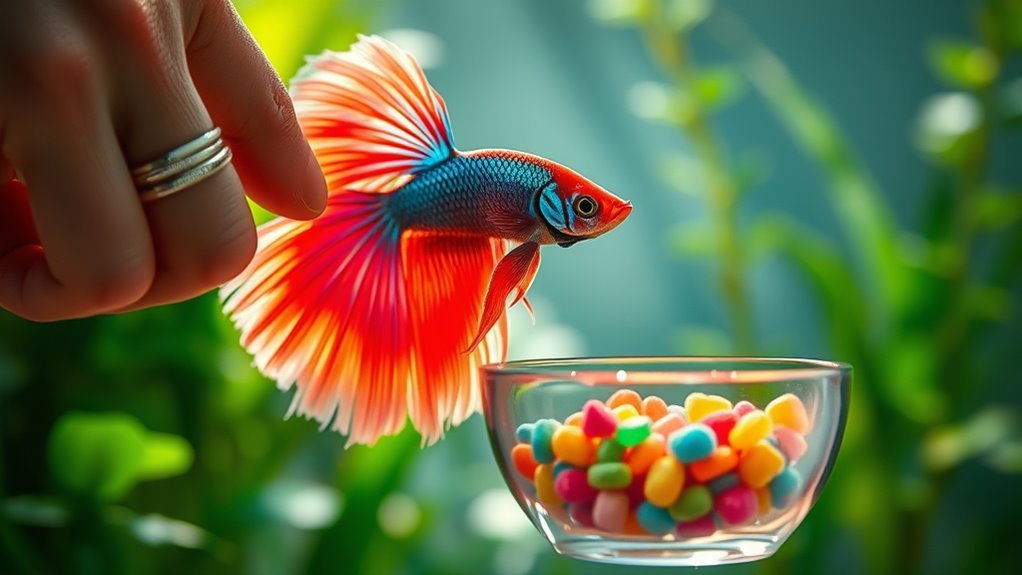
How Often Should You Feed Betta Fish?
You should feed your betta fish once or twice a day, offering about 4-6 small pellets each time. Proper betta fish feeding is essential for their health and longevity. Make sure they finish feeding within a few minutes to avoid leftovers and water issues.
Including a weekly fasting day helps prevent bloating and digestive problems. Watch your betta’s behavior and belly shape to adjust portions as needed. Maintaining this balance supports their health and activity.
Keep going to discover the best foods and feeding tricks for your betta’s well-being.
How Often to Feed Betta Fish for Best Health
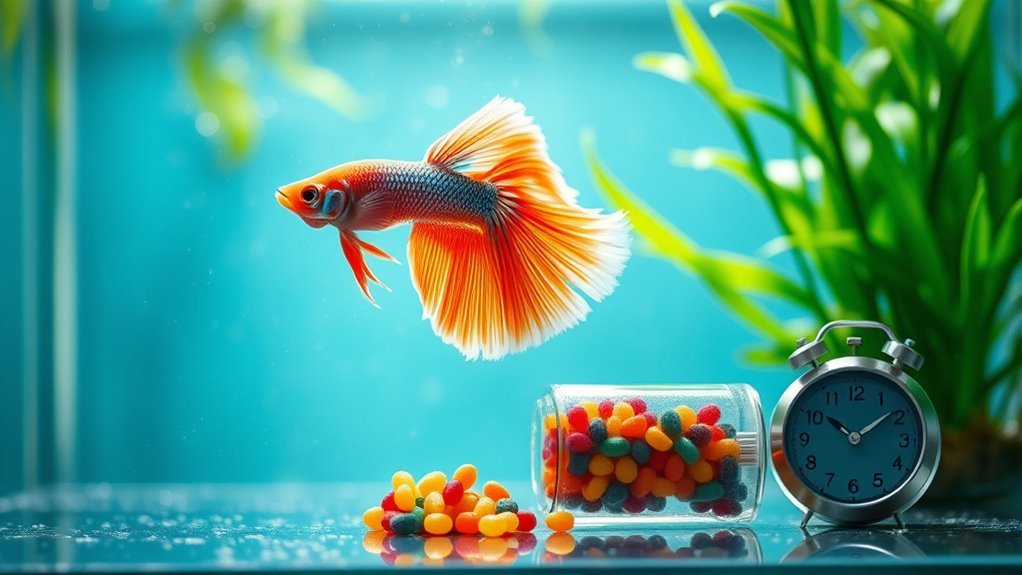
Although feeding your betta fish once or twice daily is common, many owners find that giving one meal a day with a weekly fasting day helps prevent bloating and digestive issues. You should adjust your betta’s feeding frequency based on its activity and appetite to promote ideal health.
Splitting the daily feeding into smaller portions mimics natural behavior, but be careful not to overfeed. More than six pellets per day can harm your betta and degrade water quality, leading to health risks.
Incorporating a fasting day lets your betta’s digestive system rest and helps keep the tank clean.
How Much Food Does a Betta Fish Need Each Time
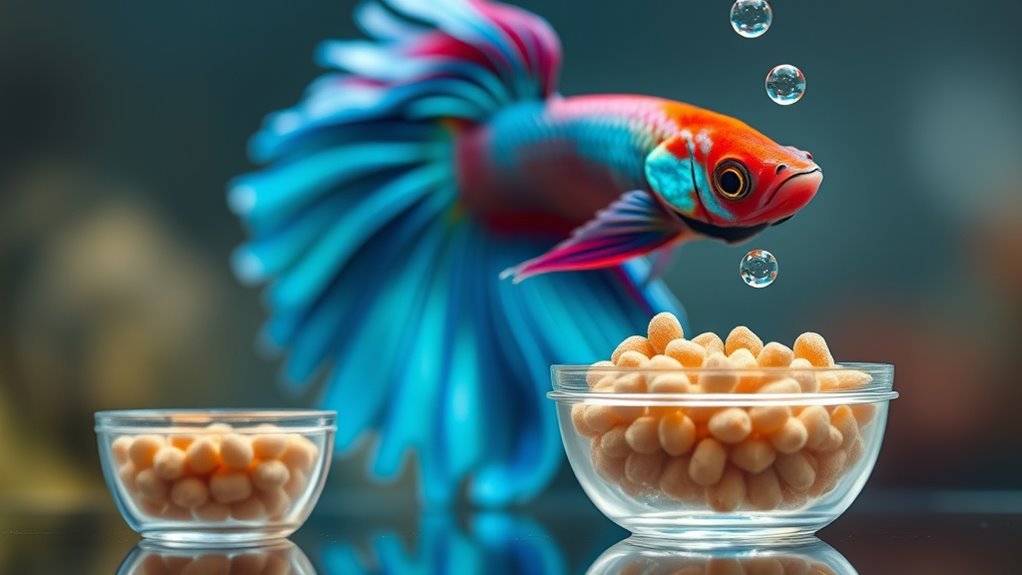
You should feed your betta about 4-6 tiny pellets each time, roughly matching the size of its eye. Keep portions small to avoid overfeeding, which can cause health issues.
Watch your fish eat and adjust the amount so it finishes within 2-3 minutes without leftover food.
Appropriate Pellet Quantity
Since a betta fish’s stomach is about the size of its eye, you should feed it only 4 to 6 tiny pellets per session. This limited size means the feeding quantity must be precise to avoid health problems.
When deciding the amount of food, consider these points:
- Only offer as many pellets as your betta can eat within 2-3 minutes.
- Overfeeding with more than 6 pellets can cause bloating and digestive issues.
- Adjust the pellet quantity based on your betta’s appetite and leftovers.
- Use pellets sized appropriately for betta fish to ensure easy consumption.
Monitor your fish’s response during feeding to determine the ideal food amount.
Maintaining the pellet quantity balanced supports your betta’s health and prevents waste.
Portion Size Guidelines
Finding the right portion size for your betta fish hinges on understanding its small stomach, about the size of its eye.
When feeding bettas, you want to provide just enough fish food to satisfy without causing overfeeding.
Most experts suggest 4 to 6 pellets per feeding, but if you use tiny pellets, 3 to 5 will usually do.
Stick to your feeding schedule and watch how quickly your betta finishes the food; aim for consumption within 2 to 3 minutes.
Overfeeding can lead to bloating and digestive issues, so it’s better to offer a slightly smaller portion size than too much.
Adjust based on your fish’s appetite to keep its fish stomach healthy and avoid waste.
Best Betta Fish Foods to Keep Your Fish Healthy
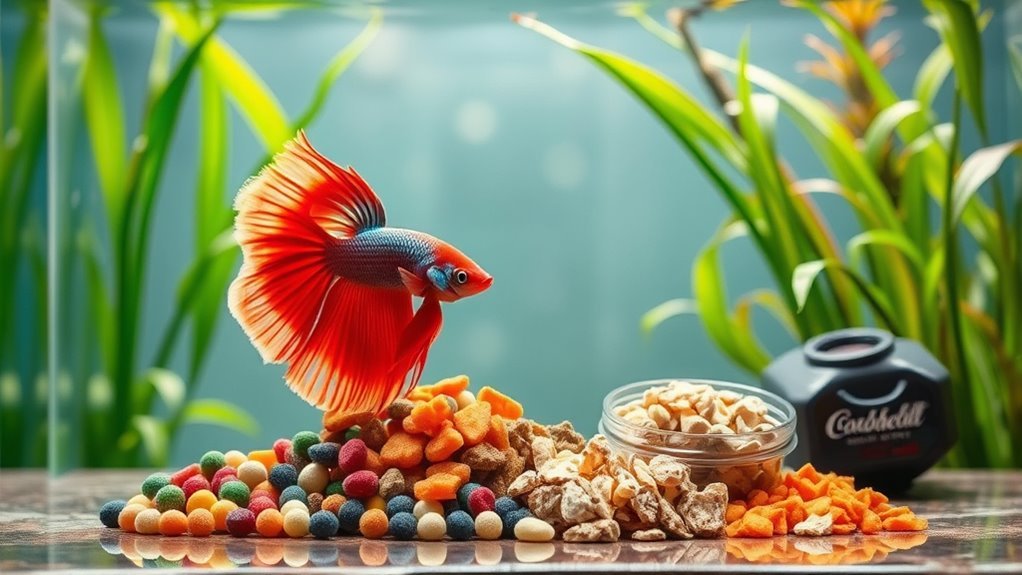
To keep your betta healthy, choose floating pellets that offer balanced nutrition and are easy to portion, like Hikari Bio-Gold or New Life Spectrum.
You can also supplement their diet with frozen or freeze-dried treats such as brine shrimp and bloodworms to boost variety and nutrients.
Avoid flakes since they’re messy and hard to control, and focus on foods that support your betta’s natural feeding habits.
Ideal Pellet Characteristics
When choosing pellets for your betta fish, prioritize floating varieties that stay on the water’s surface, making feeding and observation much easier.
Select high-quality pellets with nutrient content rich in fish meal or krill meal to boost health and vibrant colors.
Guarantee the pellet size is small enough to fit comfortably in your betta’s mouth, preventing choking and overfeeding.
A balanced diet is key, so consider varying pellet brands to provide diverse nutrients.
Keep feeding frequency consistent to maintain your fish’s wellbeing.
- Choose floating pellets for ease of feeding
- Opt for high-quality pellets with protein-rich ingredients
- Pick pellet size suited for your betta’s small mouth
- Use multiple pellet brands to ensure balanced nutrition
- Feed pellets according to recommended feeding frequency
Alternative Food Options
Although high-quality pellets form the foundation of a betta’s diet, incorporating alternative food options can keep your fish healthy and engaged. Adding frozen foods like brine shrimp and bloodworms is a great way to diversify diet and provide essential nutrients beyond what a high-quality pellet offers.
Live foods such as mosquito larvae and fruit flies not only boost protein intake but also stimulate your betta’s natural hunting instincts. When planning your feeding regimen, mix these alternatives with pellets to maintain balance and interest.
Freeze-dried bloodworms can be convenient, but soak them first to avoid bloating.
Nutritional Quality Factors
Because bettas rely heavily on protein, you should choose foods rich in high-quality ingredients like fish meal or krill meal to keep them healthy and vibrant. Prioritize nutritional quality by selecting high-protein foods that support growth and color.
Diversifying diet with live foods, frozen foods, or freeze-dried options like bloodworms and brine shrimp adds essential nutrients and stimulation.
Pay attention to ingredient quality and avoid fillers or artificial additives that harm food quality.
Also, choose pellet sizes that match your betta’s mouth to prevent choking and overfeeding.
- Opt for floating pellets to monitor feeding easily
- Include live foods to mimic natural diet
- Use frozen foods for variety and nutrition
- Avoid low-quality fillers and artificial colors
- Match pellet size to your betta’s mouth for safety
How to Adjust Feeding Based on Your Betta Fish’s Behavior
If you pay close attention to your betta’s eating habits, you’ll quickly learn how to adjust their feeding to keep them healthy. Monitor their appetite and behavior closely; a hungry betta will enthusiastically eat all food, signaling you might increase the amount. If food remains uneaten after a few minutes, reduce portions to avoid overfeeding.
Check their stomach shape: a rounded belly means proper feeding, while bloated or sunken indicates over- or underfeeding. Adjust feeding frequency and amount based on activity level and signs like lethargy or hiding.
| Behavior | Feeding Adjustment |
|---|---|
| Enthusiastically eats all food | Increase amount slightly |
| Leaves food uneaten | Decrease amount |
| Bloated stomach | Reduce feeding |
| Sunken belly | Increase feeding |
| Lethargic or hiding | Assess and adjust feeding |
Risks of Overfeeding Your Betta and How to Avoid Them
When you overfeed your betta, you risk serious health issues like bloating, constipation, and swim bladder problems that can be fatal if left untreated. Overfeeding also harms water quality as uneaten food decomposes, raising ammonia levels and stressing your fish.
Since a betta’s stomach is roughly the size of its eye, feeding more than 6 pellets or more than three times daily leads to health risks.
To avoid these problems:
- Feed only what your betta can eat in a few minutes
- Limit daily pellets to 4-6 pieces
- Remove uneaten food promptly
- Monitor your betta’s behavior and adjust accordingly
- Incorporate fasting days to aid digestion
Creating a Betta Feeding Schedule That Works for You
Overfeeding can cause serious health problems for your betta, so setting up a consistent feeding schedule helps you keep portions in check and your fish healthy. Establish a feeding routine once or twice daily, offering 4-6 pellets per meal. Watch your betta’s activity to adjust the food amount, ensuring they finish quickly.
Incorporate fasting days to support digestion and maintain water quality.
| Feeding Schedule | Portion Control | Betta Activity |
|---|---|---|
| 1-2 times daily | 4-6 pellets | Active, alert |
| Consistent timing | Avoid overfeeding | Responds well |
| Observe behavior | Adjust as needed | Healthy coloration |
| Include fasting days | Prevent bloating | Vibrant, energetic |
| Maintain water quality | Balance food amount | Stress-free fish |
A tailored schedule promotes a happy, thriving betta.
Using Fasting Days to Improve Betta Health
Why should you include fasting days in your betta’s feeding routine? Fasting days play a vital role in maintaining your betta’s health by giving its digestive system a much-needed break. This helps prevent bloating and swim bladder issues, which are common problems in betta fish.
Many experts in betta care recommend fasting at least once a week as part of a balanced feeding routine. During fasting days, you can also feed a small amount of cooked pea to aid digestion.
Benefits of fasting days include:
- Clearing the digestive system
- Reducing risk of constipation
- Preventing bloating
- Avoiding swim bladder issues
- Supporting overall betta health
Incorporate fasting days to keep your betta active and healthy.
How to Monitor Your Betta Fish’s Health Through Feeding Habits
Although bettas can’t tell you how they feel, you can monitor their health by paying close attention to their feeding habits. Watch your betta fish’s stomach: a slight, rounded belly means proper food intake, while bloating signals overfeeding.
Monitor your betta’s health by observing its stomach shape—rounded means well-fed, bloated signals overfeeding.
Observe behavior during feeding—eagerness suggests adequate feeding frequency, while reluctance may indicate health issues or overfeeding.
Changes in activity or coloration also serve as health indicators linked to nutrition.
Regularly check your betta’s weight to track trends, helping you adjust feeding habits accordingly.
Frequently Asked Questions
How Long Can a Betta Fish Go Without Eating?
Your betta fish can go without eating for about a week safely, sometimes up to 10 days.
Don’t push it longer, though, or your fish might get stressed or develop health problems, so watch closely.
Is 2 Pellets Enough for Betta Fish?
Do you think two pellets truly satisfy your betta? No, it’s usually not enough.
You should gradually increase to 4-6 pellets per feeding while watching your fish’s health to avoid underfeeding or overfeeding.
How Do I Know if My Betta Fish Is Eating Enough?
You’ll know your betta’s eating enough if it finishes food quickly, stays active, and has a belly about the size of its eye.
Watch for bloating or thinness—those signs mean you need to adjust feeding.
How to Tell if Betta Is Happy?
You’ll know your betta’s happy when it swims actively, shows vibrant colors, enthusiastically eats, keeps fins open, and looks relaxed.
Smooth fins and clear eyes also tell you it’s healthy and content in its environment.
Conclusion
Feeding your betta fish is like tending a delicate garden—consistent care and balance nurture vibrant life. By feeding your betta just enough, you’re planting seeds of health and happiness, avoiding the weeds of overfeeding that can harm them. Pay attention to their behavior, adjust wisely, and include fasting days to keep their spirit bright.
Remember, your attentive routine is the sunlight your betta needs to flourish and swim with joyful energy every day. Proper feeding habits, combined with regular observation, are key to maintaining your betta fish’s health and wellbeing. Establish a feeding schedule that supports their natural appetite and helps prevent common issues related to overfeeding.