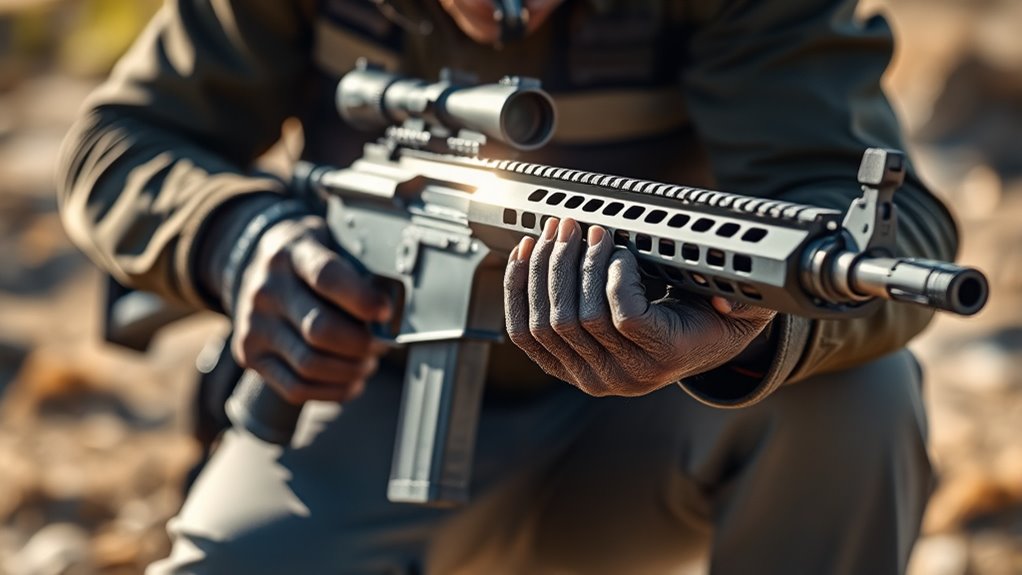
7 Tips to Hold a Rifle Steady
To hold your rifle steady, start by finding your natural point of aim. Relax and adjust your position until the rifle aligns naturally with the target. This step is key for steady shooting and helps reduce unnecessary muscle strain.
Next, choose a stable shooting position like prone or supported kneeling. These positions give you a solid base and make it easier to stay steady.
Using a sling can also support your rifle and reduce muscle fatigue, which is a game-changer during longer sessions.
Controlling your breathing is just as important. Try exhaling halfway and then holding your breath while gently squeezing the trigger. This helps minimize movement and keeps your shot steady.
Make sure to keep a consistent cheek weld and focus on your rifle’s wobble.
Following through after each shot is essential for accuracy and helps build good habits. With practice, you’ll master these skills and see improvement every time you shoot.
Key Takeaways
- Find your natural point of aim by relaxing into position and adjusting your body alignment. This helps reduce muscle tension and makes your shot steadier.
- Use a sling tightly looped around your support arm. It transfers the rifle’s weight and minimizes wobble without cutting off circulation.
- Control your breathing by exhaling halfway and holding your breath. Then apply slow, steady trigger pressure to keep from moving.
- Pick stable shooting positions like prone or supported sitting. Use natural terrain features to help steady your rifle.
- Practice dry-fire drills and consistent follow-through. This builds muscle memory and helps keep your rifle steady when you shoot.
Find Your Natural Point of Aim to Shoot Steady
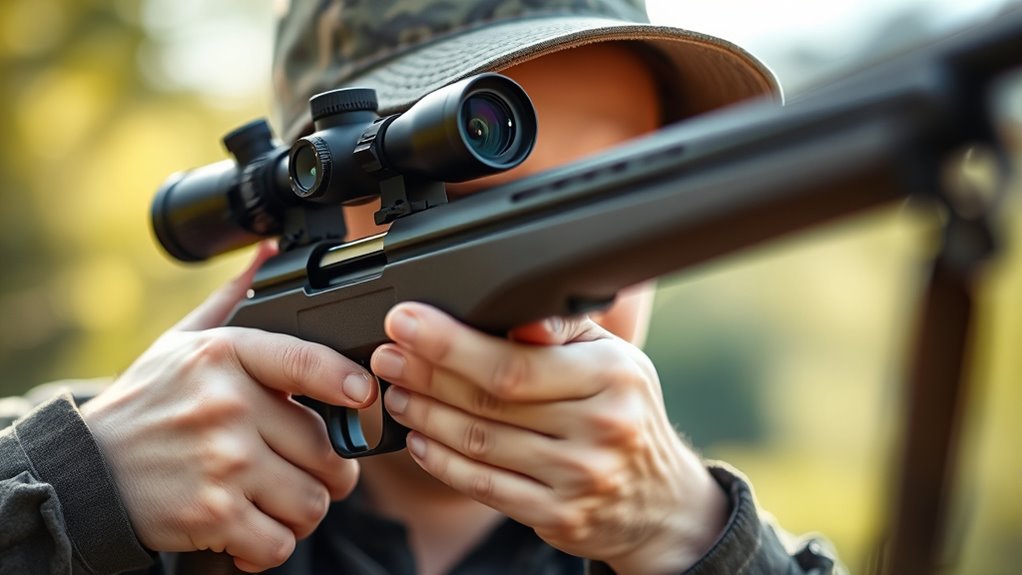
How do you guarantee your rifle stays steady without straining your muscles? Start by finding your natural point of aim. Relax fully into a supported position, close your eyes, then open them to see where your rifle points without muscle tension.
If it’s off target, adjust your body until the rifle naturally aligns with your target, requiring minimal effort. This alignment ensures you don’t have to actively steady your rifle, reducing fatigue and improving accuracy.
Keep your head and body relaxed and properly aligned to help the rifle settle quickly into this natural point of aim. Repeat this process regularly to build muscle memory, allowing you to consistently find that easy, tension-free position every time you shoot.
Choose the Best Shooting Position to Hold Steady
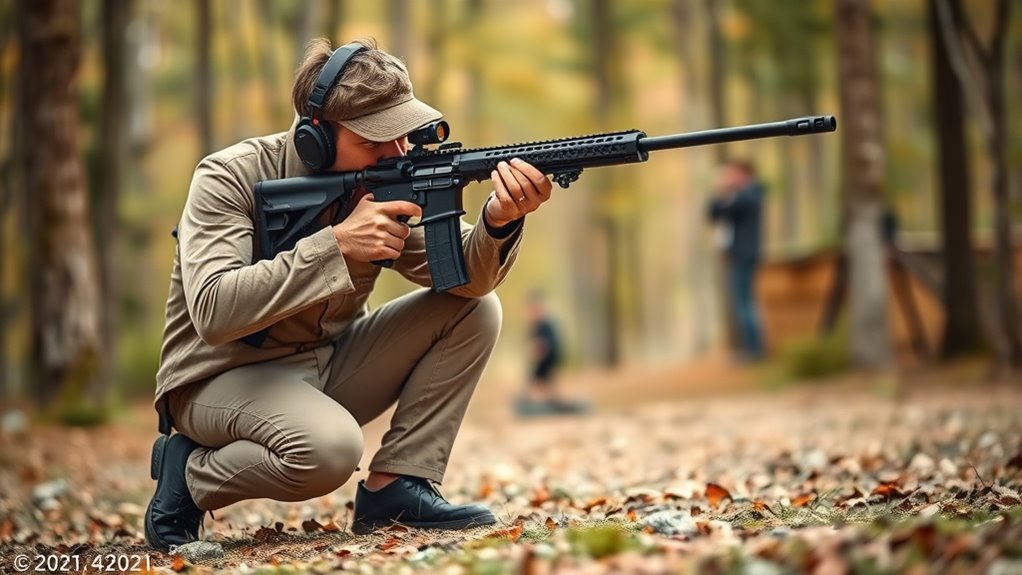
To hold your rifle steady, start by choosing a shooting position that maximizes stability based on your terrain. Positions like prone offer excellent support, while sitting or kneeling can be improved with natural or gear-based supports.
Pay attention to how your body and surroundings work together to create a solid shooting platform. It’s all about finding that balance and making the most of what’s around you.
Position Stability Factors
Although choosing the right shooting position depends on your situation, the prone position offers the most stability by maximizing ground contact and keeping your center of gravity low.
When sitting or kneeling, you can boost stability by using support like packs, soft bags, or support sticks to create a solid foundation. Rest your support-side elbow against your knee or natural features such as rocks or logs to steady your rifle.
Building triangles with your legs and rifle distributes weight evenly, reducing wobble and improving aim consistency. Don’t forget the importance of proper rifle fit; an adjustable stock and good cheek weld let you maintain a natural, comfortable aim.
This makes it easier to stay steady, no matter which position you choose.
Terrain-Based Position Choices
When you’re choosing a shooting position, the terrain around you plays a crucial role in how steady you can hold your rifle. Use your support hand to steady the rifle on natural supports like rocks or logs.
Flat terrain suits prone shooting positions, offering maximum stability. Uneven ground calls for sitting or kneeling, using packs or trekking poles for added steadiness.
Standing is least stable but can improve by resting on natural supports or tripods.
| Terrain Type | Ideal Shooting Position |
|---|---|
| Flat, open ground | Prone – max ground contact |
| Uneven terrain | Sitting or kneeling with gear |
| Dense brush | Kneeling with natural supports |
| Rocky areas | Standing with tripod support |
Support Your Rifle Using a Sling for Stability
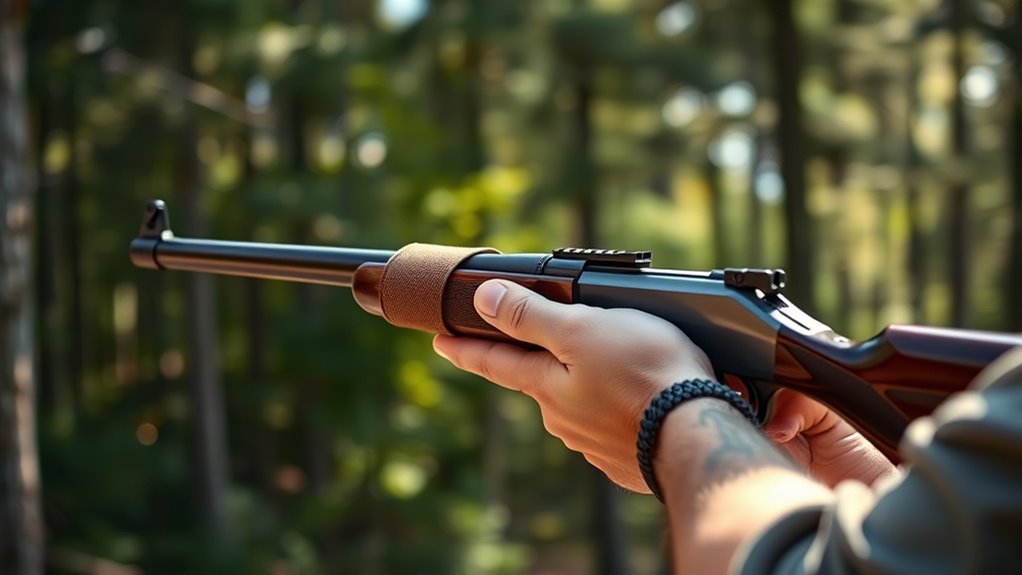
You’ll want to loop the sling around your support hand or arm and tighten it just enough to add steady tension without cutting off circulation.
Adjusting the sling’s tension helps transfer weight from your arms to your shoulder, reducing fatigue and wobble.
Mastering proper sling placement and consistent tension will give you a more stable, controlled shot every time.
Sling Placement Techniques
Mastering sling placement can substantially enhance your rifle’s stability by creating consistent tension that supports your forearm or wrist. Start by wrapping the sling around your support hand to generate steady tension, which helps keep the rifle stable during aiming.
Position the sling so it snugly supports your forearm or wrist, allowing you to make controlled adjustments without losing balance. A properly adjusted sling also pulls the rifle securely into your shoulder, minimizing wobble caused by unsupported movement.
Consistently practicing sling placement helps you develop muscle memory, enabling quick and stable shots across various positions. Remember to keep the sling snug but not overly tight; this guarantees comfort and prevents restricted blood flow while still allowing smooth adjustments for maximum stability.
Tension Adjustment Tips
Once you’ve positioned the sling to support your forearm or wrist, focus on adjusting its tension to maximize stability. Proper sling tension is essential; wrap the sling snugly around your support hand or arm to stabilize the rifle and minimize wobble.
Aim for firm tension that enhances control without being overly tight, as excessive tightness can restrict movement and cause unnecessary shake.
A well-adjusted sling transfers weight from your arms to your back and shoulders, especially in prone or supported positions, improving steadiness. Practice adjusting sling tension regularly to build muscle memory, enabling quick and effective stabilization when shooting.
Benefits Of Sling Use
How can a sling improve your rifle stability? Sling support transfers the rifle’s weight from your arms to your shoulder, helping steady the rifle and reducing muscle fatigue and wobble.
With proper sling tension, you can stabilize the rifle without causing excess pressure that leads to movement. A well-adjusted sling lets you quickly find a consistent position, enhancing your natural point of aim and allowing you to relax into the shot.
Regular sling use also builds your ability to hold steady over longer aiming periods.
| Benefit | Effect |
|---|---|
| Weight distribution | Reduces arm fatigue |
| Sling tension | Stabilizes without excess pressure |
| Quick positioning | Consistent, repeatable aiming |
| Natural point of aim | Minimizes muscular tension |
Use sling support to shoot steadier and more accurately.
Control Your Breathing and Trigger Pull for Accuracy
Although steady aim relies on many factors, controlling your breathing and trigger pull plays a crucial role in accuracy. To master this, start by taking a deep breath, then exhale halfway. Hold your breath steadily while squeezing the trigger. This helps reduce body movement and keeps your aim steady.
Next, use the first joint of your index finger to apply slow, consistent pressure on the trigger. Avoid jerking or sudden movements—they can easily throw off your shot.
Finally, practice smooth trigger squeezes without anticipation or flinching. Try to visualize a stable wobble zone and call your shot to maintain control. With time, these habits will make a big difference.
Maintain Consistent Cheek Weld and Head Position
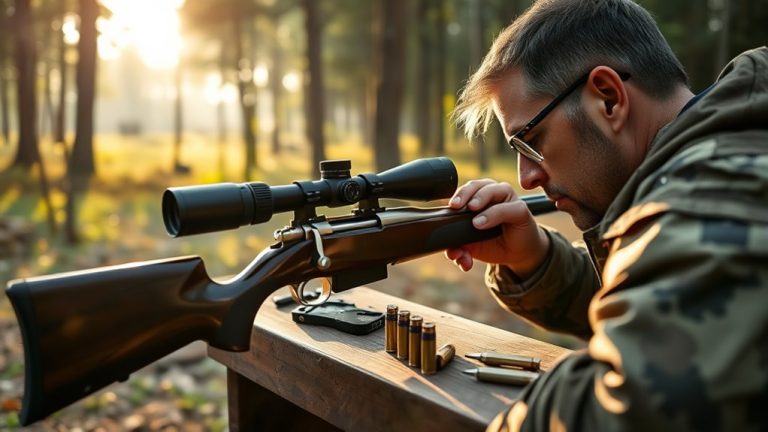
To improve your shooting accuracy, you need to maintain a consistent cheek weld and head position each time you shoulder your rifle. Position your cheek in the exact same spot on the stock to create a stable and repeatable sight picture.
A proper cheek weld aligns your eye directly with the scope or sights, reducing unnecessary head movement and enhancing overall stability. Adjust the stock height or your stance until your cheek rests comfortably without tilting your head.
Keeping firm contact prevents shifts during firing, which boosts accuracy and consistency. Regularly practicing your cheek weld builds muscle memory, helping you maintain that steady head position naturally.
This consistency is key to achieving precise, stable shots every time you take aim. So, make it a habit to check your cheek weld before each shot—it really makes a difference.
Visualize and Control Rifle Wobble to Stay Calm
When you visualize your rifle’s wobble pattern, you gain better control over its movement while aiming. This mental image helps you anticipate shifts and stay calm under pressure.
To effectively visualize and control wobble, follow these steps:
- Focus on a specific point within the wobble zone to time your shot when the rifle is most stable.
- Practice slow, deliberate breaths to reduce muscle tension and minimize excessive movement.
- Call your shot and acknowledge your wobble to build awareness and improve steadiness.
Practice Follow-Through to Keep Your Shot Steady
Keeping your sight aligned and your trigger squeeze steady until the bullet leaves the barrel plays a crucial role in maintaining a stable shot. Practicing proper follow-through prevents jerking or flinching that can throw off your aim.
By focusing on follow-through, you keep your muscles relaxed and your rifle steady throughout recoil, which reduces shot dispersion. This consistency helps reinforce good shooting habits, making it easier for you to replicate a steady shot under various conditions.
Supporting the rifle during recoil and maintaining your aiming position stabilizes the firearm for your next shot, improving overall accuracy. Try to incorporate dry-fire drills to build muscle memory, so steady trigger squeeze and aim control become automatic when you’re live firing.
Frequently Asked Questions
How to Hold a Rifle Standing?
You stand with feet shoulder-width apart, distribute your weight evenly, and rest your support elbow against your hip or a stable object. Cradle the rifle’s forend gently, keep a steady cheek weld, and lean slightly forward for balance.
Does a Rifle Require Steadiness?
Imagine your shot as a whisper in the wind; yes, a rifle demands steadiness. You can’t afford even the slightest shake if you want precision. Your hands and body must become one with the rifle’s purpose.
How to Not Flinch When Shooting a Rifle?
You can avoid flinching by controlling your breathing, holding your breath briefly after exhaling, keeping a relaxed grip, practicing dry firing to build muscle memory, and using mental focus techniques like visualization to stay calm and confident.
How to Reduce Sway When Shooting?
Imagine balancing a spinning top; to reduce sway when shooting, you’ll want to use natural supports like rocks or a tripod, relax your stance, and avoid gripping too tightly. This steady approach keeps your aim true.
Conclusion
By mastering these tips, you’ll hold your rifle as steady as a mountain stands against the wind. Remember, steady shooting isn’t just about muscle—it’s about mindset.
Find your natural point of aim, choose the right position, and control your breathing like a calm river. Keep practicing, and your shots will flow smoothly and confidently.
Stay focused, stay relaxed, and watch your accuracy soar with every steady pull of the trigger. Holding a rifle steady takes patience and practice, but with these techniques, your shooting will improve significantly.
Keep these 7 tips in mind to develop better control, enhance your stability, and maintain a calm, focused approach. Your steady hold is the foundation of accurate shooting, so keep working on it and enjoy the results.