How Do Koi Fish Eat and Get Fed
You feed koi fish by adjusting their meals to water temperature, which is essential for their health and digestion. Offering food two to four times daily when it’s warm ensures they get enough nutrients. As the water cools, feed them less frequently to match their slower metabolism.
Use high-quality floating pellets for easy surface feeding and include seasonal options like wheat germ in colder months. This variety supports their nutritional needs throughout the year. Watch that they eat all food within five minutes to avoid waste and water pollution.
Hand feeding helps you monitor their health and behavior closely. It also strengthens the bond between you and your koi. Keep exploring to uncover more feeding tips and techniques.
When and How Often Should You Feed Koi Fish?
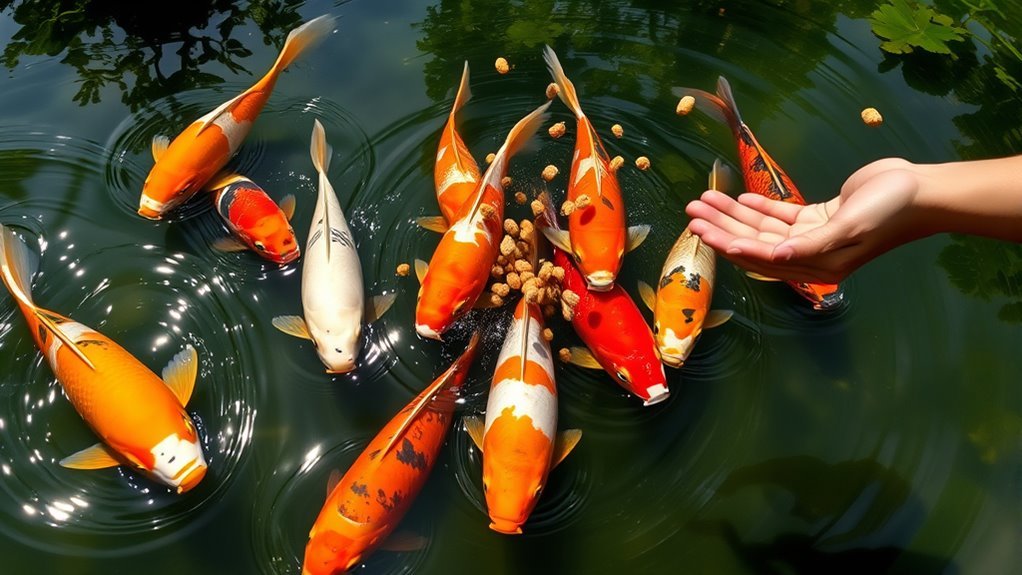
Although feeding schedules can vary, you should feed your koi fish 2 to 4 times daily, adjusting based on water temperature and the season.
Feed your koi 2 to 4 times daily, adjusting for temperature and seasonal changes.
In warmer months, when water temperature is above 68°F (20°C), increase feeding frequency to 3-4 times per day.
During colder months below 59°F (15°C), reduce feeding to once or twice daily or stop altogether.
Knowing how often to feed depends on koi activity and water temperature, which influence digestion and health.
Always follow proper feeding practices by offering only what your koi can consume within five minutes to maintain water quality and prevent pollution.
How Water Temperature Affects Koi Feeding and Digestion
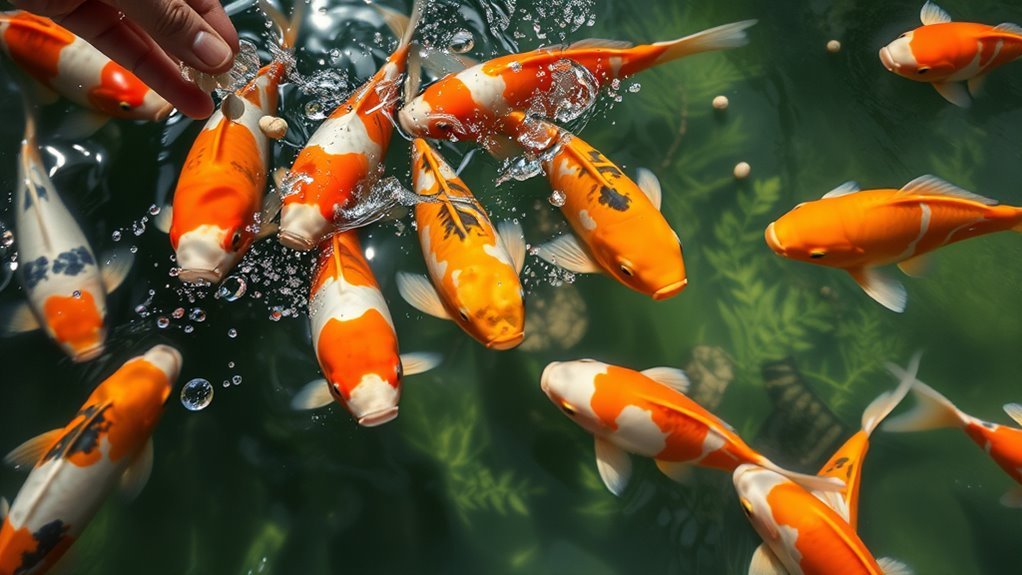
Because water temperature directly influences koi metabolism, it plays a crucial role in their feeding and digestion. When water temperatures rise above 86°F (30°C), your koi’s metabolism speeds up, increasing their feeding needs and requiring more frequent, smaller feeding times.
Conversely, as water temperature drops below 68°F (20°C), their metabolism slows, and they eat less. When water temperature drops further below 50°F (10°C), digestion nearly halts, and koi usually stop eating altogether.
In cooler ranges between 59-68°F (15-20°C), you can feed them 1-2 times daily, but expect slower digestion.
Keep in mind, sudden water temperature changes stress koi, reducing appetite and digestion efficiency.
Monitoring water temperature ensures your koi stay healthy and happy by matching feeding times and food amounts to their metabolic state.
What Types of Food Are Best for Koi Fish?
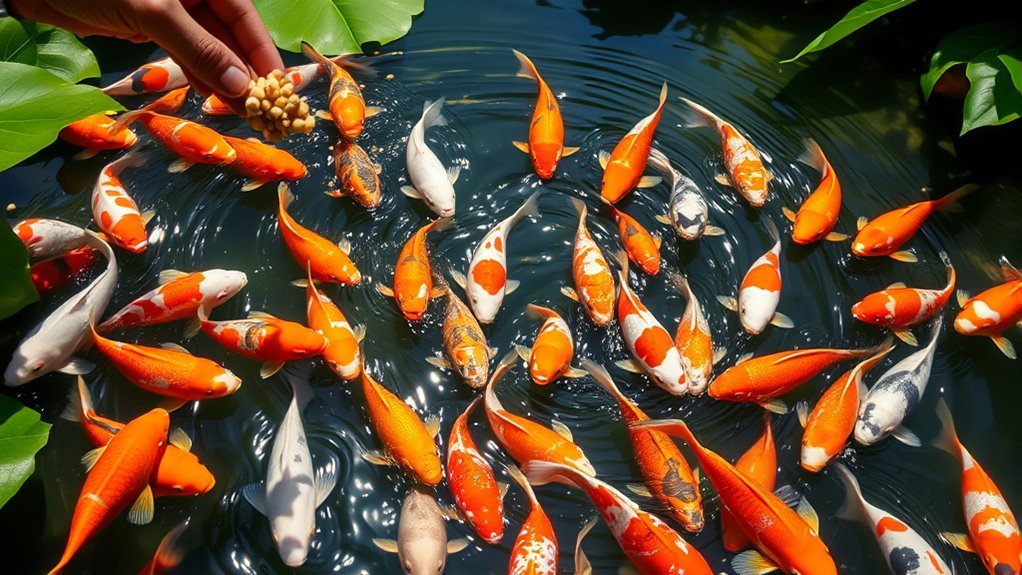
When choosing food for your koi fish, it’s important to focus on options that meet their nutritional needs and suit the current season. High-quality koi foods like floating pellets are convenient and provide balanced koi nutrition.
Adjust your fish diet based on water temperature, offering wheat germ pellets during colder months to aid digestion and high-protein pellets in summer to support growth.
Incorporate natural supplements such as bloodworms, brine shrimp, and vegetables to add variety and essential nutrients.
To boost your koi’s vibrant colors, use specially formulated color-enhancing food.
Always select foods appropriate for your koi’s size and the pond’s water temperature to guarantee excellent health and digestion.
This thoughtful approach keeps your koi thriving year-round.
How to Avoid Overfeeding and Keep Your Pond Clean
To keep your koi healthy and your pond clean, feed only what they can eat within five minutes. Remove any leftovers right after.
Controlling portion sizes based on their activity and water temperature helps prevent overfeeding.
This simple routine stops excess food from polluting the water and keeps algae growth in check.
Portion Control Strategies
Although koi enjoy their meals, feeding them too much can harm both the fish and your pond’s ecosystem. When deciding how much to feed, focus on portion control by offering only the feeding amount your koi can consume within five minutes.
Feeding koi small amounts multiple times during feeding time helps prevent overfeeding and reduces waste.
You should feed smaller portions adjusted to your koi’s size, water temperature, and activity level. Watch for koi actively coming to the surface and eating quickly as a visual cue to gauge if the portion is right.
Avoid giving large amounts at once since overfeeding can overload your pond’s filtration system and pollute the water.
Leftover Food Removal
Keeping your koi’s feeding portions in check naturally leads to the next step: removing any leftover food promptly. You should remove leftover food from the pond within 20 minutes of feeding to prevent water pollution and toxic buildup. Uneaten food decomposes quickly, causing algae growth that harms water quality and threatens koi health.
Use a fine net or siphon to efficiently remove uneaten food before it sinks or floats away. Monitoring feeding portions so koi finish their food within five minutes reduces waste and keeps the pond cleaner.
Regular filtration cleaning and maintenance are essential to manage waste from leftover food and support ideal water quality.
Feeding Tools and Techniques for Koi Fish
You’ll find that choosing the right feeding methods can make a big difference in your koi’s health and behavior. Automated feeders help you stick to a consistent schedule by dispensing precise amounts of food throughout the day.
At the same time, hand feeding lets you observe your fish up close and build a stronger connection with them.
Feeding Methods Overview
How do you guarantee your koi get the right amount of food while keeping them healthy and engaged? You’ll want to explore various feeding methods that suit your fish’s needs.
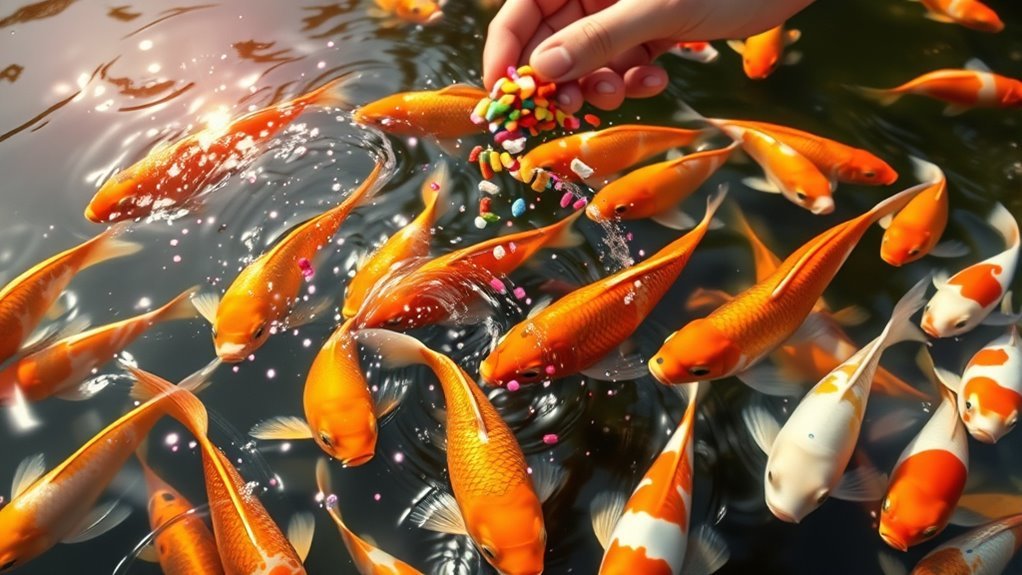
Hand feeding offers direct interaction, letting you monitor feeding closely and observe fish behavior for signs of health issues.
Surface feeding with floating pellets lets you watch how much they eat, preventing overfeeding.
Meanwhile, sinking food targets bottom feeders and works well with feeding sticks or scoops.
Auto feeders provide convenience by dispensing predetermined amounts on a schedule, maintaining consistent feeding routines without daily effort.
By combining these feeding techniques thoughtfully, you assure your koi receive balanced nutrition, stay active, and thrive in their environment.
Monitoring feeding closely remains key to adjusting methods as your fish grow and change.
Automated Feeding Devices
Although manual feeding offers direct control, automated feeding devices bring convenience and consistency to your koi care routine. Auto feeders use programmed feeding to dispense precise portions multiple times daily, often up to 12 feedings, ensuring your koi receive a balanced diet.
Equipped with digital timers, these devices maintain a reliable feeding schedule, even when you’re away.
With adjustable portion control, they prevent overfeeding and help preserve water quality by reducing leftover food.
Depending on your pond setup, auto feeders can run on electricity or solar power, offering flexibility.
Proper placement and calibration of these feeders guarantee even food distribution, encouraging natural feeding behavior while minimizing waste.
Using automated feeding devices simplifies koi care and supports a healthy pond environment.
Understanding Koi Fish Feeding Behavior and Habits
When you approach a koi pond, you’ll notice the fish quickly gather at the surface, drawn by movement and the promise of food. Koi feeding is a fascinating display of fish behavior—they instinctively come up to the water’s surface when they recognize feeding times or see food.
Their keen sense of smell lets them detect food from afar, making them enthusiastic eaters.
Because their fish metabolism increases in warmer water, they gulp food quickly, but they prefer small, frequent meals to stay healthy koi.
Over time, koi recognize and trust their feeders, showing cautious yet eager eating habits.
Understanding these patterns helps you provide the right food at the right feeding times, ensuring your koi remain vibrant and active.
Frequently Asked Questions
Do Koi Fish Have to Be Fed Every Day?
You don’t have to feed koi fish every day, especially in colder months when their metabolism slows. Feed them daily during active seasons, but avoid overfeeding to maintain water quality and keep your koi healthy.
How Do I Tell if My Koi Are Hungry?
Like sailors sensing a storm, you’ll know your koi are hungry when they eagerly cluster, nudge the surface, and dart about restlessly at feeding time.
Their active, expectant behavior tells you it’s time to feed them.
Do Koi Recognize Their Owners?
Yes, your koi recognize you and often swim enthusiastically when you approach. They associate you with feeding times, remembering your face and voice, which strengthens your bond and makes them more responsive and friendly over time.
Do Koi Like to Be Petted?
Yes, your koi can enjoy being petted, especially if you’re gentle and patient. They often recognize you, relax, and swim closer when you touch their head or back.
However, watch for signs of stress to avoid overhandling.
Conclusion
To keep your koi content and colorful, consistently consider their care. Carefully control feeding frequency and food types, catering to water temperature and their natural nibbling nature. Avoid overfeeding to maintain a clean, clear pond, and use suitable tools to simplify the process.
By understanding their unique eating habits, you’ll foster flourishing fish and a fantastic freshwater feature. Stay smart, stay steady, and savor the satisfying sight of your splendid koi swimming strong! Proper koi fish care and feeding techniques are key to ensuring your pond remains vibrant and healthy.