
How to Reduce Nitrate in a Fish Tank Step by Step
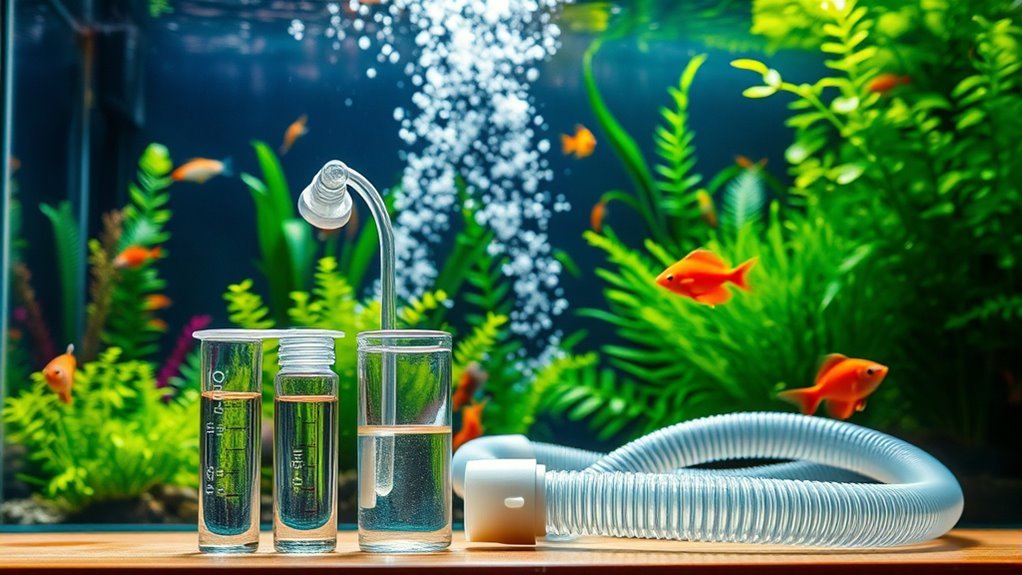
To reduce nitrate in your fish tank effectively, start by testing nitrate levels weekly using reliable kits. Monitoring nitrate levels regularly helps you catch any buildup early and take action before it harms your fish. Adjust feeding habits to avoid excess waste, as overfeeding is a common source of high nitrate.
Next, add live plants or macroalgae to absorb nitrates naturally. These plants act as natural filters, improving water quality while enhancing the tank’s aesthetics. Incorporate biological filtration with beneficial bacteria, such as biopellet reactors, paired with controlled carbon dosing. This combination helps convert nitrates into harmless nitrogen gas, keeping your tank environment safe.
Set up anaerobic sandbeds or refugiums to further reduce nitrate levels. These systems create environments where nitrate-consuming bacteria thrive. Finally, perform regular water changes to maintain low nitrate concentrations. Following these steps sets a solid foundation for healthier tank water and vibrant fish.
How To Test Your Tank’s Nitrate Levels

Before you can reduce nitrate in your fish tank, you need to test its levels accurately. Start by choosing reliable test kits like Elos or API, which provide precise readings for nitrate, ammonia, and nitrite—key indicators of water quality.
Follow the manufacturer’s instructions closely, especially for sample collection and timing, to guarantee your nitrate test results are accurate.
Carefully follow instructions for sample collection and timing to ensure accurate nitrate test results.
Test your aquarium water at least once a week to track nitrate fluctuations and evaluate how well your nitrate reduction methods are working.
Don’t forget to record each test result to spot trends and keep nitrate levels under 10 ppm, which is safe for your fish.
Also, calibrate your test kits regularly and store them properly to maintain consistent accuracy over time.
Adjust Feeding Habits To Prevent Nitrate Buildup
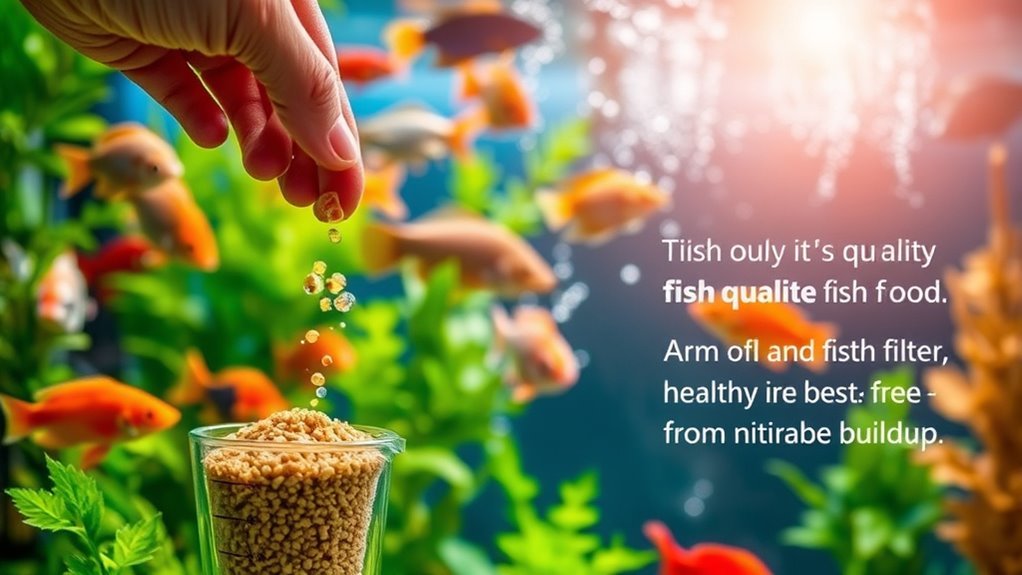
To keep nitrate levels low, feed your fish only what they can eat within a few minutes and stick to a consistent feeding schedule.
Avoid overfeeding by removing any uneaten food quickly to prevent waste buildup.
Watching your fish’s behavior will help you adjust feeding amounts and timing effectively.
Control Feeding Quantity
How much you feed your fish directly affects nitrate levels in your tank. Overfeeding leads to uneaten food decomposing, increasing organic waste and nitrates. To reduce feeding waste, adjust portion sizes to match your fish’s size and activity.
Remove leftover food promptly to prevent decay. Using targeted feeding spots helps minimize uneaten food and organic buildup.
| Feeding Practice | Impact on Nitrate Levels | Tips to Reduce Feeding Waste |
|---|---|---|
| Portion Sizes | Controls organic waste | Feed only what fish eat in minutes |
| Feeding Frequency | Limits waste buildup | Feed once daily or every other day |
| Uneaten Food Removal | Prevents nitrate spikes | Remove leftovers quickly |
| Targeted Feeding | Minimizes leftover food | Use feeding stations or specific spots |
Control feeding quantity to keep your tank healthier and nitrate levels low.
Schedule Regular Feeding
Scheduling regular feeding sessions plays a key role in preventing nitrate buildup in your fish tank. Feed your fish only what they can eat within 2-3 minutes to avoid excess uneaten food, which decomposes into organic waste and raises nitrate levels.
Stick to feeding 1-2 times daily, and consider skipping feedings on certain days to reduce organic waste production.
Use high-quality, nutrient-appropriate food to guarantee efficient digestion and minimal leftovers. Always remove any uneaten food promptly after feeding to prevent it from breaking down and contributing to nitrate formation.
Adjust portion sizes based on your fish’s size and activity to avoid overfeeding.
These feeding habits, combined with regular water changes, will maintain better fish health and keep nitrate levels under control in your aquarium.
Use Live Plants And Algae To Absorb Excess Nitrates
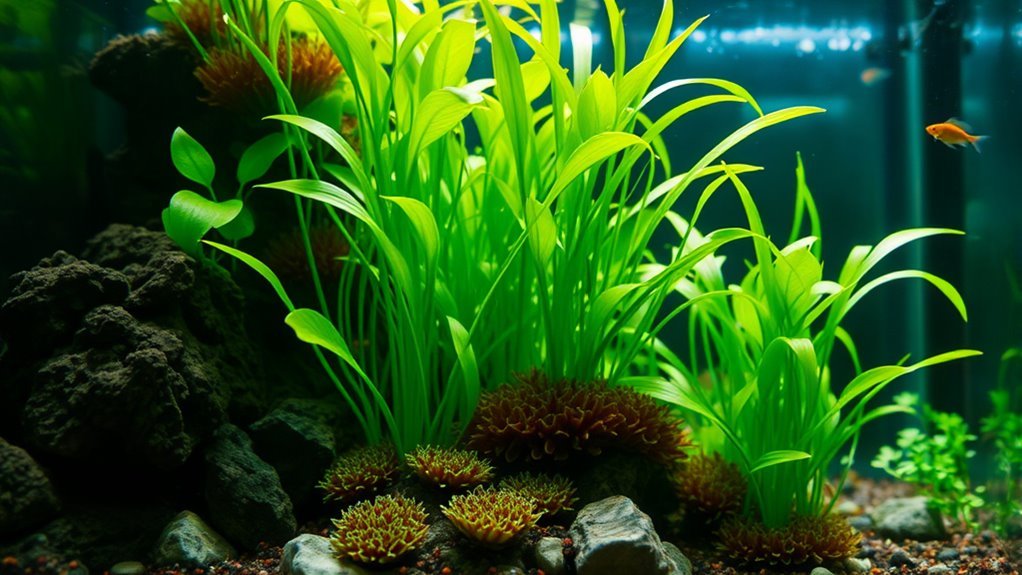
When you introduce live plants and algae into your fish tank, they actively absorb nitrates as nutrients, helping to keep water quality high. Live plants like Elodea and Brazilian pennywort perform efficient nitrate absorption, while macroalgae such as chaetomorpha thrive in refugiums to boost nitrate reduction.
Regular pruning prevents die-off, maintaining this natural filtration. This competition with nuisance algae reduces water changes and keeps your tank balanced.
| Type | Examples | Role in Nitrate Control |
|---|---|---|
| Live Plants | Elodea, Pennywort | Direct nitrate absorption |
| Macroalgae | Chaetomorpha, Caulerpa | Nitrate removal in refugium |
| Maintenance | Pruning | Prevents nutrient release |
| Benefit | Competition with algae | Keeps water clear and balanced |
Choose The Best Filtration Media For Nitrate Removal
To reduce nitrate effectively, you need to pick the right filtration media that supports beneficial bacteria and chemical filtration.
Pay close attention to flow rates and make sure your media volume is sufficient for ideal nitrate removal.
Choosing the best combination will keep your tank water cleaner and healthier for your fish.
Types Of Filtration Media
Choosing the right filtration media plays a crucial role in reducing nitrate levels in your fish tank, as different media support various biological and chemical processes. You’ll want to focus on filter media that enhance biological filtration and nitrate removal effectively.
- Bio balls and ceramic rings provide extensive surface area for beneficial bacteria to convert ammonia and nitrites, supporting biological filtration.
- Denitrifying media such as Midwest Systems reactors host anaerobic bacteria that convert nitrates into harmless nitrogen gas, markedly lowering nitrate concentrations.
- Nitrate-absorbing media like Nitra Zorb offer habitats for bacteria that reduce nitrates, making them excellent for maintaining low nitrate levels.
Choosing a combination of these filter media ensures balanced nitrate control and a healthier aquatic environment.
Flow Rate Considerations
Effective nitrate removal depends heavily on managing flow rates through your filtration media. When using denitrifying media like de*nitrate™, you need to keep the flow rate at 50 GPH or less. This low filter flow encourages anaerobic bacteria growth by limiting oxygen levels, which helps convert nitrate effectively.
If the flow rate is too high, oxygen levels rise and inhibit the anaerobic denitrification process, reducing nitrate removal efficiency.
On the other hand, media such as Matrix™ works well regardless of flow rate, giving you more flexibility in your filtration setup.
Media Volume Importance
While optimizing flow rate plays a crucial role, the volume of filtration media you use directly affects how well your tank can reduce nitrate levels. More media volume means more space for beneficial bacteria to colonize and break down nitrates efficiently.
Choosing the right filtration media with high surface area, like bio-media or biopellets, boosts nitrate removal.
To maximize your system’s effectiveness, focus on:
- Increasing media volume to provide extensive surface area for denitrifying bacteria.
- Using porous filtration media that supports anaerobic zones necessary for nitrate removal.
- Balancing media volume with ideal flow rate to ensure adequate contact time without sacrificing filtration efficiency.
Harness Beneficial Bacteria To Reduce Nitrate Naturally
Because beneficial bacteria convert harmful nitrates into harmless nitrogen gas, you can naturally lower nitrate levels in your fish tank by encouraging their growth.
Denitrifying bacteria, a type of beneficial bacteria, perform this vital nitrate reduction in oxygen-deprived zones like deep sand beds or specialized biological media.
To support these bacteria, guarantee your aquarium is mature and cycled with stable conditions. Incorporate porous substrates or denitrator reactors as biological media, providing ample surface area for bacterial colonies to thrive.
Regularly monitor nitrate levels to track the effectiveness of these bacteria in maintaining water quality.
Control Nitrates With Carbon Dosing And Biopellet Reactors
How can you enhance nitrate reduction beyond natural bacterial activity? You can use carbon dosing combined with biopellet reactors to boost denitrification and lower nitrate levels effectively.
Here’s how to get started:
- Use carbon dosing with vodka, sugar, or vinegar to supply organic carbon, stimulating denitrifying bacteria that convert nitrates into harmless nitrogen gas.
- Install biopellet reactors to provide a controlled environment with proper flow rates (around 50 GPH), creating anaerobic zones essential for efficient nitrate reduction.
- Regularly monitor nitrate levels and adjust carbon dosing to maintain bacterial growth without causing oxygen depletion or bacterial overgrowth.
Set Up Anaerobic Sandbeds And Refugiums To Cut Nitrates
To effectively cut nitrates in your fish tank, set up anaerobic sandbeds and refugiums that foster denitrifying bacteria. Create a deep anaerobic sandbed, 4-6 inches thick, using fine-grained, oxygen-poor substrates like aragonite or silica sand in your sump or refugium.
Set up deep anaerobic sandbeds with fine substrates to promote nitrate-reducing bacteria in your aquarium.
This environment encourages denitrification, where bacteria convert harmful nitrates into harmless nitrogen gas.
Maintain low oxygen flow through the sandbed to support these bacteria without disturbing aerobic zones.
In your refugium, grow and regularly harvest macroalgae such as chaetomorpha or caulerpa, which absorb nitrates directly, boosting nitrate reduction.
Keep a close eye on nitrate levels to guarantee your anaerobic sandbed and refugium work effectively over time, helping you maintain a healthier, low-nitrate aquarium environment.
Why Regular Water Changes Are Essential For Low Nitrate
While biological filtration and anaerobic sandbeds play crucial roles in managing nitrates, regular water changes remain essential for keeping nitrate levels in check. You can’t rely solely on filtration to control nitrate buildup.
Regular water changes:
- Physically dilute nitrate concentrations, preventing harmful accumulation.
- Remove organic waste and toxins that biological filtration alone can’t fully eliminate.
- Replenish trace minerals and maintain stable water parameters indispensable for fish health.
Skipping water changes risks mineral depletion and toxin buildup, which compromises your fish’s well-being and reduces biological filtration efficiency.
Even if nitrate levels seem low, consistent water changes support a balanced, healthy tank environment.
Frequently Asked Questions
How to Lower Nitrates in a Fish Tank Immediately?
You can lower nitrates immediately by performing a large partial water change and using nitrate-absorbing media in your filter.
Also, remove uneaten food and debris quickly to prevent further nitrate buildup.
Is Overfeeding Causing High Nitrates?
Yes, overfeeding causes high nitrates because uneaten food and excess waste decompose, producing ammonia that converts into nitrates.
You should feed only what your fish can eat quickly to keep nitrate levels under control.
Can Fish Recover From High Nitrites?
You can turn the tide—fish can recover from high nitrites if you act fast.
What to Do When Nitrate Is Too High?
When nitrate is too high, you should do a partial water change, remove uneaten food and debris, reduce feeding, boost biological filtration, and add macroalgae to absorb nitrates naturally.
Keep monitoring levels regularly.
Conclusion
By regularly testing your tank’s nitrate levels and adjusting your feeding, you’ll keep things from spiraling out of control. Adding live plants, using the right filtration media, and harnessing beneficial bacteria all work together to naturally reduce nitrates.
Don’t forget carbon dosing, anaerobic sandbeds, and refugiums for extra support. These methods enhance the biological processes that break down nitrates efficiently.
Above all, stick to regular water changes—they’re the bread and butter of maintaining a healthy, nitrate-free environment for your fish. Consistent nitrate reduction is key to a thriving aquarium ecosystem.