
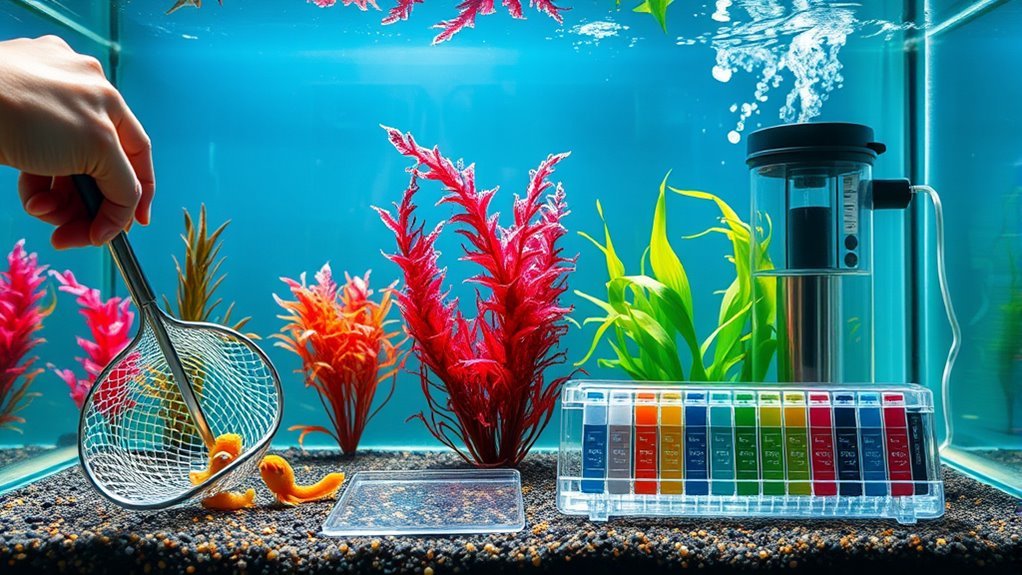
How Do You Reduce Ammonia in a Fish Tank Step by Step
To reduce ammonia in your fish tank effectively, start with a 25-50% partial water change and treat the new water with a conditioner that neutralizes ammonia and chlorine. Adding beneficial bacteria supplements can help establish a healthy biological balance. Using filter media from a well-established tank further boosts biological filtration.
Incorporate live plants into your aquarium as they naturally absorb ammonia, improving water quality. Maintain balanced pH, temperature, and aeration levels to ensure fish safety and reduce stress. Consistently follow proper feeding and cleaning routines to prevent ammonia spikes.
By following these steps, you can manage ammonia levels effectively and create a safer environment for your fish. Regular monitoring and maintenance are key to keeping your tank healthy and thriving.
Perform Immediate Water Changes To Lower Ammonia
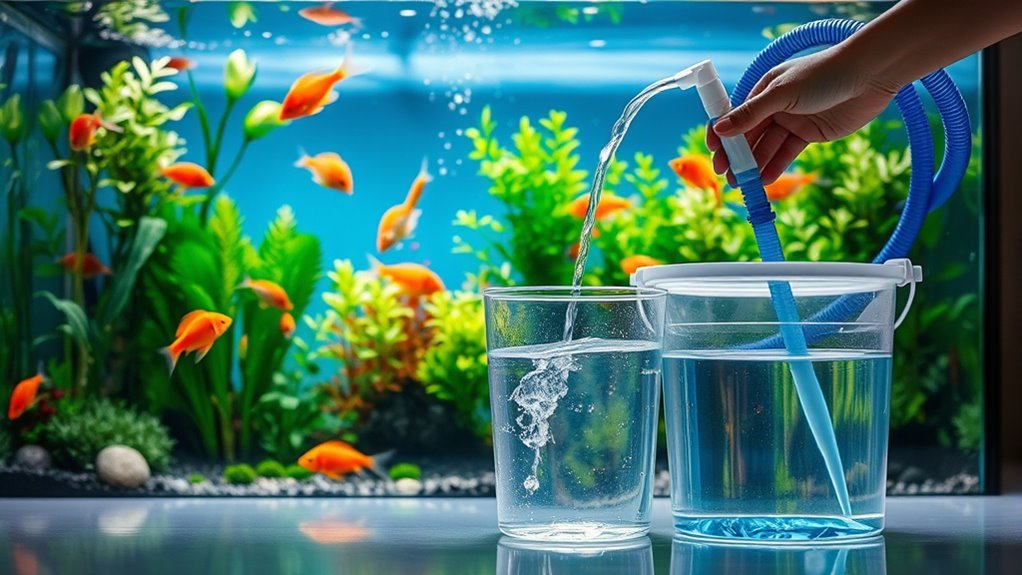
When you detect high ammonia levels in your fish tank, perform an immediate partial water change of 25-50% to dilute the concentration. Before adding new water, treat it with a water conditioner to neutralize chlorine, chloramine, and ammonia, protecting your fish from harmful chemicals.
During the water change, consider turning off or reducing your filtration temporarily to avoid disturbing beneficial bacteria, then restart it afterward.
After completing the water change, use water testing kits to check ammonia levels and confirm they’ve dropped to a safe range, ideally zero.
If ammonia remains high, repeat partial water changes regularly while continuously monitoring with water testing. This approach helps you maintain a safer environment and keeps ammonia levels under control until they stabilize.
Use Water Conditioners And Beneficial Bacteria Supplements
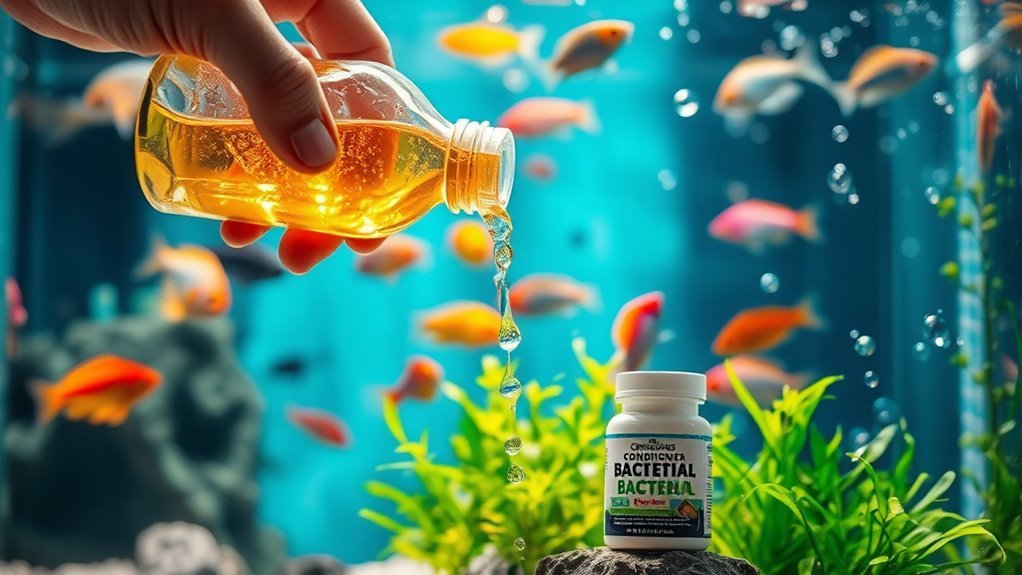
You can use water conditioners like Seachem Prime to temporarily neutralize ammonia and make the tank safer for your fish.
Adding beneficial bacteria supplements helps speed up the biological filtration that breaks down ammonia naturally.
Combining these products after water changes gives your tank the best chance to maintain a healthy, ammonia-free environment.
Ammonia Neutralizing Conditioners
Although maintaining stable ammonia levels can be challenging, using water conditioners and beneficial bacteria supplements offers an effective solution. Ammonia-neutralizing conditioners like Seachem Prime chemically detoxify ammonia, nitrite, and chlorine, instantly making the water safer for your fish.
Alongside these water conditioners, bacterial supplements such as Fritz Turbo Start help establish colonies that convert ammonia into less harmful compounds faster.
When you combine ammonia-neutralizing conditioners with bacterial supplements, you accelerate ammonia detoxification and improve overall water quality.
Remember to follow the manufacturer’s dosage instructions carefully to avoid harming beneficial bacteria.
Using these products together, plus regular water changes and proper tank care, helps you maintain stable ammonia levels and keeps your fish healthy. This combination is a powerful step toward effective ammonia management in your tank.
Beneficial Bacteria Boosters
Since maintaining stable ammonia levels is essential for your fish’s health, using beneficial bacteria boosters can make a significant difference. These boosters, combined with water conditioners, help establish and enhance biological filtration quickly. Water conditioners detoxify ammonia temporarily, creating a safer environment while beneficial bacteria colonize.
Adding beneficial bacteria supplements regularly supports the growth of nitrifying bacteria, speeding up the cycling process and preventing ammonia spikes after tank maintenance.
| Product Type | Function |
|---|---|
| Fritz Turbo Start | Introduces ammonia-consuming bacteria |
| Tetra Bacteria | Boosts beneficial bacteria growth |
| Water Conditioners (e.g., Prime) | Detoxify ammonia & chloramine temporarily |
| Beneficial Bacteria Supplements | Maintain stable ammonia levels |
| Regular Use | Supports long-term tank stability |
Use these tools consistently for effective ammonia control.
Combining Conditioners And Supplements
Beneficial bacteria boosters work best when paired with water conditioners, creating a powerful one-two punch against harmful ammonia. Use water conditioners like Seachem Prime during water changes to detoxify ammonia temporarily, making the tank safer for your fish.
After each water change, add beneficial bacteria supplements such as Fritz Turbo Start or Tetra Bactozym to quickly establish or boost colonies that convert ammonia into less toxic substances. Follow dosing instructions carefully to *guarantee* effective ammonia reduction and bacterial growth.
Regularly testing your water after combining these products helps you monitor ammonia levels and maintain a healthy environment.
Boost Biological Filtration With Beneficial Bacteria
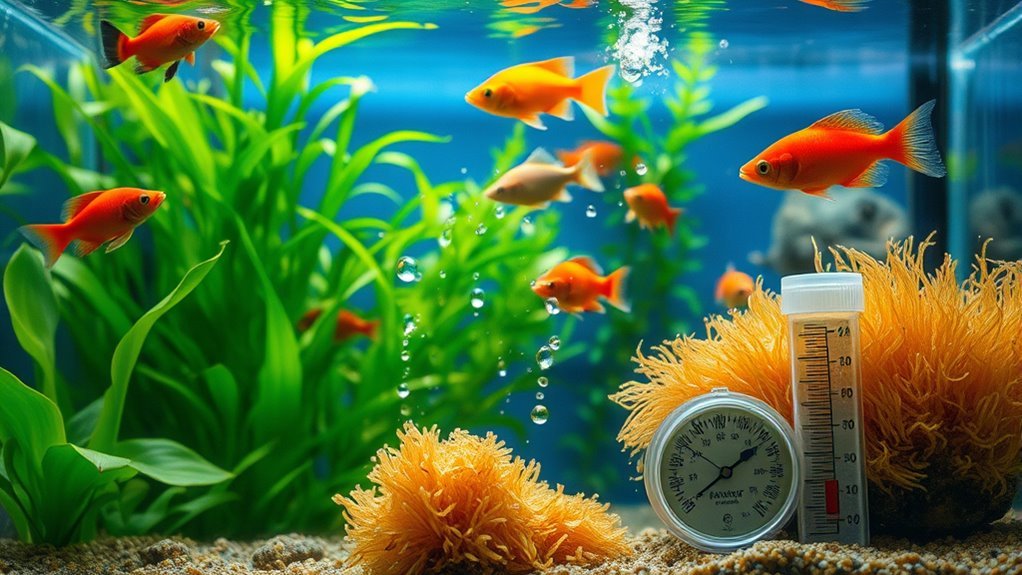
To reduce ammonia effectively, you need to boost biological filtration by encouraging colonies of bacteria that convert toxic ammonia into less harmful substances. Adding beneficial bacteria supplements like Fritz Turbo Start or Tetra Bacteria helps establish these colonies quickly.
You can also introduce filter media from an established, healthy aquarium to jumpstart bacterial growth.
Make sure your filter has enough surface area and proper flow rate to support bacteria colonization. Maintaining water parameters with a pH above 7.00 and alkalinity above 3 KH/50 ppm creates an ideal environment for nitrifying bacteria.
Avoid overcleaning your filter and perform regular partial water changes to keep the bacterial population stable.
These steps enhance biological filtration and effectively reduce ammonia levels in your fish tank.
Add Live Plants To Naturally Absorb Ammonia
Although managing ammonia levels can feel challenging, adding live plants to your fish tank offers a natural and effective way to absorb ammonia directly. Live aquatic plants like water lettuce, duckweed, and hornwort excel at ammonia absorption through their leaves and roots.
These plants also boost biological filtration by supporting beneficial bacteria with added oxygen, improving water chemistry. Fast-growing species demand more nutrients, accelerating ammonia uptake. Mixing different plants enhances filtration balance.
Remember to prune regularly to prevent decaying matter from raising ammonia.
| Plant Type | Ammonia Absorption Rate | Role in Biological Filtration |
|---|---|---|
| Water Lettuce | High | Oxygenation and nutrient uptake |
| Duckweed | Very High | Rapid nutrient absorption |
| Hornwort | Moderate | Supports beneficial bacteria |
Adjust PH, Temperature, And Aeration To Reduce Toxicity
You can reduce ammonia toxicity by keeping your tank’s pH below 7.0, which shifts ammonia into a less harmful form.
Lowering the water temperature by a few degrees slows fish metabolism and limits ammonia absorption.
Boosting aeration improves oxygen levels and supports beneficial bacteria that break down ammonia faster.
Optimal pH Levels
When you maintain a pH between 7.0 and 8.0, you considerably reduce ammonia’s toxicity in your fish tank. Suitable pH levels directly improve water quality and protect fish health by lowering harmful un-ionized ammonia. Regular testing helps you keep pH balanced, preventing spikes in ammonia toxicity.
You can also boost oxygen exchange by increasing aeration, which supports beneficial bacteria that break down ammonia efficiently.
| pH Level Range | Ammonia Toxicity | Impact on Fish Health |
|---|---|---|
| Below 7.0 | Low | Less toxic, safer |
| 7.0 – 8.0 | Moderate | Suitable for bacteria |
| Above 8.0 | High | Stressful, harmful |
Maintaining these pH levels ensures a stable environment, promoting healthier fish and cleaner water.
Temperature Effects On Toxicity
Since temperature directly influences ammonia toxicity, adjusting it alongside pH and aeration can substantially protect your fish. Lowering the water temperature reduces fish metabolic rates and ammonia absorption through their gills, making ammonia less toxic.
You should also maintain a pH below 7.00, which converts harmful ammonia into ammonium, a less toxic form. Cooler water combined with a slightly acidic pH markedly decreases un-ionized ammonia levels, improving water quality.
Regularly test and adjust both temperature and pH to optimize conditions and minimize ammonia toxicity. Although aeration plays a role in oxygen levels, focus first on balancing temperature and pH to reduce ammonia’s harmful effects.
These steps help create a safer, healthier environment for your aquatic pets.
Enhancing Water Aeration
Although adjusting pH and temperature plays an essential role in reducing ammonia toxicity, enhancing water aeration markedly boosts your tank’s oxygen levels, helping fish better withstand ammonia stress.
You can improve water aeration by installing air stones to create fine bubbles that increase oxygen exchange, enhancing surface agitation with filters or powerheads to boost oxygen absorption at the water’s surface, and regularly checking and maintaining aeration equipment to guarantee consistent oxygen levels.
These steps prevent oxygen depletion caused by ammonia-binding chemicals and high fish loads.
Also, keeping pH around 6.5-7.0 reduces ammonia’s harmful effects, while maintaining temperature near 75-78°F supports beneficial bacteria that break down ammonia.
Together, these adjustments create a healthier environment by maximizing oxygen levels and minimizing ammonia toxicity through effective water aeration.
Maintain Regular Cleaning And Feeding Habits To Prevent Spikes
To prevent ammonia spikes in your fish tank, you’ll need to maintain regular cleaning and feeding habits. Start by performing regular water changes of 20-30% weekly to dilute ammonia and remove waste buildup.
Stick to a consistent feeding schedule and only feed your fish what they can finish within 1-3 minutes to avoid excess food decaying and producing ammonia.
Incorporate a thorough cleaning routine each week, removing uneaten food, debris, and decaying matter from the tank and substrate.
Monitoring water parameters regularly helps you spot early signs of ammonia spikes so you can adjust your cleaning and feeding habits promptly.
Frequently Asked Questions
How to Lower Ammonia Levels in a Fish Tank Quickly?
You can quickly lower ammonia by doing a 25-50% water change with dechlorinated water, stopping feeding temporarily, adding ammonia-neutralizing products, ensuring good aeration, and testing water regularly to track progress and keep fish safe.
Performing a significant water change helps dilute the ammonia concentration quickly.
Stopping feeding temporarily prevents additional waste buildup.
Adding ammonia-neutralizing products can provide immediate relief by converting ammonia into less harmful substances.
Ensuring good aeration supports beneficial bacteria that break down ammonia.
Regular testing helps monitor ammonia levels and ensures the safety of your fish.
How Long Does It Take for Ammonia Levels to Go Down in a Fish Tank?
Slow and steady wins the race; ammonia levels usually take 24 to 72 hours to drop in a cycled tank.
With regular water changes and good filtration, you’ll see safer levels within a couple of days.
How to Reduce Ammonia Immediately?
To reduce ammonia immediately, change 25-50% of the water with dechlorinated water, add an ammonia neutralizer like Seachem Prime, stop feeding temporarily, and increase aeration to help your fish cope with toxicity quickly.
Can Fish Recover From High Ammonia Levels?
Yes, your fish can recover from high ammonia if you act quickly. Lower ammonia to safe levels, improve water quality, and use treatments.
Prompt care helps minimize damage, but severe exposure might cause lasting harm or death.
Conclusion
Think of your fish tank as a delicate garden. Just like flowers need fresh water, rich soil, and gentle care to thrive, your tank needs clean water, beneficial bacteria, and balanced conditions to keep ammonia in check.
By tending to it regularly—changing water, adding plants, and maintaining filtration—you create a safe, vibrant home where your fish can flourish, free from the shadow of ammonia’s harm.
Your care is the key to their bright, healthy world. Reducing ammonia in a fish tank step by step ensures a safe environment and promotes the well-being of your aquatic pets.