3 Key Factors That Determine How Much a Koi Fish Costs
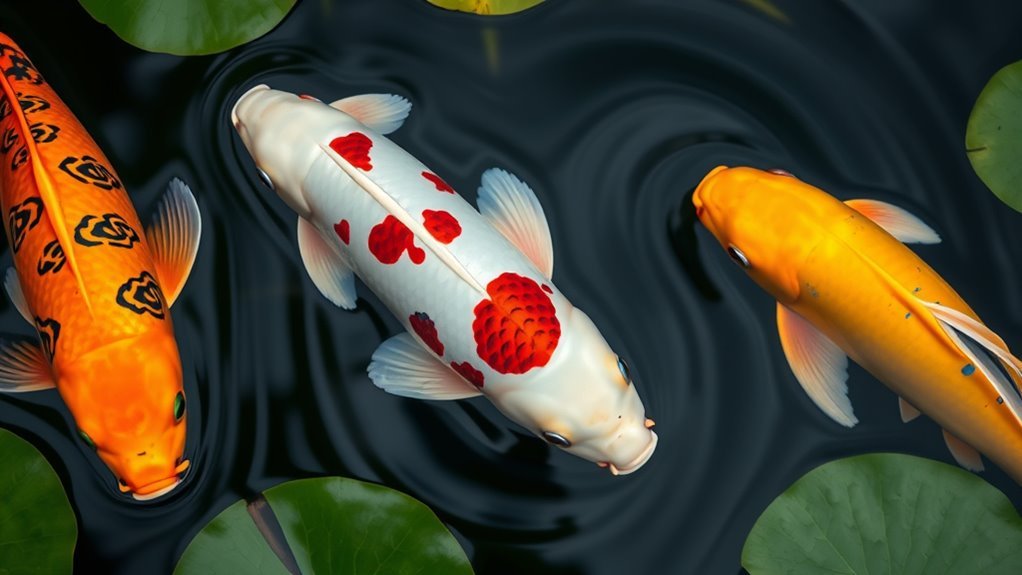
You’ll pay more for koi that come from rare, skillfully bred lineages, since only a tiny fraction reach show-quality. Vibrant, deep colors with crisp, symmetrical patterns also boost a koi’s value because they’re visually striking and hard to find.
Plus, size and body shape matter—a well-proportioned, larger koi often commands a higher price due to maturity and breeding potential. There’s more to uncover about what truly makes koi so valuable if you want to get the full picture.
Why Rarity and Breeding Affect Koi Prices

Because only about 50 out of 50,000 koi born each year reach show-quality, their rarity drives up their price. You quickly learn that breeding high-quality koi isn’t easy—achieving the perfect size, shape, and desirable traits takes skillful selective breeding.
The limited availability of these exclusive koi with superior genetic lineage makes them highly sought after. When you invest in koi, you’re paying for more than just a fish; you’re paying for rarity and the years of careful breeding behind it.
Show-quality koi command a higher market value because they represent the pinnacle of koi breeding efforts. Their unique genetic makeup and flawless characteristics make them stand out.
Because few meet these standards, you’ll find their exclusivity considerably impacts their price.
How Coloration and Pattern Affect Koi Prices
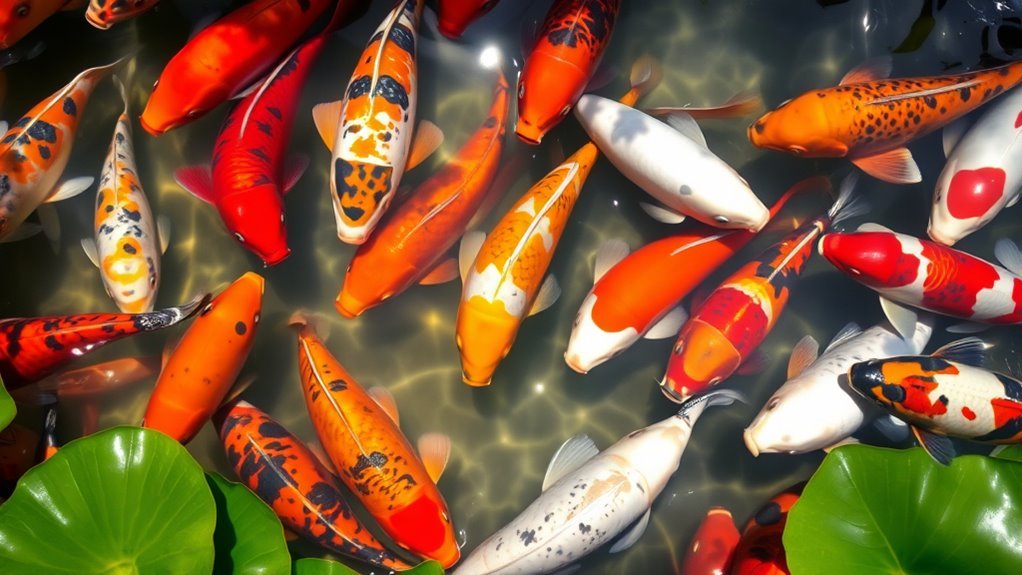
Alongside rarity and breeding quality, the coloration and pattern of a koi play a major role in its price. You’ll find that deep, vibrant colors and a pure white background boost value. Symmetry and pattern intricacy catch the eye, especially when color distribution follows the dorsal ridge.
Crisp pattern edges and clarity with minimal blemishes are essential. Multiple color steps, like layered reds or blacks, increase desirability and cost.
| Factor | Description | Impact on Price |
|---|---|---|
| Coloration | Deep, vibrant hues | High |
| Pattern Symmetry | Balanced, intricate designs | High |
| Pattern Clarity | Crisp edges, minimal blemishes | High |
| Color Steps | Multiple bands or layers of color | Moderate to High |
Mastering these aspects will help you understand koi pricing better.
Why Body Shape and Size Affect Koi Prices
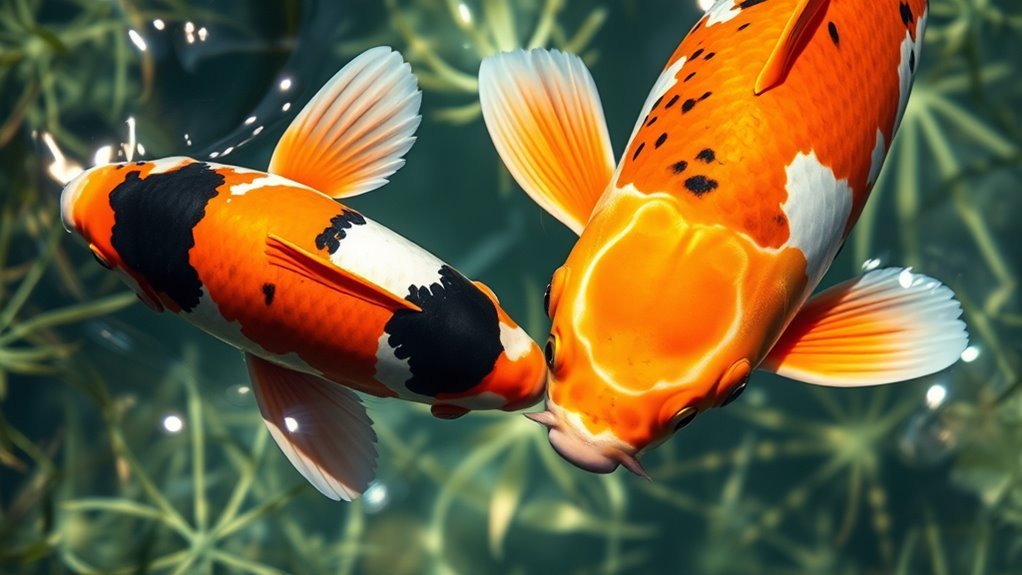
While vibrant colors and patterns catch your eye, the body shape and size of a koi play an equally important role in determining its price. Larger koi often command higher koi prices because size reflects maturity and breeding potential, with some quality koi like “Big Girl” weighing over 90 pounds.
Body shape and size, alongside vibrant colors, are key factors in determining a koi’s value.
The size of koi fish affects market value, but body conformation and physical symmetry also matter greatly. A streamlined, well-proportioned body shape signals good koi health and enhances desirability.
Female koi with wider, torpedo-shaped bodies usually fetch higher prices due to their breeding capability. When evaluating koi prices, you must consider both size and flawless physical symmetry.
Together, they indicate the overall quality koi, driving the market value beyond just vibrant coloration or pattern.
Frequently Asked Questions
How to Determine Koi Fish Value?
You determine a koi fish’s value by examining its color vibrancy, pattern symmetry, body shape, size, and age.
You’ll also consider its health, genetic lineage, rarity, and purpose, which all influence how much it’s worth.
What Makes a Koi Fish More Expensive?
You’ll find a koi fish more expensive when its colors dazzle perfectly, its patterns are flawless, and its size impresses.
But there’s more—rare genetics and breeding potential push the price even higher.
What Fish Cost $1 Million Dollars?
You’ll find that koi fish, like the famous S Legend Kohaku, can cost $1 million or more. These rare, show-quality koi are prized for their perfect patterns, vibrant colors, and exceptional lineage, making them true collector’s treasures.
What Is the Average Cost of a Koi Fish?
Koi fish typically swim between $50 and $500 in price, though some rare jewels can leap to thousands.
When you buy one, you’re capturing a living, shimmering work of art for your pond.
Conclusion
When you look at koi fish prices, don’t just guess—they reflect real factors. Rarity and breeding affect how unique your koi is. Coloration and pattern show off its beauty, making it stand out.
Body shape and size reveal its health and potential. So, the theory that all koi cost the same? It’s simply not true. Understanding these details helps you appreciate why some koi are worth more—and why investing in quality matters.
By considering rarity, coloration, and body shape, you can better understand koi fish prices and make informed decisions when choosing your koi.