How Long Can a Betta Fish Go Without Food
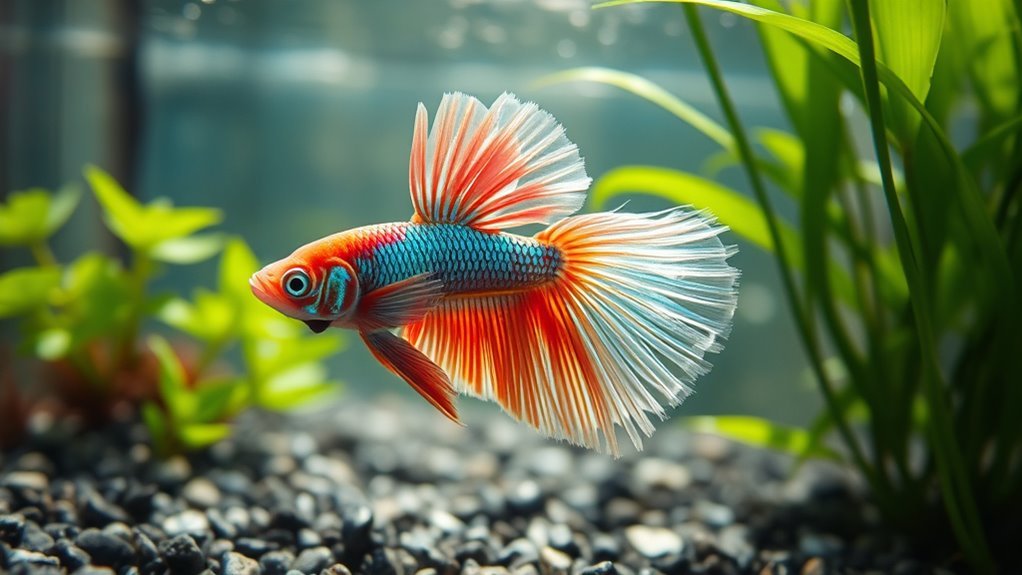
Your betta fish can safely go without food for up to two weeks, but it’s best not to fast them longer than three days to avoid stress and weaken their immune system. Knowing how long a betta fish can go without food helps you manage their care properly. Occasional skipped feedings are usually fine, and short fasts can even help digestion.
Just watch for signs of illness and keep water conditions stable. Proper tank maintenance is crucial during fasting periods to ensure your betta remains healthy. If you want to learn how to manage feeding during trips or recover your betta after fasting, there’s more helpful info ahead.
How Long Can a Betta Fish Survive Without Food?
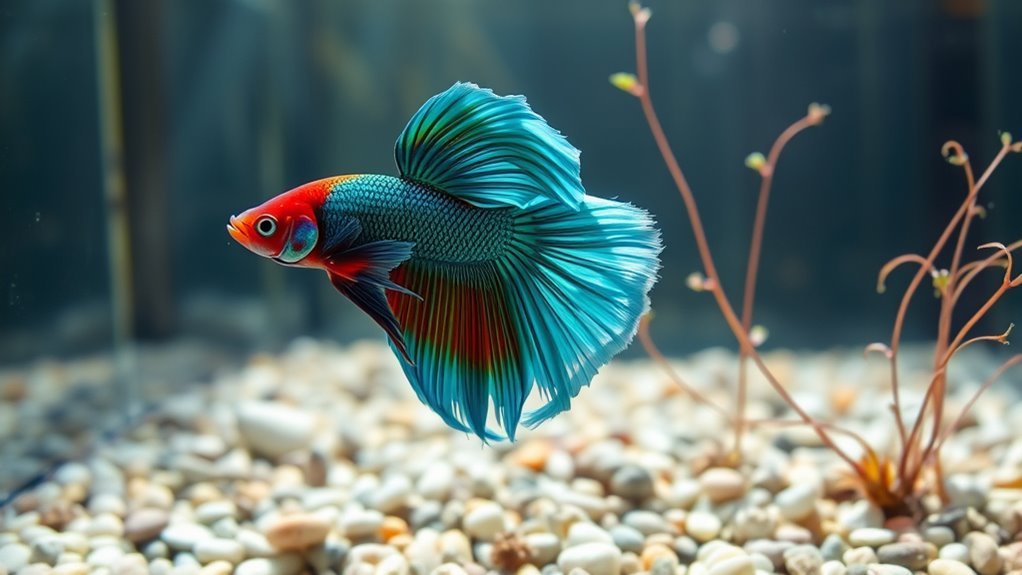
While betta fish can survive up to 10-14 days without food under ideal conditions, you should avoid fasting them for more than 3 days to prevent stress and health problems.
Betta fish can survive 10-14 days without food, but avoid fasting over 3 days to prevent stress and health issues.
A healthy adult betta fish has a small stomach, about the size of one eye, which limits how much fish food it can eat daily.
Although they can survive without food for over a week, prolonged fasting days weaken their immune system.
Water temperatures also play a role; warmer tanks speed up metabolism, so your betta needs more frequent feeding.
If you must skip feeding, keep it under three days to keep your betta fish healthy and stress-free.
Is It Safe to Skip Feeding Your Betta Fish for a Day or More?
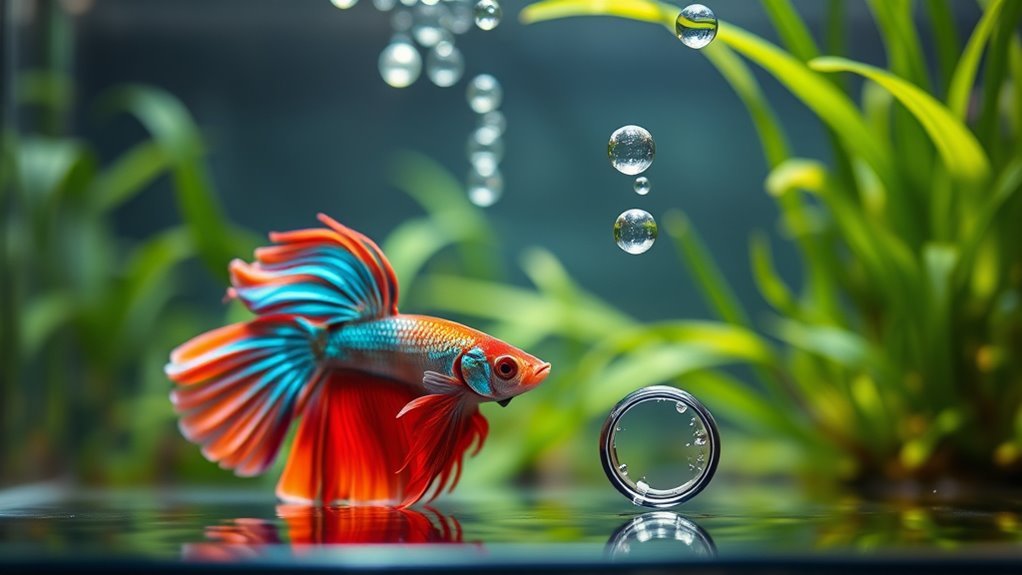
Knowing how long bettas can survive without food helps you understand whether it’s safe to skip a feeding now and then. For healthy adult betta fish, skipping feeding for a day or even a couple of days is generally safe.
In fact, occasional fasting days can improve digestion and prevent overfeeding, which helps maintain good water quality.
Feeding once daily is usually enough for your betta fish, so you don’t need to worry if you miss a meal occasionally. However, avoid prolonged fasting beyond a week, as it can cause stress and harm your fish’s health.
Always watch for any signs of stress or illness when you skip feeding, and promptly resume regular feeding to keep your betta healthy and thriving.
What Happens to Your Betta During Fasting?
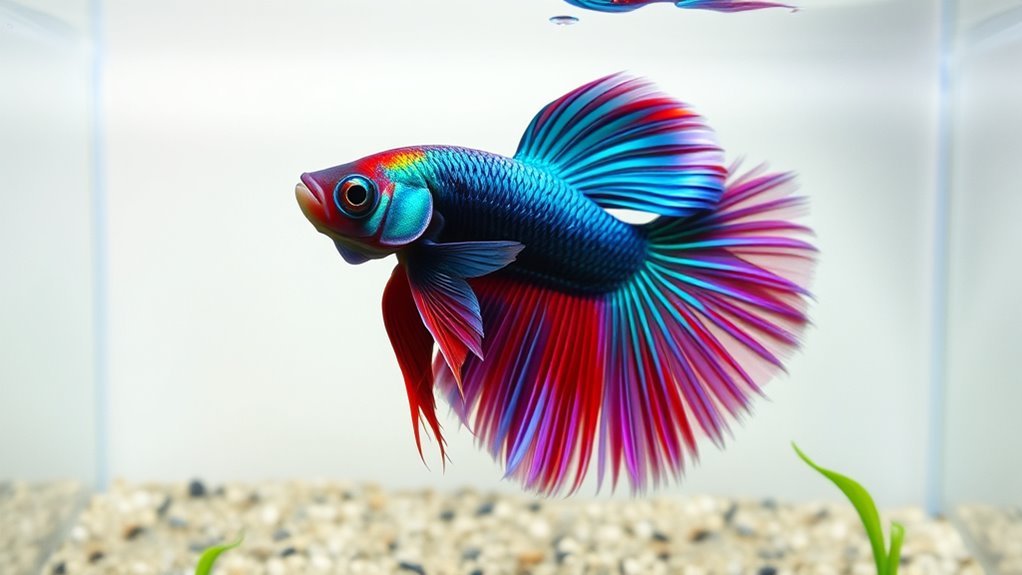
When your betta fish goes without food, its digestive system slows down, and its metabolism adjusts to conserve energy. During fasting, your betta taps into internal energy reserves to keep functioning, but after several days, you might notice it becoming lethargic and less active.
This slowdown helps reduce energy use but can cause stress if prolonged.
Extended fasting weakens your betta’s immune response, making it more vulnerable to illness and dulling its vibrant colors.
While short-term fasting is manageable, pushing beyond two weeks risks muscle wasting and serious health issues.
How Do You Prepare Your Betta for Short Absences?
If you plan to be away for a few days, preparing your betta properly guarantees it stays healthy and stress-free. Start by gradually reducing feeding frequency to lower stress. Perform a partial water change (50-80%) to maintain stable water parameters.
Use an automatic feeder or pre-measured feeding blocks to ensure consistent feeding. If unavailable, arrange a trusted person to feed your vacation fish and check water quality.
| Task | Purpose | Tips |
|---|---|---|
| Gradual Feeding | Stress reduction | Feed less before absence |
| Water Change | Maintain water parameters | Use dechlorinated water |
| Automatic Feeder | Consistent feeding | Set small, frequent portions |
| Trusted Sitter | Backup feeding | Provide clear instructions |
| Pre-measured Food | Convenience | Avoid overfeeding |
These steps keep your betta fish healthy and comfortable during short absences.
How to Care for Your Betta Fish During Longer Trips
Because longer trips require more careful planning, you’ll need to set up reliable feeding methods like automatic feeders or enlist a trusted sitter to maintain your betta’s routine.
Longer trips need reliable feeding plans, like automatic feeders or a trusted sitter to keep your betta’s routine.
Before you leave, perform a partial water change and clean the tank to keep the water fresh and healthy for your betta fish during your absence.
Automatic feeders can dispense small, controlled amounts of food at scheduled intervals, ensuring consistent food sources throughout the trip’s duration.
If you don’t have an automatic feeder, arrange for a pet sitter or a trusted friend to feed your betta according to a set schedule.
Planning these steps carefully helps maintain your betta’s health and reduces stress, so you can enjoy your time away with peace of mind.
How to Feed Your Betta After a Fasting Period
After a fasting period, start by offering your betta small amounts of high-quality, easily digestible food to avoid overwhelming its system.
Gradually increase feeding frequency over several days while watching for any signs of stress or bloating.
Keeping a close eye on your betta’s health guarantees a seamless shift back to its regular feeding routine.
Gradual Feeding Approach
Although your betta may have fasted for a while, you’ll want to reintroduce food carefully by offering small portions, like 1-2 pellets, every few hours to avoid digestive shock.
Use a gradual feeding approach by starting with easily digestible foods, such as high-quality betta pellets or frozen bloodworms, to stimulate appetite safely.
Instead of one large meal, give small meals multiple times a day during refeeding to ease your fish’s adaptation back to eating.
Watch for any signs of stress or bloating and adjust the amount you offer accordingly.
Over several days, slowly increase both the amount and frequency of feeding until your betta returns to its regular diet.
This careful process helps minimize stress and supports a healthy recovery.
Monitor Health Closely
As you gradually reintroduce food to your betta, keeping a close eye on its health is essential. You should monitor your fish closely for any signs of stress or illness, such as lethargy, fin clamping, or discoloration.
Observe its behavior carefully, noting any refusal to eat or unusual activity.
Start with small portions—1-2 pellets or flakes—to prevent digestive upset and slowly increase the amount over several days.
Maintaining high water quality and stable temperature supports your betta’s recovery and digestion during this time.
If your betta continues to show signs of stress or refuses food after fasting, don’t hesitate to consult an aquatic veterinarian for guidance.
Careful monitoring guarantees your betta thrives after a fasting period.
Frequently Asked Questions
How Long Can a Betta Fish Be Left Without Food?
You can leave your betta fish without food for up to 10-14 days if it’s healthy, but try not to exceed 3 days regularly to avoid stress and health issues.
Short breaks of 2-4 days are usually safe.
How to Know if Betta Is Starving?
You know your betta’s starving when it’s lethargic, dull in color, and clamping its fins.
Is It Okay if I Don’t Feed My Betta Fish for a Day?
Yes, it’s okay if you don’t feed your betta fish for a day. Skipping a meal can actually prevent overfeeding.
But make sure to monitor your betta’s behavior and health to keep it thriving.
How Do I Feed My Betta Fish While on Vacation?
You can use an automatic feeder, which 75% of betta owners find reliable, to feed your fish while on vacation.
Test it beforehand and ask a friend to check the feeder, ensuring your betta stays healthy.
Conclusion
So, how long can your betta really go without food? While they can survive a few days fasting, it’s not something you want to make a habit. Skipping meals occasionally is okay, but regular feeding keeps your betta healthy and happy.
Preparing properly before short absences and knowing how to care for them during longer trips guarantees they stay strong. After fasting, feed them gently to avoid digestive issues.
Isn’t your betta’s well-being worth the extra care? Understanding how long a betta fish can go without food helps you provide the best care and ensures their health and happiness.