
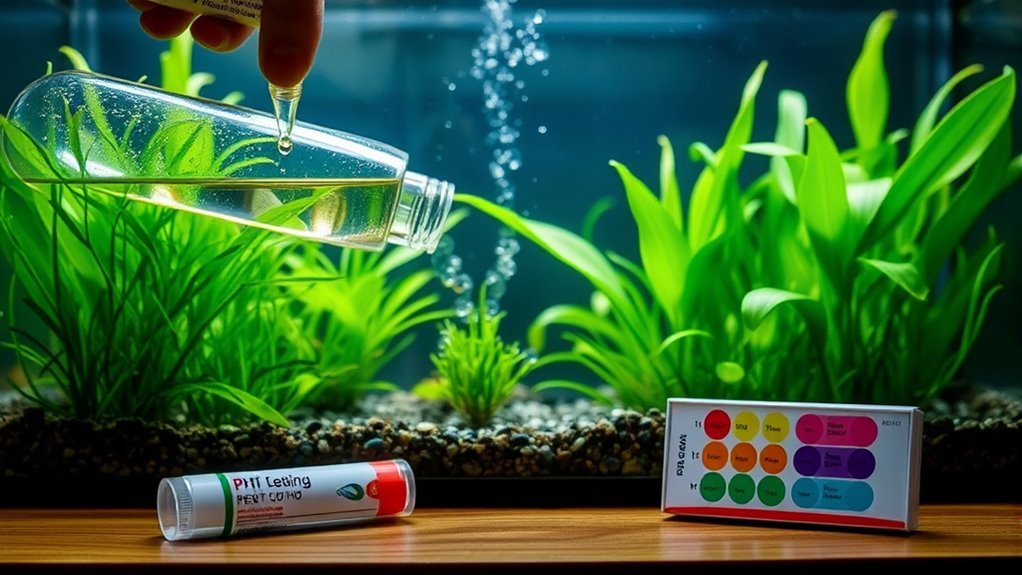
How Do You Lower pH in Your Fish Tank Step by Step
To lower your fish tank’s pH, start by testing your water to know your baseline. Understanding how to lower pH in your fish tank is essential for maintaining a healthy aquatic environment. Then, make small, gradual adjustments—avoid sudden changes that stress fish.
You can add natural tannins like driftwood or almond leaves, or cautiously use diluted acids, testing pH frequently. Mixing reverse osmosis water with your tap water helps too, but keep changes under 25%. Regular monitoring guarantees a safe, stable environment.
Following these steps sets a solid foundation to keep your aquarium healthy and balanced.
Why Lower Aquarium pH Gradually?
Although it might be tempting to adjust your aquarium’s pH quickly, lowering it gradually is essential to avoid stressing your fish and invertebrates. A gradual pH change protects fish safety by preventing sudden shifts that can shock their systems.
Lower your aquarium’s pH gradually to prevent stress and sudden shocks to fish and invertebrates.
Rapid pH adjustments often cause unstable water parameters, leading to harmful swings and even ammonia toxicity.
By slowly changing your tank’s pH over days or weeks, you allow natural biological processes to stabilize water chemistry effectively. This steady approach maintains consistent KH and GH levels, which supports a balanced environment for both fish and beneficial bacteria.
Gradual pH lowering also reduces the risk of disrupting aquatic plants, ensuring your entire ecosystem remains healthy and stable throughout the adjustment process.
Test Aquarium Water to Establish Your Starting pH
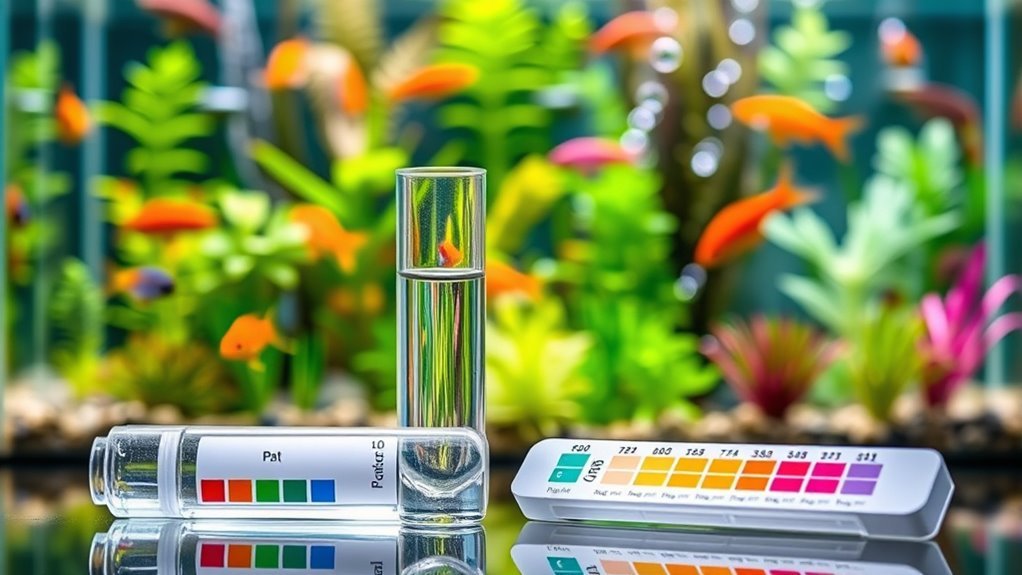
Before you start lowering your aquarium’s pH, you need to know where it stands. Begin by collecting a water sample in a clean container to avoid contamination. Use a reliable pH water test kit to measure the current acidity accurately.
Follow the test kit instructions carefully, adding the required reagents or drops. Then compare the color change to the provided chart to determine the pH level. Record this initial reading and note any fluctuations or trends over time.
Regular testing helps you understand your tank’s baseline acidity and guarantees you make informed adjustments.
Avoid Quick pH Fixes and Prioritize Stability
You’ll want to adjust your tank’s pH gradually over several weeks to avoid stressing your fish. Keep a close eye on water parameters to maintain a stable environment.
Small, consistent changes are much safer and more effective than quick fixes.
Gradual pH Adjustments
When you need to lower the pH in your fish tank, making gradual adjustments is key to keeping your aquatic life healthy. Sudden changes can stress your fish, so aim for small, steady shifts of 0.2 to 0.3 pH units per day. Use natural methods or slow chemical additions paired with consistent monitoring.
To ensure safe gradual pH adjustments, you should:
- Perform incremental water changes over several days.
- Add natural materials like driftwood or Indian almond leaves to release tannins slowly.
- Introduce chemicals cautiously, testing the water frequently.
- Monitor pH regularly to avoid rapid swings.
Consistent Water Parameter Monitoring
Although quick fixes might seem tempting, consistently monitoring your water parameters is essential for maintaining a healthy fish tank. Use reliable test kits to regularly test your aquarium’s pH, KH, and GH, so you can track changes accurately over time.
Avoid rapid pH adjustments; instead, aim for gradual shifts to prevent stressing your fish and maintain water stability.
Monitor water parameters daily during any adjustment process to catch early signs of instability or unwanted changes. Keep detailed records of your test results and any adjustments you make—this helps identify patterns and ensures consistent conditions.
Use Reverse Osmosis Water and Remineralize Carefully
You can lower your tank’s pH naturally by using reverse osmosis (RO) water, which typically has a pH around 6.2.
Just remember to remineralize it carefully with only GH minerals to keep pH stable without raising it.
Mixing RO water gradually with tap water and testing regularly will help maintain balanced water parameters.
Benefits Of RO Water
Since RO (Reverse Osmosis) water naturally has a low pH around 6.2, it offers an effective way to lower your aquarium’s pH when you re-mineralize it correctly. Using RO water lets you control water parameters precisely for your fish tank, especially if you want to lower pH without harsh chemicals.
Reverse osmosis removes impurities and toxins, creating a cleaner, healthier environment. You can mix RO water with tap water to fine-tune your pH and keep conditions stable for sensitive species.
Benefits of RO water include:
- Consistent, low pH around 6.2 to help lower pH levels
- Reduced dissolved impurities for healthier fish tank water
- Ability to adjust water parameters by mixing with tap water
- Enhanced control over soft, stable water conditions suitable for delicate fish
Proper Remineralization Techniques
When using reverse osmosis (RO) water to lower your tank’s pH, it’s essential to remineralize carefully by adding only GH minerals without increasing KH. Avoid carbonate-based additives as they raise KH and pH levels.
Mix RO water with tap water gradually, keeping water changes under 25% to maintain stability. Use mineral mixes designed for freshwater tanks to achieve the right GH while keeping KH low.
Regularly test pH and water hardness after remineralizing to ensure a safe environment for your fish.
| Parameter | Effect on pH | Recommended Action |
|---|---|---|
| GH (General Hardness) | Supports stable pH | Add minerals to remineralize |
| KH (Carbonate Hardness) | Buffers and raises pH | Avoid increasing KH |
| RO Water | Low pH, low hardness | Mix gradually and remineralize carefully |
Maintaining Stable Water Parameters
Although managing aquarium water chemistry can be challenging, using reverse osmosis (RO) water combined with careful remineralization gives you precise control over pH and hardness levels. RO water naturally has a lower pH around 6.2, making it great for softening your water parameters.
To stabilize your pH, remineralize RO water carefully with only GH minerals, avoiding KH buffers that raise alkalinity.
To maintain stable water parameters, follow these tips:
- Gradually mix RO water with tap water, limiting changes to 25% at a time.
- Use natural materials like driftwood or Indian almond leaves to acidify the water.
- Regularly test water parameters after each water change.
- Avoid sudden shifts by making small, consistent adjustments.
This approach helps you keep a steady pH and a healthy environment for your fish.
Add Natural Tannins to Lower Aquarium pH Gradually
If you want to lower your aquarium’s pH gradually, adding natural tannins is an effective method. You can introduce botanicals like Indian almond leaves, alder cones, or peat moss, which release tannins slowly into the water.
Boiling these dried botanicals before adding them helps sterilize and boosts tannin release, enhancing their pH-lowering effect.
As tannins enter the tank, they create a slight yellow or brown tint, signaling their presence and activity.
By regularly adding small amounts of botanicals, you achieve a gradual pH drop without shocking your fish.
Make certain to monitor your water parameters closely to ensure the tannins are lowering pH effectively while maintaining overall water stability, keeping your aquarium environment safe and balanced.
Use Safe Acid Treatments to Lower pH Gradually
Since sudden pH shifts can harm your fish, you’ll want to lower the pH gradually using safe acid treatments. Muriatic acid is effective but must be handled with care. Always add acid to water—not water to acid—to avoid dangerous reactions.
Lower pH gradually with safe acids like muriatic acid, adding acid to water carefully to protect your fish.
Start with a diluted muriatic acid solution, such as two caps per 35 gallons, then test the pH after three days.
Keep these tips in mind:
- Prepare the acid-water mixture separately to let CO₂ outgas before adding it to the tank
- Adjust the acid dosage gradually based on pH test results
- Avoid rapid pH changes that stress fish
- Wait at least a week after treatment to confirm stable pH
This careful approach helps you manage pH safely and gradually.
Monitor and Maintain Consistent Water Parameters for Fish Health
To keep your fish healthy, you need to monitor and maintain consistent water parameters like pH, KH, and GH regularly. Use reliable test kits to check these values and avoid sudden pH changes that can stress your fish.
Maintaining stable water parameters means using the same water sources and treatments consistently. Natural buffers like driftwood help keep pH steady.
| What to Monitor | Why It Matters |
|---|---|
| pH | Prevents stress |
| KH | Stabilizes pH |
| GH | Supports fish health |
Track your readings over time to spot trends and ensure your aquarium remains a safe environment. Consistent monitoring keeps water parameters stable, promoting long-term fish health.
Frequently Asked Questions
What Lowers pH Fast?
You lower pH fast by injecting CO2 or adding concentrated acids like hydrochloric acid carefully. These react quickly with carbonate ions, forming carbonic acid, which drops pH rapidly.
However, you must monitor closely to avoid harming your fish.
How to Balance pH Levels in a Fish Tank?
You’ll want to keep pH changes under 0.2 units daily to avoid stressing fish. Balance pH by testing regularly, using natural buffers like driftwood, and performing gradual water changes to maintain steady, healthy tank conditions.
Will Water Conditioner Lower pH?
No, water conditioner won’t lower your tank’s pH considerably. It mainly removes chlorine and chloramine.
To lower pH, you’ll need acidifiers or natural methods like driftwood or peat, not just a regular conditioner.
What to Do if pH Is Too High?
If your pH is too high, you should gradually add natural materials like driftwood or Indian almond leaves, perform gentle water changes with RO water, and monitor pH closely to avoid shocking your fish.
Be patient and cautious.
Conclusion
Lowering your fish tank’s pH is much like tending a delicate garden—you can’t rush nature without risking harm. By testing your water, adding natural tannins, or using safe acid treatments, you help create a balanced, healthy environment for your aquatic life.
Remember, slow and steady wins the race, ensuring your fish thrive just like a well-nurtured garden blooms. Patience and care are the keys to underwater harmony.
By following these steps to lower pH in your fish tank, you maintain a stable and healthy habitat. Consistent monitoring and gentle adjustments will keep your aquatic ecosystem thriving for the long term.