
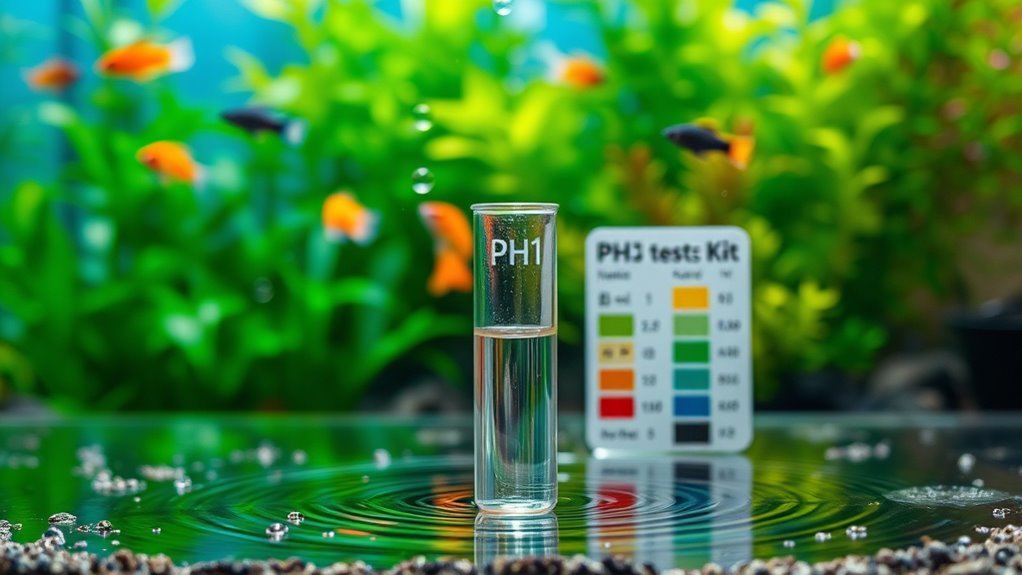
How Do You Lower pH in Your Fish Tank?
To lower pH in your fish tank, start by adding natural materials like driftwood, botanicals, or peat moss. These release tannins that gently acidify the water and promote stability. Using natural methods helps maintain a healthy environment for your aquatic life.
You can also mix reverse osmosis water with tap water for controlled pH reduction while maintaining essential minerals. Avoid sudden changes by gradually introducing these methods and regularly testing your water. Consistent monitoring ensures your tank remains balanced.
If you want to keep your aquarium healthy and balanced, exploring these strategies will help you manage pH safely and effectively. Taking these steps promotes a stable and comfortable habitat for your fish.
Why Lowering pH Naturally Benefits Your Fish Tank
When you lower the pH naturally in your fish tank, you create a stable, stress-free environment that closely resembles your fish’s natural habitat. Using natural methods like adding driftwood and botanicals releases tannins that lower the pH gently, improving water chemistry without harsh chemicals.
This approach supports long-term water stability by preventing sudden fluctuations, which often cause stress and health problems in fish. By mimicking the natural conditions many species thrive in, you encourage healthier behavior and even breeding.
Natural pH reduction helps maintain consistent water chemistry, so you don’t have to worry about drastic changes disrupting your tank’s balance. Overall, relying on these natural methods promotes a healthier, more balanced aquarium environment for your fish to flourish.
How to Lower pH Naturally: Simple Methods That Work
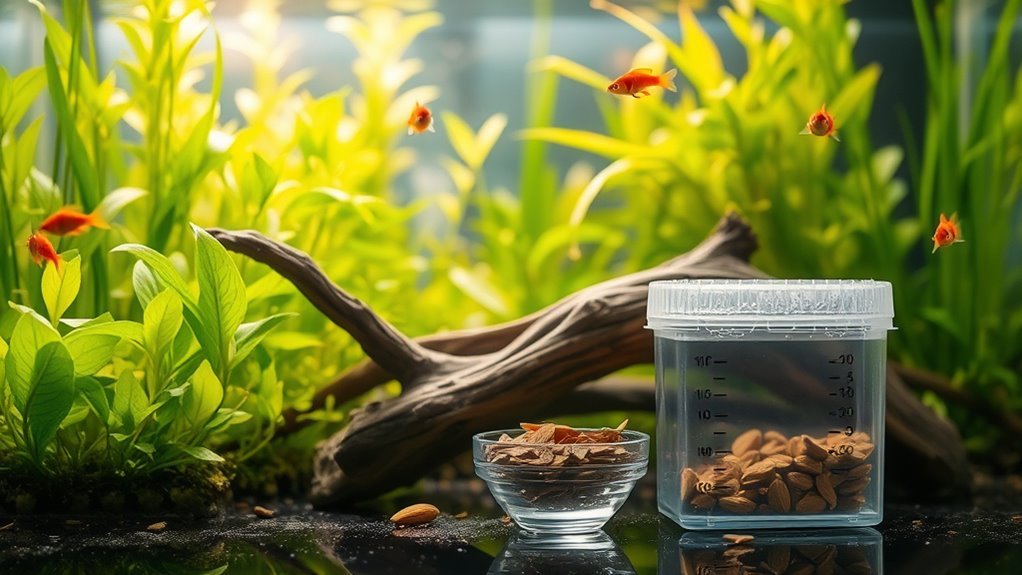
Although adjusting your tank’s pH might seem tricky, you can lower it naturally using simple, effective methods. Adding driftwood or botanicals like Indian almond leaves releases tannins that lower pH and soften water, creating a more comfortable environment for your fish.
You can also place peat moss in your filter or in a mesh bag inside the tank; it gradually acidifies water by releasing organic acids.
Regular water changes with soft, acidified water help maintain a stable, lower pH without stressing your fish.
These natural approaches keep pH levels balanced and avoid sudden fluctuations that can harm your aquatic life.
Using Reverse Osmosis (RO) Water to Lower pH Naturally
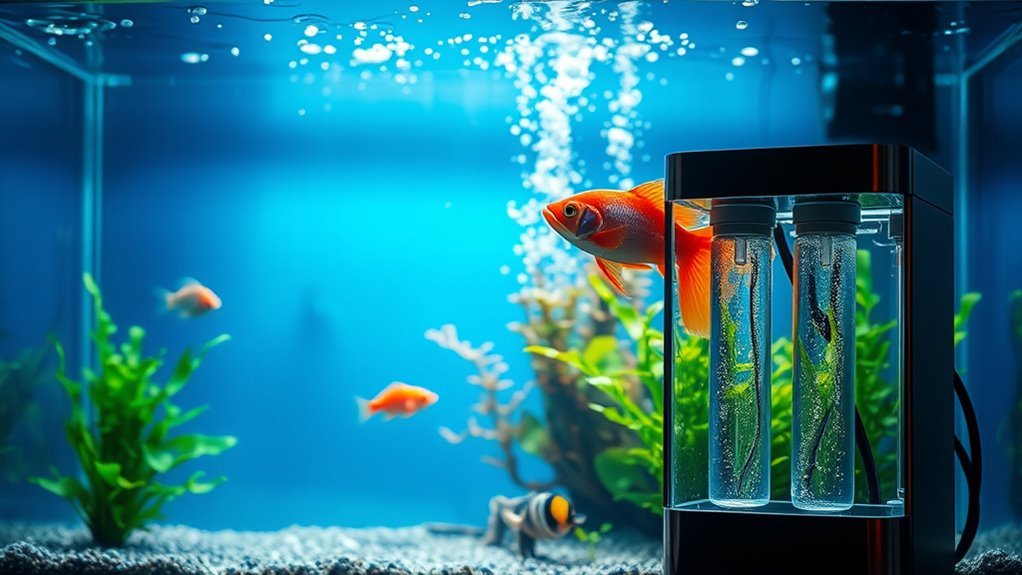
Using reverse osmosis (RO) water is a great way to lower your tank’s pH naturally since it typically has a low pH and fewer buffering minerals.
You can mix RO water with tap water or add GH minerals without KH to keep pH stable while supporting your fish’s health.
Just remember to test your water regularly to avoid sudden pH changes that could stress your aquatic life.
Benefits Of RO
Why choose RO water to manage your aquarium’s pH? RO water offers precise control over your tank’s water parameters because it’s free of dissolved salts and impurities. This purity helps you naturally lower pH when mixing RO water with harder tap water.
Here are four key benefits of using RO water:
- Using RO water with a pH around 6.2 lets you safely reduce overall tank pH.
- Re-mineralizing RO water with GH minerals maintains essential hardness without raising pH.
- It provides a clean slate, so you can adjust pH using natural materials like driftwood.
- Regular mixing and testing ensure stable, long-term pH balance.
Proper RO Usage
How can you effectively lower your aquarium’s pH without harsh chemicals? Using RO water is a natural way to lower pH since it has a neutral pH around 6.2 due to the removal of dissolved minerals.
To keep the environment stable, you should remineralize RO water with GH minerals while avoiding KH minerals, which helps maintain a lower pH suitable for sensitive fish.
Mixing RO water with tap water during water changes lets you gradually lower pH while preserving essential minerals for your fish’s health.
Always test the pH of your remineralized RO water before adding it to the tank to ensure it stays within your target range.
Proper RO usage offers a customizable, chemical-free approach to stable pH management.
Using Driftwood and Tannins to Lower pH Naturally
You can lower your tank’s pH naturally by adding driftwood, which releases tannins that create a mildly acidic environment.
Boiling the driftwood before adding it helps sterilize and boosts tannin release for better results.
Keep in mind that the type and amount of driftwood affect how much the pH drops and may tint your water a yellow or brown color.
Benefits of Driftwood
Although adding chemicals can quickly change your tank’s pH, using driftwood offers a natural alternative that gradually lowers acidity without shocking your fish. Driftwood releases tannins, which gently reduce pH and create mild acidification.
Plus, these tannins tint the water with a natural yellow or brown coloration, signaling active pH reduction. Here’s why you should consider driftwood:
- Provides steady, natural pH reduction, avoiding sudden shifts.
- Enhances water coloration, making your tank look more natural.
- Offers a stress-free environment for your fish by stabilizing water chemistry.
- Boiling driftwood before adding it helps sterilize and boosts tannin release.
Using driftwood not only improves water quality but also adds aesthetic and health benefits to your aquarium.
Tannin Release Effects
Driftwood doesn’t just add natural beauty to your aquarium—it actively releases tannins that lower the pH by gently acidifying the water. When you add driftwood, tannin release occurs naturally, creating a mild acidic environment that gradually lowers pH levels.
You might notice the water turning yellow or brown, a sign that tannins are working.
This pH lowering effect happens over weeks and stabilizes, providing a consistent environment for your fish.
Besides driftwood, you can also use tannin-rich botanicals like Indian almond leaves or alder cones to boost tannin release and enhance pH lowering naturally.
Preparing Driftwood Properly
Before adding natural tannin sources to your aquarium, proper preparation guarantees they benefit your tank without causing problems. When using driftwood to lower pH naturally, follow these steps:
- Boil the driftwood to remove sap, dirt, and bacteria that could harm water quality.
- Soak the driftwood in water for several days or weeks to let tannins leach out gradually.
- Use hot water during soaking to speed up tannin release, but change the water frequently to avoid over-acidification.
- Monitor pH regularly to ensure tannins stabilize and maintain the desired lower pH without fluctuations.
Adding Peat Moss and Botanicals for Natural Acidification
When you add peat moss and botanicals like Indian almond leaves or alder cones to your fish tank, they release tannins and humic acids that naturally lower the pH and soften the water.
Peat moss is especially effective for acidification because it releases these substances gradually, creating a stable pH of the water over time.
Before adding peat moss, boil it to sterilize and remove debris.
Place peat moss in a mesh bag or filter media to make it easy to remove or replace as needed.
Botanicals also add beneficial tannins that gently tint the water while lowering pH naturally.
Using peat moss and botanicals helps maintain a balanced, stress-free environment for your aquatic life without relying on harsh chemicals.
Safe Partial Water Changes to Adjust and Stabilize pH
Using natural methods like peat moss and botanicals provides a gentle way to lower pH, but sometimes you’ll need to fine-tune the levels more precisely. Safe partial water changes offer a controlled approach to pH adjustment, helping maintain stable pH and balanced water parameters.
Natural methods gently lower pH, while partial water changes allow precise control for stable aquatic conditions.
Here’s how to do it effectively:
- Change 25% or less of the tank water to avoid stressing your fish.
- Use dechlorinated, conditioned water with a slightly lower pH than your tank’s current level.
- Test pH before and after each partial water change to monitor progress.
- Combine water changes with natural buffers like driftwood to support long-term stable pH.
This gradual approach prevents sudden pH swings and keeps your aquatic environment healthy.
Common Mistakes to Avoid When Lowering pH Naturally
Although lowering your tank’s pH naturally seems straightforward, many aquarists make mistakes that can harm their fish or destabilize water conditions. One common error is to make sudden adjustments, causing rapid pH changes that stress fish.
Using natural methods like peat or driftwood is great, but overusing them without monitoring water parameters can lead to unpredictable pH drops.
Avoid relying solely on chemical pH adjusters, as they often cause temporary fluctuations rather than lasting stability. Never add acids directly to the tank without a gradual, controlled approach, since this can destabilize water chemistry.
Regularly testing your water is essential to catch any unintended swings during natural pH lowering.
How to Acclimate Fish to Lower pH Conditions Safely
Lowering the pH in your tank is only part of the process; you also need to help your fish adjust to these new conditions safely. Proper acclimation is key to a safe adjustment when you lower the pH. Here’s how to do it effectively:
- Gradually introduce water with a lower pH into the shipping container using small amounts over several hours to avoid shock.
- Use a slow drip method to mix the new water, allowing fish to adjust over 1 to 5 hours depending on their sensitivity.
- Match the pH of the new water closely to the fish’s original environment before making further adjustments.
- Monitor water parameters and fish behavior carefully during acclimation, extending the process if you notice signs of stress.
This careful approach guarantees your fish adapt smoothly to the lower pH.
Monitoring and Maintaining Stable pH in Your Aquarium
When you want to keep your aquarium healthy, regularly testing its pH is essential to catch any fluctuations early. Monitoring water parameters like KH and GH also helps maintain a stable pH by influencing the tank’s buffering capacity.
Perform consistent partial water changes with conditioned or natural water to avoid sudden pH swings. Use natural materials such as driftwood or peat moss to help stabilize pH gradually over time.
Here’s a quick guide to maintain stable pH:
| Task | Purpose |
|---|---|
| Test pH regularly | Catch fluctuations early |
| Monitor KH and GH | Support buffering capacity |
| Partial water changes | Maintain stable water chemistry |
| Use driftwood or peat moss | Naturally buffer pH |
| Adjust pH gradually | Prevent harmful pH swings |
Frequently Asked Questions
How to Lower pH Quickly in a Fish Tank?
You can lower pH quickly by carefully adding a small amount of hydrochloric acid while aerating the tank. Add gradually over 24-48 hours, monitor closely, and avoid sudden drops to keep your fish safe and stress-free.
What Should I Do if My Aquarium pH Is Too High?
When your aquarium pH is too high, remember, “slow and steady wins the race.” You should add driftwood or peat moss, mix in some RO water, and test regularly to gently bring it down without stressing your fish.
What Is the Cheapest Way to Lower pH in Water?
The cheapest way to lower pH is by adding natural materials like driftwood, Indian almond leaves, or peat moss to your filter.
These release tannins that gradually acidify the water without expensive chemicals or treatments.
What Are Signs of High pH in a Fish Tank?
If you notice your fish gasping or hiding more, and algae suddenly takes over like an unwanted guest, your tank’s pH might be too high.
Cloudy water and mineral buildup also clue you in to the problem.
Conclusion
Lowering pH naturally lets you lovingly look after your lively little aquatic life. By blending beneficial botanicals, balancing with beautiful driftwood, and bringing in reverse osmosis water, you’ll boost your tank’s tranquil temperament.
Be brave but balanced—avoid abrupt adjustments and always acclimate your fish carefully. Monitoring and maintaining a steady, stable pH ensures your fish flourish in a friendly, flourishing freshwater fortress.
Keep calm, care consistently, and create a calm, enthralling environment to lower pH in your fish tank effectively.