What Does a Pistol Compensator Do to Shooting?
A pistol compensator helps you control recoil by redirecting gases upward, which reduces muzzle rise and keeps your barrel level. This means you’ll experience less muzzle flip, enabling faster shooting and quicker target reacquisition with better accuracy.
Essentially, it makes managing your shots easier, especially during rapid fire.
It also helps maintain your sight alignment, so follow-up shots become smoother and more precise. While it boosts your control and speed, there are some trade-offs to consider. Keep exploring to discover how a compensator impacts your overall shooting experience.
Key Takeaways
- A pistol compensator redirects gases upward to reduce muzzle rise and improve barrel stability. It minimizes muzzle flip, allowing faster and more controlled follow-up shots.
- By keeping the barrel level, it helps maintain sight alignment during rapid fire. This means you can stay on target more easily.
- It enhances shooting accuracy and enables quicker target reacquisition. So, you get better performance when shooting quickly.
- Using a compensator may increase noise and flash, requiring shooter adjustment and familiarity. It takes a bit of getting used to, but it’s worth it for the benefits.
What a Pistol Compensator Is and How It Reduces Muzzle Rise
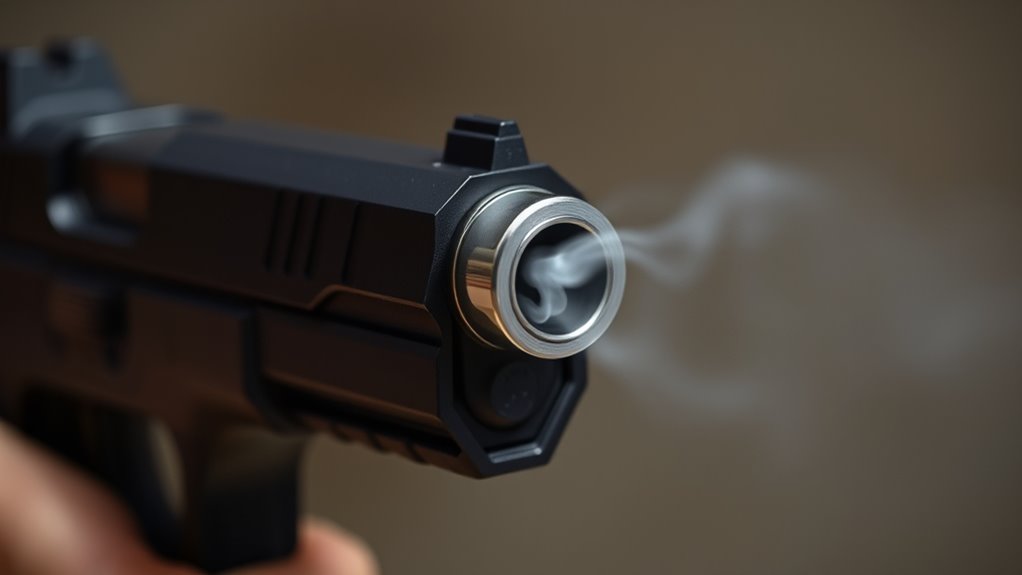
Although recoil naturally causes your pistol’s barrel to rise after each shot, a compensator helps keep it steady by redirecting gases upward through vents. This ported barrel design vents gases vertically, pushing the barrel downward to reduce muzzle flip.
By redirecting the gas upward, the compensator counteracts muzzle rise, allowing you to control recoil more effectively. Venting gases this way helps maintain stability, so your sights stay aligned shot after shot.
When you attach a compensator, it balances the forces from expanding gases, preventing excessive barrel climb. This means you can keep your pistol level, improving your shooting control.
How a Pistol Compensator Boosts Shooting Speed and Accuracy : Plus What to Watch Out For
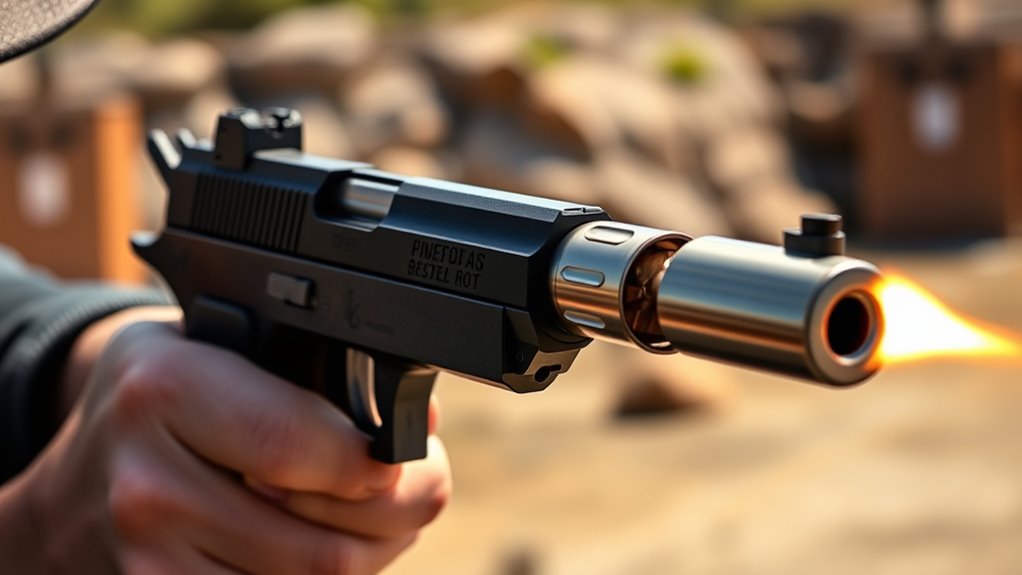
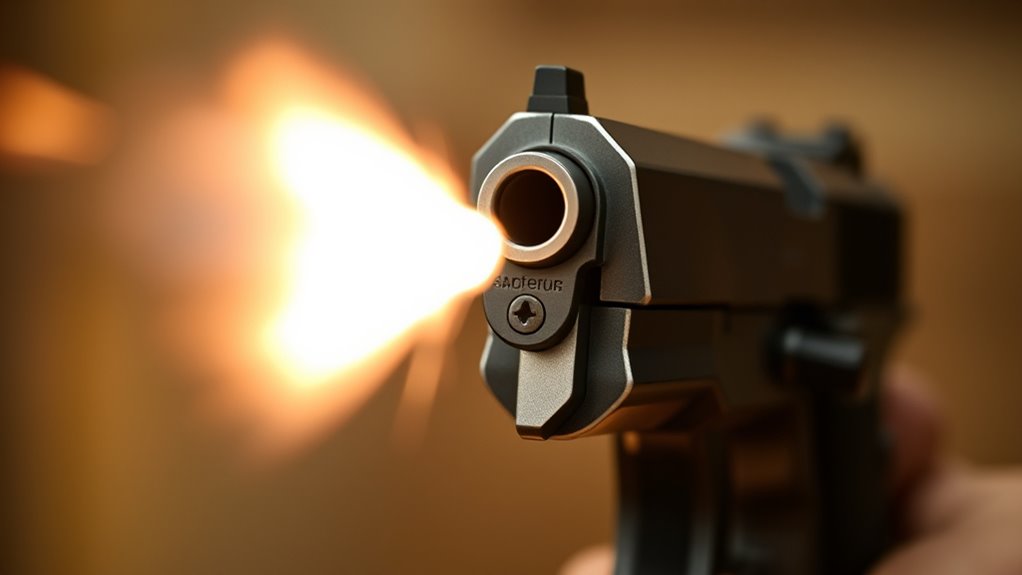
When you attach a pistol compensator, it lets you shoot faster and more accurately by keeping your barrel aligned during rapid fire. The compensator works by redirecting gases upward to reduce muzzle rise and minimize muzzle flip.
This control over muzzle device effects means you can quickly reacquire targets, making follow-up shots faster and more precise. In rapid-fire situations, this improved recoil management helps maintain accuracy without constantly re-aiming.
However, you should watch out for increased noise and flash, which can be distracting or reveal your position. Also, compensators can slightly alter recoil feel, so getting used to the new dynamics is essential.
Frequently Asked Questions
What Is the Downside of a Pistol Compensator?
The downside is you’ll face louder noise, increased muzzle flash, and potential burns from hot gases. It may reduce reliability with some ammo, complicate cleaning, and slightly lower muzzle velocity, affecting shot effectiveness.
Is a Compensator on a 9mm Worth It?
Think of a compensator as your pistol’s dance partner, guiding your shots smoothly. Yes, it’s worth it—you’ll control recoil better, shoot faster, and stay on target, especially in rapid-fire or competitive situations.
Is It Illegal to Put a Compensator on a Pistol?
It’s not illegal federally to put a compensator on a pistol, but you’ll need to check your state and local laws carefully. Some places may require permits or restrict certain types, so don’t assume it’s always allowed.
How Much Louder Is a Compensated Pistol?
You might be surprised, but a compensated pistol can be 3 to 8 decibels louder than a standard one. That jump in noise especially hits during rapid fire, making your shooting experience noticeably louder.
Conclusion
When you fire your pistol, the compensator channels gases upward, pushing the barrel down just like a gentle hand steadying a wild horse. This reduces muzzle rise, letting you snap shots faster and with sharper accuracy.
It’s like catching two birds with one stone—speed and precision dancing together in every pull of the trigger. Just remember, while it boosts your game, it might also kick up some extra noise and blast—so be ready for that unexpected roar.
In short, a pistol compensator helps control recoil and muzzle rise, making your shooting smoother and more accurate. If you want quicker follow-up shots and better target control, it’s a great upgrade. Just keep in mind the louder noise and increased blast that come with it, so always use proper hearing protection when shooting with a compensator.