How to Hold a Pistol Properly in 3 Easy Steps
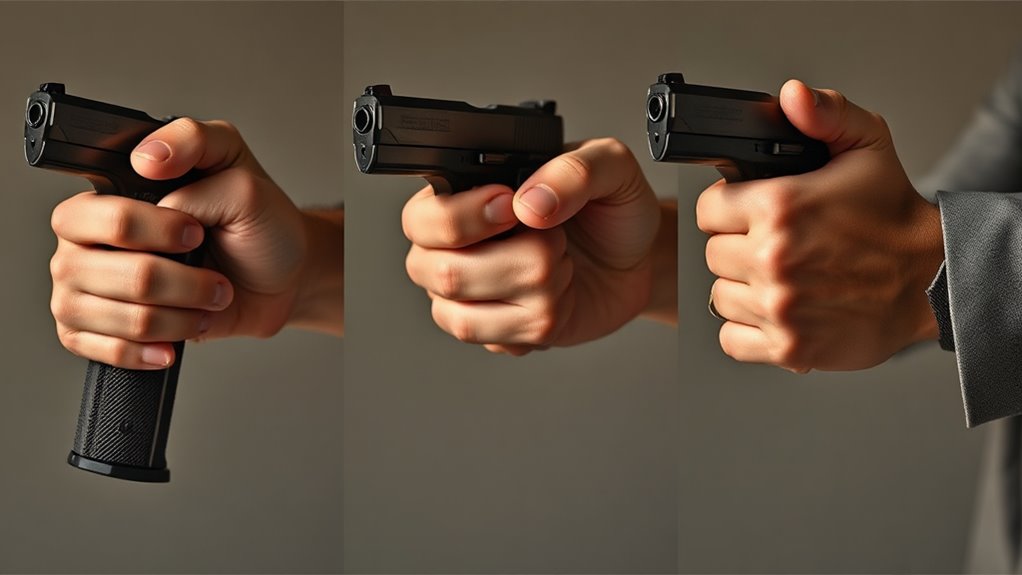
To hold a pistol properly, start by placing your shooting hand high on the grip. Cradle it firmly to control recoil and improve follow-up shots. This is key for better accuracy and safety when handling a pistol.
Next, position your support hand under the frame. Apply firm, steady pressure that’s slightly stronger than your shooting hand to reduce muzzle flip. This helps keep the pistol steady and makes shooting smoother.
Finally, keep your trigger finger straight along the frame until you’re ready to fire. When it’s time, press the trigger smoothly without jerking. Mastering these steps sets the foundation for safer, more accurate shooting.
And remember, there’s plenty more to explore when perfecting your pistol grip.
Key Takeaways
- Place the shooting hand high on the pistol’s backstrap for better recoil control and steadiness. This helps you keep the gun more stable while shooting.
- Keep the support hand’s web under the frame and grip firmly, applying slightly more pressure than the shooting hand. It might feel a bit strange at first, but it really improves your control.
- Avoid low or “teacup” grips; wrap both hands firmly around the grip with thumbs forming a V along the frame. This grip gives you better accuracy and safety.
- Keep your trigger finger straight and indexed along the frame until ready to fire, then press the trigger smoothly. Don’t rush the trigger pull—it’s all about control.
- Maintain hand placement in safe zones to prevent pinching or cuts from moving parts and ensure firearm safety. Staying aware of this keeps your shooting experience safe and comfortable.
Place Your Shooting Hand High on the Pistol Grip
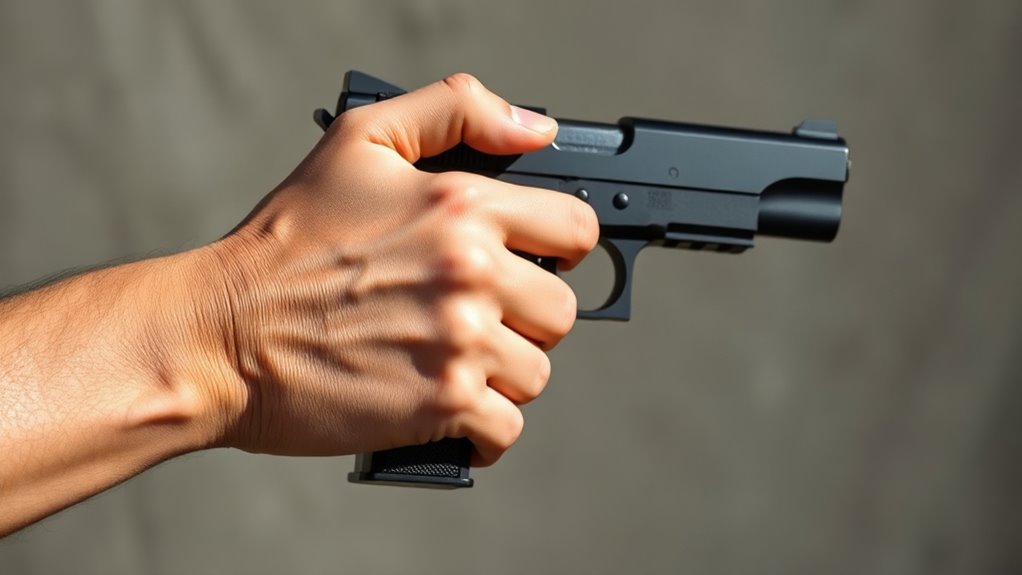
A solid grip starts by securing the web of your shooting hand as high as possible on the pistol’s backstrap, letting the rest of your palm firmly cradle the grip. This “high grip” helps manage recoil by sending it straight back into your hand and arm, keeping your sights steady for follow-up shots.
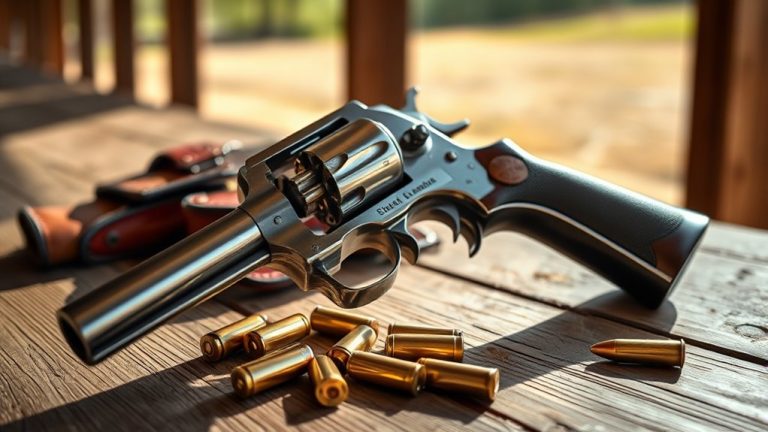
With semi-automatics, your hand might not go as high due to the rear frame extension, so adjust within the gun’s limits. Revolvers often allow a higher hold, which can further reduce muzzle flip.
Always make sure your hand placement stays out of areas where the hammer or moving parts could pinch or cut you during recoil. Remember, proper hand placement is a key part of Firearm Safety, and your index finger should remain off the trigger until you’re ready to shoot.
Position Your Support Hand and Apply Firm Pressure
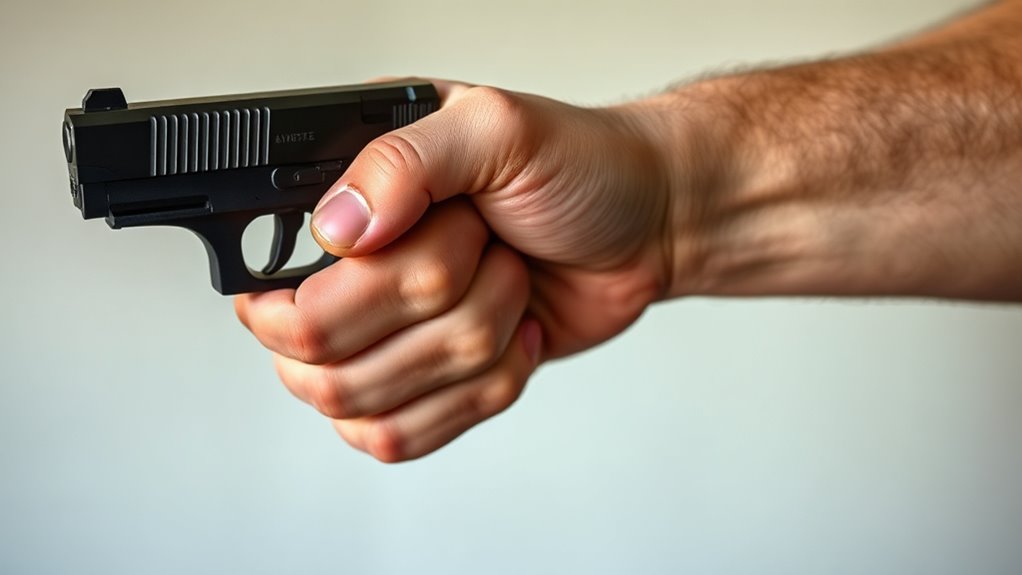
Once you’ve secured your shooting hand high on the grip, bring your support hand into play to complete a stable hold. Seat the support hand’s web under the frame and trigger guard to fill gaps, making sure your shooting hand’s thumb and index finger form a V with the index finger straight along the frame—not touching the trigger.
Wrap the middle, ring, and little fingers of both hands firmly around the frontstrap, positioning the grip as high as possible on the backstrap. Apply firm, consistent pressure with your support hand slightly stronger than your shooting hand to minimize muzzle shift and maintain control during recoil.
Avoid gripping too low or using a “teacup” grip. And make sure your support hand stays in a safe zone to prevent pinching or cuts from hammer movement. It’s all about comfort and control.
Keep Your Trigger Finger Safe and Press the Trigger Smoothly
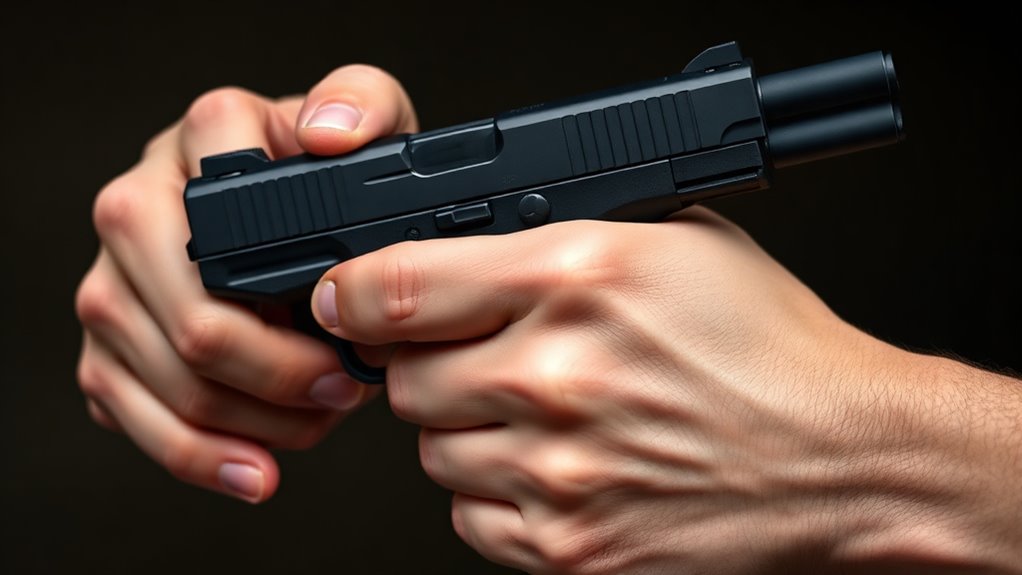
Although it’s tempting to rest your finger on the trigger, you need to keep it straight and indexed along the frame until you’ve aligned your sights and decided to fire. Following the Rules of Firearm safety, this discipline ensures you only pull the trigger when ready.
When shooting a semi-automatic pistol, place the trigger-finger pad flat on the trigger’s face, pressing straight back without disturbing your sight alignment. Press the trigger smoothly every time—no jerking—while keeping the front sight level inside the rear sight notch.
Let the firearm do the work; maintain your grip and recoil control but don’t steer with your trigger finger once pressure begins. Mastering this trigger discipline improves accuracy and keeps your finger safe during every shot.
Frequently Asked Questions
What Type of Pistol Is Best for Beginners?
You’ll want a small, lightweight pistol like a .22 caliber or 9mm for beginners. They’re easier to control, have manageable recoil, and are great for building your confidence and accuracy.
As you learn proper handling skills, these types of pistols really help you get comfortable. Plus, they’re less intimidating when you’re just starting out.
How Do I Clean and Maintain My Pistol?
Think of your pistol as a loyal steed; to keep it ready, you clean it after every ride. Disassemble, remove residue, lubricate moving parts, and reassemble.
Regular maintenance ensures trust and safety on every journey. It’s really about keeping your pistol reliable and ready whenever you need it.
What Safety Gear Should I Wear While Shooting?
You should always wear eye protection to guard against debris and ear protection to prevent hearing damage.
Think about using gloves too—they can give you a better grip and make things more comfortable.
Proper safety gear keeps you safe and helps you stay focused while shooting. It’s definitely worth the effort!
How Do I Improve My Shooting Accuracy Over Time?
You improve your shooting accuracy over time by practicing consistently, focusing on your grip, stance, and trigger control.
Analyze your shots, adjust your technique, and stay patient.
Dry fire exercises also boost muscle memory effectively.
Just keep at it, and you’ll see progress!
What Are Common Mistakes to Avoid When Handling a Pistol?
Don’t forget to keep your finger off the trigger until you’re ready. Also, avoid having a weak grip on the pistol.
Never point the pistol at anything you don’t intend to shoot. And always be aware of your surroundings to ensure safe handling.
Conclusion
Now that you know how to hold a pistol properly, you’re basically ready to become a sharpshooter—just don’t forget your safety. Place your shooting hand high, press firmly with your support hand, and keep that trigger finger disciplined.
It’s almost like you’re cradling a delicate flower, except this flower demands respect and precision. So go ahead, hold steady, and remember: the right grip is what keeps you in control, not just the gun.
Mastering the proper pistol grip is key to accuracy and safety. When you hold a pistol correctly, it improves your aim, reduces recoil, and boosts your confidence on the range. Always prioritize a firm, consistent grip to maintain control. That way, every shot counts, and you stay safe. So keep practicing those steps, and you’ll see how the right pistol grip makes all the difference in your shooting performance.