How to Tell if a Pistol Is a Revolver
You can tell a pistol is a revolver by spotting its revolving cylinder holding multiple chambers, usually five or six.
This cylinder is a dead giveaway because it rotates as you fire, unlike semi-automatic pistols that use magazines.
Also, check out the exposed hammer that’s cocked and released by the trigger.
This is different from semi-automatics, where the hammer is often hidden or automated.
Revolvers have a distinct cylinder release mechanism.
This allows the cylinder to swing open for easy loading and ejection using an ejector rod.
Another clue is the type of cartridges—they usually have rimmed cartridges designed to sit in the cylinder chambers.
And don’t forget the grip style, which places your thumb near the cylinder gap for better control.
Keep going to uncover more details on what sets revolvers apart and makes them unique in the world of pistols.
Key Takeaways
- A revolver features a revolving cylinder with multiple chambers that rotate to align each round with the barrel. It is hammer-fired, with the trigger either cocking and releasing the hammer (double-action) or requiring manual cocking (single-action).
- The cylinder swings open for direct loading and unloading of individual cartridges, unlike semi-automatic magazines. This makes it pretty straightforward to see what’s going on inside.
- Revolver cartridges have prominent rims and fit into separate cylinder chambers, which really helps when you’re trying to identify one visually.
- Revolver grips often position the support thumb near the cylinder gap, which is different from how semi-automatic pistol grips feel and function. It’s a subtle but telling detail.
How to Spot a Revolver by Its Cylinder and Action
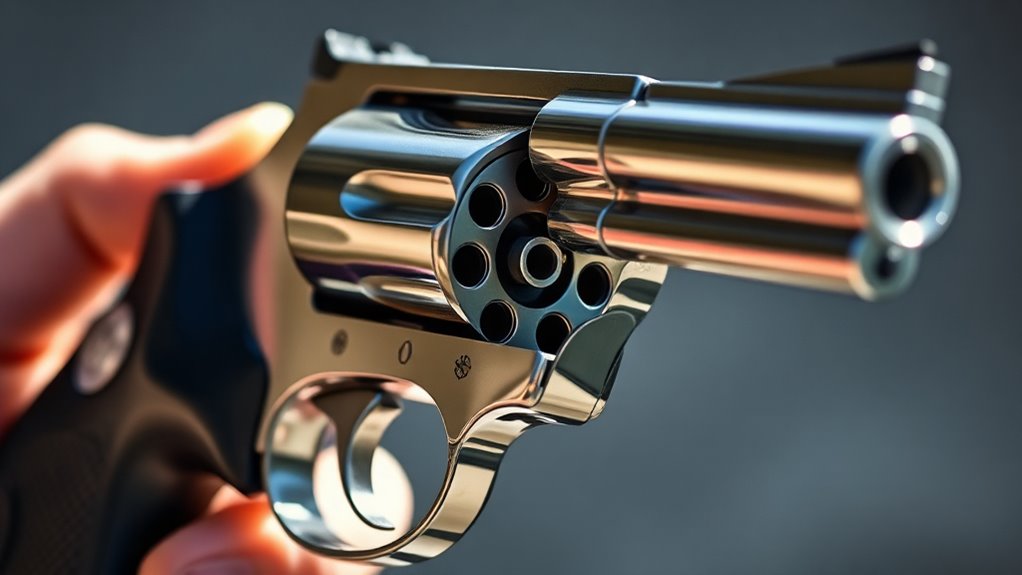
To spot a revolver, start by looking for its revolving cylinder, which usually holds six chambers but can vary depending on the model. You might see five chambers or even about ten in .22LR revolvers.
Look for a revolving cylinder, typically with six chambers, though some models vary in capacity.
When the action is ready, this cylinder is exposed and rotates with each shot, unlike the slide cycling in semi-automatics.
Next, check the action: revolvers rely on a hammer-fired mechanism. Pressing the trigger releases a cocked hammer to strike the primer.
In double-action models, pulling the trigger cocks and releases the hammer in one motion, often feeling heavier. Single-action revolvers need you to cock the hammer manually before firing, resulting in a lighter trigger pull.
Even if the hammer’s hidden, it’s still there, driving the firing pin and confirming you’re looking at a revolver.
What Makes a Revolver’s Cylinder Unique
You’ll notice a revolver’s cylinder stands out with its multiple chambers arranged in a circular pattern, each holding a single cartridge. The cylinder rotates to align each chamber with the barrel as you fire.
You can usually spot a cylinder release that lets you swing it open to load or unload. These features make the cylinder a key part of what sets revolvers apart from other pistols.
Cylinder Chamber Configuration
How can you tell a revolver apart by its cylinder chamber configuration? Look for a rotating drum with multiple chambers arranged around its circumference—typically 5 or 6 in common models. Each chamber holds a single cartridge, so you’ll see distinct “seats” rather than one continuous space like in semi-automatics.
Smaller calibers, like .22 LR, often have more chambers, sometimes 8 to 10, making the cylinder look more cellular. When the cylinder swings open, you can insert rounds directly into each chamber.
Also, check for individual extraction points aligned with each chamber, usually paired with an ejector rod for unloading. If the firearm loads by opening this multi-chambered cylinder instead of using a magazine, that’s a clear sign you’re dealing with a revolver.
Rotating Cylinder Mechanism
Notice how a revolver’s cylinder rotates each time you pull the trigger, aligning a fresh chamber with the barrel for firing. This rotating cylinder mechanism is what sets a revolver apart from other pistols.
Typically, the cylinder holds 5 to 6 cartridges, though smaller calibers like .22LR can hold more. Each chamber is separate, ensuring one round is ready to fire with every trigger pull.
You’ll also notice a small gap between the cylinder and barrel—this gap is normal and necessary for the cylinder’s rotation. When you open the cylinder using the release latch, you can load or unload cartridges.
Once closed, the cylinder locks into place, aligning precisely for the next shot. Many hammer-fired revolvers use the trigger pull to both rotate the cylinder and cock the hammer simultaneously.
Visible Cylinder Release
When inspecting a pistol, check the frame for a cylinder release mechanism—usually a button or latch—that lets you swing out or move the cylinder to expose the chambers.
On most revolvers, this release opens a hinged top-strap or side-swing action, allowing the cylinder to swing out and reveal multiple chambers, typically five or six. You’ll see the cylinder as a rotating drum with distinct openings, setting revolvers apart from pistols with solid, gapless slides and barrels.
If the firearm opens via a latch to show several chamber mouths at once, that visible cylinder release strongly indicates a revolver design. In contrast, pistols without this feature usually have a fixed barrel assembly and no rotating multi-chamber drum, confirming they aren’t revolvers.
Counting Cylinder Chambers to Identify a Revolver
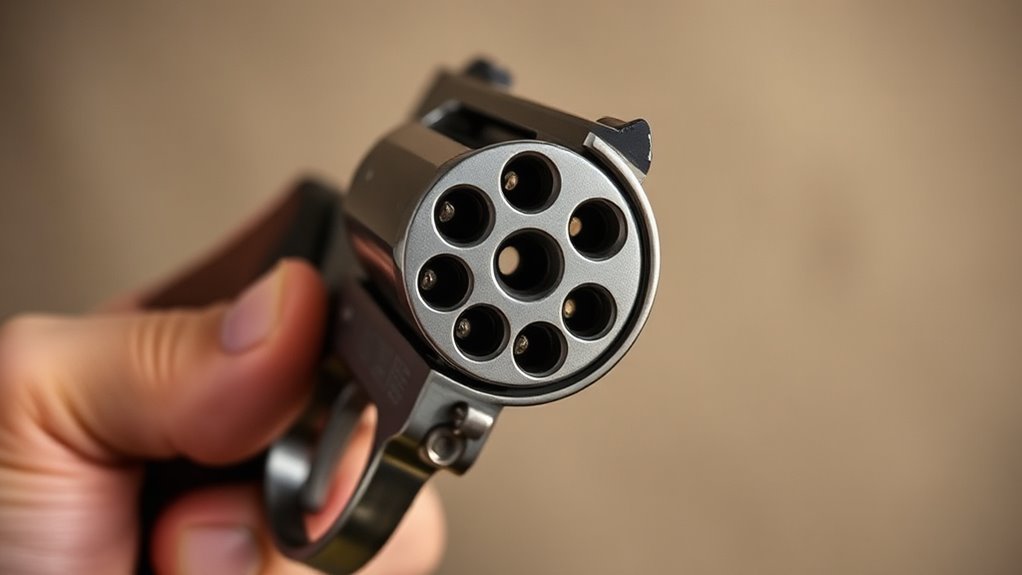
To identify a revolver, start by looking for a revolving cylinder located just behind the trigger. This cylinder contains multiple separate chambers, and counting them helps you confirm it’s a revolver.
Most common self-defense revolvers hold 5 or 6 chambers, so spotting that count is a strong clue. Smaller-caliber revolvers, like many .22LR models, might have around 10 chambers.
You can open the cylinder to visually count the chamber openings. Unlike semi-automatic pistols, which have a fixed chamber in the barrel and use magazines, revolvers don’t have a rotating magazine system.
That rotating cylinder with several chambers is unique to revolvers, so counting those chambers is a reliable way to identify one quickly and accurately.
Recognizing Hammer and Trigger Differences on Revolvers
Check the hammer and trigger to help distinguish a revolver from other pistols. Most revolvers have a hammer that pivots to strike a firing pin, igniting the primer. You’ll notice either an exposed hammer or one partly shrouded inside the frame.
Pay attention to the trigger action: single-action revolvers need you to cock the hammer manually before each shot, resulting in a lighter, shorter trigger pull. Double-action revolvers let you pull the trigger to both cock and release the hammer, which means a longer, heavier trigger pull—usually around 10 to 14 pounds.
If the hammer strikes near the centerline of a cylinder with multiple chambers, that’s a clear sign you’re looking at a revolver, not a semi-automatic pistol. Just keep an eye out for these details and you’ll be able to tell them apart easily.
How Revolver Ejection Differs From Semi-Automatics
Although both revolvers and semi-automatic pistols fire cartridges, they handle ejection very differently. With a revolver, you open the cylinder and manually push spent cases out using an ejector rod. Often, you tilt the cylinder so gravity helps clear the chambers.
In contrast, semi-automatics automatically eject the spent case with the slide cycling action. You remove remaining rounds by taking out the magazine.
Here’s how ejection differs:
- Revolvers eject cases chamber-by-chamber manually; semi-automatics eject one case per firing cycle automatically.
- You can see and clear all revolver chambers at once when the cylinder opens, unlike semi-automatics where only the chambered round ejects automatically.
- Revolver ejection uses a rod and gravity, while semi-automatic ejection depends on the slide’s extractor and ejector mechanisms.
Checking Common Revolver Markings and Engravings
When examining a revolver, you’ll want to carefully inspect the barrel, frame, and areas near the ejection port for manufacturer names and model markings. These are often small alphanumeric codes stamped or engraved.
Don’t forget to locate the serial number, typically found on the frame or slide area, and record it exactly. Check the underside or side of the barrel and the top of the frame for caliber markings like “.357” or “.38 Spl.”
Around the cylinder release, ejector, and trigger guard, look for additional engravings such as grip maker marks or “DA/SA” indicators. Use a flashlight and magnifying glass to spot markings that might be recessed, tiny, or hidden under the finish.
Keep an eye out for less obvious spots too, like panel areas and the barrel’s underside. These details can be easy to miss but are important for a thorough inspection.
Comparing Revolver Ammo Types for Identification Clues
You won’t spot a revolver just by looking at basic ammo components since bullets, cases, primers, and powder are the same for both revolvers and semi-autos.
Instead, pay attention to caliber markings like .38 Special or .357 Magnum, which are commonly linked to revolvers.
Also, consider how many rounds the firearm holds—revolver cylinders usually carry 5 or 6, unlike semi-auto magazines.
Revolver Ammo Components
Identifying revolver ammo starts with recognizing its distinctive components, especially the cartridge case and rim design. Revolver cartridges share basic parts like the bullet, primer, and powder with semi-auto rounds, but their cases often have a prominent rim.
This rim helps with extraction and is a key visual clue you can look for.
To identify revolver ammunition, focus on:
- Rimmed Case Profile – Many revolver calibers like .38 Special and .44 Magnum feature a noticeable rim around the base.
- Caliber Markings – Check for stamped labels such as “.38 SPL” or “44 MAG” on the case head.
- Case Length – Differences like “short” (.38 Special) versus “long” (.357 Magnum) indicate distinct revolver ammo types.
These features make it easier to tell revolver ammo apart from other pistol cartridges. Just keep an eye out for those rims and markings!
Shared Caliber Types
Ammo features like rimmed cases and caliber markings help distinguish revolver rounds, but overlapping cartridge families can still cause confusion. Many revolvers use calibers that overlap with semi-automatic pistols, such as .38 Special and .357 Magnum.
While related, .357 Magnum rounds are longer and marked “.357,” helping you spot the difference. Revolvers chambered for .22 LR usually won’t use .22 WMR, so checking exact caliber markings is key.
Rimmed cartridges—common in .38/.357/.44/.45 Colt families—generally indicate revolver ammo, unlike rimless cases typical of 9mm, .40, and .45 ACP used in semi-autos. Some revolvers use uncommon calibers, so always match the pistol’s marked caliber with the cartridge headstamp or box label to accurately identify whether the ammo suits a revolver.
Ammo Design Differences
Although revolver and semi-automatic pistol cartridges share basic components like bullets and brass cases, you can often tell them apart by examining their design features.
Revolver ammo is usually rimmed, allowing the cylinder chamber to hold the cartridge securely, unlike most semi-auto rounds that are rimless. You’ll also notice revolver cartridges often carry specific magnum designations or case markings that hint at their intended use.
Here are three key ammo design differences to look for:
- Rimmed cases: Revolver rounds have a prominent rim at the base, while semi-auto cartridges are mostly rimless or minimally rimmed.
- Caliber markings: Revolver ammo often specifies magnum or unique case names.
- Headspacing design: Revolver cartridges are built to fit a cylinder chamber, not a magazine feed.
Using Grip Style as a Tip to Confirm a Revolver
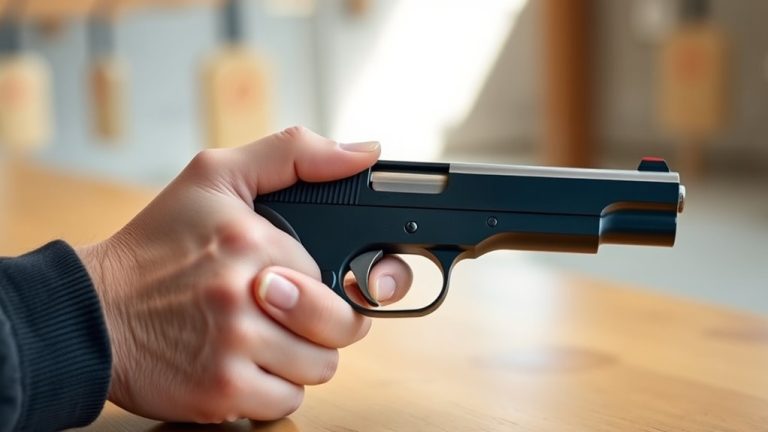
When you grip a pistol, paying attention to where your support-hand thumb naturally rests can offer a strong hint that you’re holding a revolver. Revolver grips often encourage a “thumb-over” style, placing your support thumb near the cylinder gap. This is different from many semi-auto pistols.
This grip style aligns with the frame and helps manage recoil effectively because of the hammer-based trigger mechanism. Checking your thumb’s position relative to the front strap and cylinder area is a handy way to confirm a revolver.
| Thumb Placement | Pistol Type Indicator |
|---|---|
| High, near cylinder | Revolver |
| Low, away from cylinder | Semi-auto pistol |
| Overlapping cylinder | Likely revolver grip fit |
Frequently Asked Questions
Is a Revolver Considered a Handgun?
Yes, a revolver is considered a handgun. You’ll recognize it by its rotating cylinder holding multiple cartridges.
It’s designed to be fired with one hand, just like other compact firearms you use for quick, precise shooting. So, it’s definitely in the same category as other handguns.
What Model Smith and Wesson Revolver Do I Have?
You can identify your Smith & Wesson revolver by checking the stamped model number on the frame or barrel.
Make sure to note the caliber and serial number as well. This info really helps narrow things down.
Then, you can use online databases or just reach out to a gunsmith for precise identification. It’s pretty straightforward once you have those details.
How to Tell if a Pistol Is Loaded?
You open the cylinder or magazine to verify for cartridges. Don’t depend on hammer position or external appearances.
Always examine each chamber or magazine firsthand to ensure the pistol is truly loaded or empty before handling. It’s the safest way to be sure.
Is the AK-47 a Revolver?
No, the AK-47 isn’t a revolver; it’s a semi-automatic rifle. It feeds from a magazine, and it uses a bolt action.
You won’t see any rotating cylinder here, or that hammer-and-cylinder mechanism revolvers have. So, it’s definitely a different kind of firearm altogether.
Conclusion
You might think telling a revolver apart from other pistols is tricky, but it’s simpler than you expect. Just look for the cylinder—it’s the telltale sign no semi-automatic has.
Pay attention to how the hammer and trigger work, and check for those unique ejection and grip styles. These details really set revolvers apart.
Once you spot these features, you’ll confidently identify a revolver every time, no matter how unfamiliar the gun looks at first glance. Recognizing a revolver is all about spotting the cylinder, understanding the hammer and trigger mechanics, and noting the distinct ejection and grip. With these tips, telling a pistol from a revolver becomes easy and reliable. So next time you see a handgun, you’ll know exactly how to tell if it’s a revolver without any confusion.