Is a Shotgun a Rifle?
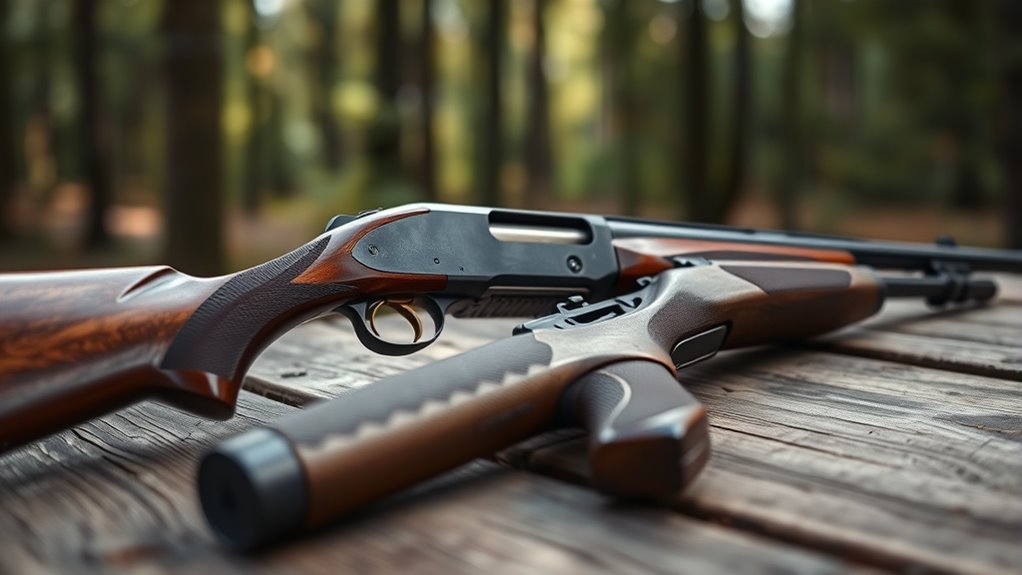
You might wonder if a shotgun is a rifle, but they’re quite different firearms with distinct features and uses. Shotguns have smoothbore barrels designed to spread pellets over a wide area, making them ideal for close-range targets like birds or moving game.
On the other hand, rifles come with rifled barrels that spin bullets, giving them long-range accuracy and precision.
Shotguns use gauges to measure their barrels, while rifles use calibers—these measurements highlight their unique purposes. You’ll find shotguns are great for wide impact zones, perfect for hunting or home defense.
Rifles, in contrast, excel in precision shooting and long-distance targeting.
Keep exploring, and you’ll discover how barrel design shapes their distinct performances and why each firearm serves different roles in shooting sports and practical use. It’s pretty fascinating once you get into the details!
Key Takeaways
- A shotgun has a smoothbore barrel, while a rifle has a rifled barrel with spiral grooves. Rifles are designed for long-range accuracy; shotguns are optimized for close-range, wide-impact zones.
- Shotguns are measured by gauge, rifles by caliber, reflecting different design purposes. Rifles have longer barrels for precision; shotguns have shorter barrels for maneuverability.
- Shotguns and rifles serve distinct roles and are not the same type of firearm. So, even though they’re both guns, they’re definitely not the same thing.
How Shotguns and Rifles Are Different
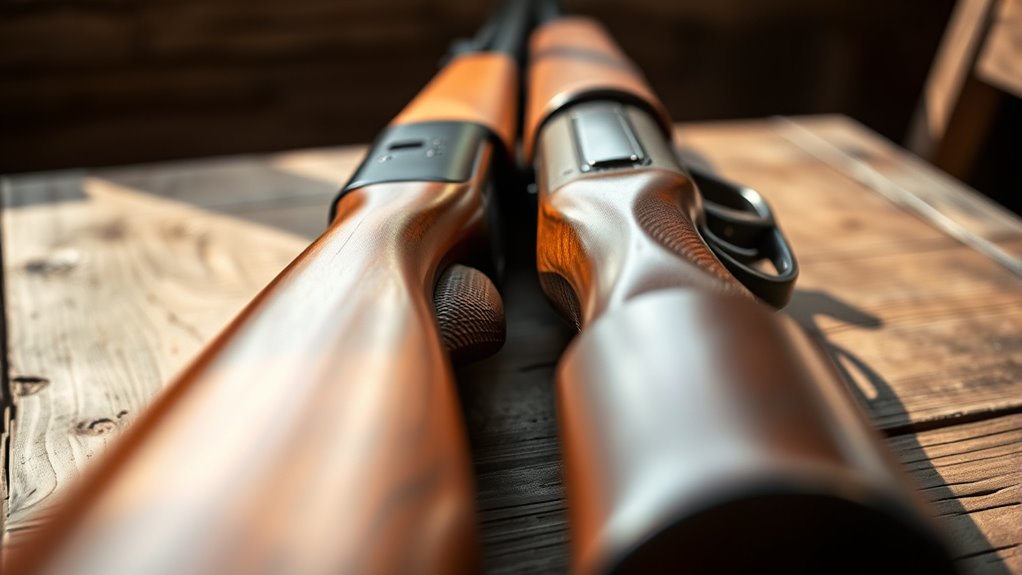
How exactly do shotguns and rifles differ? You’ll notice that shotguns and rifles vary primarily in barrel design and purpose. Rifles have rifled barrels with spiral grooves that spin bullets, boosting accuracy for long-range shots.
In contrast, shotguns feature smoothbore barrels, which don’t spin projectiles but allow for a pellet spread when firing multiple pellets. You’ll measure rifles by caliber, which refers to the bore diameter, while shotguns use gauge to classify their size.
Barrel length plays a role too—rifles typically have longer barrels to enhance accuracy, whereas shotguns have shorter barrels for better maneuverability. Shotguns often fire slugs or pellets at close range, sacrificing pinpoint accuracy for a wider impact zone, unlike rifles designed for precise, long-range targeting.
How Rifling and Barrel Design Affect Shotgun and Rifle Performance
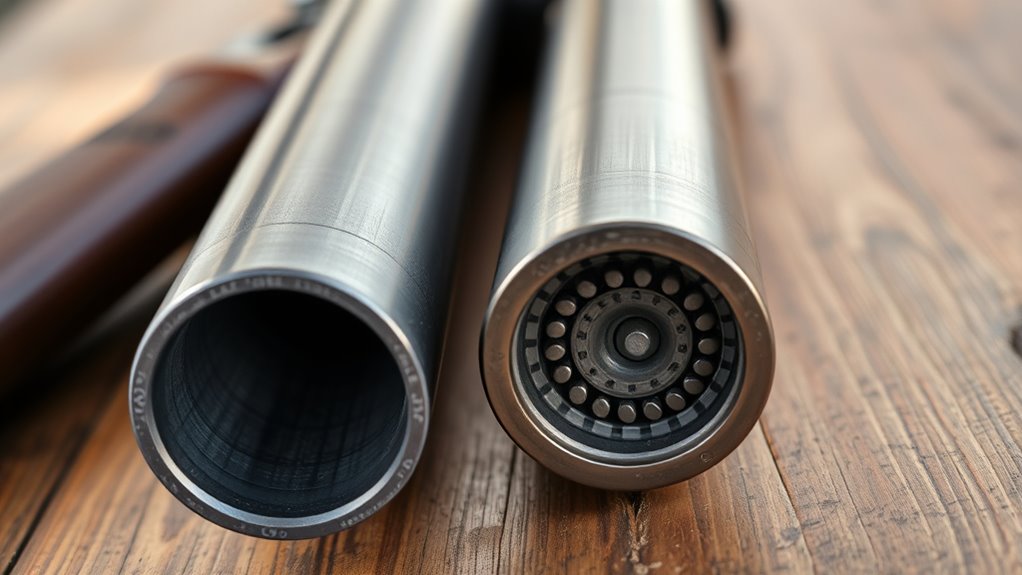
The differences in barrel design play a major role in how shotguns and rifles perform. Rifles use rifled barrels, which have spiral grooves that spin the bullet, enhancing projectile stabilization and accuracy, especially at long range.
Longer barrel length in rifles further improves precision. Shotguns, on the other hand, typically feature smooth bore barrels, designed to maximize shot dispersion for hitting close-range targets with multiple pellets.
However, some shotguns use rifled barrels when firing slugs, benefiting from the spin stabilization rifling provides. This contrast in barrel design means shotguns prioritize wide shot spread and maneuverability, while rifles focus on accuracy and range.
Understanding rifling and barrel length helps you grasp why shotguns and rifles excel in different shooting scenarios and target types. It’s pretty interesting how these design choices really tailor each firearm to its intended use.
Frequently Asked Questions
Can Shotguns Fire Rifle Cartridges?
No, you can’t fire rifle cartridges in a shotgun because they’re designed for different chambers and pressures. Using the wrong ammo can damage your shotgun or cause injury, so always use the correct shotgun shells.
Are Shotguns Legal for Self-Defense?
You’re allowed to use shotguns for self-defense in most places; in fact, 70% of American households with firearms choose shotguns for home protection. Just make sure to check your local laws before buying or carrying one.
How Do Shotgun Gauges Compare to Rifle Calibers?
You’ll find shotgun gauges measure the bore diameter inversely—smaller gauge means larger bore—while rifle calibers measure bullet diameter directly in inches or millimeters. They’re different systems, so comparing them isn’t straightforward but gauges reflect bore size.
Can You Use Shotgun Ammunition in a Rifle?
You can’t use shotgun ammunition in a rifle because they’re designed differently. Shotgun shells and rifle cartridges have distinct sizes, pressures, and mechanisms, so using the wrong ammo risks damage and injury. Always match ammo to your firearm.
What Maintenance Differences Exist Between Shotguns and Rifles?
Think of shotguns like messy artists; you’ll clean their barrels more often due to residue buildup, while rifles need precise, less frequent care. You’ll also oil moving parts differently to keep each firearm performing at its peak.
Conclusion
You might think shotguns and rifles are just two sides of the same coin, but they’re worlds apart. Shotguns spread their shot wide like a painter’s brushstroke, while rifles carve precise paths like an artist’s fine tip.
Understanding these differences helps you choose the right tool for your purpose, whether you want broad coverage or pinpoint accuracy.
So, next time you pick up a firearm, remember: it’s not just about power, but how that power is shaped.
To clear things up, a shotgun is not a rifle. They differ in design, ammunition, and how they deliver their shot. Shotguns are great for hitting moving targets at close range, thanks to their spread pattern. Rifles, on the other hand, are built for accuracy over longer distances with a single bullet. Knowing whether you need a shotgun or a rifle can make all the difference in your shooting experience.