How to Identify if an ARP Is a Rifle
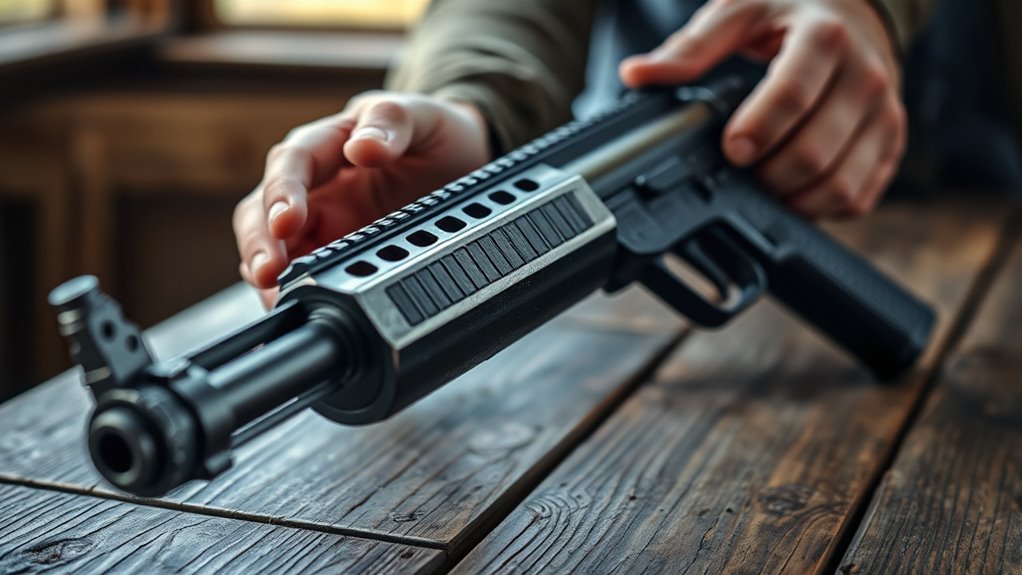
To identify if an ARP is a rifle, start by measuring the barrel length—if it’s 16 inches or longer, it qualifies as a rifle. This is one of the most important factors to check when distinguishing an ARP from other firearms.
Next, check for a full shoulder stock instead of a pistol brace. The presence of a shoulder stock usually indicates it’s designed to be fired from the shoulder, which is typical for rifles.
Then, measure the overall length; anything over 26 inches typically means it’s classified as a rifle.
Don’t forget to notice the buffer tube length and foregrip style too. These details help confirm the firearm’s classification.
Keep going to explore how these features come together for accurate identification. Understanding these key points will make it easier to tell if your ARP is a rifle or not.
Key Takeaways
- Measure barrel length from muzzle to bolt face; over 16 inches indicates a rifle.
- Check overall length including stock or brace; over 26 inches suggests a rifle.
- Identify if the firearm has a full-length shoulder stock, which denotes a rifle.
- Observe the buffer tube length; longer tubes typically signify rifles.
- Look for a longer foregrip designed for shoulder support, common on rifles.
These features usually help you tell if an ARP is classified as a rifle or not.
Using Barrel Length and Size to Identify AR Pistols vs. Rifles
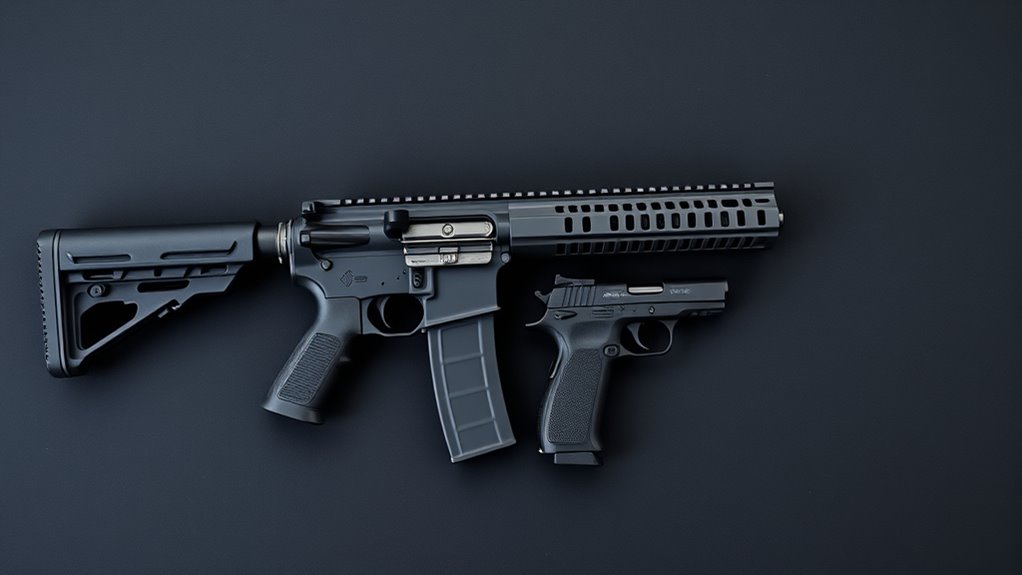
When you want to determine if an ARP is a rifle or a pistol, start by measuring its barrel length and overall size. Focus on the barrel length—from the barrel’s muzzle to the bolt face—since a short barrel under 16 inches usually indicates an AR pistol.
Next, measure the overall length, including the shoulder stock or brace and the lower receiver. If the overall length exceeds 26 inches, it typically meets rifle criteria. Since the AR platform can vary, you must check both measurements carefully against federal legal standards.
An AR pistol generally has both a barrel length under 16 inches and an overall length under 26 inches, while rifles meet or exceed these dimensions. Accurate measuring is essential to correctly identify your firearm’s classification.
How to Spot Stocks, Braces, and Foregrips on AR Pistols and Rifles
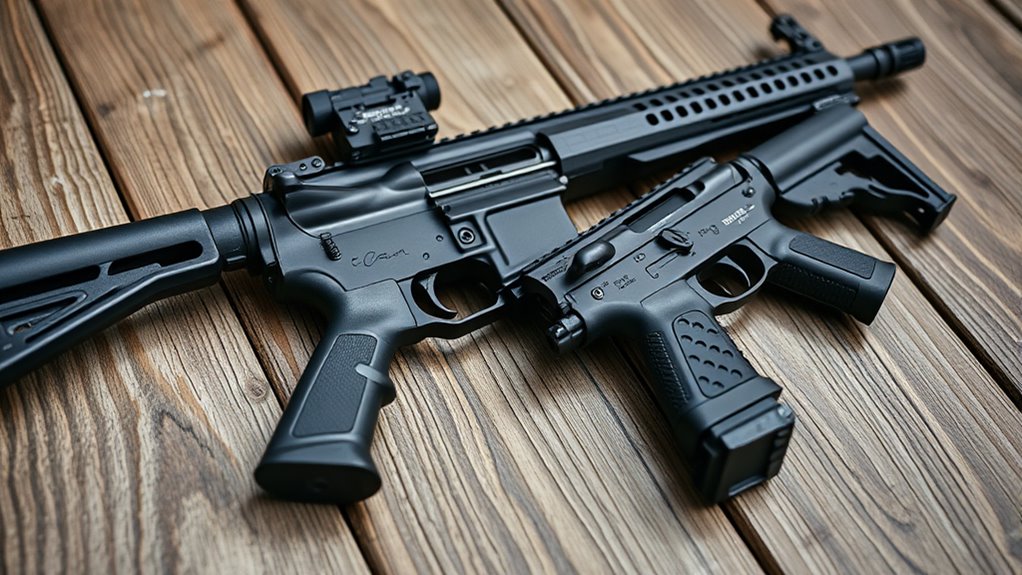
Although AR pistols and rifles share many design features, you can quickly tell them apart by looking at their stocks, braces, and foregrips.
An AR rifle usually has a full-length shoulder stock. On the other hand, an AR pistol features a pistol brace or no stock at all, with a shorter buffer tube.
The stabilizing brace on AR pistols looks like a stock but is legally different.
Foregrips also differ. AR rifles often have longer foregrips for shoulder support, while AR pistols have angled or vertical foregrips that might be regulated.
| Feature | AR Pistol |
|---|---|
| Stock | Pistol brace or none |
| Buffer Tube | Short pistol buffer tube |
| Foregrip | Angled or vertical (restricted) |
| Shoulder Stock | Absent or stabilizing brace |
| Feature | AR Rifle |
| Stock | Full-length shoulder stock |
| Buffer Tube | Standard rifle buffer tube |
| Foregrip | Longer, for shoulder support |
| Shoulder Stock | Present, fixed or adjustable |
Frequently Asked Questions
Is an ARP a Rifle?
An ARP is a rifle only if its barrel is 16 inches or longer and the total length exceeds 26 inches. If it’s shorter or smaller, it’s typically classified as a pistol, not a rifle.
Is My AR a Pistol or Rifle?
Before smartphones, you’d check specs carefully—your AR’s a rifle if its barrel’s 16 inches or longer and overall length exceeds 26 inches. If shorter, or with a pistol brace, it’s legally a pistol, not a rifle.
How to Tell What Caliber an AR Is?
You’ll find the caliber marked on the barrel or receiver, often near the muzzle or ejection port. Check the markings, magazine type, or use a chamber gauge to confirm what caliber your AR is chambered for.
How Do I Identify My Rifle?
Oh, you just pick it up and *know*, right? Honestly, check the barrel length, look for a shoulder stock, measure overall length, and peek at the receiver. Those details will confirm you’re holding a rifle, not just a fancy toy.
Conclusion
When you’re trying to tell if an AR is a rifle or not, remember to look beyond just the obvious. The barrel length and size can give you a gentle nudge in the right direction, while stocks, braces, and foregrips offer subtle clues.
Sometimes, what seems like a small detail can quietly change the whole picture. So, take your time and observe carefully—you’ll find it’s easier than it initially appears.
Identifying if an AR is a rifle often comes down to understanding these key features. Barrel length typically plays a big role, as rifles usually have longer barrels compared to pistols or other AR variants. Stocks versus braces also help differentiate them. Paying attention to these details will make spotting a rifle much clearer and less confusing in the long run.