Are AR Pistol Braces Illegal?
You can legally own and use AR pistol braces under federal law in 2025. The ATF’s 2021 restrictions on these braces were vacated and are no longer enforced nationwide.
These braces are designed to improve shooting stability without functioning as traditional stocks.
However, state laws on AR pistol braces can vary quite a bit. So, it’s a good idea to check your local rules before purchasing or attaching one.
If you’re curious about why these braces were once so controversial and want to know how to stay compliant today, there’s more useful information ahead.
Key Takeaways
- AR pistol braces are legal under federal law as of 2025. This follows the vacatur of the 2021 ATF rule that treated them as short-barreled rifles.
- The ATF no longer enforces restrictions on AR pistol braces nationwide. Because of this, they’re widely available at major retailers and online.
- But keep in mind, state laws vary. Some states have restrictions or outright bans, so whether they’re legal depends on your local regulations as well as federal rules.
- AR pistol braces help improve firearm stability without acting like traditional shoulder stocks. This distinction was a big part of the legal debates around them.
- If you’re thinking about buying one, make sure to check your local laws first. It’s also a good idea to keep documentation to stay compliant with any state-specific rules.
What Is an AR Pistol Brace and How Does It Work?
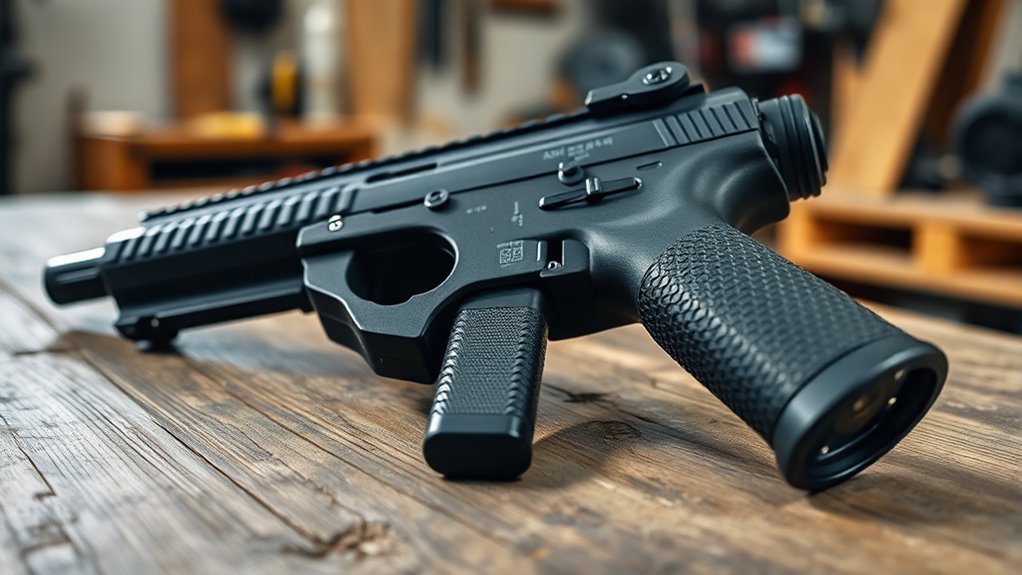
An AR pistol brace is a forearm strap that attaches to the rear of an AR-style pistol, giving you extra stability without serving as a shoulder stock. It uses an adjustable Velcro strap so you can slide your firing-side forearm through and tighten it, securing the contact surface area firmly against your arm.
This design helps transfer recoil energy to your forearm, creating a steadier platform that improves sight alignment and shooting consistency. By locking your forearm and the firearm together during recoil, the brace enhances control without functioning like a traditional shoulder stock.
Originally developed to assist disabled veterans with one-handed operation, the brace’s primary role is to provide stability without compromising the pistol’s intended design or legal classification. So, it’s all about making shooting easier and more controlled without crossing any legal lines.
Are AR Pistol Braces Legal Under Federal Law in 2025?
In 2025, you can rely on the fact that the ATF’s 2021 rule treating AR pistol braces as short-barreled rifles is no longer enforced nationwide. The dismissal of the *Mock v. Bondi* appeal means federal restrictions linked to that rule have ended. So, braces remain legal under federal law.
While state laws vary, federally, AR pistol braces don’t require registration or face prohibitions tied to that vacated ATF rule. It’s always a good idea to double-check your local laws, but from a federal standpoint, you’re in the clear.
Federal Legal Status
| Aspect | Current Status |
|---|---|
| Registration | Not required under federal law |
| ATF Restrictions | Vacated and not enforced |
| Design Factors | No longer relevant federally |
| Second Amendment | Fully supported in 2025 |
You can confidently use AR pistol braces without fear of federal penalties this year.
It’s a relief for many, knowing the rules are clear and supportive. So, go ahead and enjoy your setup without worry!
ATF Regulatory Updates
Although the ATF once sought to classify many AR pistol braces as short-barreled rifles, their 2021R-08F rule was vacated and is no longer enforceable nationwide as of 2025. This means you don’t have to worry about federal restrictions tied to that rule anymore.
Key points to understand include:
- The *Mock v. Bondi* dismissal on July 17, 2025, ended appeals enforcing the 2021R-08F framework.
- The ATF now treats pistol braces as accessories, not automatically as NFA short-barreled rifles (SBRs).
- The restrictive classification factors, like shoulder-contact surface area, no longer apply under federal law.
- You generally don’t need to register, remove, or surrender braced AR pistols due to the vacated rule.
Why Were AR Pistol Braces Controversial in the Past?
Because the ATF’s 2021 Final Rule treated some AR pistol braces as short-barreled rifles (SBRs), many users faced confusion and legal challenges. The controversy hinged on how the ATF analyzed “intended use” and design factors, like how much surface area of the brace could contact your shoulder.
This blurred the line between a stabilizing brace and a stock, making it unclear when your AR pistol might legally be an SBR requiring registration and a $200 tax stamp. The rule also considered how you installed and used the brace, including whether attachments were permanent.
This uncertainty sparked debate because different models and setups complicated enforcement. Though legal challenges eventually overturned the rule, the core dispute was whether braces functioned as stocks under the National Firearms Act.
What Were the ATF’s Old Rules on AR Pistol Braces?
When the ATF issued its 2021 Final Rule, it treated many AR pistols with stabilizing braces as short-barreled rifles (SBRs) under the National Firearms Act. You had to look at several factors to figure out if your AR pistol counted as an SBR.
First, they checked whether the brace design gave enough surface area for shoulder contact. Then, they considered if the firearm’s setup suggested it was meant to be fired from the shoulder.
They also looked at whether the brace was removable or meant to stay on permanently. Plus, the overall setup—like the dimensions and weight—played a role.
The ATF even talked about using a point-based system to score brace features, but that never fully came to life. So, under these rules, if your AR pistol qualified, you usually had to register it as an SBR and pay the $200 tax stamp.
How Do State Laws Affect AR Pistol Brace Owners?
Since the federal ATF rule on AR pistol braces was overturned in 2025, your state’s laws now play a central role in determining whether your brace-equipped firearm is legal.
Some states treat certain setups as rifles or SBRs based on barrel length, brace type, or configuration. You should always check your state’s specific restrictions to avoid legal issues.
| State Example | Key Restriction | Impact on AR Brace Owners |
|---|---|---|
| California | Limits on shoulder-fired use | Brace may be considered illegal |
| New York | Defines based on barrel length | Short barrels trigger SBR rules |
| Texas | No further restrictions | Brace use generally allowed |
| Illinois | “Constructive possession” laws | Use and parts possession matter |
Stay informed and keep records to ensure compliance with state requirements.
It’s better to be safe and double-check than to run into trouble later.
What Are Key Compliance Tips for AR Pistol Brace Owners in 2025?
AR pistol brace owners should always stay vigilant about compliance, especially in 2025 when federal restrictions have eased but state laws remain essential.
To keep your AR pistol legal and hassle-free, follow these key tips:
- Verify your state’s specific rules on AR pistols, buffer tubes, and stock configurations—federal relief doesn’t override local laws.
- Keep thorough documentation including purchase receipts, brace model details, and retailer records to prove your firearm’s status if needed.
- Don’t assume the brace alone makes your setup legal; ensure the entire firearm configuration aligns with state regulations.
- Monitor ongoing legal developments and Executive Order 14206 impacts, and consult a firearms attorney for tailored advice.
Staying proactive helps you avoid compliance pitfalls and enjoy your AR pistol responsibly.
How Has the ATF’s Legal Position on AR Pistol Braces Changed Recently?
Although the ATF once classified many pistol braces as short-barreled rifles requiring strict registration, their stance has shifted dramatically. The 2021R-08F rule that treated AR-style pistol braces as SBRs was vacated and is no longer enforced.
After the July 17, 2025 dismissal of the *Mock v. Bondi* appeal, federal restrictions based on that rule effectively ended nationwide. Now, the ATF views pistol braces as accessories, not automatic triggers for SBR classification.
They’ve dropped the prior focus on factors like design intent for shoulder firing or attachment methods. This means you no longer need to worry about compliance issues tied to “surface area” or “shoulder contact” indicators.
The ATF’s updated position removes the earlier regulatory hurdles surrounding AR pistol braces. So, things are a lot clearer and simpler now.
Where Can You Find Legal AR Pistol Braces and Accessories Today?
Wondering where to find legal pistol braces and accessories today? Since the ATF’s “Final Rule 2021R-08F” was vacated, you can generally buy AR-style pistol braces at major firearms retailers and reputable online stores.
Since the ATF’s rule was vacated, AR-style pistol braces are widely available at major retailers and online.
However, state laws vary, so always check your local regulations before purchasing.
Here’s where to start:
- Visit major firearms retailers that stock AR pistol braces and accessories.
- Check reputable online shops offering braces designed for arm contact with adjustable Velcro straps.
- Look for retailers that categorize products by platform (e.g., AR stabilizers, chassis systems) and offer compatibility info.
- Consider Recover Tactical, which lists pistol stabilizers and provides customer service for compatibility questions.
This approach helps you find legal, functional braces tailored to your needs.
Frequently Asked Questions
Is It Legal to Have a Pistol Brace on a Rifle?
You can legally have a pistol brace on a rifle at the federal level since 2025, but state laws vary.
Always check your local regulations and keep purchase records to avoid issues with future rule changes or enforcement.
What Three Guns Should Everyone Own?
When it comes to guns, you can’t put all your eggs in one basket. Own a reliable 9mm pistol, a versatile 12-gauge shotgun, and a .22 LR rifle for affordable practice and skill-building across platforms.
These three cover your bases for defense, hunting, and training. Plus, they’re easy to find and maintain, making them perfect for everyone.
Why Are Foregrips a Felony?
Foregrips become a felony when they change your firearm’s classification under NFA laws, like making it a short-barreled rifle.
You’ll want to check your gun’s setup and local laws to avoid illegal configurations. It’s always better to be safe than sorry when it comes to compliance.
Can I Put a Regular Stock on My AR Pistol Now?
You can’t just slap a regular stock on your AR pistol without potentially creating an SBR under federal law.
It’s important to check your firearm’s classification and state laws first.
Or better yet, consult a firearms attorney to avoid any legal trouble.
Conclusion
In 2025, AR pistol braces aren’t the legal minefield they once seemed to be, but you still need to stay sharp. Don’t let outdated rules or confusing state laws trip you up. Knowing the latest ATF guidance is your best defense.
With the right info and legal accessories, you can confidently own and use your brace without feeling like you’re walking through a legal jungle. Stay informed, stay safe, and keep your gear legit! Understanding AR pistol brace laws helps you avoid trouble and enjoy your firearm responsibly.
Remember, staying updated on AR pistol brace legality means you can protect your rights and gear with confidence. So, keep learning and follow the rules to ensure your AR pistol brace remains a legal and safe part of your collection.