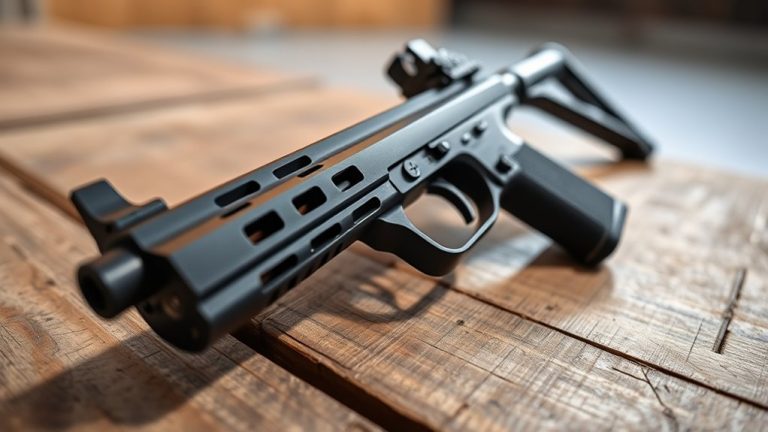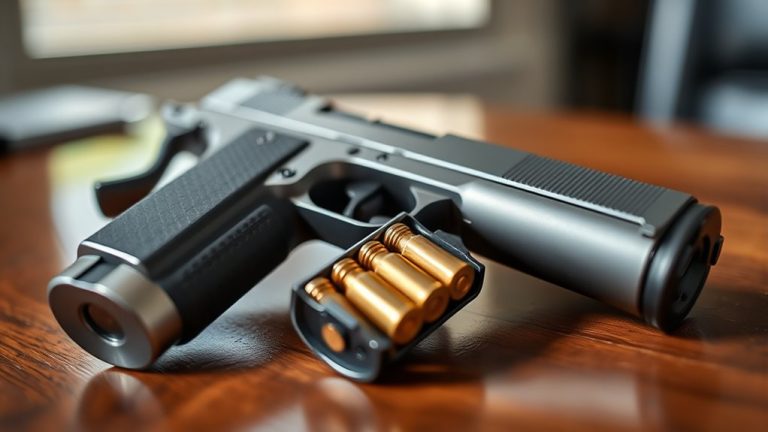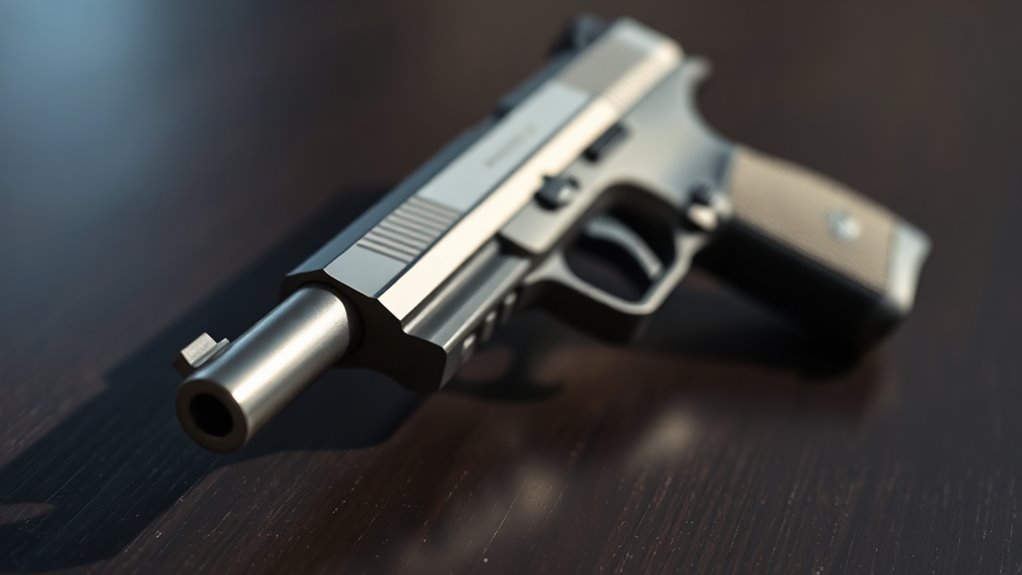
What Is the Standard Barrel Length for a Pistol?
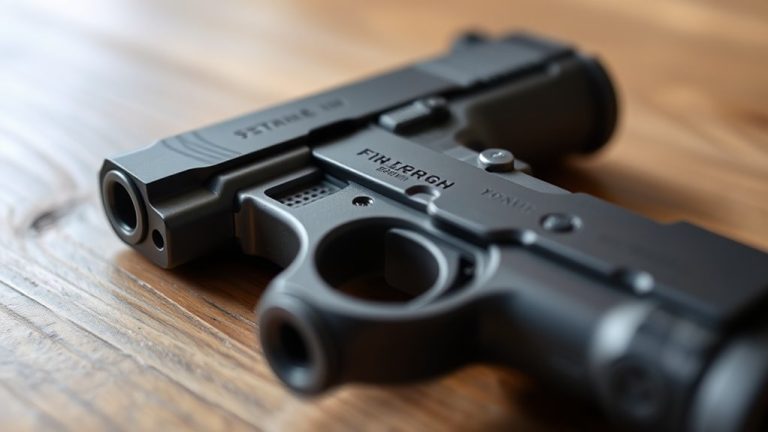
There’s no single standard barrel length for pistols because laws tend to focus more on the type of firearm rather than the exact size. Barrel lengths can vary quite a bit depending on what you need.
You might find barrels as short as 3.5 inches, which are great for quick handling and easy holster clearance.
On the other hand, longer barrels around 5 to 6 inches offer better accuracy and increased bullet velocity.
Short barrels make carrying and drawing your pistol easier, especially if you want something compact.
But if accuracy and sight radius are your priorities, a longer barrel is usually the way to go.
Whether you’re picking a pistol for sport shooting, everyday carry, or legal reasons, understanding how barrel length affects performance is important.
It’s worth exploring how these differences come together to suit your needs the best.
Key Takeaways
- There is no single standard barrel length for pistols across the US because federal and state regulations vary quite a bit.
- Typical pistol barrels usually range from about 3.5 inches to 6 inches. This range strikes a good balance between handling and accuracy.
- Longer barrels, say between 4 to 6 inches, help improve velocity, sight radius, and accuracy when shooting at longer distances.
- On the other hand, shorter barrels around 3.5 inches make it easier to clear your holster and allow for a faster draw. But keep in mind, they might reduce ballistic performance a bit.
- Ultimately, the choice of barrel length depends on what you plan to use the pistol for, legal classifications, the type of holster you’re using, and even sport-specific rules like those in SASS categories.
What Are the Legal Barrel Length Rules for Pistols?
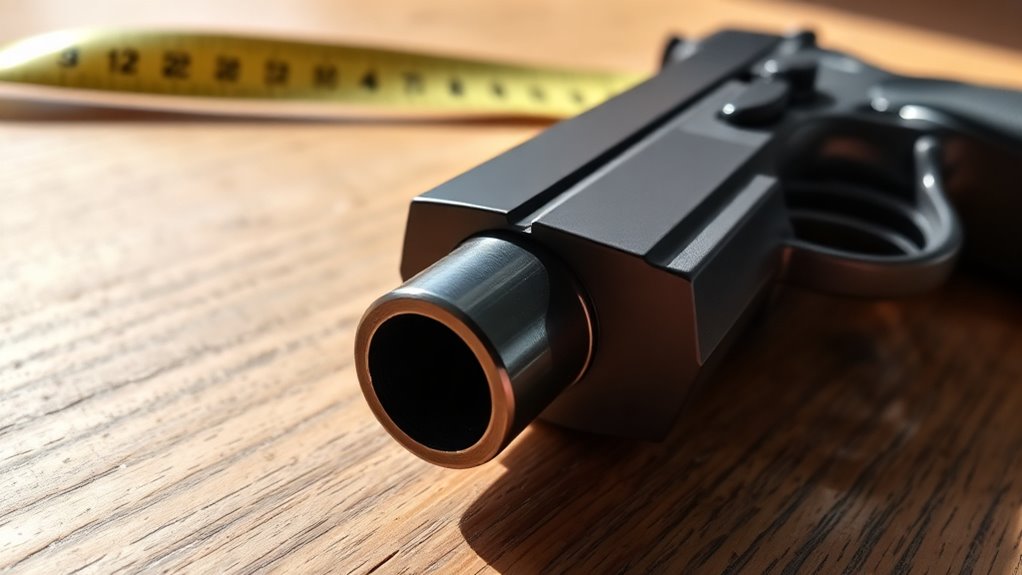
What legal barrel length rules apply to pistols? Unlike rifles, pistols generally have no federal minimum barrel length under the National Firearms Act (NFA). This means you don’t have to worry about federal restrictions like those for short-barreled rifles (SBRs), which must have barrels under 16 inches or overall lengths under 26 inches.
However, whether a firearm is classified as a pistol or rifle can depend on its origin, such as if the receiver started as a rifle, affecting legal treatment. If you’re a SWAT team member or an enthusiast, you should make sure to check both federal and your specific state laws because states can impose their own barrel length rules.
Staying informed is key to compliance and safety. So, it’s always a good idea to double-check the rules that apply to you before making any decisions.
What Minimum Barrel Lengths Does SASS Require?
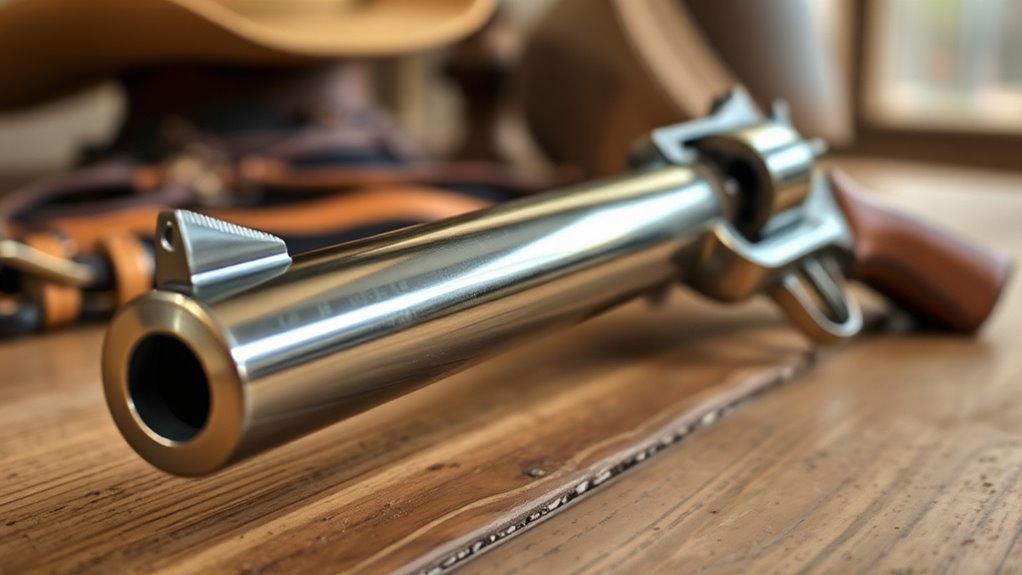
Wondering how short you can go with your pistol barrel in SASS competitions? The minimum barrel lengths depend on your shooting category. Most revolver divisions require barrels around 4.75 inches or longer, while lever-action pistols usually range from 5.5 to 7.5 inches, like the common 5½-inch Colt SAA.
SASS rules focus on sport-specific firearm types, not federal definitions, so short barrels—sometimes as brief as 3.5 inches—are judged by category rules, not ATF cutoffs. If you’re debating barrel length, remember shorter barrels mostly improve holster clearance rather than long-range accuracy.
Since each pistol class (revolver, automatic, blunt line) has distinct minimums, you should always check the latest SASS rulebook to confirm the exact minimum barrel length for your firearm type before competing.
How Do Barrel Lengths Affect Pistol Accuracy and Handling?
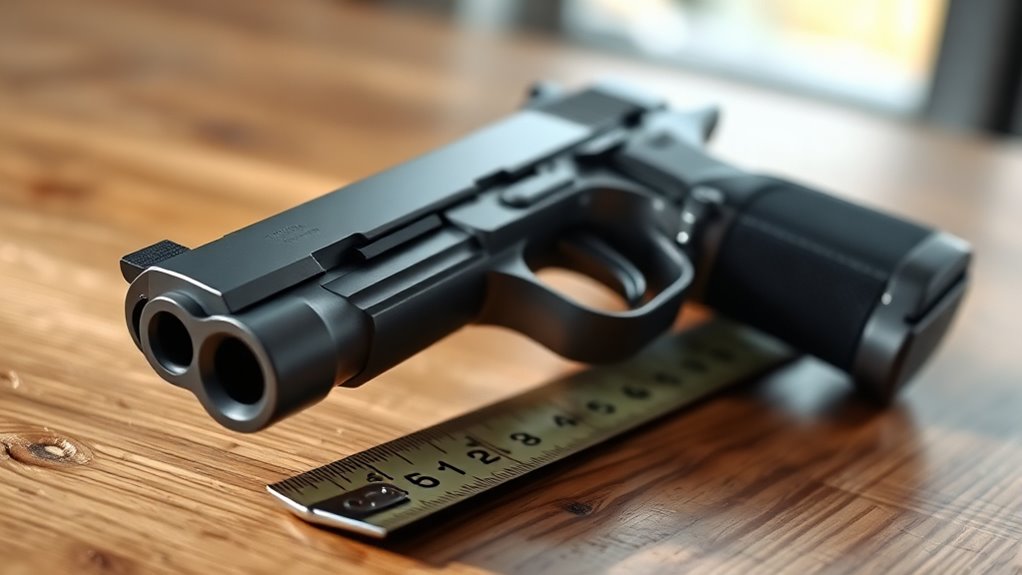
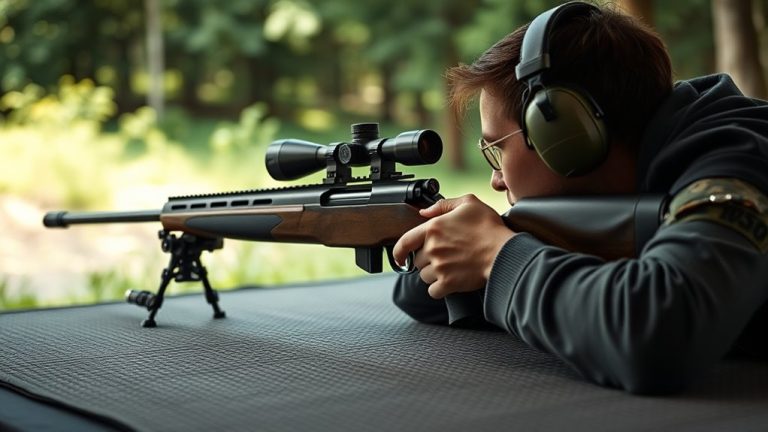
How much does barrel length really impact your pistol’s accuracy and handling? Longer barrels, typically 4 to 6 inches, give your bullet more velocity and stability. This often boosts accuracy at longer ranges.
You’ll also benefit from a longer sight radius, which helps you aim precisely. However, shorter barrels around 3.5 inches trade some of that velocity and sight radius for quicker handling and easier holster clearance.
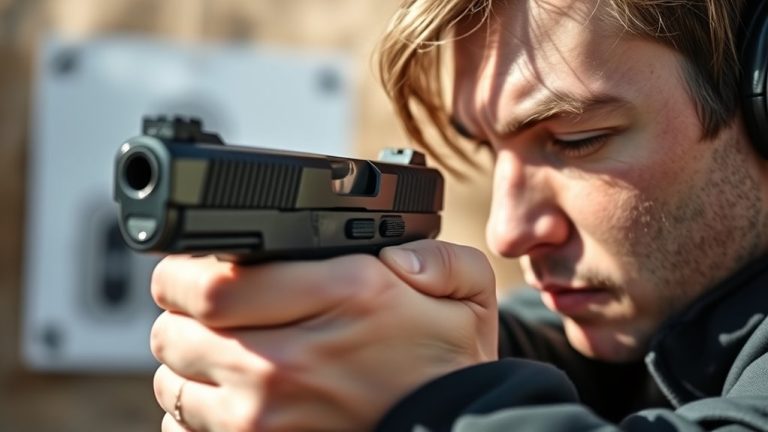
In real use, the difference in accuracy at typical pistol distances is often minor compared to how barrel length affects your speed and smoothness in drawing and shooting. Your choice will likely depend on what fits your shooting style and workflow best.
It’s all about balancing the slight accuracy gains of longer barrels with the faster handling that shorter barrels provide.
Why Are Short Barrels Popular for Holster Clearance?
Why do short barrels make such a difference when drawing from a holster? It’s simple: a shorter muzzle clears the holster mouth and any retention hardware more easily, letting you draw quickly without snagging.
Short barrels speed up your draw by easily clearing the holster and retention gear without snagging.
If you’re a SASS-style shooter, you’ll find that fast, smooth presentation often matters more than having the longest barrel for accuracy. Many competitors choose barrels as short as 3.5 inches specifically to improve holster clearance.
Even though longer barrels might offer better accuracy, the advantage can be outweighed by the risk of the barrel catching during your draw. You’ll notice some shooters running very short setups because they prioritize reliability and convenience.
That just goes to show, holster clearance is a key factor influencing barrel length choices.
What Barrel Lengths Do Experienced SASS Shooters Prefer?
When choosing barrel lengths, you’ll find experienced SASS shooters often balance holster clearance with their handling needs. Sometimes, they opt for shorter barrels around 3.5 inches for convenience.
Others prefer longer barrels near 12 inches, believing they offer better accuracy despite the sport’s practical constraints. It really comes down to what feels right for you.
Ultimately, the best barrel length depends on how smoothly your gun clears the holster and matches your shooting style. Everyone’s different, so go with what works best in your hands.
Common Barrel Length Choices
Experienced SASS shooters often choose pistol barrels ranging from about 4¾ to 7½ inches. Revolvers like the Colt Single Action Army, with a 5½-inch barrel, strike a popular balance between speed and accuracy.
You might prefer a shorter barrel, like 3½ inches, if quick holster clearance and stage speed are your priorities. On the other hand, some shooters opt for longer barrels, even up to 12 inches in blunt line styles, to gain a steadier sight picture and improved alignment.
While raw ballistic performance isn’t the main concern in SASS matches, many find that a slightly longer barrel helps maintain consistent accuracy. Ultimately, you’ll want to select the shortest barrel length that still fits your holster smoothly and supports your shooting style for the best performance.
Impact On Holster Clearance
Although there’s no single standard barrel length in SASS, many shooters prefer shorter barrels around 3.5 to 5.5 inches to speed up holster clearance during matches. You’ll find that running a 3.5-inch barrel helps you draw faster without feeling limited by accuracy at typical SASS ranges.
Some even favor setups as short as 12 inches overall, tailoring their gear for quick-stage workflow. While longer barrels often seem more accurate, that advantage can take a backseat when you need smooth, fast holster access.
For example, many experienced shooters stick with a 5½-inch Colt Single Action Army because it strikes a balance between handling and legality. This makes holster clearance comfortable without sacrificing performance on the course.
Ultimately, your barrel length choice should fit your style and holster setup. It’s all about what works best for you out there.
Accuracy Versus Barrel Size
Choosing the right barrel length means balancing how quickly you can clear your holster with how accurately you can shoot. Experienced SASS shooters often weigh these factors differently based on their style and stage demands.
You might prefer a shorter barrel, like 3.5 inches, for faster draws during *shift* transitions. Others lean toward longer barrels, such as 5½ inches, to benefit from a longer sight radius, improving accuracy.
Some choose mid-length barrels, around 12 inches, to strike a balance between visibility and handling.
Here’s what you should consider:
- Short barrels speed up holster clearance but may reduce sight radius.
- Longer barrels provide better accuracy through increased sight radius.
- Mid-length barrels offer a practical compromise depending on stage setup and personal skill.
How Do AR-15 Pistols Differ From SBRS in Barrel Length Rules?
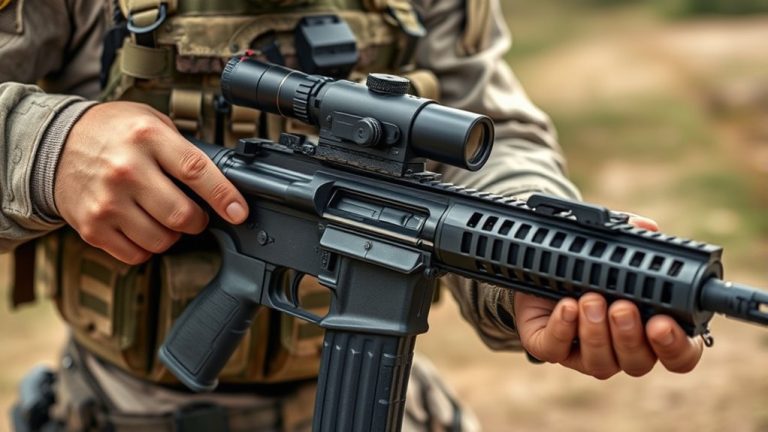
When you look at AR-15 pistols and short-barreled rifles (SBRs), the key difference lies in how the law treats their barrel lengths and overall configurations. An SBR is defined by having a rifle barrel under 16 inches or overall length under 26 inches, and it usually starts as a rifle lower receiver.
You’ll need an ATF tax stamp to legally own an SBR. In contrast, an AR-15 pistol doesn’t trigger these rifle rules, even if it uses barrels shorter than 16 inches, as long as the overall setup avoids meeting the SBR criteria.
The receiver’s origin and how the weapon is modified “as built” matter most. So, you can have shorter barrels on pistols without facing the stricter SBR regulations.
Are Ultra-Short Pistol Barrels Legal and Practical for Carry?
Understanding the legal nuances around barrel length helps clarify why ultra-short pistol barrels spark so much debate. You’ll find no single legal barrel length standard in the US; legality hinges on weapon type, not barrel size.
Ultra-short barrels offer faster holster clearance and quicker draws but can compromise ballistic performance. If an ultra-short setup crosses into SBR territory—considering overall length or stock—it requires ATF paperwork and a tax stamp.
When considering ultra-short barrels, keep in mind:
- Legal status depends on configuration, not just barrel length.
- Practical carry benefits include easier handling and speed.
- Ballistics and reliability may suffer with extreme shortness.
You’ll see many shooters accept these trade-offs, especially in cowboy action shooting. In those cases, operational ease often outweighs barrel length concerns.
How to Choose the Right Barrel Length for Your Cowboy Pistol
Picking the right barrel length for your cowboy pistol often comes down to balancing accuracy, handling, and holster clearance. Most shooters start with a 4¾–5½ inch barrel for solid accuracy and manageable size.
If quick drawing and holster clearance matter more, shorter barrels around 3.5 inches work well. Remember to check your competition’s rules since some setups require specific lengths.
| Barrel Length | Benefit |
|---|---|
| 3.5 inches | Easier, faster draw |
| 4¾–5½ inches | Balanced accuracy & handling |
| >5½ inches | Potential for improved accuracy |
Choose what fits your style, holster, and accuracy needs. And always verify legality for your event or area.
Frequently Asked Questions
What Barrel Length Classifies as an AR Pistol?
An AR pistol typically has a barrel shorter than 16 inches. But to avoid SBR classification, you must make sure your barrel is under 16 inches and overall length stays above 26 inches.
What Does “Mexican Carry” Mean?
You might think “Mexican carry” just means holstering a pistol, but it actually refers to holding or carrying your gun with minimal cover—often in a quick-access style like a loop or band.
This way, you can draw it fast and keep it secure. It’s all about being ready without the bulk of a full holster.
How Do Smith and Wesson Measure Barrel Length?
Smith & Wesson measures barrel length from the breech face, where the cartridge sits, straight to the muzzle along the bore axis.
You’ll find this method consistent across revolvers and semi-automatic pistols in their specs. It’s a straightforward way to keep things uniform.
What Is the 26 Inch Rule?
The 26-inch rule means if your rifle’s overall length, after modifications, measures less than 26 inches, it’s classified as a Short-Barreled Rifle (SBR).
That means you’ll need ATF tax stamps and paperwork before you can legally possess it.
Conclusion
You want a pistol barrel that feels just right—long enough for accuracy but short enough for quick draws. Picture the sleek, confident reach of a cowboy’s gun versus the compact, nimble snap of a modern holster fit.
Balancing tradition with practicality, you’ll find your ideal length somewhere between bold precision and effortless handling. Choosing wisely means you’re ready for both the open range and close quarters, every time you draw.
When it comes to the standard barrel length for a pistol, most fall between 3 to 5 inches. This range offers a perfect blend of accuracy and maneuverability. Whether you’re aiming for target shooting or self-defense, the barrel length significantly affects performance.
So, picking the right pistol barrel length is about matching your needs. A standard barrel length balances accuracy, ease of carry, and quick handling, making it ideal for everyday use. Keep this in mind, and you’ll have a reliable, versatile pistol ready whenever you need it.