7 Steps to Properly Grip a Pistol
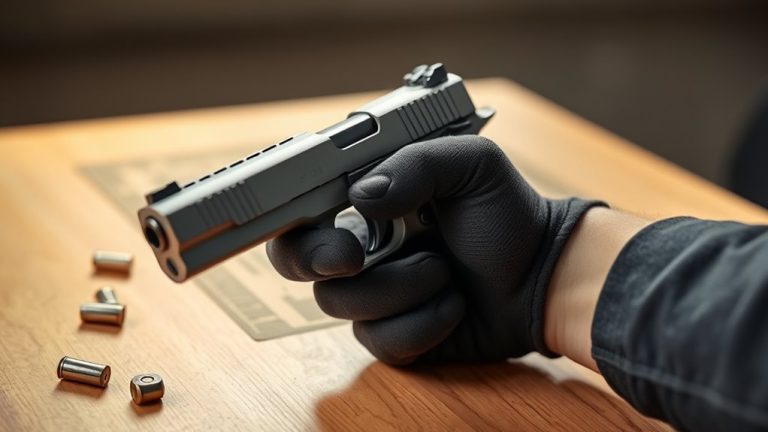
To properly grip a pistol, start by holding it high on the backstrap. This gives you better leverage and helps with controlling recoil. Your grip is the foundation for accurate shooting, so it’s important to get this right.
Next, wrap your support hand firmly around the pistol with your fingers pointing downward. Lock your wrists by positioning your thumbs forward and low. This creates a solid, stable grip that keeps the gun steady.
Apply balanced, firm pressure—think slightly tighter than a handshake. This helps maintain control without causing fatigue.
Keep your elbows bent to absorb recoil, and use your body movement to support your grip. This alignment makes shooting feel natural and smooth.
Mastering these basics sets you up for more precise shooting techniques ahead. With a proper grip, you’ll notice better accuracy and confidence every time you handle your pistol.
Key Takeaways
– Hold the pistol high on the backstrap to maximize leverage and minimize muzzle flip by eliminating gaps between the hand and the grip.
This helps you keep better control when firing.
– Wrap the support hand firmly around the pistol with fingers downward and align both hands’ second knuckles for a secure grip lock.
It’s all about locking your hands together for stability.
– Position thumbs forward and low on the frame, keeping them aligned and close to avoid interference and enhance wrist control.
This way, your thumbs won’t get in the way and you’ll have better wrist movement.
– Maintain slight bend in elbows to absorb recoil, reduce muzzle rise, and create a stable shooting platform for faster follow-up shots.
A little bend goes a long way in managing the gun’s kick.
– Apply firm but comfortable grip pressure, slightly tighter than a handshake, locking the wrist with the support hand to improve control and prevent fatigue.
Hold it tight enough to stay in control, but don’t overdo it or you’ll tire out quickly.
Hold the Pistol High on the Backstrap for Recoil Control

When you hold the pistol high on the backstrap, you maximize your hand’s leverage to absorb recoil more effectively. This high grip places your hand closer to the bore line, which reduces muzzle flip and keeps the gun stable during rapid fire.
Proper hand placement means positioning the web of your hand as high as possible on the backstrap, minimizing gaps where recoil can escape. This increases friction and contact between your hand and the pistol, giving you better recoil control and overall stability.
Align Your Hands and Wrap the Support Hand for Grip Lock

Although gripping the pistol with your shooting hand provides initial control, you’ll gain far better stability by wrapping your support hand firmly around it. Position your support hand high on the pistol, with fingers pointing downward and filling the space around the trigger guard.
For improved stability, wrap your support hand high on the pistol, fingers downward around the trigger guard.
This guarantees maximum contact and creates a secure grip lock. Align the second knuckles of both hands to maintain proper hand alignment, which enhances recoil management and muzzle control.
Keep your support hand fingers in contact with the heel of your shooting hand to increase friction and stability. Apply consistent side-to-side pressure with your support hand to lock the grip firmly, preventing muzzle movement during firing.
This grip lock is essential for maintaining a proper grip and improving accuracy under recoil. It really makes a difference when you’re shooting.
Position Your Thumbs in Your Grip to Avoid Gaps and Lock Wrists

Position your thumbs forward and low on the frame to create a solid, gap-free grip. This alignment locks your wrists and boosts stability during recoil.
Keep both thumbs close and aligned to maintain control and prevent interference. It really helps keep everything steady and under control.
Thumb Placement Essentials
How should you place your thumbs to maximize control and stability? Proper thumb placement is crucial for grip stability and effective recoil control. Position your thumbs either pointing forward along the slide or resting naturally, but avoid creating gaps that reduce your grip’s firmness.
Keep your thumbs close with a slight gap—this spacing prevents interference with your trigger finger and maintains proper hand positioning. Flag your thumbs outward or downward to steer clear of crowding the slide or disturbing your firing hand’s hold.
Aligning your thumbs with the gun’s bore line helps lock your wrists, boosting control during recoil. Apply steady, consistent pressure with your thumbs to support the grip without causing tension or losing contact.
Mastering thumb placement sets the foundation for a confident, controlled pistol grip. It’s all about finding that sweet spot where your hands feel secure but relaxed.
Wrist Lock Techniques
When you place your thumbs forward along the frame with your primary thumb slightly pointing toward the target, you secure your wrists for better control. Align both thumbs firmly against the frame to eliminate gaps, creating a stable contact point essential for a strong wrist lock.
Drive the heel of your support hand upward and forward while pulling your pinky inward and upward to reinforce this lock. Keep a consistent grip pressure with your thumbs to maintain proper wrist canting and prevent unwanted movement during firing.
This solid wrist lock improves recoil control, letting you manage muzzle rise and stay on target. Just remember to avoid gaps between your thumbs and the grip because continuous contact maximizes leverage and keeps your wrists locked throughout each shot.
Apply Balanced Grip Pressure to Manage Recoil Effectively
You want to apply just the right amount of pressure—not too tight, not too loose—to control recoil effectively.
Focus on distributing that pressure evenly from front to back and side to side for maximum stability.
Keeping this balance helps manage muzzle rise and keeps your shots on target.
Optimal Grip Tightness
Why does your grip pressure matter so much when handling a pistol? Your hand grip pressure directly affects recoil control and your ability to maintain a steady hold.
If your grip tightness is too loose, the pistol will move excessively, reducing accuracy. But if you squeeze too hard, you risk hand exertion that leads to fatigue and tremors, which also harms performance.
Aim for a grip slightly firmer than a handshake—that sweet spot maximizes stability without causing strain. Consistently applying balanced pressure from all sides helps absorb recoil effectively, improving shot placement and enabling faster follow-up shots.
During practice, adjust your grip pressure to find what feels best for you. That way, you ensure both control and comfort throughout your shooting session.
Front-To-Back Pressure
Finding the right grip tightness sets the foundation, but controlling recoil requires focused front-to-back pressure from your support hand. Apply firm, consistent front-to-back pressure with your support hand, pressing firmly against the backstrap to stabilize the pistol.
Use the entire grip surface to guarantee even pressure, which helps manage recoil control effectively. This forward force prevents the muzzle flip by keeping the gun from rising during rapid fire.
Balance your grip by maintaining equal front and back pressure to avoid shifting or loosening as you shoot. A solid front-to-back pressure combined with your grip’s inward force enhances overall stability, allowing you to maintain accuracy and control with every shot.
Master this step to improve your shooting performance considerably. It really makes a difference once you get the hang of it.
Side-To-Side Force
How do you keep your pistol steady when recoil tries to throw it off balance? Apply consistent side-to-side pressure with both hands to maintain grip stability and manage muzzle movement effectively.
Your support hand should wrap firmly around the shooting hand, pressing fingers against the heel to enhance recoil control. Equal pressure from both sides prevents torque and muzzle flip.
Use your support hand to drive the heel of your palm upward and forward, locking your wrist for better lateral stability. Practice this balanced force regularly to build muscle memory and improve performance during rapid fire.
| Action | Purpose | Tip |
|---|---|---|
| Side-to-side pressure | Counteracts muzzle movement | Apply equal force on both sides |
| Support hand grip | Enhances grip stability | Wrap fingers tightly |
| Heel of palm drive | Locks wrist laterally | Push upward and forward |
| Balanced force | Prevents torque and flip | Maintain consistent pressure |
| Practice regularly | Builds muscle memory | Use dry-fire drills |
Keep Your Elbows Bent to Support Your Grip and Absorb Recoil
Although it might feel natural to lock your arms straight when gripping a pistol, keeping your elbows slightly bent gives you better control and comfort. Bent elbows help absorb recoil forces, reducing muzzle flip and preventing the gun from rising excessively with each shot.
By maintaining this gentle bend, you create a stable platform that directs recoil horizontally rather than upward. This allows quicker, more consistent follow-up shots. Fully locked elbows act like a hinge at the shoulders, which increases muzzle rise and decreases control.
Relaxed, bent elbows support your grip by absorbing recoil smoothly, so you stay on target during rapid fire. Remember, your elbows play a vital role in managing recoil and maintaining control, making your shooting experience both safer and more effective.
Use Body Movement to Support Your Grip and Align the Gun
When you move your body deliberately, you bring the pistol into proper alignment with your target more smoothly and accurately. Use body movement to adjust your stance and torso, guiding the muzzle naturally toward the target.
Instead of relying solely on your arms, engage your entire upper body to support your grip and enhance stability. This controlled motion ensures the pistol settles into the correct shooting position without rushing or flinging it forward.
Engage your upper body for a steady grip, guiding the pistol smoothly into position without haste.
By coordinating your body movement with your grip, you create a stable, consistent platform that improves accuracy and recoil control. Remember, proper alignment comes from the harmony between your body’s positioning and your grip.
That way, you maintain control and confidently place each shot where you intend.
Practice Consistent Grip and Hand Placement for Accuracy
To achieve consistent accuracy, you need to practice placing your hands precisely on the pistol every time you grip it. Position the hand high on the backstrap for maximum surface contact and recoil control.
Make sure there’s no gap between the web of your hand and the pistol’s tang to maintain stability. Wrap your support hand fingers downward around the shooting hand to lock the wrist and improve control.
Align your thumbs toward the target, with one thumb flagging the other, creating space for support hand engagement. Maintain firm but comfortable grip pressure—tighter than a handshake but not too much to avoid fatigue or trembling.
| Grip Element | Purpose |
|---|---|
| High backstrap placement | Maximizes surface contact |
| No gap between hand & tang | Prevents recoil escape routes |
| Support hand wraps downward | Locks wrist, enhances control |
Frequently Asked Questions
What Is the Correct Way to Grip a Pistol?
You grip the pistol high on the backstrap, eliminating gaps between your hand and the frame. Wrap your support hand firmly around your shooting hand, align knuckles, and apply balanced pressure for maximum control and recoil management.
What Is the 3-3-3 Rule in Self-Defense?
Imagine your reflexes as lightning— the 3-3-3 rule means you take three steps back, draw your pistol at three yards, and fire within three seconds. You’ll sharpen speed and accuracy when seconds count in self-defense.
What Is the 26 Pistol Rule?
The 26 pistol rule means you grip the pistol high on the backstrap, covering about 26% of its length from the rear. This helps you control recoil, reduce muzzle flip, and improve accuracy with faster follow-up shots.
What Is the New Pistol Grip Rule?
Imagine gripping a flintlock, but today’s new pistol grip rule has you holding high on the backstrap, wrapping your hand fully, no gaps, aligning knuckles, and applying consistent pressure for ultimate recoil control and accuracy.
Conclusion
Now that you’ve mastered these 7 steps, your grip will become second nature—like the steady beat of a drum guiding your aim.
Remember, every detail counts: from hand placement to body movement, they all work together to tame recoil and boost accuracy.
Keep practicing consistently, and soon your pistol will feel like an extension of your hand. Grip it right, and watch your confidence—and precision—soar.
Ready to shoot with control? With the right pistol grip, you’re not just holding a firearm; you’re setting yourself up for better control, faster target acquisition, and improved shooting accuracy.
So keep these key points in mind, practice regularly, and your shooting skills will keep getting sharper. The proper pistol grip is the foundation of shooting success, and once you’ve got it down, everything else falls into place.