How to Put a Vertical Grip on Your Pistol Safely
Before adding a vertical grip to your pistol, it’s really important to understand the legal implications. This modification could potentially reclassify your firearm under the National Firearms Act, which means you might need to register it.
So, definitely check all local and federal laws before making any changes.
If you’re unsure about the rules, don’t hesitate to consult a firearms attorney. They can help you navigate the legal landscape and avoid any trouble down the road.
Using the correct mounting system, like M-LOK or Picatinny, is essential for a secure fit.
Make sure to tighten the grip properly to prevent any wobble. Proper installation not only improves handling but also ensures your safety and control while shooting.
Keep following for more details on legal compliance and mounting techniques!
Key Takeaways
- Verify legal compliance and firearm classification before installing a vertical grip to avoid regulatory violations. It’s important to know the rules so you don’t run into any trouble.
- Choose a vertical grip compatible with your pistol’s mounting system, like M-LOK or Picatinny rails. This makes sure the grip fits securely and works properly.
- Securely attach the grip using manufacturer-recommended torque specifications. This helps prevent wobble or accidental detachment while you’re handling the pistol.
- Regularly inspect the grip and mounting hardware to ensure everything stays stable and safe during use. A quick check now and then can save you from problems later.
- If you’re unsure about legal or installation requirements, don’t hesitate to consult a firearms attorney or local authorities. Getting expert advice is always a smart move.
Make Sure You’re Following the Law Before Adding a Vertical Grip
Before adding a vertical grip to your pistol, you need to confirm you’re fully aware of the legal implications. Attaching a vertical grip can change your pistol’s classification under the National Firearms Act, potentially reclassifying it as a short-barreled rifle.
Adding a vertical grip may legally reclassify your pistol, so understand the implications before proceeding.
This modification demands strict legal compliance, including registration and tax stamps. You must check federal, state, and local regulations carefully to avoid legal trouble.
The Bureau of Alcohol, Tobacco, Firearms and Explosives views vertical grips as significant changes affecting control and classification. So, it’s important to always review manufacturer guidelines to guarantee your specific pistol supports this modification legally.
When in doubt, consulting a firearms attorney or local authorities helps confirm you’re following the law. Staying informed ensures you maintain proper control while respecting all regulations related to your vertical grip installation.
How to Properly Mount and Secure Your Vertical Grip for Safe Use
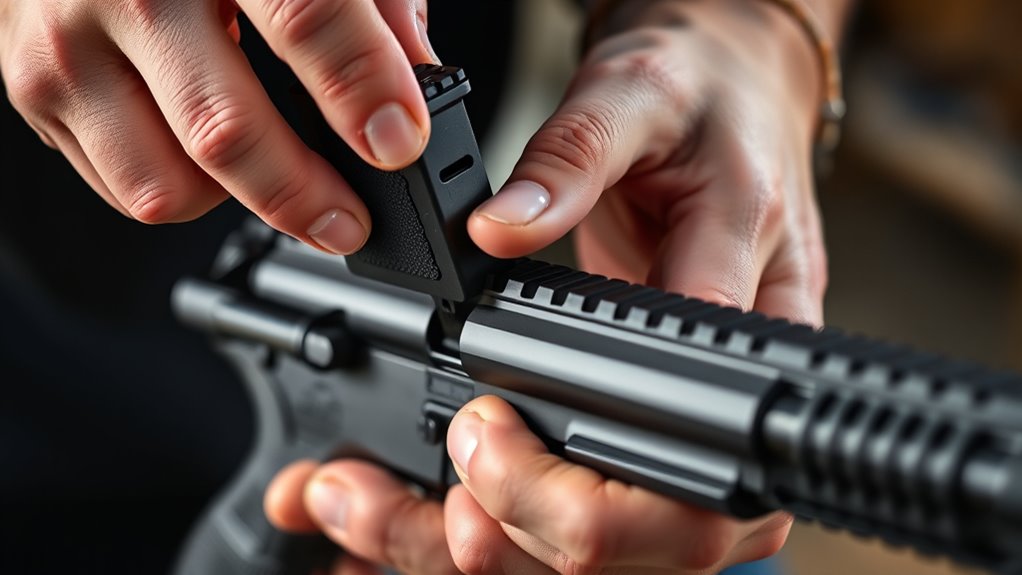
Once you’ve confirmed the legal requirements and compatibility of your vertical grip with your pistol, the next step is to mount it securely.
Begin by ensuring the grip matches your pistol’s mounting system, whether M-LOK or Picatinny rails. Attach the grip firmly to the designated rail section, tightening all screws or quick-detach levers according to the manufacturer’s installation torque specifications. This prevents over-tightening that could damage the rail or grip.
Check that the attachment shows no wobble or shift to guarantee stability during handling. It’s a good idea to regularly inspect the grip’s mounting during maintenance to maintain a secure hold.
Proper mounting and secure attachment are essential for safe use. They provide consistent stability and control with every shot.
Frequently Asked Questions
Can You Legally Put a Vertical Foregrip on a Pistol?
You can legally put a vertical foregrip on your pistol only if you get ATF approval, submit Form 1, pay the $5 tax stamp, and comply with local laws; otherwise, it’s illegal and risky.
How to Properly Hold a Vertical Grip?
Like a knight gripping his sword, you grasp the vertical grip firmly with your dominant hand, keep your support hand steady and relaxed, and make sure fingers don’t block controls—this balance gives you control and precision every time.
Why Is It a Felony to Put a Vertical Grip on a Gun?
It’s a felony because adding a vertical grip reclassifies your pistol as a short-barreled rifle or “Any Other Weapon” under federal law, requiring registration. Without it, you’re violating the National Firearms Act and facing serious legal trouble.
What Is the ATF Rule for Vertical Foregrip?
The ATF rules that attaching a vertical foregrip to a pistol reclassifies it as an “Any Other Weapon” (AOW), requiring you to register it federally, pay a tax stamp, and pass background checks before legally owning it.
Conclusion
Before you slap that vertical grip on your pistol, double-check the law—you don’t want the ATF knocking on your door!
Once you’re clear, mount and secure it properly, or risk turning your precise shooter into a wild carnival ride. Follow the steps carefully, and your grip will feel like an extension of your arm, not a clunky attachment.
Safety isn’t just a suggestion; it’s your ticket to keeping your shooting sharp and legal! Installing a vertical grip on your pistol safely means knowing the rules and handling your firearm responsibly. By doing this, you ensure your setup enhances control and accuracy without compromising safety or legality. So take your time, follow proper procedures, and enjoy a better shooting experience with your vertical grip firmly in place.