What Is a Threaded Barrel on a Pistol?
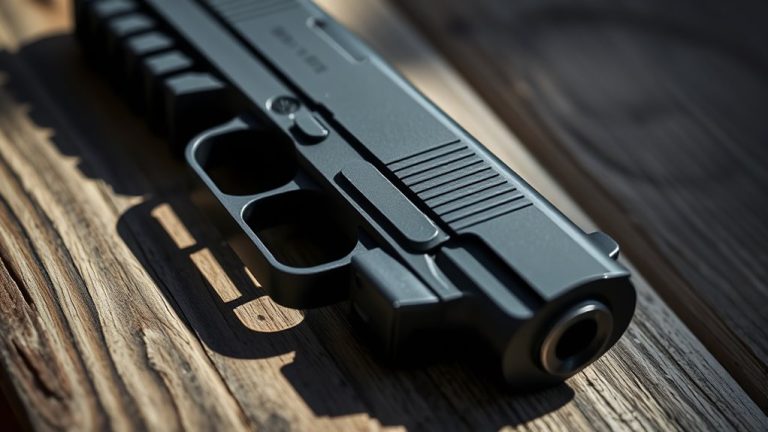
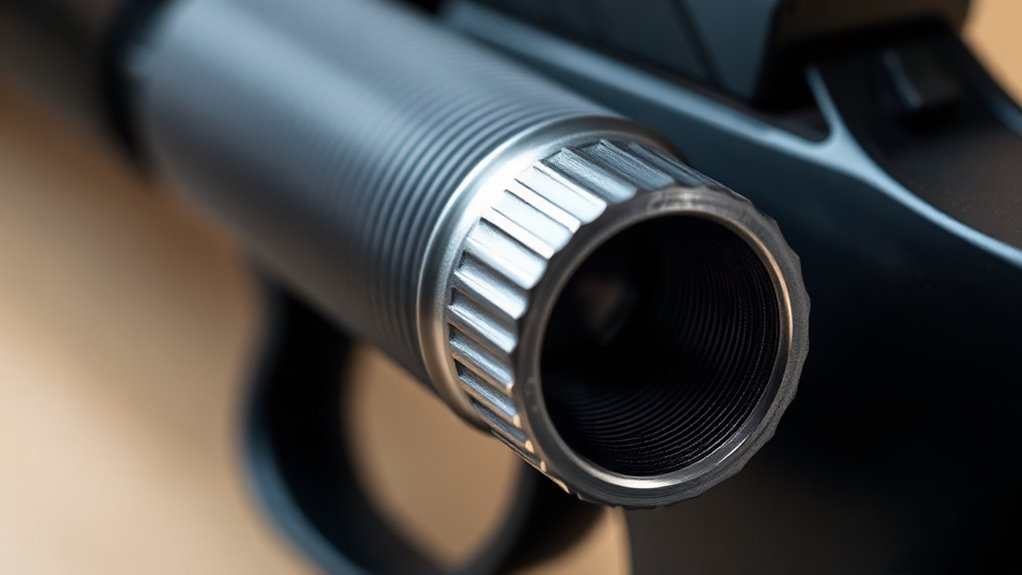
A threaded barrel on a pistol lets you effortlessly attach suppressors or muzzle devices by using specially machined threads at the barrel’s muzzle. These threads extend beyond the slide and must match the exact thread pitch and diameter of your accessory for a secure, aligned fit.
Threaded barrels are popular among shooters who want to customize their pistols for noise reduction or improved recoil control.
Using the correct threads ensures safety, avoids damage, and improves accuracy and control. It’s pretty important to get the thread size right so your suppressor or muzzle brake fits perfectly without wobbling.
If you want to understand thread sizes, compatibility, and benefits, you’ll find more useful details ahead. Stick around, and we’ll break it all down for you.
Key Takeaways
- A threaded barrel has external screw threads at the muzzle for attaching suppressors or muzzle devices. These threads are what let you easily add cool accessories to your pistol.
- The threads have to match in diameter and pitch (like 1/2×28) to fit properly and line up just right. If they don’t, your attachments won’t sit correctly, which can be a problem.
- Threaded barrels usually stick out past the slide a bit. This can change the balance of your gun and might make it tricky to find a holster that fits well.
- They’re made with precise machining to keep them strong and ensure the bore stays aligned. That way, any accessories you add stay secure and work reliably.
- You’ll see different thread sizes depending on the caliber, but 1/2×28 is pretty common for a lot of 9mm pistols. It’s kind of the standard in that category.
What Is a Threaded Barrel on a Pistol
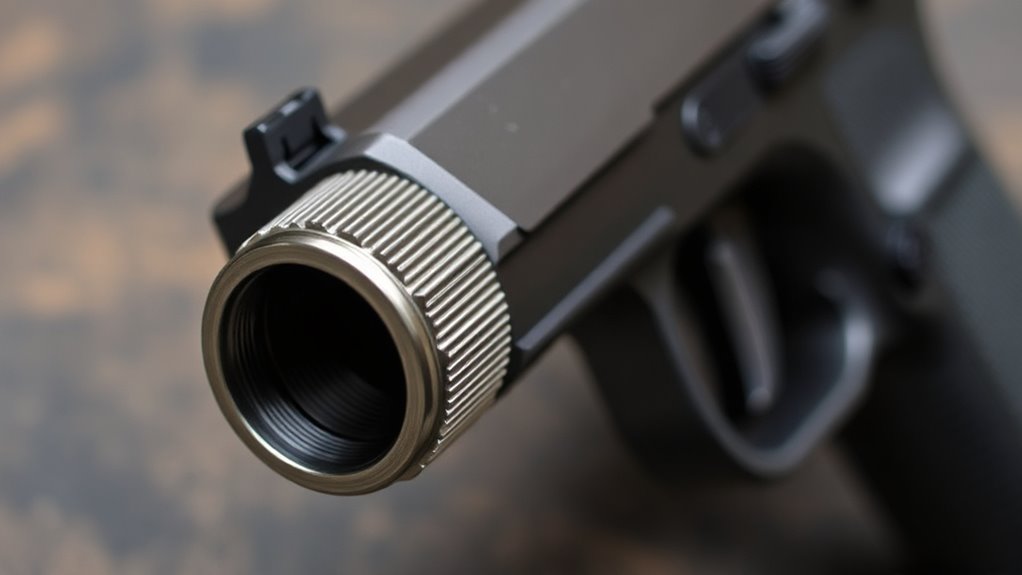
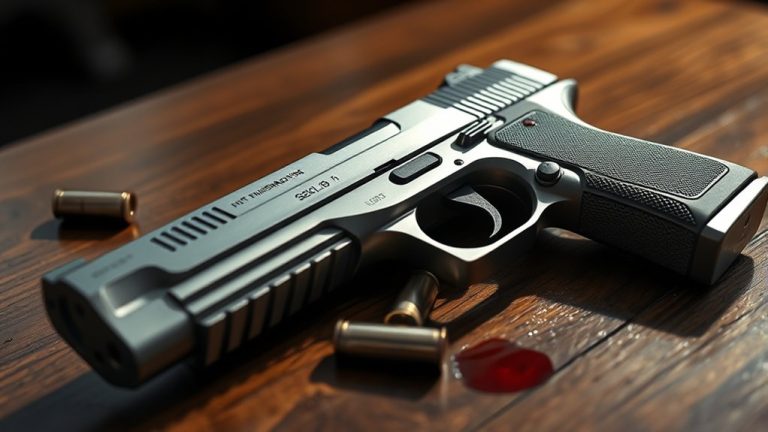
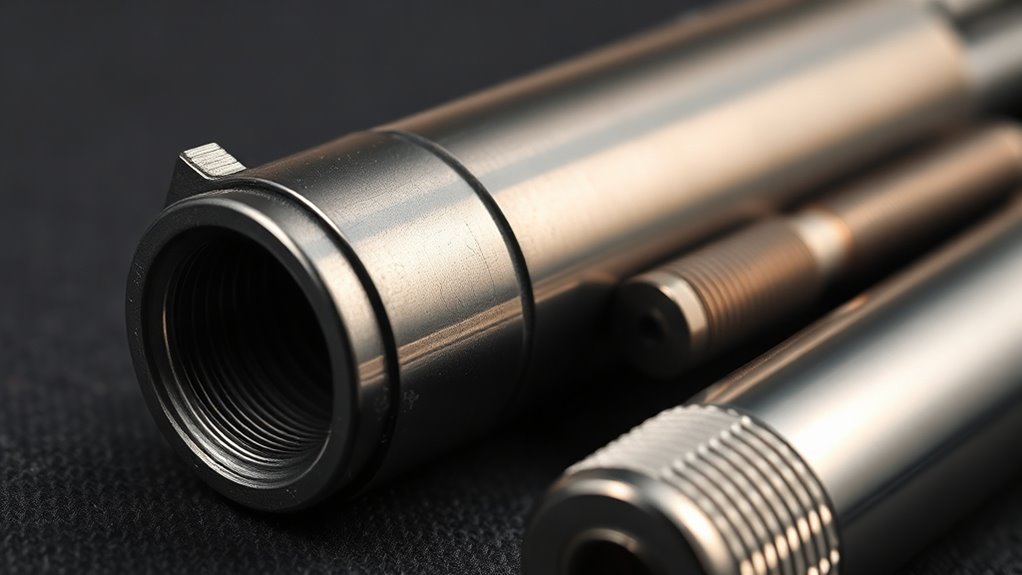
Although it might look like a regular barrel, a threaded barrel on a pistol features external machine screw-style threads at the muzzle end. This design lets you easily attach compatible muzzle devices like suppressors or compensators.
The key to this compatibility lies in the thread pitch and TPI thread count. These specs determine how tightly and precisely these devices screw on.
Thread pitch and TPI thread count ensure muzzle devices fit securely and align perfectly on threaded barrels.
For many 9mm pistols, including popular models like the Glock 19, the standard TPI thread is 1/2×28. That means a ½-inch diameter with 28 threads per inch.
Your pistol’s threaded barrel is machined for strength and precise alignment. This ensures attachments stay snug and true to the bore.
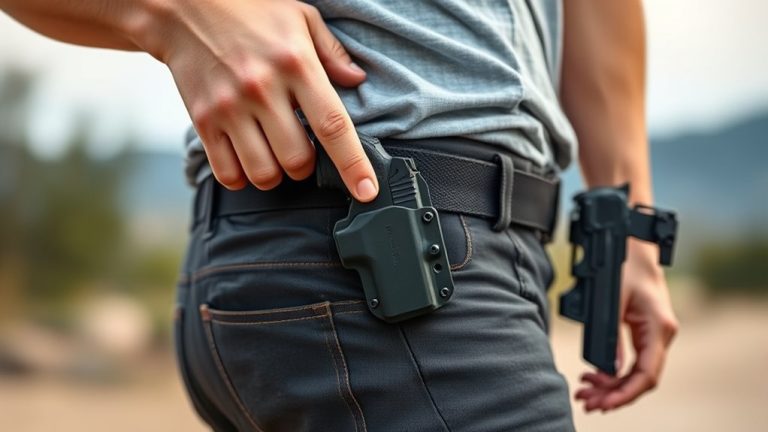
Just keep in mind, the threaded portion extends beyond the slide. This might affect handling and require a holster designed specifically for these barrels.
Why Thread Pitch Is Key to Accessory Fit
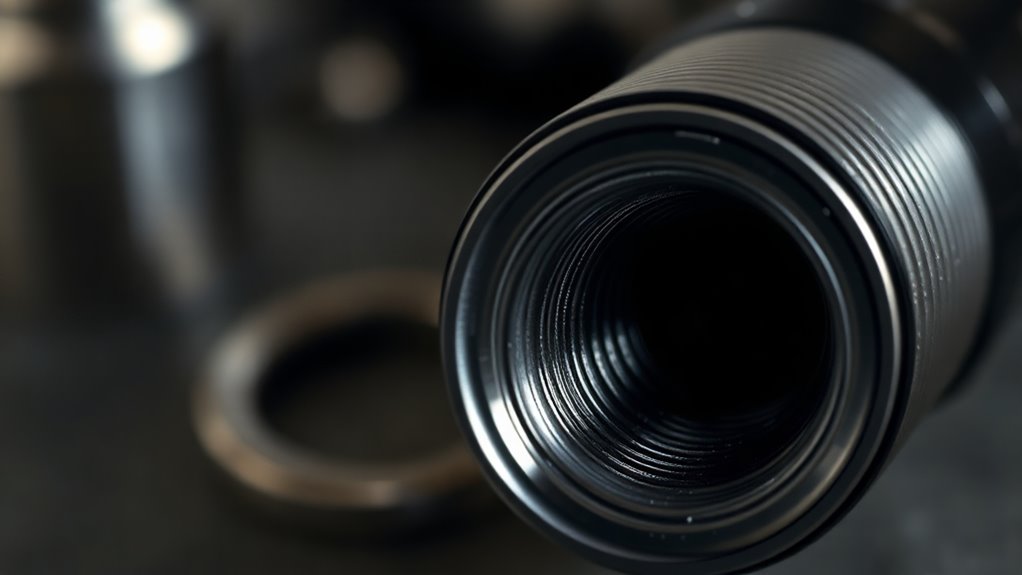
Understanding thread pitch is important when fitting accessories to your pistol’s threaded barrel. Your muzzle device must match both the barrel’s thread diameter and the threads-per-inch (TPI) of the threaded section.
For example, a “1/2×28” means a 1/2-inch diameter with 28 threads per inch. Using an accessory with a different thread pitch won’t fit correctly and may cause misalignment or unsafe mounting.
| Threaded Section Size | Threads Per Inch (TPI) |
|---|---|
| 1/2 inch | 28 |
| .578 inch | 28 |
| 9mm standard | 1/2×28 |
| .45 ACP standard | .578×28 |
Always confirm your barrel’s thread pitch before buying accessories. That way, you’ll ensure a proper fit and keep things safe.
Common Thread Pitches for Pistols and Rifles
You’ll find that most pistols use standard thread sizes like 1/2×28 for 9mm and .578×28 for .45 ACP, while rifles often shift to 5/8×24.
It’s essential to match both the diameter and pitch exactly when attaching suppressors or muzzle devices to avoid fit issues.
Keep in mind, there are some exceptions and variations, so always double-check your specific firearm’s threading before ordering accessories.
Standard Thread Sizes
When selecting a threaded barrel for your pistol or rifle, it’s crucial to match both the thread diameter and confirm proper fit and function.
The vast majority of U.S. pistols use a 1/2×28 thread, which is perfect for 9mm models and carbines. Moving up a size, larger calibers like .45 ACP typically use .578×28 threads.
For rifles starting at .243 caliber and going up to .375, 5/8×24 is the standard thread size. Here’s a quick reference:
| Thread Size | Common Calibers | Typical Use |
|---|---|---|
| 1/2×28 | 9mm | Pistols/Carbines |
| .578×28 | .45 ACP | Pistols/Carbines |
| 5/8×24 | .243 to .375 calibers | Rifles |
Matching the thread size is critical to ensure your barrel works flawlessly. So, take your time and double-check before making a purchase.
Pitch Compatibility Importance
Several factors make pitch compatibility significant for pistol threaded barrels. You need the muzzle threads to match both the thread diameter and the threads-per-inch (TPI) to properly fit a suppressor or muzzle device.
In the U.S., a common pitch for pistols is 1/2×28, which is standard for many 9mm and .22 LR barrels. Another popular pitch is .578×28, often found on .45 ACP pistols.
If the pitch doesn’t match—say 1/2×28 versus 5/8×24—the device won’t thread on correctly. Forcing it can damage both parts, so it’s definitely not worth the risk.
Always check your barrel’s exact marking or manufacturer specs to make sure you select the right thread pitch. Matching the thread pitch is key to safe, dependable compatibility when attaching muzzle accessories.
Exceptions And Variations
Although most pistol and rifle threaded barrels follow standardized pitches like 1/2×28 or 5/8×24, you’ll encounter exceptions and variations that require careful attention. Some pistols, especially those chambered in .45 ACP, use a .57828 pitch, which differs from the common 1/2×28 on 9mm models.
Larger calibers often use 5/8×24, but less common pitches like 11/16×24 or 3/4×24 also exist. Always verify barrel markings since matching thread diameter and pitch is essential for compatibility.
| Thread Pitch | Typical Caliber | Usage Example |
|---|---|---|
| 1/2×28 | 9mm | Most pistols |
| .57828 | .45 ACP | Pistols, carbines |
| 5/8×24 | > .223 through .375 cal | Many rifles |
| 11/16×24, 3/4×24 | Larger calibers | Specialized setups |
What to Know Before Adding a Threaded Barrel
Before adding a threaded barrel to your pistol, you should confirm the exact thread specifications to ensure compatibility with your accessories. Thread size and pitch must match—for example, many 9mm barrels use 1/2×28 (1/2-inch diameter with 28 threads per inch), while some .45 ACP barrels use .57828.
Even if the diameter looks right, differing thread spacing means parts won’t fit. Also, keep in mind that a threaded barrel extends beyond the slide, which can affect your pistol’s balance and how it fits in holsters, especially if you carry concealed.
To maintain safety and performance, use properly machined threads and ensure the barrel’s alignment is precise. This reduces risks like baffle strikes and guarantees consistent accessory mounting.
How Threaded Barrels Allow Suppressor Mounting
When mounting a suppressor, you need to make certain the thread pitch on your barrel matches the suppressor’s threads perfectly. Proper alignment is vital to avoid baffle strikes and maintain consistent performance.
Getting these details right lets you securely attach the suppressor and enjoy quieter, more controlled shooting. It’s all about making sure everything fits just right so you can get the most out of your setup.
Thread Pitch Compatibility
If you want to mount a suppressor on your pistol, matching the thread pitch and diameter of the barrel’s threaded end is crucial. The threads at the muzzle must align perfectly with the suppressor’s threads to screw on securely.
Thread pitch is usually noted as something like 1/2×28, meaning a 1/2 inch outside diameter with 28 threads per inch—common for many 9mm pistols. Another typical size is .578×28, often found on .45 ACP pistols.
Keep these in mind:
- Suppressors must match both thread diameter and pitch to fit properly.
- 9mm and .45 ACP mounts aren’t interchangeable due to different thread specs.
- Manufacturers specify compatibility based on thread pitch.
- Mismatched threads can cause binding or poor fit.
Always verify thread specs before attaching a suppressor. It’s better to double-check than to struggle with a bad fit later.
Suppressor Alignment Importance
Though it may seem straightforward, ensuring your suppressor screws onto your pistol’s threaded barrel with perfect alignment is critical. Your barrel’s thread pitch—like the common 1/2×28 for a 9mm Glock 19—must match your suppressor mount exactly.
This match ensures the suppressor engages the threads concentrically, preventing misalignment during firing. If the suppressor isn’t properly aligned, it can cause baffle strikes, affect accuracy, and alter backpressure.
The quality of your barrel’s threaded section—its straightness and surface finish—also influences alignment, especially under heat and recoil. Because suppressor mounts act as threaded sockets, you’ll only achieve reliable, safe attachment when the barrel and mount share the same thread pitch and machining tolerances.
That way, you get to enjoy maximum performance and safety without any hassle.
Benefits of Threaded Barrels for Using Suppressors and Muzzle Devices
Because a threaded barrel features precise exterior threads at the muzzle, you can easily attach suppressors and various muzzle devices directly to your pistol.
A threaded barrel allows quick attachment of suppressors and muzzle devices for enhanced shooting versatility.
This convenience opens up several benefits for you when shooting or training:
- Attach suppressors matched to the barrel’s thread pitch and diameter for reduced muzzle blast and noise.
- Use compensators to redirect gases, helping minimize muzzle rise and improve quick-fire control.
- Ensure reliable, concentric fits that prevent baffle strikes and enhance suppressor longevity.
- Improve indoor and low-light shooting comfort by lowering sound output, aiding communication and focus.
Accuracy and Control With Threaded Barrels
With a threaded barrel, you can improve your pistol’s accuracy and control by ensuring that suppressors or compensators stay perfectly aligned with the bore. When mounts are machined to the correct thread pitch, this alignment reduces shot-to-shot variation and offers predictable point-of-impact behavior.
Compensators attached to the threads help manage muzzle gases, reducing muzzle climb and allowing you to return to target faster for tighter follow-up shots. The added length and weight from the barrel and mounted device also help reduce felt recoil and muzzle rise, improving your ability to track sights consistently during rapid fire.
Plus, using subsonic loads with a suppressor feels more stable shot-to-shot. This supports better control and tighter groupings under suppressed conditions.
How Threaded Barrels Affect Firearm Balance and Use
When you attach a threaded barrel to your pistol, you’ll notice the balance shifts forward because the barrel extends beyond the slide. This forward weight changes how the gun feels, especially during recoil.
Adding devices like suppressors or compensators further affects handling by altering the muzzle’s weight and movement. Here’s what you can expect:
- Increased forward weight can reduce muzzle rise, improving your follow-up shot speed.
- Threaded barrels help manage recoil by redirecting gases through attached muzzle devices.
- The extra length and thickness may complicate holster fit and concealment.
- Different attachments affect balance uniquely—heavier suppressors increase forward weight more than lighter compensators, changing tracking and control.
Understanding these effects helps you choose the right setup for better shooting performance and comfort.
Frequently Asked Questions
Is a Threaded or Non-Threaded Barrel Better?
A threaded barrel is better if you want to attach suppressors or compensators for improved shooting control.
Choose non-threaded if you prefer simplicity, lighter weight, and no holster changes.
It all depends on your needs. What works best for one person might not be right for another.
How Many Guns Can a US Citizen Legally Own?
You can legally own as many guns as you want under federal law, but some states and cities may limit numbers or types. Always check local rules to stay compliant and avoid legal trouble.
It’s a good idea to know the specific laws where you live because they can vary a lot. That way, you won’t accidentally break any rules. Staying informed keeps things simple and safe.
What Three Guns Should Everyone Own?
Think of your gun collection as a balanced tripod: you should own a Glock 19-style 9mm with a threaded barrel, a .22 LR for affordable practice, and a rifle caliber gun with a larger thread pitch for versatile attachments.
Having these three covers all your bases pretty well. The 9mm is great for everyday carry or defense, while the .22 LR lets you practice without breaking the bank.
And the rifle caliber gun? It’s perfect for longer range and can handle a variety of attachments thanks to that bigger thread pitch. Makes your collection flexible and ready for anything.
What Is the Thread Size of a .45 ACP Barrel?
The thread size of a .45 ACP barrel is typically .578 inches in diameter with 28 threads per inch (TPI).
You’ll need both specs matching perfectly to attach suppressors or muzzle devices securely and safely.
It’s super important to get these measurements right, or your accessories might not fit properly.
Conclusion
Now that you know what a threaded barrel on a pistol is, you’re ready to upgrade your firearm like a true gunslinger from the Old West with modern tech. Just remember, matching the thread pitch is essential for fitting accessories like suppressors or muzzle brakes.
Threaded barrels not only boost accuracy and control but also change your pistol’s balance. So, before you bolt one on, think about how it’ll affect your shooting experience overall.
Choosing the right threaded barrel can really enhance your pistol’s performance. It’s all about finding that perfect fit for your style, whether you want better recoil management or the ability to attach muzzle devices. Keep in mind, a threaded barrel is more than just a cool feature—it’s a functional upgrade that can improve your accuracy and overall control. So take your time, consider the thread size and pitch, and make sure your pistol setup works for you.