How Do You Put a Foregrip on an AR Pistol Legally?
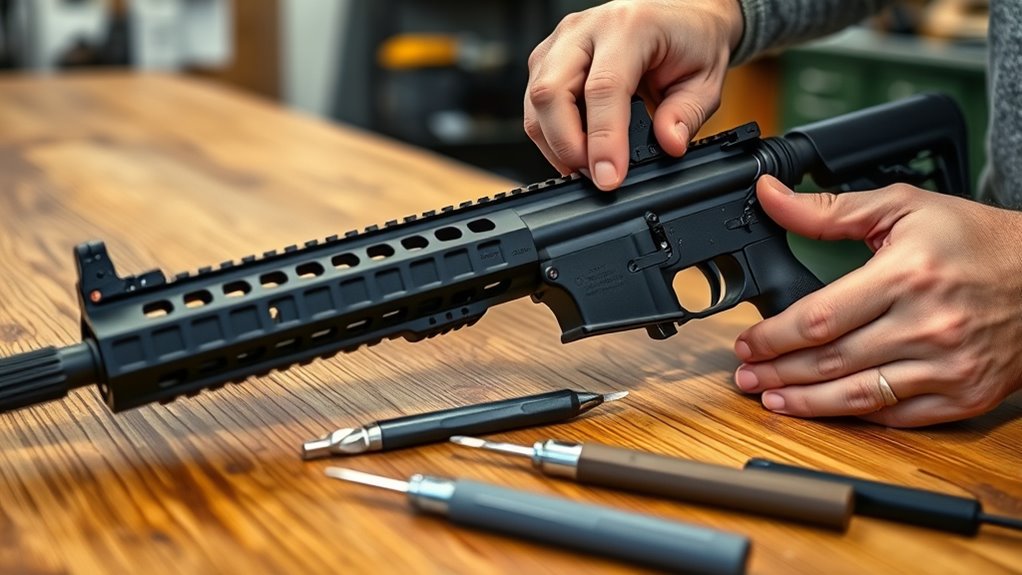
To put a foregrip on your AR pistol legally, you need to be careful about the type of grip you choose. Opt for an angled foregrip instead of a vertical one. This is important because attaching a vertical grip to a pistol with a barrel shorter than 16 inches can change its classification to an AOW (Any Other Weapon), which comes with strict ATF regulations.
Also, make sure your AR pistol’s overall length is at least 26 inches when the stabilizing brace is fully collapsed. Remember, this measurement excludes any muzzle devices.
Following these simple guidelines will help you stay compliant with the law. Keep these tips in mind when customizing your AR pistol. It’s all about making smart choices so you can enjoy your firearm without running into legal trouble.
Key Takeaways
- Use an angled foregrip with less than a 45° angle to avoid reclassifying your AR pistol as an AOW. This little detail can save you a lot of hassle.
- Measure your AR pistol’s overall length fully collapsed, ensuring it is at least 26 inches with the foregrip installed. It’s important to get this right.
- Avoid attaching a vertical foregrip on AR pistols with barrels shorter than 16 inches to prevent strict ATF regulations. Trust me, you don’t want to deal with that.
- Confirm compliance with both federal and local laws before installing any foregrip on your AR pistol. Laws can vary, so double-checking is key.
- Regularly re-measure your firearm after modifications to ensure it remains legally classified and avoids additional registration. Staying on top of this keeps everything above board.
Choosing a Legal Foregrip for Your AR Pistol: Vertical vs. Angled
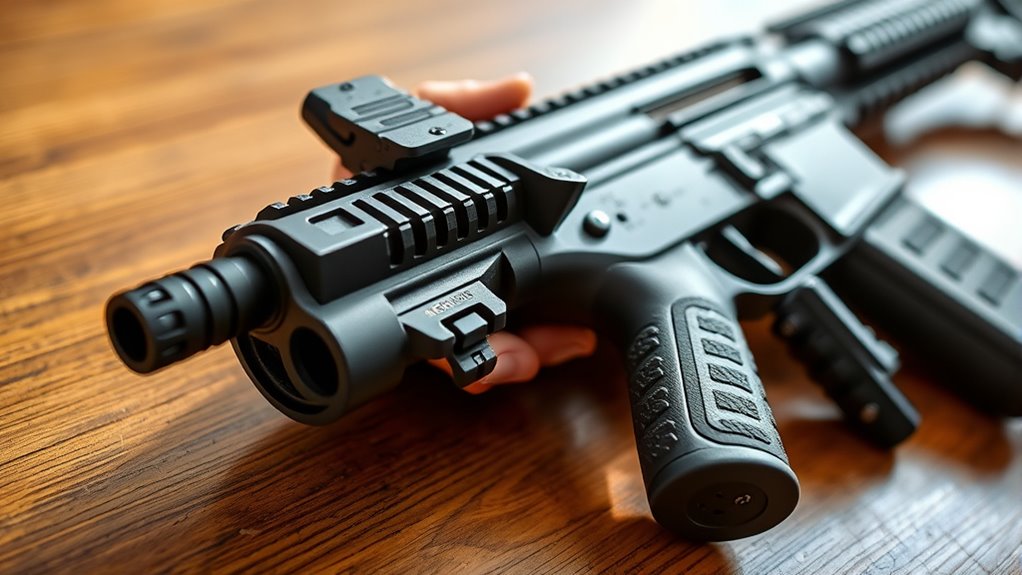
When choosing a foregrip for your AR pistol, understanding the legal distinctions between vertical and angled grips is essential. A vertical foregrip attached to an AR pistol with a barrel length under 16 inches can reclassify your firearm as an AOW, triggering strict ATF regulations. This could require registration and additional paperwork.
On the other hand, an angled foregrip, like the Magpul AFG, generally remains legal as long as your overall length is 26 inches or more. Angled grips with less than a 45-degree angle tend to avoid classification issues, helping you maintain legal compliance while improving control.
How to Measure Your AR Pistol’s Length to Stay Compliant
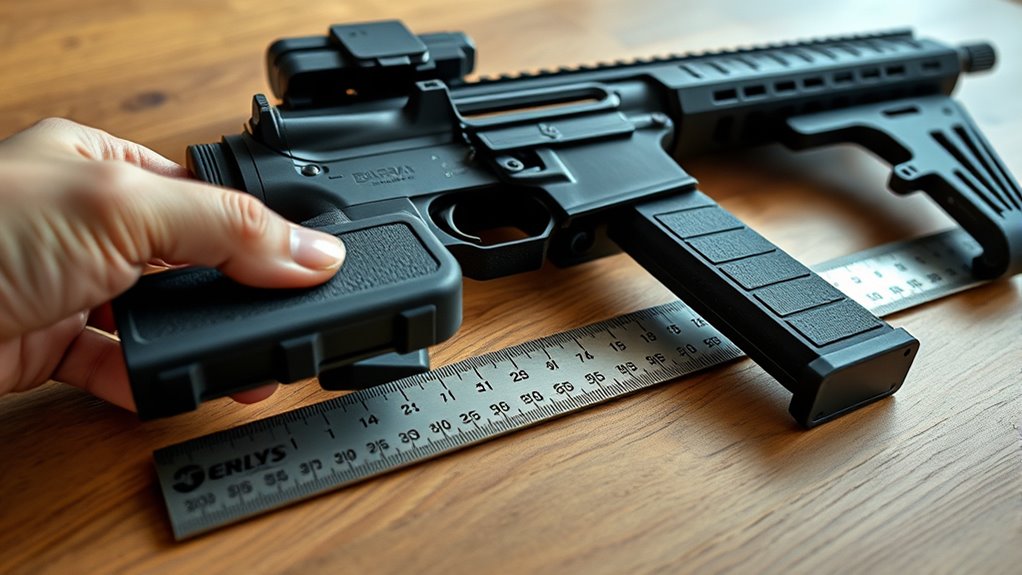
Although measuring your AR pistol’s length might seem straightforward, accuracy is essential to stay compliant with regulations. To guarantee compliance, measure the overall length with the stabilizing brace fully collapsed, excluding muzzle devices.
Use a measuring tape to record the shortest possible length from the muzzle to the end of the brace or buffer tube. Federal laws require your AR pistol to be at least 26 inches long to avoid classification as a short-barreled rifle or an Any Other Weapon.
Keep in mind that adding a vertical foregrip can affect your AR pistol’s length and classification. Always double-check your measurements against current federal laws and local regulations to maintain legal compliance while customizing your firearm.
Frequently Asked Questions
Is It Legal to Put a Foregrip on an AR Pistol?
You can put a foregrip on an AR pistol legally if you avoid vertical grips on barrels under 16 inches and keep the overall length over 26 inches. Angled grips are usually safer, but always check local laws first.
Can You Put a Hand Grip on an AR Pistol?
You can add a hand grip to your AR pistol, like planting a sturdy branch on a tree. Just guarantee it’s angled right and your overall length stays legal, so your firearm doesn’t cross forbidden lines.
Why Can’t I Put a Foregrip on an AR Pistol?
You can’t put a vertical foregrip on an AR pistol because it changes its classification, making it an AOW under federal law. This triggers strict regulations and requires registration, so it’s generally illegal without proper paperwork.
Is a Foregrip on a Pistol a Felony?
Yes, attaching a vertical foregrip to a pistol can be a felony if you don’t register it as an AOW with the ATF. Without proper paperwork, you risk serious legal trouble, including prison time.
Conclusion
Now that you know the difference between vertical and angled foregrips and how to measure your AR pistol correctly, you’re ready to stay on the right side of the law.
Remember, a vertical grip on a pistol can change its classification, but an angled grip keeps you clear and compliant.
So, choose wisely, measure carefully, and shoot straight—because when it comes to legality, precision is your best friend.
When putting a foregrip on an AR pistol legally, it’s crucial to understand how your choices affect the firearm’s classification under the law. A vertical foregrip can reclassify your pistol as a short-barreled rifle, which requires registration and additional regulations. On the other hand, an angled foregrip is generally allowed without changing the legal status of your AR pistol. Always measure your firearm properly and follow all local, state, and federal regulations to ensure compliance. By staying informed and making smart decisions about foregrips, you can enjoy your AR pistol safely and legally.