How to Sell a Gun Legally in 5 Essential Steps
To sell a gun legally, first know if you need a license—occasional private sales usually don’t require one, but frequent sales do. It’s important to understand the laws around gun sales so you stay compliant and avoid trouble.
Make sure your buyer is legally allowed to own a firearm—no prohibited persons or minors. Licensed dealers help by handling background checks and transfers, which makes the process smoother and safer for everyone involved.
Complete all necessary paperwork and keep records for safety and compliance.
Remember, special rules apply for NFA firearms and crossing state lines, so keep these in mind as you proceed. Taking these steps seriously ensures your sale is legal and responsible.
Key Takeaways
- Verify the buyer is legally eligible and not prohibited from owning firearms under federal and state laws.
- For private sales, make sure the transaction is occasional and within the state. This helps you avoid needing an FFL license.
- Use a licensed dealer to conduct background checks, complete Form 4473, and transfer the firearm legally.
- Don’t forget to complete and keep all required paperwork. This includes bills of sale and transaction records to stay compliant with the law.
- Follow special rules for NFA firearms. And never sell across state lines without using licensed dealers.
Do You Need a License to Sell Your Gun?
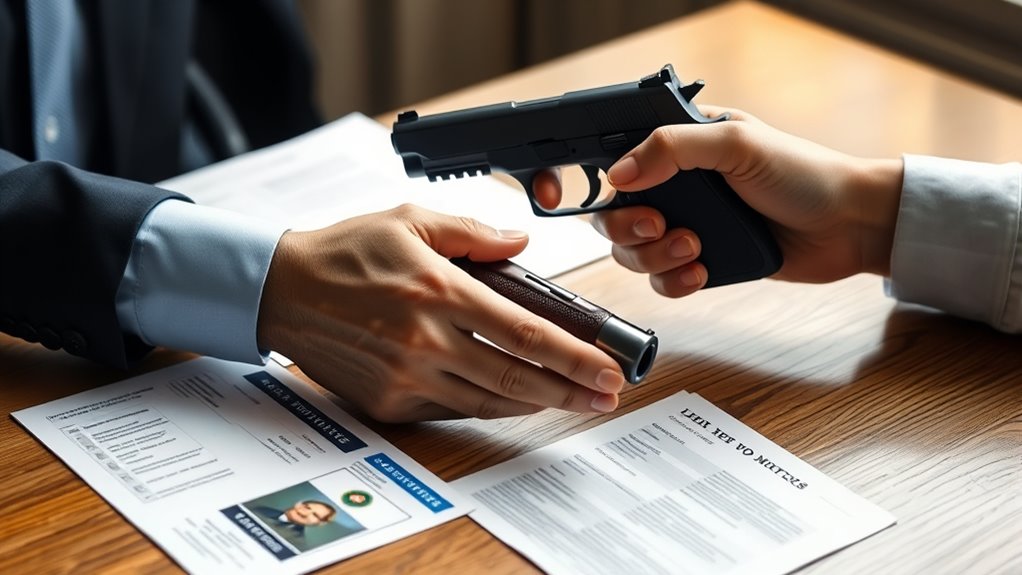
Wondering if you need a license to sell your gun? Generally, if you’re a private individual making a one-time or occasional sale within your state, you don’t need a license.
Federal law requires a Federal Firearms License (FFL) only if you’re engaged in selling firearms regularly as a business. This means that if you’re buying and selling guns repeatedly for profit, you must become a licensed firearm dealer.
For private sales, you don’t have to conduct a background check unless state gun laws require it. However, selling firearms across state lines without involving an FFL is illegal.
Who Can You Legally Sell Your Gun To?
Before selling your gun, you need to make certain the buyer is legally allowed to own one. You can only sell to someone who meets buyer eligibility under federal laws and state laws. That means they’re not on any prohibited persons lists, such as felons or individuals with domestic violence convictions.
It’s illegal to sell firearms to anyone under 18. As a private seller, you must guarantee the lawful sale follows proper guidelines.
Private sales across state lines are prohibited unless done through a licensed dealer. Using an FFL (Federal Firearms License) holder helps ensure a legal firearm transfer and background check to verify eligibility.
Always confirm the buyer complies with state laws to avoid unlawful sales and stay within your legal rights.
How Licensed Dealers Help With Background Checks and Transfers
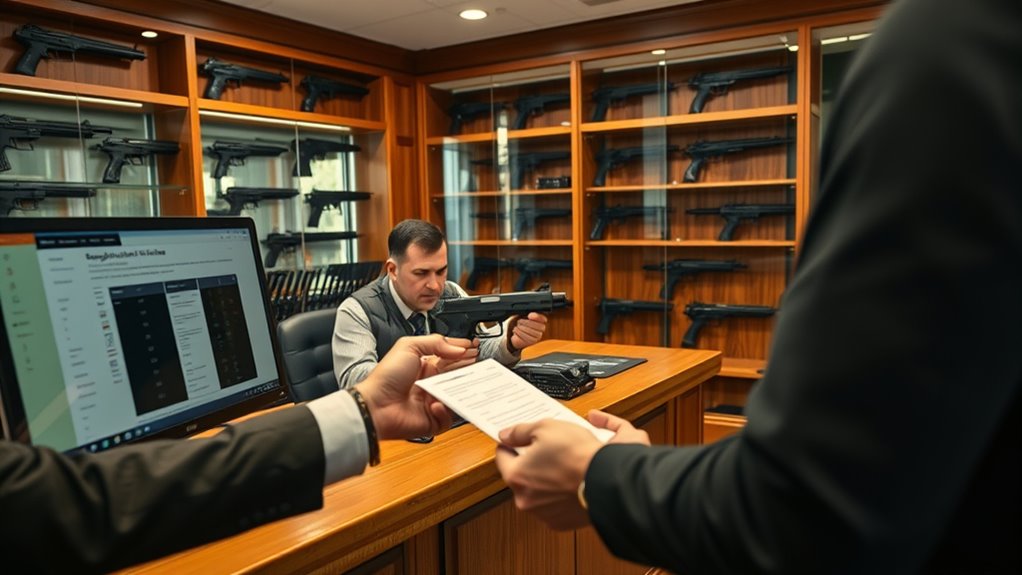
Since private sales require careful verification to guarantee the buyer is legally allowed to own a gun, licensed dealers play an important role in the process. Licensed dealers, authorized by the ATF, conduct background checks through the NICS system to ensure a lawful sale.
When you use a licensed dealer, they verify the buyer’s identity, complete Form 4473, and confirm the buyer isn’t prohibited from owning a firearm. They handle the firearm transfer, *guaranteeing* all federal and state regulations are met.
Licensed dealers also maintain detailed records of firearm transactions, including serial numbers and buyer information, to comply with ATF rules. While they charge a fee, their services help you complete a lawful firearm transfer securely.
This protects both you and the buyer during the sale. It’s a smart way to make sure everything goes smoothly and by the book.
Complete the Required Paperwork and Why Keeping Records Matters
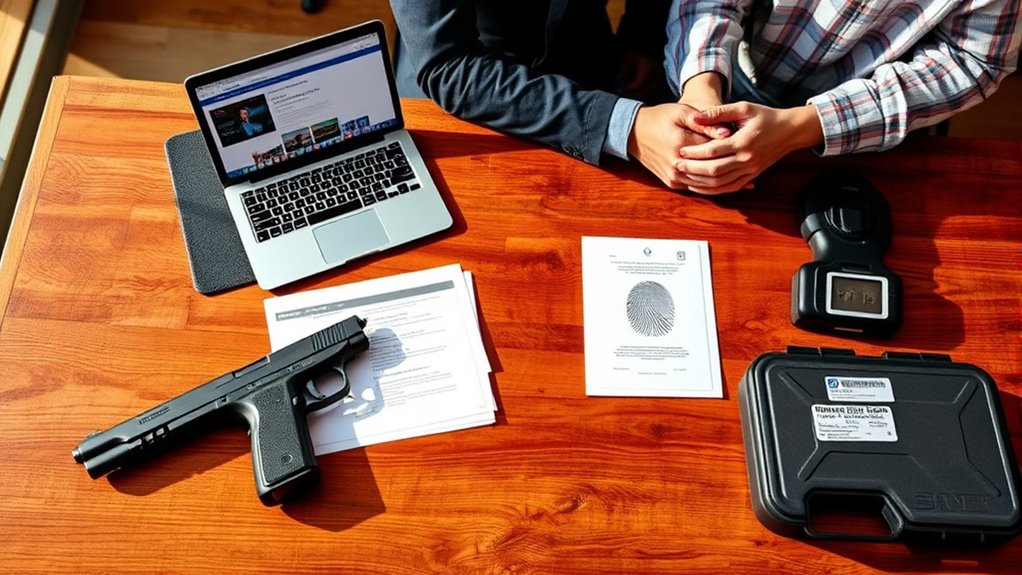
Although the process may seem tedious, completing the required paperwork like ATF Form 4473 and SAP 534 is essential when transferring a firearm through a licensed dealer. You must guarantee all transfer documents are accurately filled out, capturing essential details such as the firearm’s serial number and buyer information.
Keeping thorough transaction records, including signed bills of sale, protects both you and the buyer by proving legal compliance. Proper recordkeeping helps you stay aligned with federal regulations, which mandate licensed dealers retain these documents for the life of their license.
Organized and complete paperwork not only facilitates a smooth firearm sale but also shields you from potential legal issues if the gun is misused later. Staying diligent with your records ensures your sale remains transparent and lawful.
Special Rules for Selling NFA Firearms and Interstate Sales
Proper paperwork and recordkeeping lay the groundwork for selling firearms. But when it comes to NFA firearms and interstate sales, additional rules come into play.
You must complete ATF Form 4, undergo a background check, and submit fingerprints for transfer approval. Registration with the ATF is mandatory, and the transfer process often takes months.
For interstate transfer, both seller and buyer need a Federal Firearms License (FFL). Private transfer across state lines is prohibited without approval.
| Requirement | Details |
|---|---|
| NFA Firearms | Require ATF Form 4 and registration |
| Background Check | Mandatory for transfer approval |
| Interstate Transfer | Must use FFLs in both states |
| Transfer Tax | $200, reducing to $0 in 2026 for some |
Frequently Asked Questions
How to Legally Sell a Gun Privately in Indiana?
You can legally sell a gun privately in Indiana by ensuring the buyer is eligible, completing a Bill of Sale, and avoiding transfers across state lines. Always verify local laws and consider using a licensed dealer for added compliance.
How Do You Legally Sell a Gun in PA?
You can legally sell a gun privately in Pennsylvania if both you and the buyer are residents and the buyer’s eligible. Always avoid selling to prohibited persons, keep a bill of sale, and follow all federal and state laws.
How to Legally Sell a Gun in North Carolina?
In North Carolina, you can sell a gun privately without a background check if both of you are residents. For out-of-state buyers, you must use a licensed dealer and complete a background check to sell legally.
How to Sell a Gun in Iowa?
Want to sell a gun in Iowa? You’ll just need to confirm both of you are eligible, use an Iowa-licensed dealer for out-of-state buyers, and document the sale with a bill of sale to protect yourself legally.
Conclusion
Selling your gun legally might seem complex, but it’s simpler than risking illegal transactions. While the process demands attention to licenses, background checks, and paperwork, following these steps protects you and the buyer.
Licensed dealers act as a bridge between confusion and compliance, ensuring safety on both ends. By respecting special rules for NFA firearms and interstate sales, you turn potential legal pitfalls into responsible ownership.
When you sell your gun legally, you’re not just following the law—you’re ensuring a safe transaction for everyone involved. Paying close attention to background checks, proper documentation, and working with licensed dealers makes all the difference. Remember, being mindful of NFA regulations and interstate sale rules protects you from legal trouble while promoting responsible gun ownership. Selling your gun legally blends caution with confidence, giving you peace of mind throughout the process.