
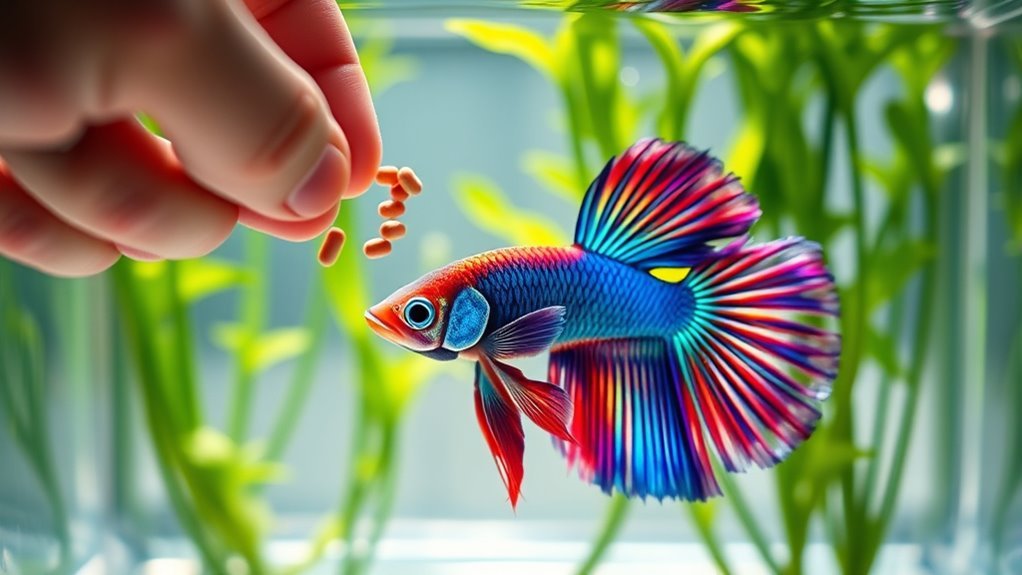
How Often Do You Feed Betta Fish
You should feed your betta fish once or twice a day, giving about 4-6 small pellets per feeding—just enough that they finish in 2-3 minutes. Feeding betta fish properly is essential for their health and well-being.
Incorporate one fasting day weekly to support their digestion and keep water clean. Watch their belly size and behavior to avoid overfeeding or underfeeding, as both can harm your fish.
Adjust portions based on their activity and tank conditions. Keep going to discover tips on the best foods and feeding routines for your betta’s health.
How Often Should You Feed Your Betta Fish?
Although bettas can eat more often, you should feed your betta fish once or twice a day to keep it healthy without overfeeding. Maintaining a consistent feeding schedule ensures your betta fish gets the right amount of nutrients without risking health issues.
Adjust the feeding frequency based on your betta’s size, activity, and appetite, but avoid giving more than six pellets daily.
Overfeeding can lead to bloating, digestive problems, and poor water quality. Including a fasting day once a week helps prevent these issues and supports good digestion.
By providing smaller, regular feedings, you encourage natural behavior and maintain a cleaner tank.
How Much Food Does a Betta Need Per Feeding?
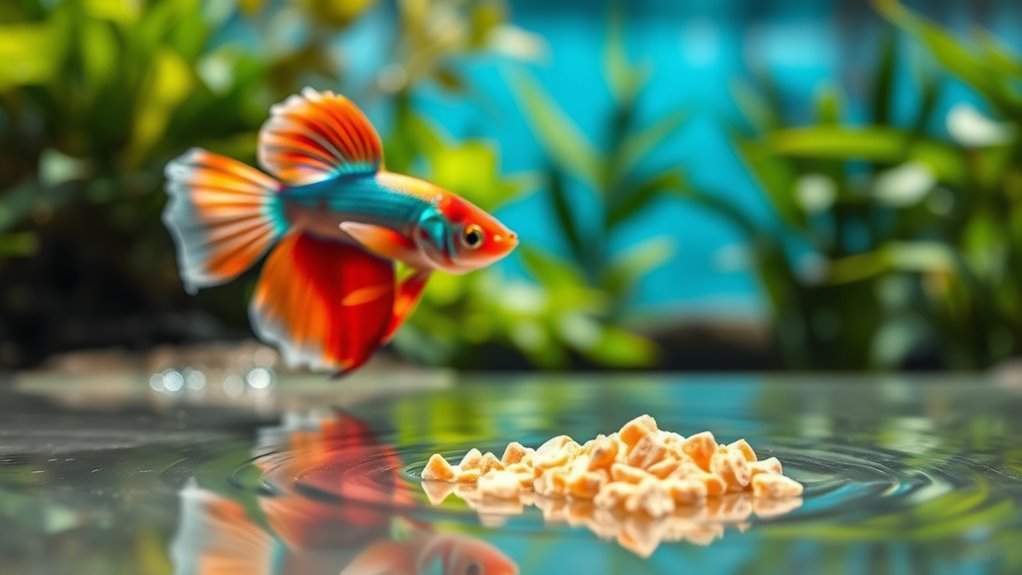
You should feed your betta about 4-6 small pellets per meal, roughly the size of its eye. Watch its appetite closely and adjust portions to avoid overfeeding, which can cause bloating and water quality issues.
It’s better to give a little less than too much to keep your fish healthy.
Pellet Quantity Guidelines
Since a betta fish’s stomach is roughly the size of its eye, you should feed it only 3 to 6 tiny pellets per meal. This quantity guarantees you provide the right portion without risking overfeeding, which can cause bloating and digestive problems.
Most experts recommend sticking to about 4 to 6 pellets per feeding, but you can adjust slightly based on your betta’s size and activity level.
When feeding, watch how quickly your fish eats the pellets—ideally, it should finish within 2 to 3 minutes.
If pellets remain uneaten, reduce the portion next time.
Adjusting Based On Appetite
When you notice your betta enthusiastically finishing its pellets within a few minutes, it’s a good sign to contemplate increasing the portion slightly. Pay close attention to your fish’s appetite and behavior; a healthy betta usually consumes its food within 2-3 minutes.
Since its stomach is about the size of its eye, feeding more than 4-6 pellets risks bloating.
If your betta consistently eats all the food quickly, try adding one pellet per feeding gradually.
On the other hand, if you see leftover pellets or reduced interest, reduce the portion size accordingly.
Adjusting portion size based on these visual cues and activity levels helps you meet your betta’s nutritional needs without risking overfeeding.
Monitoring fish behavior is key to finding the right balance.
Avoiding Overfeeding Risks
Although it might be tempting to feed your betta extra pellets, sticking to about 4-6 tiny pellets per feeding helps prevent overfeeding. Betta fish have small stomachs, roughly the size of their eyes, so portion size matters. Overfeeding can lead to bloating, constipation, and poor water quality, which harms their health.
Pay attention to feeding frequency and stop once your betta finishes eating within 2-3 minutes. Slight underfeeding is safer than overfeeding to maintain water quality and avoid digestive issues.
| Aspect | Recommended Amount | Risks of Excess |
|---|---|---|
| Portion Size | 4-6 pellets | Bloating, constipation |
| Feeding Frequency | 1-2 times daily | Water pollution, health decline |
| Feeding Duration | 2-3 minutes | Leftover food, water quality issues |
Best Types of Food for Betta Fish
When choosing pellets for your betta, focus on quality and how well they float at the surface.
You’ll also want to take into account alternative foods like frozen or live options to keep their diet balanced.
Paying attention to nutritional content guarantees your betta stays healthy and active.
Pellet Selection Criteria
Choosing the right pellets plays a vital role in keeping your betta healthy and vibrant. When you focus on pellet selection, opt for high-quality pellets made from fish meal or krill meal, as they offer superior nutrition and boost coloration.
Make sure the food size fits comfortably in your betta’s mouth—tiny or micro-sized pellets work best. Floating pellets are ideal since they stay on the surface longer, allowing you to monitor consumption easily. Also, mixing pellet types introduces diet variety, preventing boredom and ensuring balanced nutrition.
| Criteria | Why It Matters |
|---|---|
| Fish Meal | Provides essential protein and color enhancement |
| Food Size | Ensures easy consumption without choking |
| Diet Variety | Maintains interest and balanced nutrients |
Alternative Food Options
Wondering how to add variety to your betta’s diet beyond pellets? Frozen foods like brine shrimp, bloodworms, and daphnia make excellent treats and fit well into your feeding regimen when offered in small, controlled portions.
Live foods such as mosquito larvae and tiny insects provide natural stimulation and nutritional variety. This helps keep your betta active and interested during mealtime.
While pellets remain a staple—especially floating ones that are easier to monitor—mixing in frozen or live options can enrich your fish’s diet.
Freeze-dried foods offer convenience but should be soaked before feeding to avoid bloating.
Avoid flake foods, as they create mess and make portion control difficult compared to pellets or frozen foods.
Incorporating these alternatives thoughtfully guarantees a balanced, engaging feeding regimen for your betta.
Nutritional Quality Factors
Although bettas will eat a variety of foods, you’ll want to focus on high-quality options that support their health and vibrant colors. Choosing fish food with excellent nutritional quality is key. Look for pellets made with high-quality ingredients like fish meal or krill meal, which deliver essential nutrients and promote vitality.
Floating pellets are ideal since they stay on the surface longer, making feeding easier and preventing waste. To guarantee balanced nutrition, incorporate variety by offering freeze-dried or frozen brine shrimp and bloodworms occasionally.
Pellets made specifically for bettas, such as North Fin Betta Bits or Hikari Bio-Gold, are formulated to meet their unique dietary needs.
Avoid low-quality foods with fillers, as these can lead to health problems like bloating and dull coloration.
Adjust Feeding Based on Betta Activity and Size
Since bettas vary in size and activity, you’ll need to adjust their feeding accordingly. Pay close attention to your betta’s behavior and environment to determine the right feeding size and frequency. Consider these factors:
- Larger bettas or those with increased betta activity require more food to meet their energy needs.
- Cooler water temperature slows metabolism, so feed less to avoid overfeeding.
- If your betta is active—swimming or exploring—slightly increase feeding size or frequency.
- Lethargic or less active bettas need smaller portions to prevent bloating and health issues.
Why Overfeeding Your Betta Is Harmful
You might think more food means a happier betta, but overfeeding can actually cause serious health problems like bloating and constipation.
Leftover food also harms water quality, increasing toxins that stress your fish.
Let’s look at how to avoid these issues and keep your betta healthy.
Health Risks of Overfeeding
When you overfeed your betta fish, it can quickly lead to serious health problems like bloating and swim bladder disorder, making it hard for your fish to swim properly.
Overfeeding poses several health risks that you should be aware of:
- Bloating and constipation can cause discomfort and digestive issues.
- Excess food leads to waste buildup, harming water quality.
- Poor water quality from decomposing food stresses your betta.
Obesity increases the risk of heart problems and reduces activity.
Water Quality Impact
Although feeding your betta generously might seem like a way to keep it happy, overfeeding quickly degrades water quality and creates a harmful environment. When you overfeed, uneaten food settles in the tank and starts to decay, causing ammonia buildup.
This rise in ammonia, along with increased nitrate and nitrite levels, stresses your betta and promotes harmful algae growth.
Poor water quality from overfeeding can lead to serious health problems like fin rot and ich. To keep your betta healthy, you need to control food amounts carefully and remove uneaten food promptly.
Maintaining stable, clean water conditions guarantees your betta’s environment stays safe and supports its well-being over time.
Preventing Bloating And Constipation
Since bettas have small stomachs, overfeeding can quickly cause bloating, making it hard for them to swim properly. Bloating often looks like a swollen belly and can lead to swim bladder problems.
Overfeeding also increases leftover food, which harms water quality and raises the risk of constipation.
To prevent these issues, follow these tips:
- Feed no more than 4-6 pellets per day to avoid overfeeding
- Avoid multiple small feedings that can overwhelm your betta’s digestion
- Incorporate regular fasting days to give your betta’s digestive system a break
- Monitor your betta’s belly for signs of bloating or constipation
Signs Your Betta Is Overfed or Underfed
If you notice your betta’s belly looking unusually rounded or sunken, it’s a clear sign you need to adjust its feeding habits. Overfeeding often causes a bloated, distended stomach that stays enlarged even after fasting, indicating digestive issues or excess food.
Your betta’s stomach size is a critical indicator; a bloated belly can also make it hard for your fish to swim properly or maintain balance.
On the other hand, if your betta appears underfed, its belly will look sunken or concave, signaling insufficient nutrition.
How to Incorporate Fasting Days Effectively
To keep your betta healthy and prevent digestive issues, you should incorporate fasting days into its feeding routine once a week. Fasting days give your betta fish’s digestive system a much-needed break, reducing bloating and improving overall health.
Here’s how to do it right:
- Skip feeding your betta fish completely on fasting days to allow waste clearance.
- Stick to a consistent weekly feeding schedule that includes one fasting day.
- Monitor your betta’s behavior and adjust fasting frequency if needed.
- Enjoy the health benefits of reduced water pollution from less leftover food.
Since betta fish can safely go without food for up to seven days, one fasting day weekly strikes a good balance.
This simple addition to your feeding schedule promotes better digestion and a healthier tank environment.
Tips for Feeding Frozen, Live, and Pellet Foods to Bettas
When you feed your betta a variety of frozen, live, and pellet foods, you provide essential nutrients while keeping mealtime interesting.
Frozen foods like brine shrimp and bloodworms should be thawed and offered in small portions to avoid overfeeding.
Live foods, such as mosquito larvae or fruit flies, can be given occasionally to stimulate natural hunting behaviors and add nutritional variety.
Pellet foods are convenient for daily feeding and allow precise portion control; choose sinking or floating pellets based on your betta’s preference.
Always guarantee frozen and live foods are clean and free from contaminants to maintain water quality.
Feeding frozen or live foods 2-3 times a week as treats supplements the regular pellet diet, promoting a balanced nutrition plan and a healthy, active betta.
Using Visual Cues to Optimize Betta Feeding
Although feeding your betta regularly is important, paying close attention to visual cues can help you fine-tune meal portions and frequency. Watching your fish’s body and behavior gives you clues to avoid overfeeding or underfeeding.
Regular feeding paired with observing your betta’s appearance and behavior ensures balanced nutrition and health.
Look for these key indicators to guide feeding adjustments:
- A slightly rounded belly shows proper fullness; a bloated stomach signals overfeeding.
- A visible swim bladder or overly thin appearance means you might need to adjust portions.
- Notice if your betta enthusiastically eats or shows disinterest to gauge if meal size fits its appetite.
- Changes in activity or coloration often reflect nutritional imbalances and prompt feeding tweaks.
Setting a Feeding Routine Your Betta Will Love
Watching your betta’s behavior and appearance gives you valuable clues, but pairing these observations with a consistent feeding routine makes a big difference. Set a consistent schedule, feeding once or twice daily, so your betta knows when to expect meals, reducing stress.
Start with a small portion size—3 to 4 pellets—and adjust based on your fish’s appetite and stomach fullness.
Incorporate fasting days, such as one day per week, to aid digestion and prevent bloating.
Stick to your chosen feeding routine, maintaining regular times and quantities to support your betta’s health.
Frequently Asked Questions
Do Betta Fish Need Food Every Day?
No, you don’t need to feed betta fish every day. Feeding them once or twice daily keeps them healthy, but including a fasting day once a week helps prevent overfeeding and supports their digestion and overall well-being.
How Often Should I Play With My Betta Fish?
You should play with your betta about 5-10 minutes daily. This brief interaction keeps your fish active and happy without causing stress.
Keep it gentle, watch their response, and enjoy bonding together regularly.
Is 2 Pellets Enough for Betta Fish?
Yes, two pellets can be enough if they’re the right size and your betta eats them quickly.
Watch your fish’s behavior and body condition to make sure it’s getting enough without overfeeding or causing bloating.
How Long Can a Betta Fish Go Without Fish Food?
Your betta fish can go about one to two weeks without food if healthy, but you shouldn’t make this a habit.
Occasional short fasting is okay, but regular feeding keeps them strong and thriving.
Conclusion
Feeding your betta fish the right amount, like clockwork, keeps them healthy and happy. Stick to small, balanced meals two to three times a day, and don’t forget occasional fasting days to avoid overfeeding. Pay attention to how active and hungry your betta seems, and choose quality foods like pellets and live treats.
With a consistent routine, your betta will thrive and brighten your tank like a little underwater jewel. Remember, how often do you feed betta fish directly impacts their health and vibrancy. Establishing a proper feeding schedule is key to maintaining a happy and healthy betta.