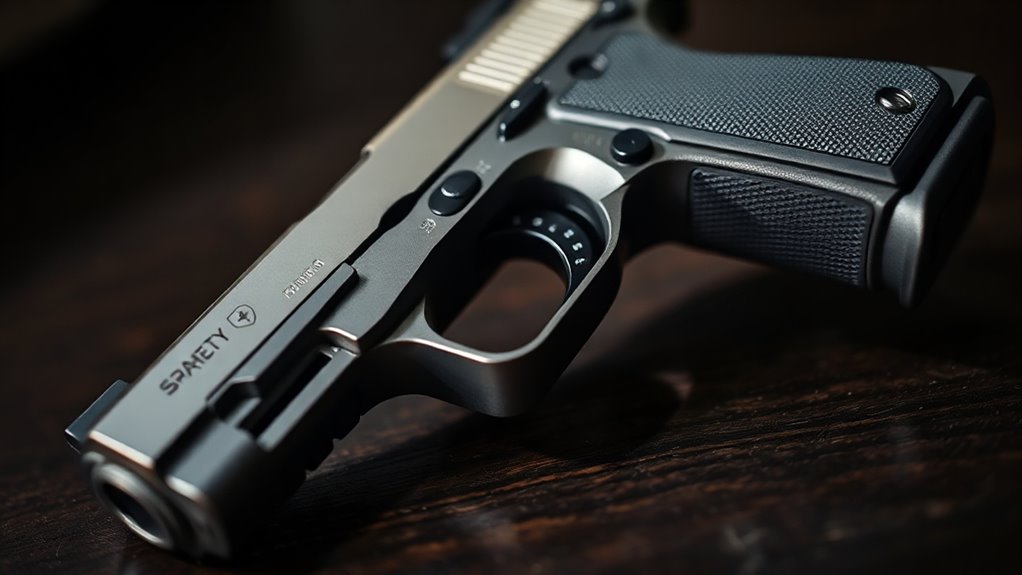
What Is a Manual Safety on a Pistol?
A manual safety on a pistol is a user-controlled lever or switch that mechanically blocks the firing mechanism to help prevent accidental discharge. It’s a key safety feature designed to keep the gun from firing unless you intentionally disengage it.
When engaged, it physically stops the trigger or firing system from working.
This means the pistol won’t fire unintentionally, giving you both tactile and visual confirmation that it’s safe.
Using a manual safety requires consistent training to operate smoothly, especially in high-pressure situations. If you want to understand when a manual safety is helpful and how to train with it, keep exploring.
Key Takeaways
- A manual safety is a user-operated mechanical device that blocks a pistol’s firing mechanism to prevent accidental discharge. It works by moving a safety lug to block the trigger or sear release, physically preventing the gun from firing.
- Manual safeties provide tactile and visual feedback to confirm whether the pistol is in “safe” or “fire” mode. Engaging the manual safety is typically done before carrying, and disengaging is required before firing the pistol.
- Proper use of a manual safety depends on consistent training and discipline to avoid failures under stress. So, it’s really about making sure you practice and stay focused when using it.
What Is a Manual Safety and How Does It Work?
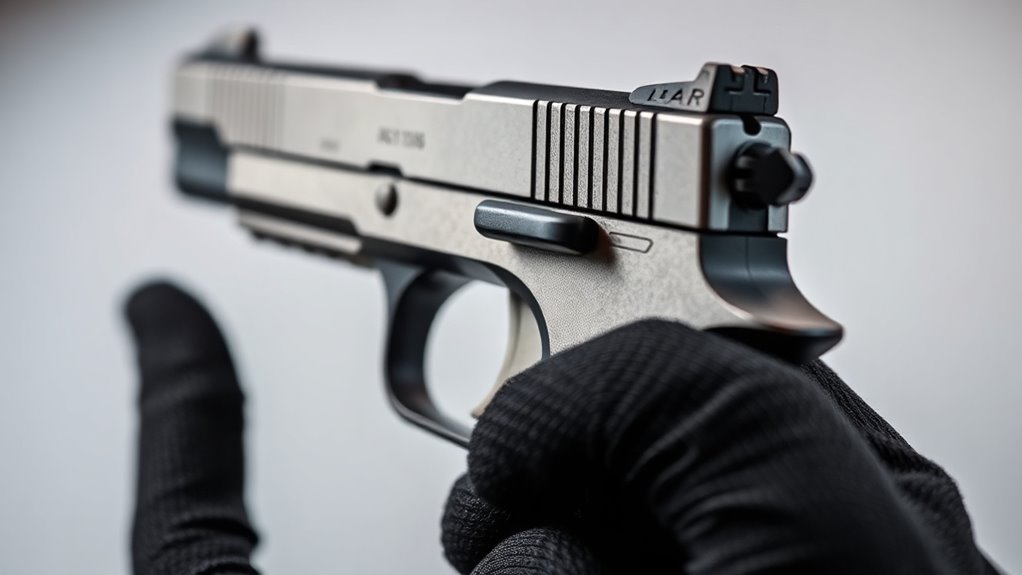
Although pistols often include built-in drop-safety mechanisms, a manual safety gives you direct control by mechanically blocking the firing mechanism to prevent accidental discharge.
When you engage this user-operated lever or switch, it moves a safety lug into place, either locking part of the firing system or preventing the trigger from releasing the sear. This means your pistol won’t fire even if it’s struck or handled roughly.
Whether you’re setting up a new account for firearm training or just learning your pistol’s features, understanding how to engage and disengage the manual safety is essential. You’ll typically follow a deliberate “engage before carrying, disengage before firing” routine, trusting the mechanical block to keep your gun secure until you’re ready to shoot.
Why Do Some Handguns Have a Manual Safety?
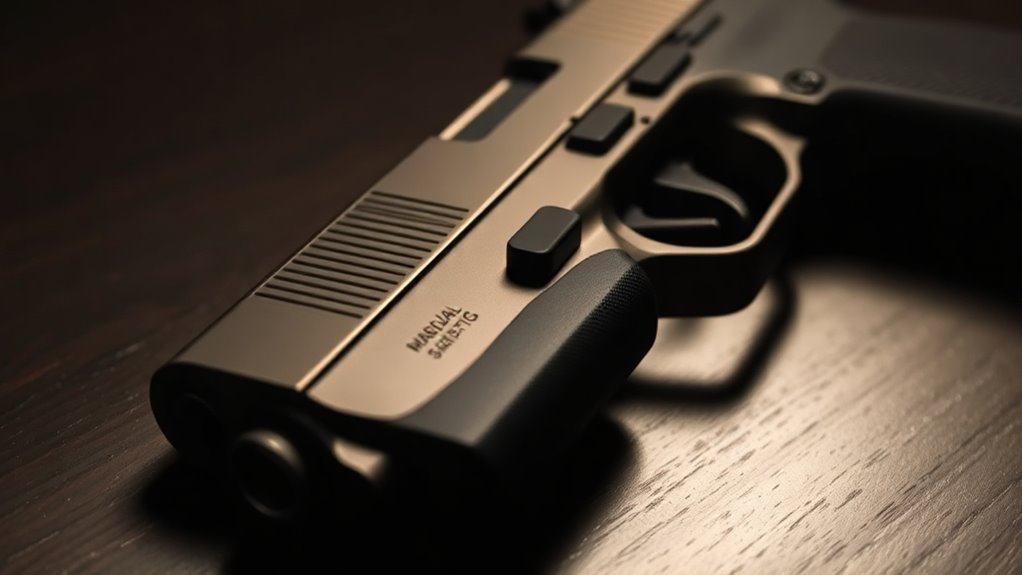
A manual safety gives you direct control over when your handgun can fire, providing an extra layer of protection against accidental discharge. You engage or disengage this user-operated lever or switch to mechanically block firing functions like the trigger or striker.
Many pistols with manual safeties follow the “cocked-and-locked” design, where you decide when the gun is ready, rather than relying on automatic safeties. This system also offers tactile and visual cues, helping you confirm the firearm’s status.
Some shooters prefer manual safeties because they reduce reliance on passive safeties, adding peace of mind when carrying or handling the gun. But keep in mind, using a manual safety effectively depends on your training and discipline to operate it reliably under stress.
What Are the Pros and Cons of Manual Safeties?
When you engage a manual safety on a pistol, you add a deliberate step that can help prevent accidental firing during handling or holstering. This feature gives you a tactile confirmation that the firearm won’t fire unless you want it to.
However, it also requires consistent training to avoid mishaps like forgetting to disengage it in critical moments. You’ll face a tradeoff between increased handling security and the need for disciplined practice.
Consider these points:
- You reduce unintended discharges by adding a physical barrier to firing.
- You gain a predictable “off” check, but it can slow your response under stress.
- You risk failure to fire if you forget to turn off the safety or struggle with differing pistol designs.
Ultimately, manual safeties demand your attention and skill to be effective.
How Do You Decide If You Need a Manual Safety?
To decide if you need a manual safety, start by evaluating your comfort and ability to operate it smoothly under stress. Think about the situations where you’ll use your pistol and whether the added safety fits your speed and handling style.
Balancing safety with quick access is key to making the right choice for your needs. It’s all about finding what works best for you in real-life scenarios. Don’t rush it—take your time to figure out what feels right.
Assessing Personal Comfort
Deciding if you need a manual safety starts with understanding how comfortable you feel adding that extra step before carrying. It’s essential to reflect on how natural engaging a safety lever feels, especially under stress.
Your daily routine and gear, like a holster that fully covers the trigger guard, also play a role in this comfort. Most importantly, your training frequency impacts your confidence in using the safety correctly.
Ask yourself:
- Do you practice enough to operate the safety smoothly during a draw?
- Can you consistently manipulate the safety under pressure?
- Does adding a manual safety increase or reduce your confidence in safe handling?
Use real training to make this decision—comfort grows from repetition, not guesswork.
Evaluating Usage Scenarios
Although adding a manual safety can enhance security, you need to evaluate how your pistol is carried, handled, and stored daily to determine if it truly fits your routine. Consider whether your pistol frequently switches between “condition” states—like loaded for carry versus immediate use—and if your holstering and hand-off practices reliably prevent accidental disengagement.
Think about how the manual safety complements internal features such as drop safeties and trigger geometry. If you consistently practice safe handling—good finger discipline, muzzle awareness, and secure holstering—you might not need one.
However, if you often re-holster or move, a manual safety adds a deliberate barrier. Also, ask yourself if you can quickly and confidently operate the safety under stress; if not, focus on mastering safe handling and your pistol’s default safety mechanisms instead.
Balancing Safety Versus Speed
You’ll often find yourself weighing safety against speed when considering a manual safety on your pistol. A manual safety adds a deliberate step to firing, which might slow you down under stress, but it also reduces the risk of accidental discharge when holstering or handling.
Modern pistols usually have passive safeties, so the benefit of a manual safety depends on your personal needs and carry style.
Ask yourself: Can you reliably flip the safety off quickly in high-pressure moments? Does your training reinforce consistent, instinctive use of the safety?
Will this extra step protect you more than it hinders your response time?
If you hesitate or fumble, a manual safety might become a liability rather than an asset.
Who Benefits Most From a Manual Safety?
If you handle a pistol frequently around others, especially in a household with children, a manual safety can provide an important extra step to prevent accidental discharges. It adds a mechanical barrier that requires deliberate action before the gun can fire, reducing the risk of unintended shots.
New handgun owners benefit greatly as they develop safe habits like muzzle awareness and trigger discipline. Also, if you store or transport your pistol without a secure holster, a manual safety offers added protection.
However, this safety device only helps if you use it consistently and correctly, especially under stress. So, while a manual safety can boost security, it doesn’t replace proper training and safe handling practices, which remain essential no matter what.
How to Train for Safe Handling With or Without a Manual Safety
You’ll want to practice safe handling fundamentals the same way, whether your pistol has a manual safety or not—muzzle pointed safely, finger off the trigger, and a clear load–unload–verify routine.
If your pistol has a manual safety, train a consistent sequence to manipulate it only under defined rules, so you don’t fumble under stress.
Without a manual safety, focus on trigger discipline and grip control through slow, deliberate dry-fire practice before moving to timed drills.
Safe Handling Techniques
Although pistols may differ in features, mastering safe handling techniques remains essential whether or not your firearm has a manual safety. You should always follow a consistent “unload–verify–store” routine before training and handling your pistol.
Practice trigger discipline by keeping your finger off the trigger and outside the guard until you’re ready to fire. Even if your pistol has a manual safety, train for mechanical failure by rehearsing emergency manipulations. This way, you’ll ensure you can return to a safe condition under stress.
To build confidence and skill, focus on timed dry-fire drills emphasizing muzzle awareness and controlled switches. Also, learn the tactile and visual cues for your pistol’s safety status.
Make it a habit to regularly verify your safe handling progress with a qualified instructor. This approach keeps you prepared and confident every time you handle your pistol.
Training With Manual Safety
When training with a manual safety, mastering smooth, confident operation becomes just as important as keeping strict trigger discipline and muzzle awareness. Always start every session by verifying the firearm is unloaded. Keep your finger off the trigger until your sights are on the target, and make it a habit to confirm the chamber’s status each time you pick it up or reholster.
Practice operating the safety reliably under stress. Use smooth, intentional movements and avoid struggling with the mechanism during draws or presentations.
Dry-fire drills are great for building muscle memory—where legal, of course. They help you engage and disengage the safety without messing up your grip or sight alignment.
When reholstering, focus on safety. Perform visual and physical checks, and make sure the safety’s position matches your draw technique.
At the end of the day, your goal is consistent, safe handling. Don’t rely just on the safety’s presence—build your skill through practice.
Training Without Manual Safety
Training with a manual safety teaches valuable habits, but many pistols don’t have this feature or users may choose not to engage it. When training without a manual safety, you’ll focus on consistent muzzle discipline, keeping your finger off the trigger until ready, and always verifying your pistol’s condition.
You’ll rely on built-in safeties as mechanical aids—not replacements for safe handling. Structured drills like “draw–index” and “holster–press-check” routines build muscle memory for safe states, not just flipping a lever.
Regular live-fire practice with instructor feedback sharpens your skills for real-world scenarios. Remember, training without a manual safety means you must:
- Respect your pistol’s readiness every time
- Trust your technique over mechanical devices
- Commit to disciplined, repetitive safe handling
What Are Common Myths and Facts About Manual Safeties?
You might assume that a manual safety automatically makes a pistol safer, but that’s not always true. A manual safety mechanically blocks firing until you move it to “fire,” but safe gun handling—like proper trigger discipline and holstering—is far more important.
One myth is that having a manual safety means you can relax on trigger control; in reality, you still need consistent trigger discipline. Another misconception is that manual safeties slow you down. With regular training, you can operate them quickly, though proficiency varies.
Some believe a manual safety prevents all negligent discharges, but no safety replaces careful handling, proper maintenance, and keeping the firearm unloaded when appropriate. Understanding these facts helps you use manual safeties responsibly.
Why Manual Safety May Not Be Necessary for Everyone
Although manual safeties provide an added layer of security, they aren’t essential for every shooter’s safe handling.
If you’re skilled and disciplined, you might rely more on consistent training than on an extra mechanical step.
Drawing or holstering under stress can be slowed by a manual safety, which might complicate quick access.
Consider your own situation:
- Do you often face high-stress or low-light scenarios where speed matters?
- Are you confident in trigger discipline and proper firearm handling?
- Will your pistol be stored or carried in a way that risks accidental disengagement?
If you answered “yes” to these, a manual safety may not be necessary for you.
Instead, focus on solid training and safe habits to keep control in any situation.
Frequently Asked Questions
What Are Safeties on Guns?
Safeties on guns prevent accidental firing by blocking or disconnecting the firing mechanism. You’ll find manual safeties and passive internal ones.
But remember, none of these replace careful handling. Always practice using them correctly for your safety and confidence.
What Gun Has the Most Accidental Discharges?
You might think a musket causes most accidents, but striker-fired pistols top that list today.
Keep your finger off the trigger and use a quality holster to avoid negligent discharges—they’re usually about handling, not just the gun.
What Does “Mexican Carry” Mean?
“Mexican carry” means you carry your pistol at your hip or belt with the grip angled upward and the muzzle pointing back. It lets you draw quickly but needs a secure holster to avoid accidental drops or discharges.
Basically, it’s all about quick access. But remember, safety is key—using a proper holster is a must to keep things secure.
Which Concealed Carry Gun Has the Best Manual Safety?
When seconds count, you want a pistol like the Smith & Wesson M&P Shield with a crisp, reliable manual safety. It clicks with confidence, lets you disengage smoothly, and won’t slip during your draw or stress drills.
That kind of performance matters when you’re in the moment. You need to trust your gun completely, no second guessing. The Shield delivers that peace of mind every time.
Conclusion
You want safety, but you also want speed—you want control, but not complexity. Manual safeties give you a choice: extra security or quicker action.
Whether you need one depends on your comfort, experience, and how you handle your pistol. So, you train hard, you practice often, and you decide what fits best.
In the end, safety isn’t about a switch; it’s about you—steady, aware, and ready every time. Choosing a pistol with a manual safety means balancing ease of use with added protection. It’s all about your personal style and confidence in handling your firearm safely. Remember, the best manual safety is the one you trust and can operate instinctively under pressure.