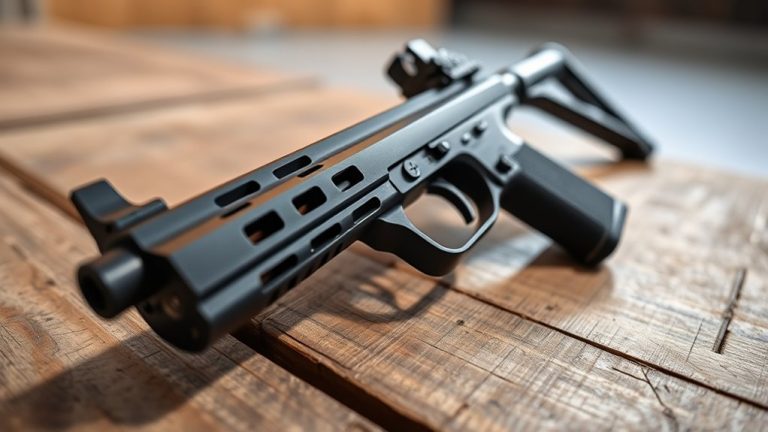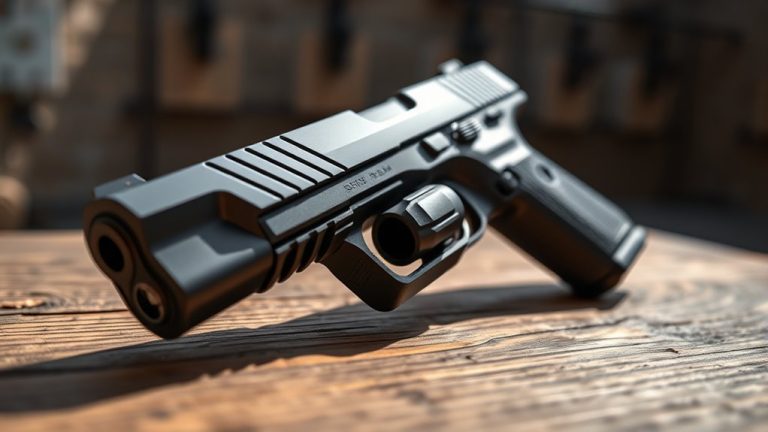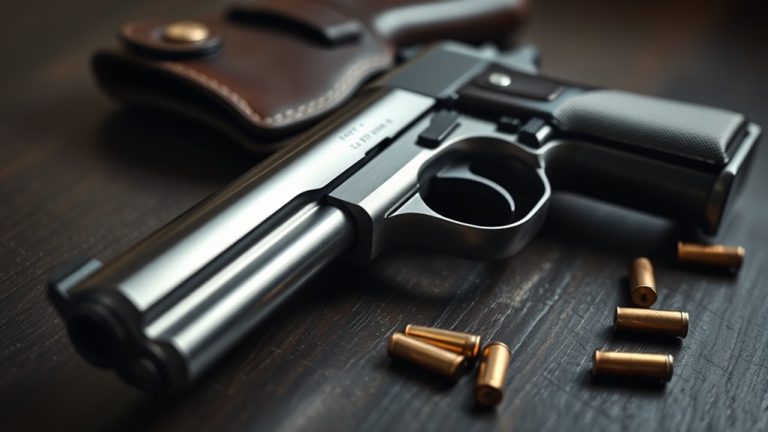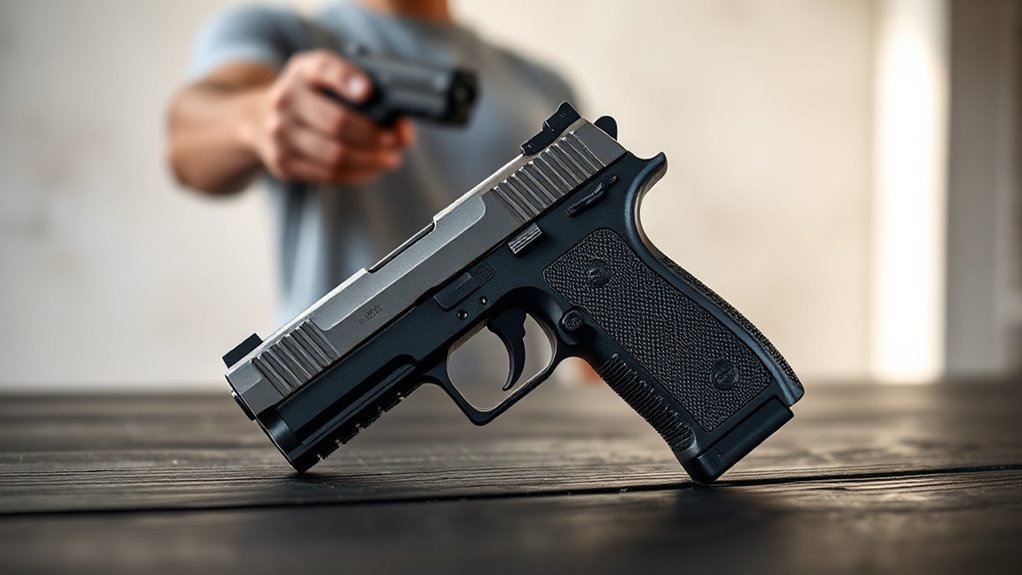
What Is a 5.7 Pistol Good For in Self-Defense?
A 5.7 pistol is great for self-defense because it offers flat, fast ballistics with low recoil, letting you quickly follow up accurate shots under stress.
Its unique cartridge delivers high velocity, which helps with better penetration and controlled expansion.
You’ll also appreciate the high-capacity magazines, often holding 20+ rounds, so you stay equipped longer without frequent reloads.
This balance of power and control makes the 5.7 pistol effective in stopping threats while reducing the risk of over-penetration.
Plus, its lightweight design and manageable recoil mean you can handle it comfortably in high-pressure situations.
If you’re curious about how it stacks up in terms of accuracy, handling, or even pairing it with a carbine, there’s more insight ahead to help you understand why this pistol is a solid choice for personal defense.
Key Takeaways
- The 5.7 pistol offers flat, fast ballistics with low recoil for quick, accurate follow-up shots in home defense scenarios. It’s easy to handle, even if you’re not super experienced with firearms.
- High-capacity magazines (20+ rounds) mean you get more shots before needing to reload. That’s a big advantage when you want to maintain your defensive stance without interruptions.
- Its compact size strikes a nice balance between power and shootability. This makes it great for close-quarters situations while still allowing for controlled, precise shots.
- The cartridge’s fragmentation causes effective wound disruption but with less risk of over-penetration compared to traditional expanding rounds. So, it’s safer for use in home environments where bystanders might be nearby.
- Plus, the accuracy at typical defensive ranges is top-notch. It rivals or even beats many 9mm pistols, giving you confidence that you can reliably stop a threat when it matters most.
Why Choose a 5.7 Pistol for Home Defense?
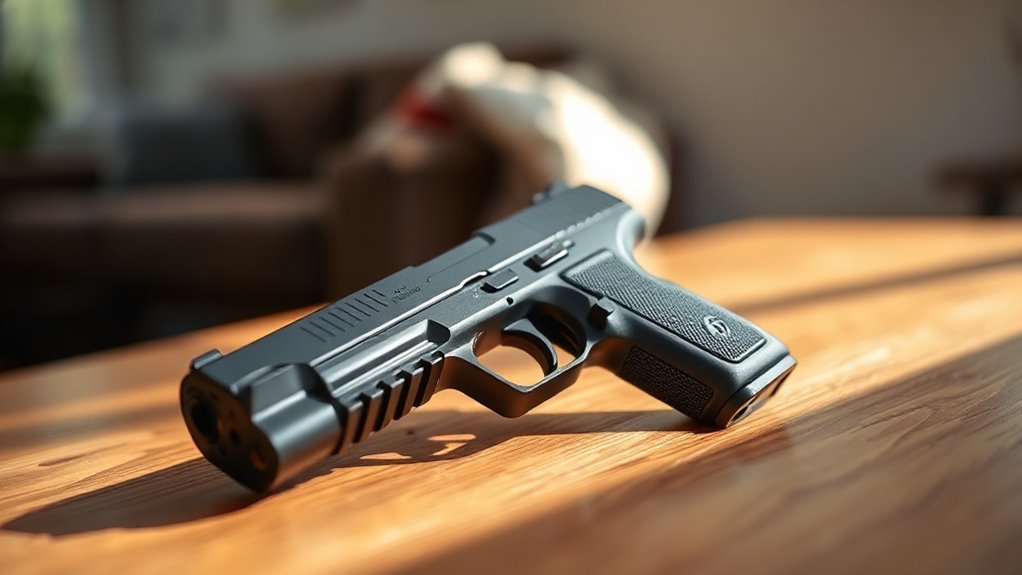
When you choose a 5.7 pistol for home defense, you get a combination of flat, fast ballistics and low recoil that makes quick, accurate follow-up shots easier—especially with high-capacity magazines often holding 20 or more rounds.
A 5.7 pistol offers flat, fast ballistics and low recoil for swift, precise follow-up shots.
This makes it an excellent option for personal defense, where reliability and precision matter most. You’ll find it easy to shoot, even under stress, thanks to its controllable recoil and excellent accuracy.
Plus, its performance rivals that of some carbines in a more compact, pistol-sized package. Though often praised for home defense, the 5.7’s size and handling also lend themselves well to concealed carry.
It’s a versatile choice that balances power, capacity, and shootability, making it a smart pick when you need a dependable self-defense tool.
Why Are 5.7 Pistols Easy to Control?
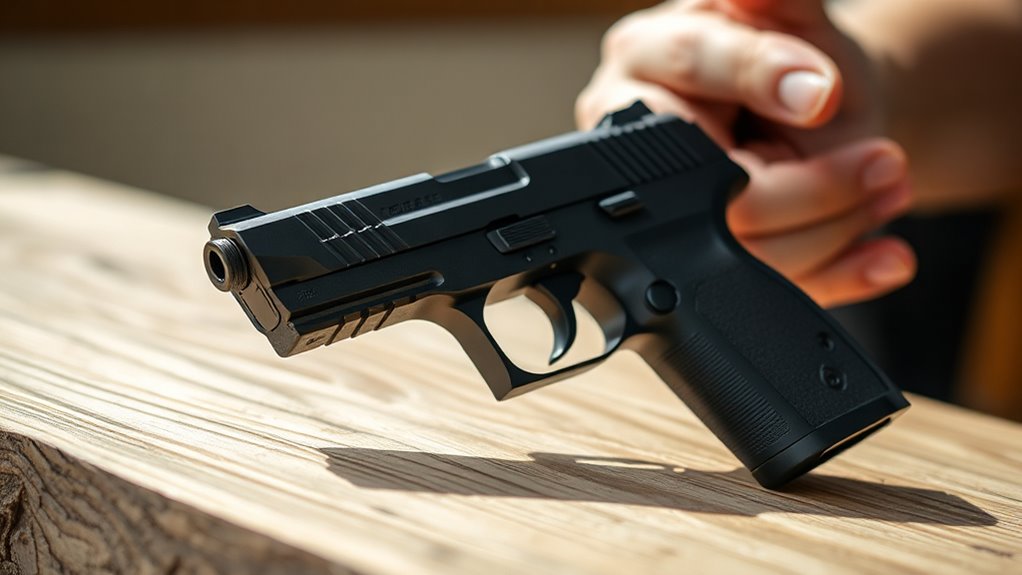
The 5.7 pistol’s reputation for easy handling builds directly on its design features that prioritize shootability. You’ll notice the 5.7×28mm round’s small recoil impulse lets you stay on target for fast follow-up shots, unlike many higher-recoil 9mm pistols.
This new product’s practical handling means you can make sure each shot is controlled, even with compact models. While the muzzle blast is noticeable, recoil stays manageable, helping you maintain accuracy without heavy compensation.
Plus, with high-capacity magazines—often 20 rounds—you can keep engaging targets longer with less disruption between shots. Test data shows tight accuracy groups at 25 yards, proving you can confidently control the pistol and maximize its precision in self-defense situations.
How Does 5.7 Pistol Ammo Balance Penetration and Expansion?
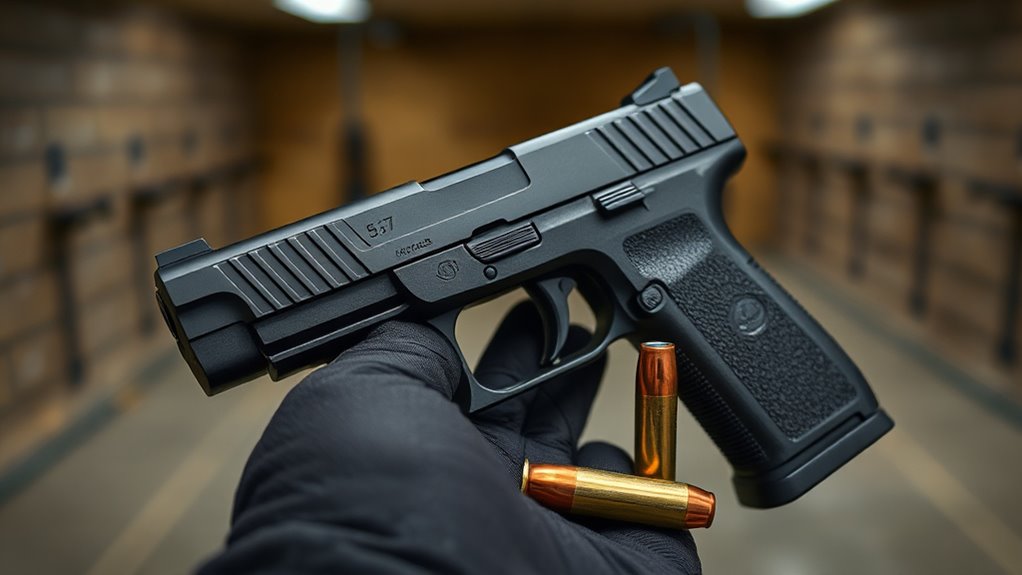
You want ammo that strikes the right balance between penetration and expansion to stop a threat effectively without over-penetrating. The 5.7 pistol rounds achieve this by fragmenting at controlled depths, creating consistent wound channels while limiting how far they travel.
Understanding this tradeoff helps you pick the best load for reliable terminal performance in self-defense. It’s all about finding that sweet spot where the round does its job without going too far.
Penetration Versus Expansion
In balancing penetration and expansion, 5.7 pistol ammo relies on small, high-velocity bullets that fragment rather than mushroom. Unlike larger calibers that expand by increasing diameter, 5.7 rounds create wound channels by breaking apart inside the target. They typically fragment around 8 to 12 inches in ballistic tests.
This fragmentation delivers effective tissue disruption without excessive penetration, which often stays shallower than 9mm ball ammo. Keep in mind, penetration depth varies with velocity—pistols produce less penetration than carbines due to lower speeds.
Terminal Performance Tradeoffs
Although 5.7 pistol ammo doesn’t penetrate as deeply as traditional 9mm rounds, it makes up for that by releasing energy quickly through controlled fragmentation. This tradeoff helps reduce the risk of overpenetration.
You get solid stopping power within about 8–12 inches in pistol barrels. Barrel length also plays a role here—carbines push velocity higher and slightly extend how deep the fragmentation goes.
When you compare that to 9mm, which tends to penetrate roughly 16–21 inches before expanding, the 5.7 favors earlier energy transfer over creating deep wound channels. For self-defense, this means you get consistent, controlled penetration that stops threats without putting bystanders at unnecessary risk.
| Ammo Type | Penetration Depth (inches) |
|---|---|
| 5.7 Pistol | 8–12 |
| 5.7 Carbine | 8–14 |
| 9mm Pistol | 16–21 |
| 9mm Expansion Diameter | 0.50–0.58 in |
How Accurate Are 5.7 Pistols at Defensive Ranges?
When you consider defensive shooting distances, 5.7 pistols deliver impressive accuracy that rivals or even surpasses many 9mm options. For example, a Smith & Wesson M&P 5.7 posted groups around 2.0 inches at 25 yards with Fiocchi 40-grain ammo—practical for self-defense.
The Ruger LC carbine with the same load tightened groups to about 0.8 inches at 25 yards, showing how barrel length boosts precision. Compared to 9mm pistols like the SIG P210, which averaged 1.75 inches at 25 yards, the 5.7 holds its own or does better.
Why Does Magazine Capacity Matter in 5.7 Pistols?
You’ll appreciate that 5.7 pistols often hold 20 rounds, giving you more shots before needing to reload. This high capacity lets you stay in the fight longer while keeping reloads quick and manageable.
Plus, their lighter recoil means carrying extra rounds won’t weigh you down during self-defense situations. It’s a real advantage when every shot counts and you want to stay ready without feeling bogged down.
High Round Count Advantage
Because 5.7 pistols typically come with magazines holding 20 or more rounds, they give you substantially more chances to land follow-up shots without pausing to reload.
This advantage is vital in self-defense, where one shot may not stop a threat immediately. Having extra rounds reduces the pressure and risk during a critical encounter.
Compared to typical 9mm pistols with smaller magazines, the 5.7 lets you engage longer before needing to reload. Plus, its low recoil aids quick, accurate follow-ups.
| Pistol Model | Magazine Capacity | Follow-up Shots Possible |
|---|---|---|
| 5.7 Pistol (Ruger LC) | 20 rounds | High |
| S&W M&P 5.7 | 20 rounds | High |
| Standard 9mm | 15 rounds | Moderate |
| Compact 9mm | 10 rounds | Low |
| Extended 5.7 Mag | 20 rounds | Very High |
Reload Speed Benefits
Having a high magazine capacity not only gives you more shots before reloading but also speeds up your overall reload process. With common 20-round magazines—and even extended options—you’ll reload less often during rapid engagements, keeping your focus on the target.
In self-defense, especially at close range, this really matters. Fewer reload interruptions mean you can deliver follow-up shots quickly under stress. The 5.7’s low recoil lets you move between threats faster, so maintaining time-on-target without frequent reloads is a real advantage.
Plus, with reliable ammo like Fiocchi 5.7 loads, you reduce the chance of malfunctions during those critical moments. Fewer reload cycles mean you spend less time fumbling with magazines and more time defending yourself effectively.
Carry Weight Considerations
Magazine capacity plays a significant role in how you manage carry weight with a 5.7 pistol. Because these pistols often hold 20-round magazines, you carry more shots per reload without adding bulk.
This means you can carry fewer spare magazines, reducing the overall weight on your body. Compared to many 9mm pistols, a single 5.7 magazine offers roughly twice the capacity. So, you maintain a similar ammunition reserve but with less total weight.
The lighter, high-velocity rounds also help keep recoil manageable. But it’s the reduced reload frequency that really lightens your load.
Which 5.7 Pistols Offer the Best Reliability and Handling?
When you’re choosing a 5.7 pistol for self-defense, reliability and handling should top your list. The S&W M&P 5.7 stands out as the best pistol option, offering tight groups around 2.0–2.2 inches at 25 yards paired with Fiocchi ammo. This combination is noted for superb accuracy and failsafe reliability.
Meanwhile, the Ruger LC carbine shines in handling and accuracy but keep in mind—it’s a carbine, not a pistol. For dependable self-defense use, stick with the S&W M&P 5.7 and Fiocchi factory loads for the most consistent performance.
| Model | Group Size (25 yd) | Notes |
|---|---|---|
| S&W M&P 5.7 | 2.0–2.2 in | Superb accuracy, reliable |
| Ruger LC Carbine | 0.8 in (40-gr) | Excellent handling, carbine |
| Fiocchi Ammo | N/A | Best factory ammo for 5.7 |
How Does the 5.7 Pistol Compare to 9mm in Recoil and Noise?
How does shooting a 5.7 pistol feel compared to a 9mm? You’ll notice the 5.7 recoils less, making it easier to control and faster to get back on target.
Despite its small size, the 5.7 round moves at a much higher velocity—over 1800 fps in many handguns—so you get that flat shooting performance without the typical 9mm’s kick.
However, this comes at a cost: the 5.7 pistol is noticeably louder. The high-pressure gas propelling the tiny projectile creates a blast that’s often described as “magnum loud,” louder than most 9mms.
How to Pair Your 5.7 Pistol With a Carbine for Defense
Although carrying both a 5.7 pistol and carbine might seem like extra gear, pairing them offers a seamless defense strategy by using the same caliber and magazines.
This setup lets you reload quickly under stress without switching ammo types, guaranteeing smooth handoffs.
The consistent performance of Fiocchi 5.7 loads between both platforms supports reliable terminal effects.
You can stage your carbine for longer-range shots while keeping the pistol ready for immediate defense, benefiting from modest recoil and good control on each.
Here’s why pairing them works well:
- Same magazines and ammo simplify logistics and speed reloads.
- Consistent load performance ensures predictable terminal results.
- The carbine extends your effective range beyond the pistol.
- Both offer manageable recoil for accurate follow-up shots.
Frequently Asked Questions
Can 5.7 Be Used for Self-Defense?
Yes, you can use a 5.7 pistol for self-defense. It offers high capacity, low recoil, and reliable performance when paired with proper defensive ammo.
This gives you accurate shots and effective wound ballistics for personal protection. So, it’s definitely a solid choice if you’re looking for something dependable.
Is 5.7 More Lethal Than 9mm?
You’re not going to find 5.7 outright more lethal than 9mm; it fragments earlier with less penetration.
You’ll want to focus on shot placement and penetration depth for effective self-defense, not just raw velocity or fragmentation.
What Caliber Is a 5.7 Equivalent To?
Don’t think 5.7 equals .223; it’s closer to 9mm in performance. You’ll find its penetration and fragmentation sit between 9mm and smaller calibers, making it a unique option rather than a direct replacement for common rounds.
It’s kind of in a class of its own, really. So, if you’re comparing calibers, 5.7 doesn’t neatly line up with what you might expect. Instead, it offers something a bit different in terms of how it performs.
Does 5.7 Actually Penetrate Body Armor?
Yes, the 5.7 can penetrate some soft body armor, but it really depends on the exact armor type, bullet design, and velocity.
Also, your pistol’s shorter barrel might reduce penetration compared to what you’d get with carbine velocities. So, results can vary quite a bit.
Conclusion
Choosing a 5.7 pistol for self-defense puts a sleek, precise arrow in your quiver—light in recoil but sharp in impact. It’s easy to control, packs a punch that balances power and safety, and offers plenty of rounds when you need them most.
Like a well-tuned dance partner, it moves with you smoothly, making every shot count. When seconds matter, this pistol is your reliable ally, ready to protect with confidence and grace.
In self-defense situations, the 5.7 pistol shines because it combines accuracy, manageable recoil, and a high-capacity magazine. This means you can respond quickly and effectively under pressure without sacrificing control. Whether you’re a seasoned shooter or new to handguns, its design makes it approachable and dependable. Ultimately, a 5.7 pistol is a smart choice for those seeking a lightweight, powerful, and reliable firearm to defend themselves with confidence.