Does Your Pistol Safety Work and How to Use It
Your pistol safety is designed to prevent accidental discharges by blocking the trigger or firing pin until you intentionally disengage it. Understanding how your pistol safety works is crucial for every gun owner. It’s your first line of defense against unintentional firing, helping keep you and those around you safe.
To guarantee it works, identify the type—manual, grip, or trigger safety—and practice engaging and disengaging it smoothly every time you handle your firearm.
Always maintain proper grip and trigger discipline alongside the safety.
Mastering how your pistol safety interacts with the firing mechanism is key to safe use and reliable operation. Keep exploring to enhance your safety skills further. Remember, practice makes perfect when it comes to safe firearm handling.
Key Takeaways
- Test your pistol safety by confirming it blocks the trigger or firing pin until fully disengaged. This way, you know it’s doing its job.
- Identify your pistol’s safety type—manual, trigger, or grip. Understanding this helps you use it properly and stay safe.
- Engage manual safeties firmly. Only disengage them when you’re ready to fire to keep everything working reliably.
- Maintain a proper grip and practice good trigger discipline. This keeps your safeties effective and helps prevent accidental discharge.
- Make a habit of regularly practicing with your safety. It builds muscle memory and ensures you handle your pistol safely every time.
How Pistol Safeties Work

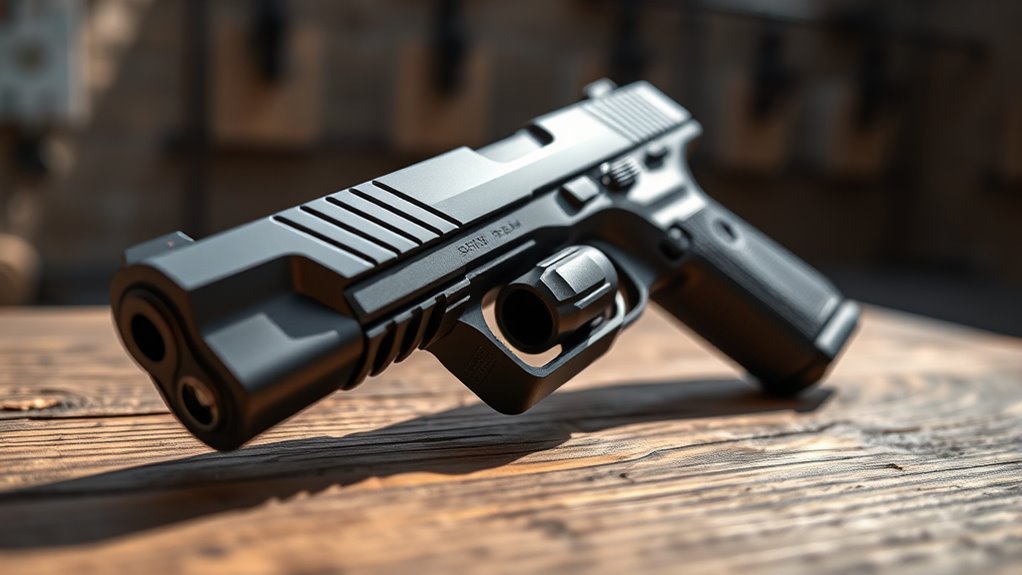
Although pistol safeties vary in design, they all aim to prevent accidental discharges by blocking the trigger or firing pin until you intentionally disengage them. You’ll find external safeties like manual safeties and grip safeties that require your deliberate action to enable or disable.
Internal safeties, such as the firing pin block, automatically stop the firing mechanism from working if the pistol is dropped or mishandled. Trigger safeties only let the gun fire when you fully press the trigger, preventing accidental discharge from bumps or snags.
Understanding how these safeties interact with the trigger and firing mechanism is essential. That way, you can rely on them to keep your pistol safe and only fire when you want it to.
How to Use Your Pistol Safety Correctly

Knowing how your pistol’s safety functions gives you the foundation to use it correctly every time you handle your firearm. First, identify if your pistol has a manual safety, trigger safety, or grip safety, and understand its operation.
Always engage the manual safety via the safety lever when preparing to fire, but make sure to disengage the safety immediately before shooting. With grip safeties, maintain a firm grip to keep it disengaged, while trigger safeties require fully pressing the trigger to fire. Avoid partial safety positions.
Practice safe handling to build muscle memory for engaging and disengaging safety features smoothly. Combine this with solid trigger discipline to prevent accidental discharge and guarantee firearm safety. This way, your use of the pistol’s safety will be both effective and reliable.
Frequently Asked Questions
How Does the Safety on a Pistol Work?
The safety on your pistol blocks the trigger or firing mechanism, preventing accidental shots. You either manually engage it or rely on automatic safeties that only disengage when you firmly pull the trigger to fire.
What Are the Three Basic Rules of Gun Safety?
You always treat every firearm as loaded, never point it at anything you don’t intend to shoot, and keep your finger off the trigger until you’re ready to fire. Following these rules keeps you and others safe.
What Are the 7 Rules of Gun Safety?
Imagine holding a loaded pistol safely. You’ll always treat it as loaded, point it safely, know your target and beyond, keep your finger off the trigger, unload when not in use, store securely, and use safety devices properly.
What Are the 12 Golden Rules of Gun Safety?
You follow the 12 golden rules by always treating guns as loaded, pointing muzzles safely, keeping fingers off triggers until ready, knowing your target and beyond, unloading when not in use, storing securely, and practicing constant safety awareness.
Conclusion
Now that you know how your pistol safety works and how to use it properly, you can handle your firearm more confidently and responsibly.
Imagine Sarah, who always engaged her safety until she was ready to shoot. This simple habit prevented a dangerous accident during a tense moment.
By making the safety switch part of your routine, you protect yourself and others. Remember, a working safety isn’t just a feature; it’s your lifeline.
Using your pistol safety wisely every time is key to safe firearm handling. It’s not just about the mechanism—it’s about creating a habit that keeps you and those around you safe.
So, always check that your pistol safety works before handling your gun, and make engaging it a natural part of your process. This way, you’re practicing responsible gun ownership and preventing accidents before they happen.