How Loud Is a Pistol Shrimp?
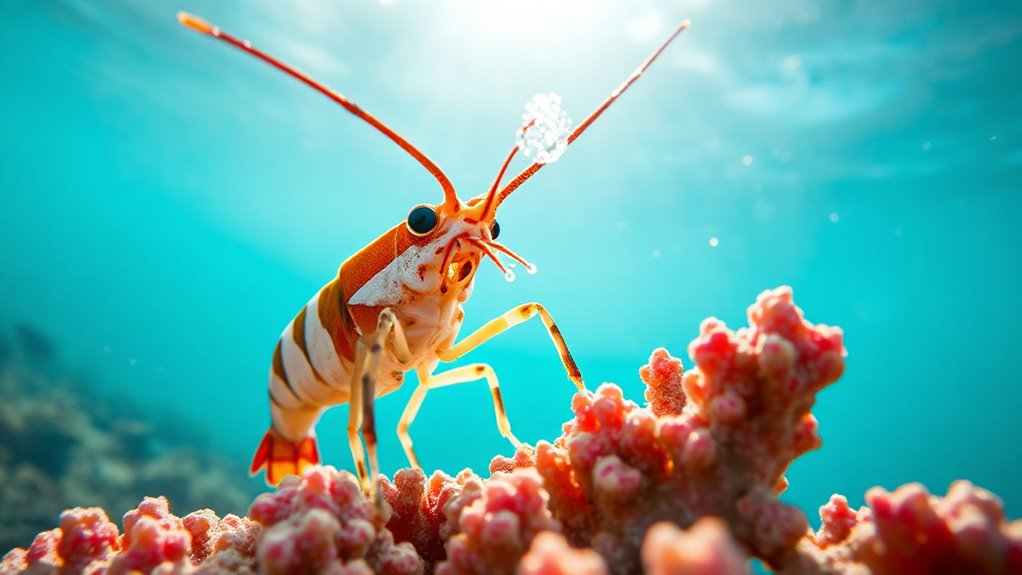
You might not expect a tiny pistol shrimp to pack such a punch, but its snap can reach over 220 decibels underwater—that’s one of the loudest natural sounds relative to its size.
This intense noise comes from a rapid claw snap that creates a cavitation bubble, which bursts and amplifies the sound.
These snaps can stun prey and even disrupt underwater equipment.
Curious about how this tiny creature achieves such power and its effects beneath the waves?
It’s pretty amazing how something so small can make such a big impact underwater!
Key Takeaways
- Pistol shrimp snaps reach sound levels around 220 decibels re 1 µPa at just 4 cm distance. The loudness actually comes from the cavitation bubble collapse, not just the mechanical claw impact.
- The snapping sound can produce pressure waves near 80 kPa at close range. It’s pretty impressive for such a tiny creature!
- It is one of the loudest natural underwater noises relative to the shrimp’s size. These snaps are sharp, brief pops that can disrupt underwater communication and sonar.
What Makes the Pistol Shrimp’s Snap So Unique?
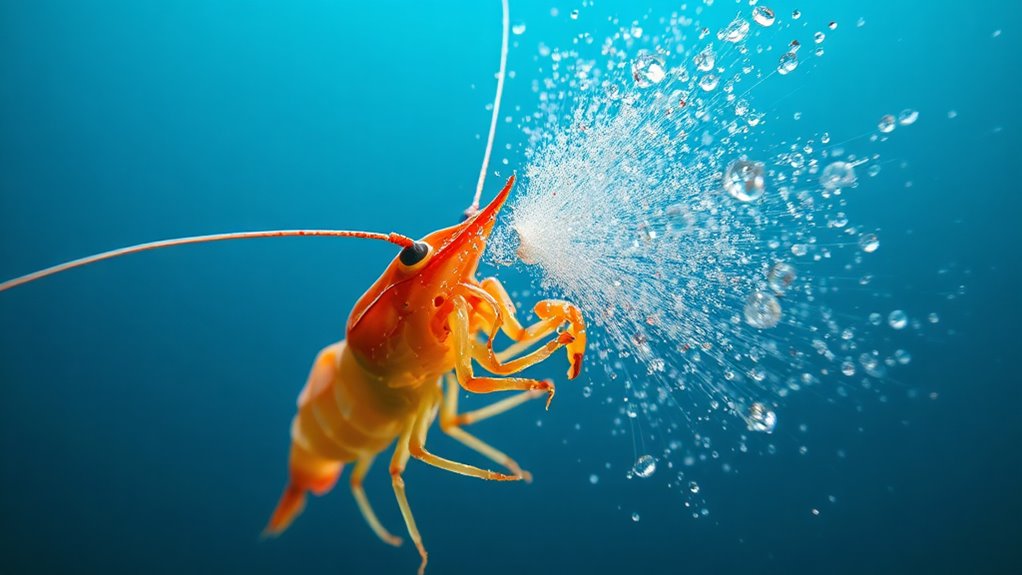
While many marine creatures produce sounds, the pistol shrimp’s snap stands out because it doesn’t just close its claw like a pincer—it releases a snapping hammer with a sudden, powerful snap. You’ll find this snap generates a cavitation bubble that bursts, creating a brief but incredibly loud pop.
This sound can reach a staggering 220 decibels relative to 1 µPa, or about 80 kPa just 4 centimeters away, making it one of the loudest marine sounds for its size. You’ll notice the shrimp uses this intense pop to stun prey, giving it a chance to dismember and eat without a fight.
The rapid, crackling snaps are so distinct, they can be heard clearly even at very close range, setting the pistol shrimp apart underwater. It’s pretty amazing how such a small creature can make such a big noise!
How Does the Cavitation Bubble Amplify the Pistol Shrimp Snap?
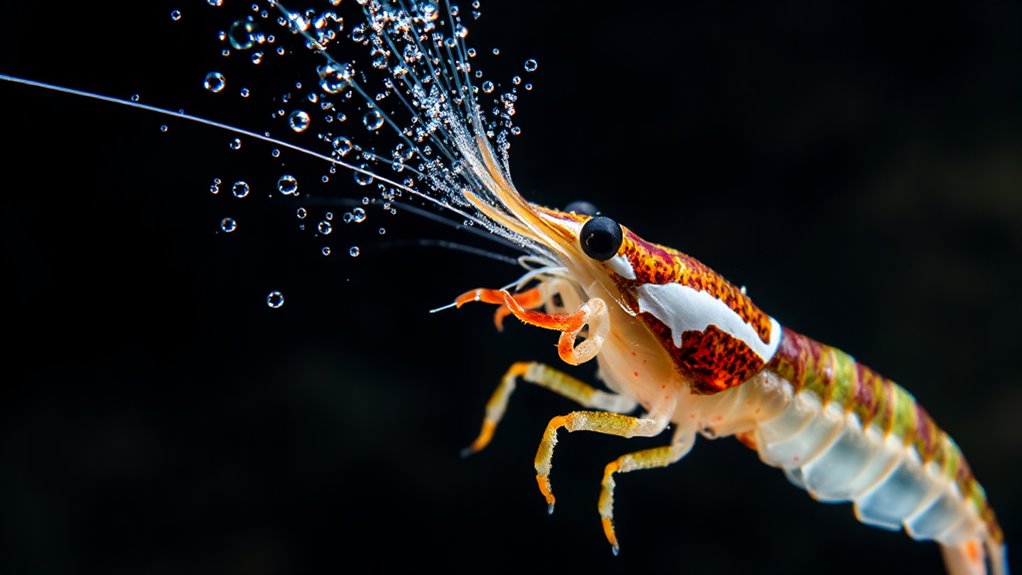
When the pistol shrimp snaps its claw shut, it creates a cavitation bubble by rapidly changing water pressure. This bubble then collapses, concentrating energy into a powerful pressure pulse that amplifies the snap’s sound.
You can think of the bubble as a natural amplifier, turning a quick mechanical snap into an incredibly loud pop. It’s pretty amazing how such a tiny creature can produce such a big noise!
Cavitation Bubble Formation
Because the pistol shrimp’s claw snaps shut so rapidly, it shoots water at high speed, creating a low-pressure zone that triggers cavitation—forming a vapor bubble. This bubble grows quickly, then violently collapses, concentrating enormous energy into a tiny space.
You might think the snap’s sound comes from the claw hitting, but it’s the bubble’s collapse that produces the sharp, intense pop reaching around 220 dB near the source. This shock pulse stuns nearby prey, allowing the shrimp to capture it effortlessly.
The cavitation process repeats with every snap, producing localized but extremely loud acoustic pulses relative to the shrimp’s size. So, the cavitation bubble isn’t just a side effect—it’s key to the pistol shrimp’s powerful snap and hunting success.
Sound Amplification Mechanism
At the heart of the pistol shrimp’s powerful snap lies the cavitation bubble, which acts like a natural amplifier for the sound. When the shrimp’s claw snaps shut, a built-in hammer forces fluid out so quickly that a cavitation bubble forms at the claw tip.
This bubble rapidly collapses, concentrating energy into a short, intense pulse instead of a drawn-out mechanical noise. The snap can reach around 220 dB re 1 μPa at 4 cm, reflecting the enormous pressure generated—about 80 kPa.
Because the sound comes mainly from the bubble’s near-instant collapse, it’s highly directional and strongest close to the claw. This intense, sudden pulse delivers a mechanical shock that can stun prey, showing how the cavitation bubble amplifies the snap’s impact.
How Loud Is a Pistol Shrimp’s Snap Compared to Other Marine Sounds?
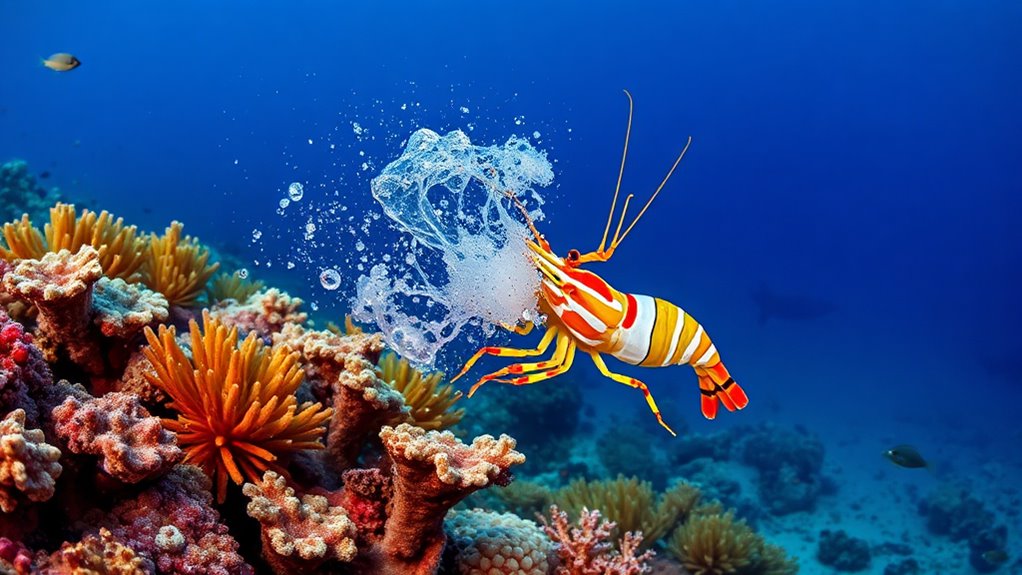
Although the ocean is filled with a variety of sounds, you’ll find that the pistol shrimp’s snap stands out as one of the loudest natural underwater noises. Producing source levels around 220 dB re 1 µPa, its snap creates an intense, sharp pop caused by a cavitation bubble.
Compared to many marine sounds, this pop dominates shallow-water soundscapes and is one of the most common noises you’ll hear there. It’s so loud it can even break small glass jars in recording setups and stun prey near it.
Because of its intensity, the snap can overwhelm underwater communication and sonar signals, making it far more disruptive than quieter biological sounds. When you listen closely, the pistol shrimp’s snap truly commands attention underwater.
Where and When Are Pistol Shrimp Snaps Most Commonly Heard?
You’ll most often hear pistol shrimp snaps in shallow coastal waters like coral reefs, seagrass flats, and oyster beds where their sounds travel far. These snaps happen near active burrows and colonies, making certain spots louder than others.
While timing varies, their snaps are a regular part of the underwater soundscape in tropical and temperate regions. So, if you’re near these habitats, keep your ears open for those distinctive clicks!
Habitat Locations
In tropical and subtropical coastal waters worldwide, pistol shrimp snap frequently, creating a distinctive pop that fills shallow, sound-rich environments. You’ll most often hear their snaps around coral reefs, submerged seagrass flats, and oyster reefs, especially where dense colonies of shrimp build burrows.
These shallow habitats amplify their snaps, making pistol shrimp some of the most common natural crackling sounds nearshore. If you’re listening in coastal areas, the snaps remain audible to both humans and monitoring equipment due to effective sound propagation in shallow water.
To catch the most snapping action, focus on regions where dense burrow communities thrive. These habitats serve as hotspots for pistol shrimp activity, ensuring their sharp pops punctuate the underwater soundscape regularly throughout the day.
Peak Activity Times
Pistol shrimp snaps frequently dominate the soundscape in shallow coastal habitats like coral reefs, seagrass flats, and oyster reefs, especially where burrow colonies cluster. You’ll hear the most snaps in these nearshore, tropical or subtropical waters, not in deep open ocean.
Since pistol shrimp use snapping to stun prey, their activity peaks when small arthropods and zooplankton are most active. Sound travels well in shallow water, so daytime and nighttime cycles often enhance snapping audibility.
Here’s when and where you’ll find the most snaps:
- Around dense burrow colonies where shrimp snap repeatedly
- During periods with favorable sound propagation, like calm shallow water
- Times matching prey activity, often twilight or nighttime
Knowing this helps you pinpoint the best moments to listen for those signature pops. It’s pretty cool how timing and location come together to make those snaps stand out!
How Do Pistol Shrimp Use Their Loud Snap for Hunting and Defense?
When you encounter a snap so loud it can stun prey and send shockwaves underwater, you’re witnessing the pistol shrimp’s remarkable hunting tool. This shrimp uses its oversized claw like a hammer, snapping it shut to create a cavitation bubble that bursts with a deafening pop, reaching around 220 dB re 1 µPa.
The powerful shockwave stuns small prey nearby, making it easier for the shrimp to catch and eat them. But the snap isn’t just for hunting. When a threat nears their burrow, pistol shrimp fire off the same loud snap to defend themselves and warn others in their colony.
This crackling burst is so intense it can disrupt marine sounds, highlighting how crucial it is for both attack and defense. Pretty amazing, right? The pistol shrimp’s snap is truly a multipurpose tool in the underwater world.
How Does the Snap Affect Nearby Marine Life and Environments?
Because the shrimp’s snap generates a shockwave measuring around 220 dB re 1 µPa at close range, it doesn’t just stun prey—it can also impact nearby marine life and their habitats. When you’re near these snaps, you might notice how they physically affect small organisms and delicate structures, sometimes causing damage due to the intense pressure wave.
They can also interfere with communication and sonar signals used by other marine animals, potentially disrupting their behavior. Plus, these snaps contribute to a constant background noise in shallow waters, which influences how marine life perceives its environment.
Why Can Such a Tiny Shrimp Produce Sounds Over 220 Decibels?
Despite its tiny size, this shrimp packs a powerful punch thanks to its oversized claw that snaps shut with incredible speed. When it snaps, the claw’s “hammer” moves so fast it creates a cavitation bubble—tiny vapor pockets that form and collapse rapidly.
This bubble collapse releases an intense burst of energy, producing a sharp, pop-like sound that can reach over 220 decibels at just a few centimeters away. The combination of the mechanical snap and cavitation amplifies the sound far beyond what you’d expect from a 3–5 cm crustacean.
This snap is so forceful it can even stun prey. So, the shrimp’s unique claw design and the physics of cavitation let it loose one of the loudest sounds in the ocean relative to its size.
Why the Shrimp’s Snap Disrupts Underwater Recording and Sonar
The pistol shrimp’s snap doesn’t just stun prey—it also creates challenges for underwater recording and sonar systems. Its claw generates a cavitation bubble producing a sharp, intense pop reaching about 220 dB re 1 µPa. This extreme sound can easily overwhelm sensitive microphones and sonar devices.
When you’re trying to capture or interpret marine sounds, the shrimp’s snap can abruptly mask or saturate recordings by adding high-intensity bursts. It can also interfere with sonar by injecting strong, broadband pulses during listening periods.
Plus, it disrupts shallow coastal monitoring because snaps propagate well and occur frequently. These factors make it tough to get clear underwater audio or accurate sonar data in shrimp-populated habitats. The pistol shrimp’s snap is a natural but noisy obstacle you just can’t overlook.
Frequently Asked Questions
What Do Snapping Shrimp Eat?
You’ll find snapping shrimp eating small arthropods and zooplankton. They stun their prey with a powerful snap, then quickly dismember and eat the immobilized creatures before they can escape or recover.
It’s pretty amazing how they use that snap as a weapon. Once the prey is stunned, the shrimp wastes no time in finishing the job. They’re quick and efficient hunters!
What Kind of Shrimp Shoots an Air Bubble?
You see the pistol shrimp snap, you hear the bubble burst, you watch prey stunned—this shrimp shoots that air bubble.
Its oversized claw creates a cavitation bubble, delivering a powerful, precise strike under the sea.
How Intelligent Is a Shrimp?
You’d be surprised how intelligent a pistol shrimp is—they solve hunting challenges by timing their claw snaps precisely.
Their learned behavior and coordination with goby fish show functional intelligence beyond simple instinct. It’s pretty impressive when you think about it!
Is a Pistol Shrimp Louder Than a Sperm Whale?
Think of a pistol shrimp as a firecracker next to a sperm whale’s thunderclap—you’ll find the shrimp louder only if you’re inches away.
But the whale’s sound dominates over long distances and broader underwater areas.
Conclusion
When you hear the pistol shrimp’s snap, think of it as a tiny underwater thunderclap—a symbol of nature’s surprising power in the smallest forms. This shrimp’s loud click, louder than a jet engine underwater, reminds you that even the tiniest creatures can shake entire ecosystems.
It’s pretty wild to think that something so small can create such a massive noise. So next time you plunge into the ocean’s depths, remember: true strength often hides in the smallest snap, echoing far beyond what meets the eye.
The pistol shrimp’s snap is more than just a sound; it’s a reminder of nature’s incredible power and complexity. This tiny crustacean makes one of the loudest noises underwater, showing that even the smallest creatures can have a big impact on their environment. When you think about loudness in the ocean, the pistol shrimp stands out as a fascinating example of how nature uses sound in surprising ways.