How to Unload a Pistol in 3 Simple Steps
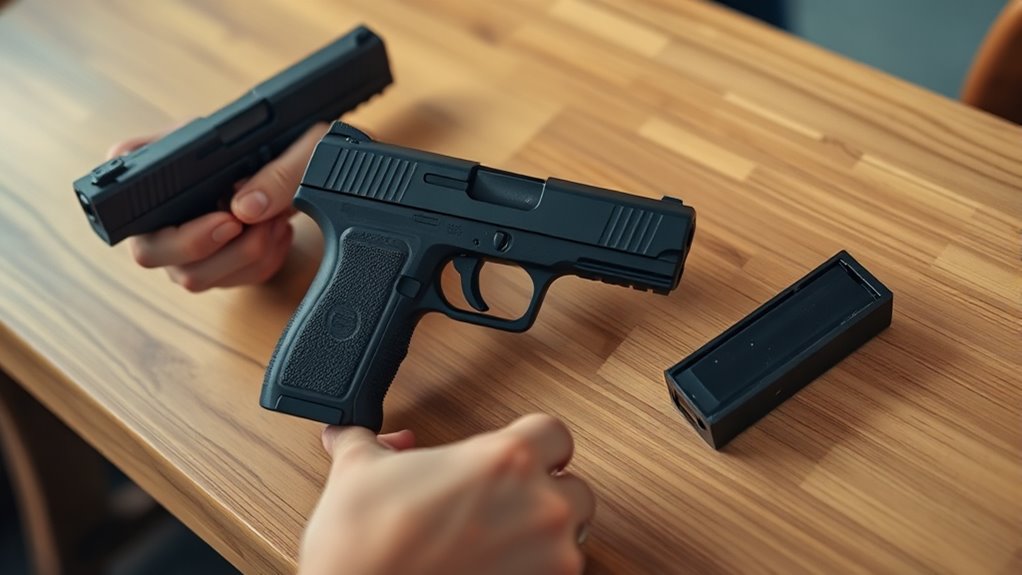
To unload a pistol in three simple steps, first keep the muzzle pointed in a safe direction and your finger off the trigger. Safety is the top priority whenever handling a firearm, so always stay alert. Next, press the magazine release and remove the magazine carefully while maintaining control.
Once the magazine is out, lock the slide open. Then, visually and physically inspect the chamber to confirm it’s empty before storing the pistol safely.
These straightforward steps help ensure your safety and proper handling every time you unload your pistol.
If you want to master safe unloading and troubleshooting, there’s more useful guidance ahead. Taking the time to learn and practice these basics will build your confidence and keep you safe.
Key Takeaways
- Keep the pistol pointed in a safe direction and your finger off the trigger before starting to unload.
- Press the magazine release and remove the magazine while maintaining muzzle discipline.
- Lock the slide open to visually and physically check and confirm the chamber is empty.
- Perform a thorough inspection of the feed area and chamber for any obstructions or rounds.
- Store the unloaded pistol securely, separate from ammunition, after confirming all parts are clear.
Keep Your Pistol Pointed Safely When Unloading
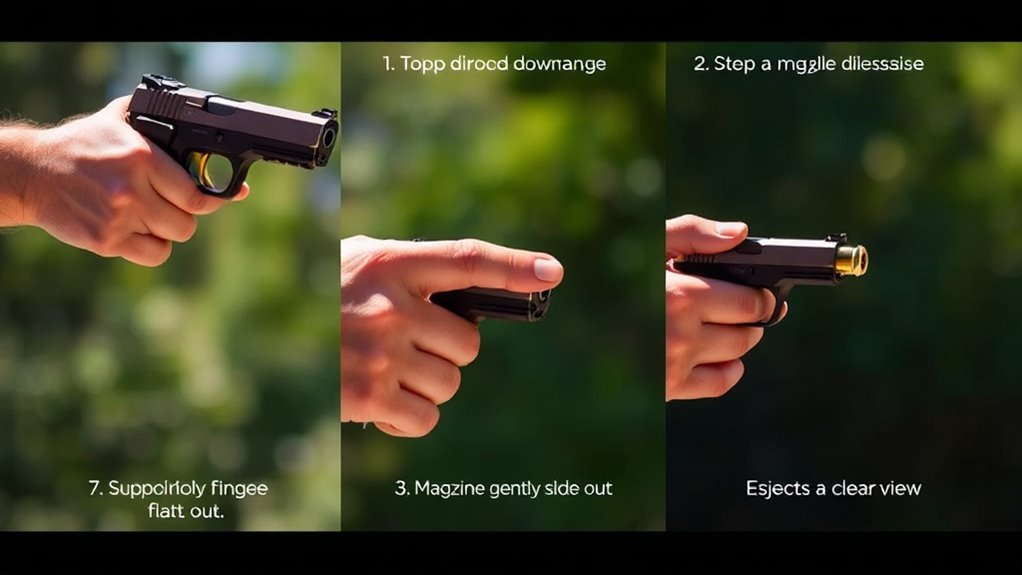
Before you begin unloading your pistol, always keep it pointed in a safe direction—usually toward the ground—to prevent injury if a round is chambered. You want a stable stance and firm control over the muzzle, making sure it never crosses your body or others nearby.
Only start unloading when your grip and muzzle discipline are secure, because losing control often leads to unsafe handling. If you feel resistance or hear unusual sounds, stop immediately and maintain muzzle control instead of forcing the action.
These precautions help you avoid accidents while removing the magazine and manipulating the slide or charging handle. Keeping your pistol pointed safely is the foundation of unloading correctly and protecting yourself and those around you.
Check the Firearm Visually and Physically
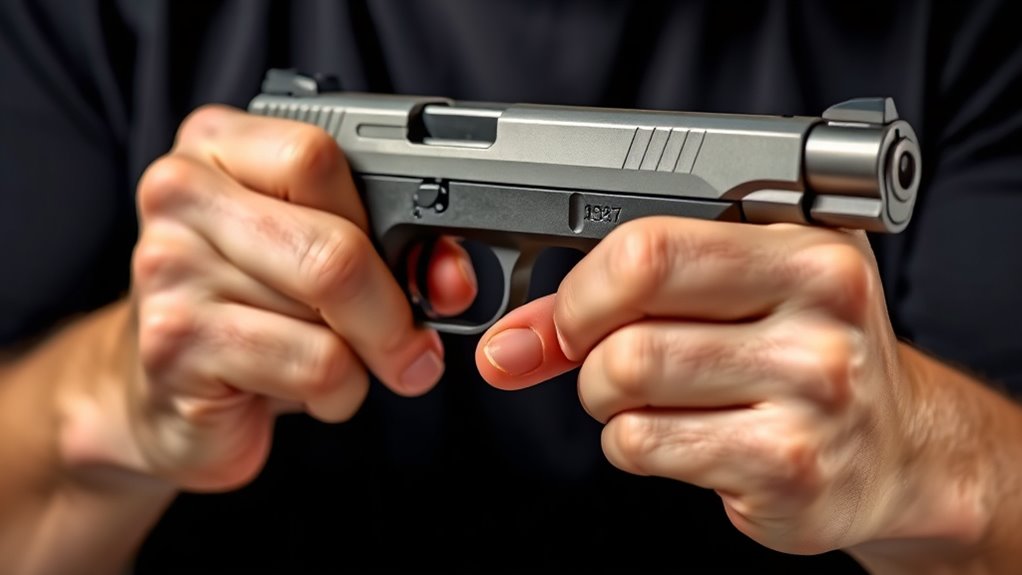
Once you’ve secured a secure hold and kept the pistol pointed away, the next step is to verify that it’s completely unloaded. Start by visually checking the chamber through the ejection port or chamber indicator to ensure no cartridge is present.
After securing a firm grip and pointing the pistol safely, visually check the chamber for any cartridges.
Then, physically confirm by removing the magazine and inspecting the chamber again. If your pistol allows, lock the slide open to get a clear view of the chamber and feed path.
Remember to keep your finger off the trigger while inspecting. Look carefully for any rounds in the chamber or magazine well.
Also, repeat your visual and physical checks after any slide or magazine manipulation. These steps help ensure that you handle your pistol safely and avoid accidental discharge.
Remove Magazine and Lock Slide Open When Unloading
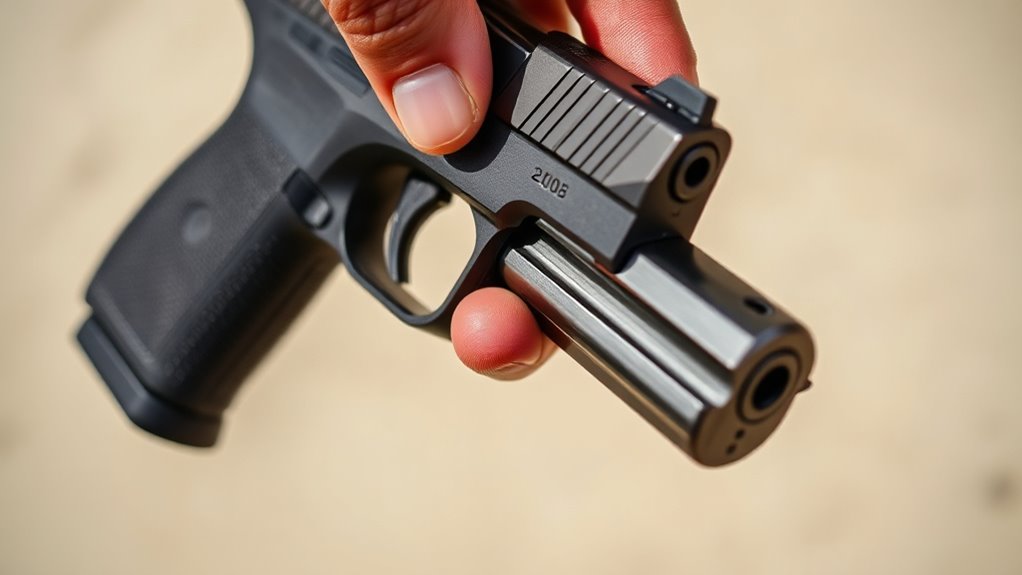
Start by pressing the magazine release and carefully removing the magazine. Make sure to keep the muzzle pointed in a safe direction throughout the process.
Next, lock the slide open to ensure the chamber is clear and visible. Always keep your fingers off the trigger during these steps to maintain safety. Safety first, right? Just take it slow and steady.
Magazine Removal Safety
Keep your pistol pointed in a safe direction as you remove the magazine using your strong hand. This helps prevent accidental trigger movement.
Once the magazine is out, immediately lock the slide open—this action keeps the firearm safe and ready for inspection.
Make sure to follow these key safety steps:
- Lock the slide using the slide stop or cocking handle, according to your pistol’s design.
- Visually and physically check the chamber to ensure it’s empty.
- If available, use the chamber indicator window as an extra confirmation that no round is present.
Only after removing the magazine and locking the slide open should you proceed with any further handling. This way, you maintain control and reduce the risk of accidental discharge.
Slide Lock Procedures
While removing the magazine, press the release and pull it free to make sure no rounds remain in the pistol. Next, pull the slide fully to the rear and engage the slide stop or slide-lock lever to lock the slide open. This keeps the chamber visibly clear.
Always visually and physically inspect the chamber through the ejection port to confirm it’s empty before continuing. If the slide won’t stay locked open, double-check that the magazine is fully removed and the chamber is clear.
Use this slide-lock position as a verification step and to maintain control of the pistol’s action during unloading. Remember, keeping the slide locked open ensures safe handling and helps prevent accidental discharge while you finish unloading.
Inspect the Chamber and Feed Area
Now that the magazine is removed and the slide is locked open, take a close look into the chamber through the ejection port to confirm it’s empty.
Check the feed area carefully to make sure no rounds or debris are stuck where a cartridge would move next. Use a light or your finger if needed to be certain there’s no ammunition before moving on.
Visual Chamber Check
Before you proceed, you’ll want to visually inspect the chamber and feed area by looking directly into the ejection port or slide opening to confirm whether a cartridge is present. This step helps ensure you’re confident about the pistol’s condition before moving on.
Focus on these key points:
- Check for any cartridge in the chamber and verify the feed area to ensure no rounds are being stuck or partially seated.
- Look for visible obstructions, debris, or unusual markings around the chamber mouth that might interfere with operation.
- Compare what you see with your pistol’s expected layout to avoid misinterpreting shadows or shapes.
If your view isn’t clear, don’t guess—adjust your position until you get a definitive look. It’s always better to be certain than to assume.
Clear Feed Path
To ensure your pistol is fully safe to handle, take a close look into the chamber and feed path to confirm there are no cartridges, cases, or obstructions present. Begin by inspecting the chamber directly, checking the mouth and interior for any rounds, spent cases, or debris.
Next, examine the feed path carefully—look at the magazine lips and the area where cartridges rise toward the chamber. Watch for bent rounds, dirt, or anything that might hinder feeding.
If you suspect a problem, check underneath or at the forward part of the receiver where the next cartridge moves during feeding. Only when you see a clear, unobstructed chamber and feed path should you proceed with unloading to ensure your pistol is handled safely.
Confirm No Ammunition
After clearing the feed path, focus on confirming there’s no ammunition remaining in the pistol. Point the pistol in a safe direction and keep your finger off the trigger as you inspect.
Use the slide stop or locking feature if your pistol has one to hold the slide open for better visibility. Then, carefully:
- Visually check the chamber through the ejection port to ensure no cartridge or cartridge casing is present.
- Inspect the feed area, including the magazine well, for any loose rounds or cartridges that could be chambered.
When unsure, physically verify the chamber and feed area using the safe method recommended for your pistol model.
This thorough inspection ensures your pistol is completely unloaded and safe to handle.
Release the Action and Make Sure the Pistol Is Empty
Once you’ve made certain the manual safety is on or verified the pistol is pointing in a safe direction, go ahead and let go of the slide or bolt using the slide stop or charging handle. This will reveal the chamber.
Now, pull the slide or bolt back fully and hold it there. This lets you visually and physically check for any rounds inside.
Use a flashlight to carefully inspect the chamber and feed path. If your pistol has a magazine, remove it and confirm the magazine well is empty.
Don’t just rely on touch—make sure to look closely for any cartridges in the chamber, ejection port, or chamber mouth. If you don’t clearly see an empty chamber, keep unloading and re-check until you’re absolutely sure the pistol is completely empty.
Store the Firearm Safely After Unloading
Secure your unloaded pistol in a locked gun safe or lockbox right away to keep it out of unauthorized hands. After confirming your pistol is empty, store it separately from ammunition, preferably in another locked container. This reduces the risk of accidental loading.
Before putting your pistol away, apply a light coat of gun oil or anti-rust protectant to the metal surfaces to prevent corrosion. Also, follow the manufacturer’s instructions for storing the action to avoid any chance of a round being chambered later.
Keep keys or access codes secure and out of reach. It’s a good idea to use a dehumidifier or desiccant in the storage area to manage humidity.
Don’t forget to store ammunition separately from the firearm for added safety. These steps help ensure your pistol stays secure and well-maintained.
Avoid Common Mistakes When Unloading Your Pistol
Storing your unloaded pistol safely is only part of responsible firearm handling; knowing how to prevent common mistakes during the unloading process is just as important. First, always remove the magazine before anything else and keep your finger off the trigger to prevent accidental discharge.
Removing the magazine first and keeping your finger off the trigger are key steps in safe unloading.
Never omit the visual inspection—lock the slide back to check the chamber thoroughly. Don’t assume the pistol is unloaded just because you removed the magazine or completed a field strip.
Always treat the firearm as loaded until you’ve double-checked both the chamber and magazine well. Avoid pointing the muzzle in unsafe directions and never handle the pistol as if it’s clear without confirming it.
Staying vigilant during unloading ensures your safety and those around you. It’s really about making those safe habits second nature.
Handle Malfunctions During Pistol Unloading
Although malfunctions during unloading are uncommon, you need to stay calm and keep the pistol pointed in a safe direction while you address any issues. First, always remove the magazine before troubleshooting to prevent accidental discharge.
If the slide won’t lock open, use only the manufacturer-recommended method to safely access the chamber without forcing parts. When you spot a stuck round or stoppage, clear it carefully and verify the chamber is empty by looking and, if needed, physically checking with a proper tool.
Remember to maintain muzzle discipline throughout the process. Also, avoid repeatedly cycling the action when clearing malfunctions.
If you can’t unload safely or confirm an empty chamber, stop and seek expert help. Safety comes first when handling malfunctions during unloading.
Frequently Asked Questions
What Types of Pistols Require Different Unloading Procedures?
Revolvers, single-action, and double-action pistols require different unloading steps. You’ll open the cylinder on revolvers, while semi-automatics need you to lock back the slide and remove the magazine before clearing the chamber safely.
It might sound a bit tricky at first, but once you get the hang of each type, it becomes second nature. Just remember, the key is to always make sure the firearm is completely unloaded before handling it further.
How Often Should I Practice Unloading My Pistol?
You should practice unloading your pistol consistently, ideally every time you handle it or at least once a month.
Ongoing practice helps build muscle memory and ensures you can do it safely and confidently under stress.
It might seem like a hassle, but keeping up with this routine really pays off when it counts.
Can I Unload a Pistol With One Hand Safely?
You can’t juggle fire safely—unloading a pistol with one hand isn’t recommended.
It’s best to use both hands for control and safety, ensuring you don’t accidentally release a round or lose grip during the process.
Better safe than sorry, right? Keep both hands on the gun whenever possible.
What Safety Gear Is Recommended When Unloading Firearms?
You should wear safety glasses to protect your eyes and hearing protection to guard against unexpected noise. Gloves can improve grip and prevent burns.
Always keep the firearm pointed in a safe direction while unloading. It’s just a smart habit to keep things safe for everyone around you.
How Do Environmental Conditions Affect Unloading a Pistol?
You’ll want to evaluate environmental conditions like rain or dust—they can cause your pistol to jam or misfire while unloading.
Don’t treat it like a medieval joust; stay calm, clean, and make sure a safe, clear space.
Conclusion
Now that you know how to unload your pistol safely, remember to keep it pointed in a safe direction. Always double-check the chamber and magazine to be sure.
Removing the magazine and locking the slide open helps guarantee the firearm is empty before storing it securely. Why take unnecessary risks when a few simple steps keep you and others safe?
Practice these habits every time. Unloading your pistol will become second nature—safe, quick, and worry-free. Following these pistol unloading steps not only protects you but also ensures responsible firearm handling. Stay safe and confident whenever you unload your pistol by making these simple actions part of your routine.