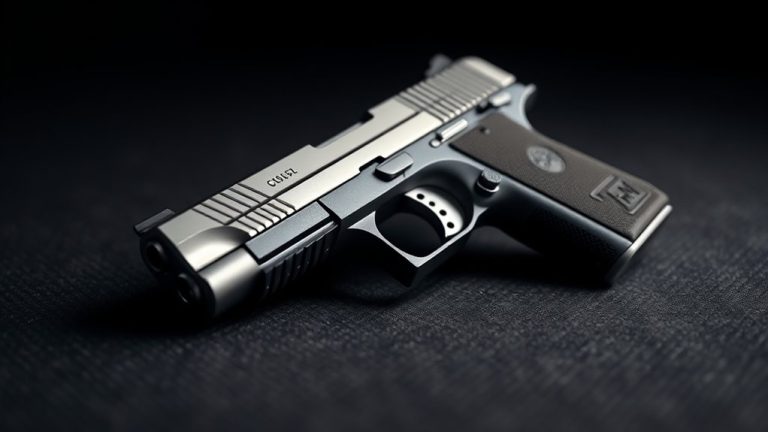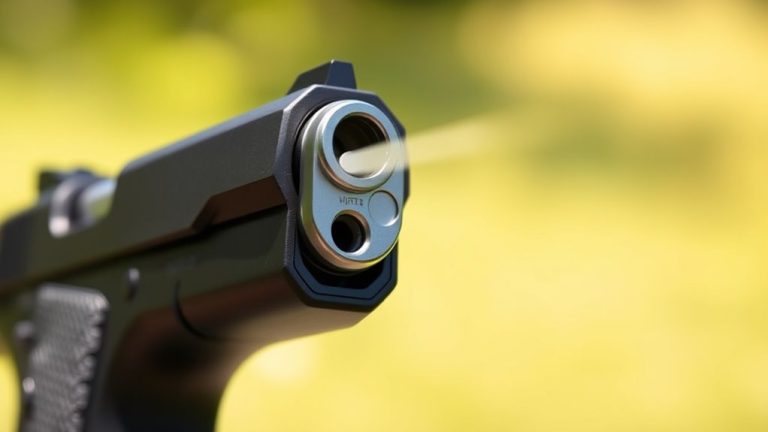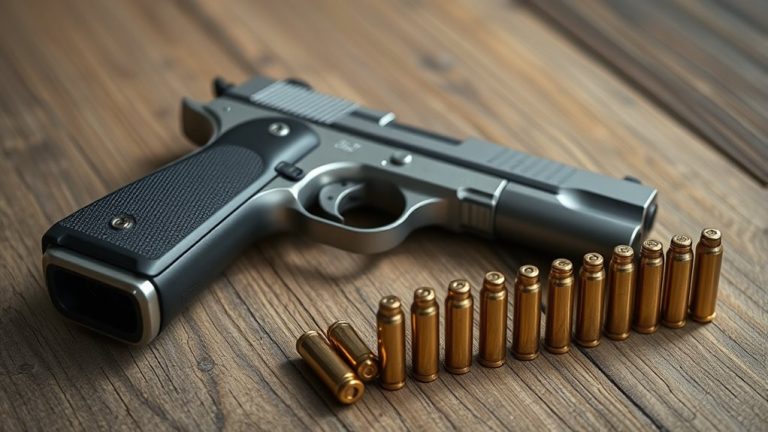
How Does a Gun Work?
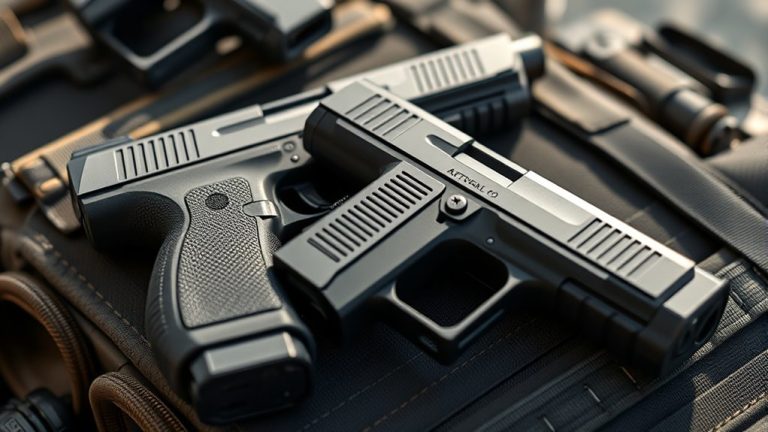
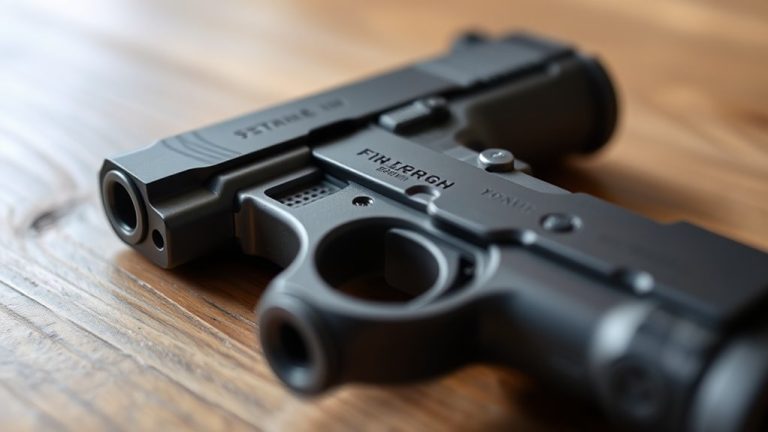
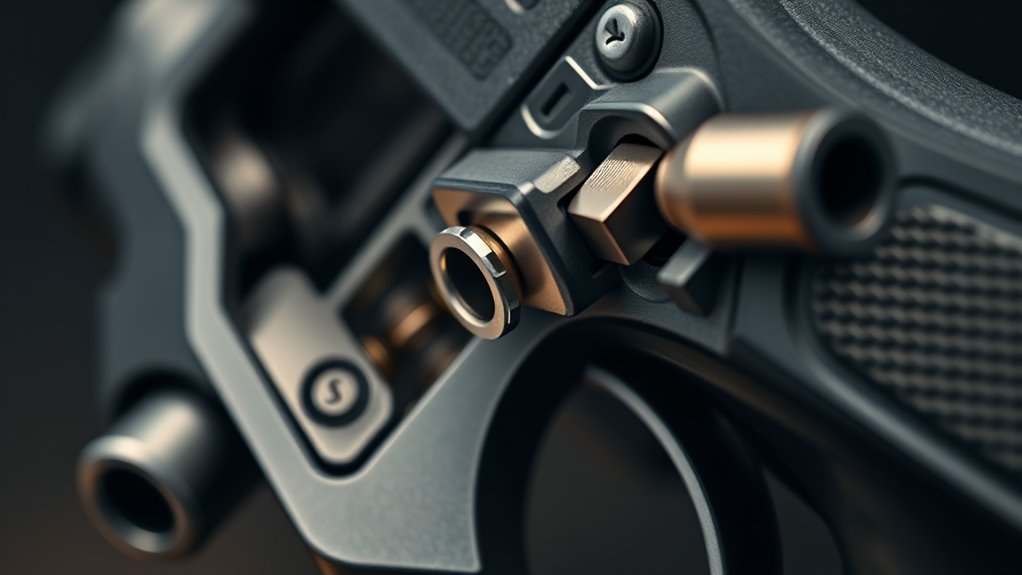
When you pull the trigger on a gun, you’re starting a chain reaction that makes everything happen. First, a mechanism strikes the cartridge primer, which then ignites the gunpowder inside.
This ignition creates high-pressure gases that push the bullet forward through the barrel.
The barrel is rifled, meaning it has grooves inside that spin the bullet for better accuracy.
After the bullet leaves the barrel, the gas pressure helps cycle the firearm. This cycling ejects the spent casing from the chamber and loads a new round, so the gun is ready to fire again quickly.
It’s pretty amazing how your simple action of pulling the trigger controls this complex process. Understanding how these parts work together helps you see why guns function smoothly and reliably every time you shoot.
Key Takeaways
- Pulling the trigger releases the firing mechanism, causing the hammer or firing pin to strike the cartridge primer. This is what sets everything in motion.
- The primer ignites gunpowder, generating rapidly expanding gases that propel the bullet through the rifled barrel. It happens fast and with a lot of force.
- Rifling inside the barrel stabilizes the bullet’s flight for improved accuracy at high velocity. This is why bullets can hit targets far away.
- After firing, gas pressure cycles the bolt rearward, ejecting the spent casing and compressing the recoil spring. It’s like the gun is getting ready for the next shot.
- The bolt then chambers a new round from the magazine, preparing the firearm to fire again. And just like that, it’s ready to go.
How a Gun Fires: From Trigger Pull to Bullet Exit
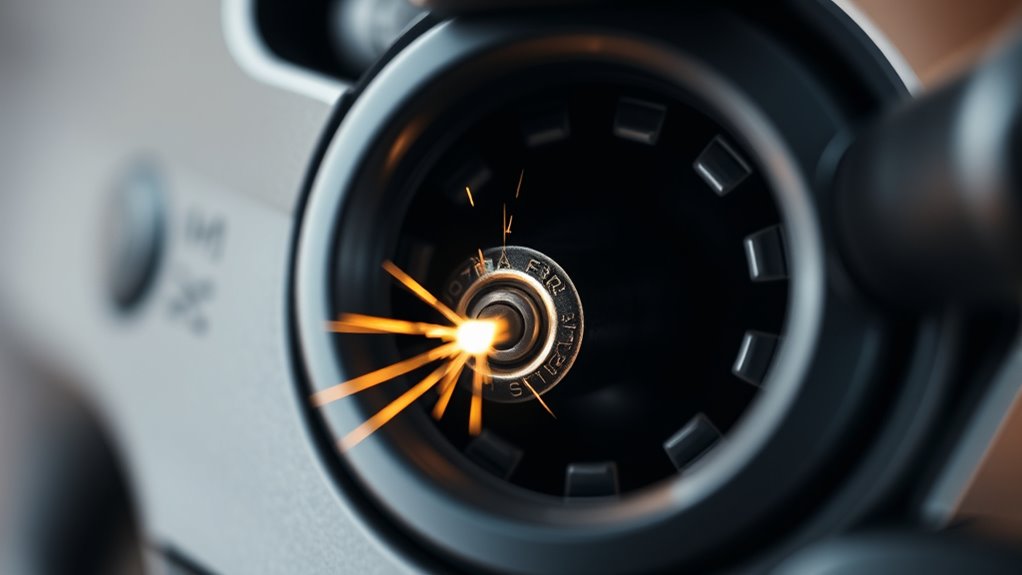
When you pull the trigger, it releases the firing mechanism, causing the hammer or firing pin to strike the cartridge’s primer. In an assault rifle, this primer ignites the gunpowder inside the cartridge, creating rapidly expanding gases.
These gases push the bullet forward through the barrel, which features rifling—spiral grooves that stabilize the bullet’s flight for accuracy. As the bullet speeds down the barrel and exits at high velocity, the firing cycle completes.
This precise sequence—from trigger pull to bullet exit—is essential for the assault rifle’s reliability and effectiveness in delivering rapid, controlled fire. Understanding this process helps you appreciate the complex mechanics behind each shot fired from an assault rifle.
How the Gun Cycles and Reloads After Each Shot
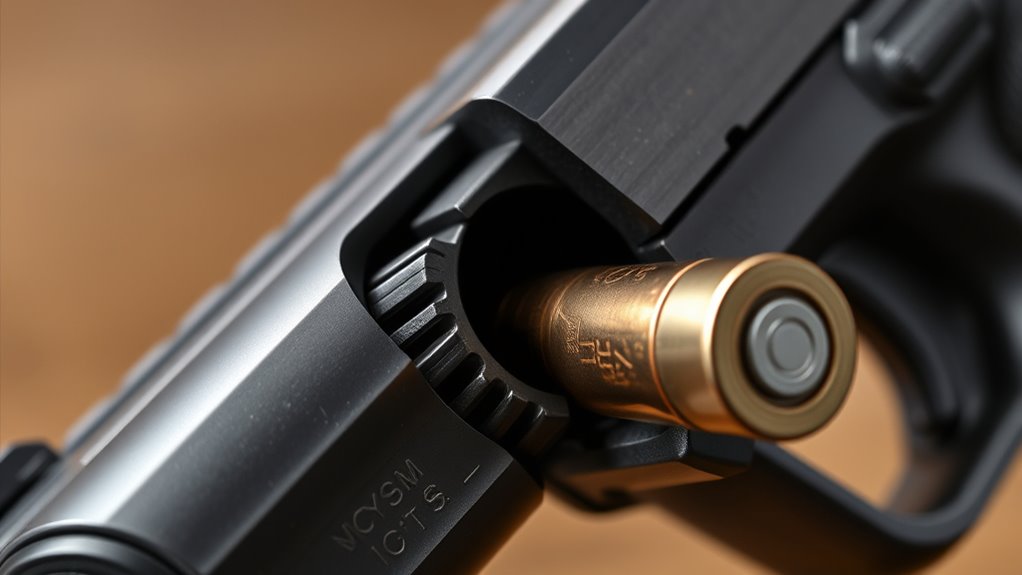
Once the bullet exits the barrel, the gun immediately begins cycling to prepare for the next shot. The gas pressure from the ignited cartridge pushes the bolt carrier rearward, cycling the action.
As you watch, the extractor pulls the spent casing out of the chamber, and the ejector throws it out of the firearm. Meanwhile, the recoil or buffer spring compresses, storing energy for the next cycle.
Then, the bolt moves forward, chambering a new round from the magazine. This resets the firing cycle, making the firearm ready to fire again.
| Step | Action | Purpose |
|---|---|---|
| Bolt Carrier Moves | Rearward by gas pressure | Eject spent casing |
| Spring Compression | Stores energy | Prepare for bolt’s return |
| Bolt Chambering | Moves forward | Load new round |
Frequently Asked Questions
How Is a Bullet Fired From a Gun?
You fire a bullet by pulling the trigger, which releases the firing pin to ignite the primer. This creates gas pressure that pushes the bullet through the barrel, spinning it for accuracy as it speeds toward the target.
Can You Hear a Bullet Before It Hits You?
No, you can’t hear a bullet before it hits you because bullets travel faster than sound. The gunshot’s noise reaches you after the bullet, so the impact comes first, especially at close range.
How Does It Feel When You Shoot a Gun?
When you shoot a gun, you’ll feel a sharp recoil pushing back against your hands and shoulder, hear a loud bang, and sense vibrations through the firearm. It’s an intense, thrilling mix of physical and auditory sensations.
What Part of the Gun Holds the Bullets?
Think of the magazine as your gun’s ammo backpack—it holds and organizes your bullets, feeding them smoothly into the chamber when you pull the trigger. You’ll find it either detachable or built into the gun itself.
Conclusion
Think of a gun like a tightly choreographed dance—each step precise and deliberate. When you pull the trigger, you set off a chain reaction, like dominoes falling one after another, culminating in the bullet’s swift exit.
After the performance, the gun resets itself, ready for the next act. Understanding this dance helps you see the power and responsibility in your hands.
Every shot is part of a carefully balanced cycle. Knowing how a gun works means recognizing the importance of safety and control. The gun’s mechanism relies on timing and precision, showing just how much power is involved with each pull of the trigger.
So, when you handle a gun, remember this cycle—the trigger, the chain reaction, the bullet firing, and the reset. This awareness can help you respect the responsibility that comes with using such a powerful tool.