How to Sell a Pistol in 10 Essential Steps
To sell a pistol responsibly, you need to follow some essential steps that ensure everything is legal and safe.
First, make sure your buyer is federally eligible, with no restrictions, and has a valid ID. This is super important to avoid any legal issues down the line.
Next, complete all the necessary paperwork, including the ATF Form 4473. You’ll also need to run a background check through a Federal Firearms Licensee (FFL). This keeps the sale above board and protects both you and the buyer.
Match the pistol to the buyer’s needs and comfort level. Take time to explain safe handling and secure storage. It’s important they know how to keep it safe once they take it home.
Don’t forget to guide them on choosing the right ammo and essential safety gear. Also, cover basic maintenance routines to keep the pistol in good shape.
Stick to these steps to sell responsibly—there’s more to help you master every detail!
Key Takeaways
- Verify the buyer’s federal eligibility and check their valid ID. Make sure they comply with all legal and jurisdictional requirements before moving forward with the sale.
- Complete ATF Form 4473 accurately. Also, ensure the buyer passes the NICS background check through an approved FFL transfer.
- Handle all required paperwork carefully. This includes local and state forms, plus any NFA documentation if it applies. Keep proper records for everything.
- Confirm the buyer’s comfort and suitability. Assess their needs, how well they handle firearms, and what they intend to use the pistol for before making a recommendation.
- Provide instructions on safe handling and secure storage. Don’t forget to give ammunition recommendations to ensure responsible ownership and operation.
Confirm Pistol Buyer Eligibility
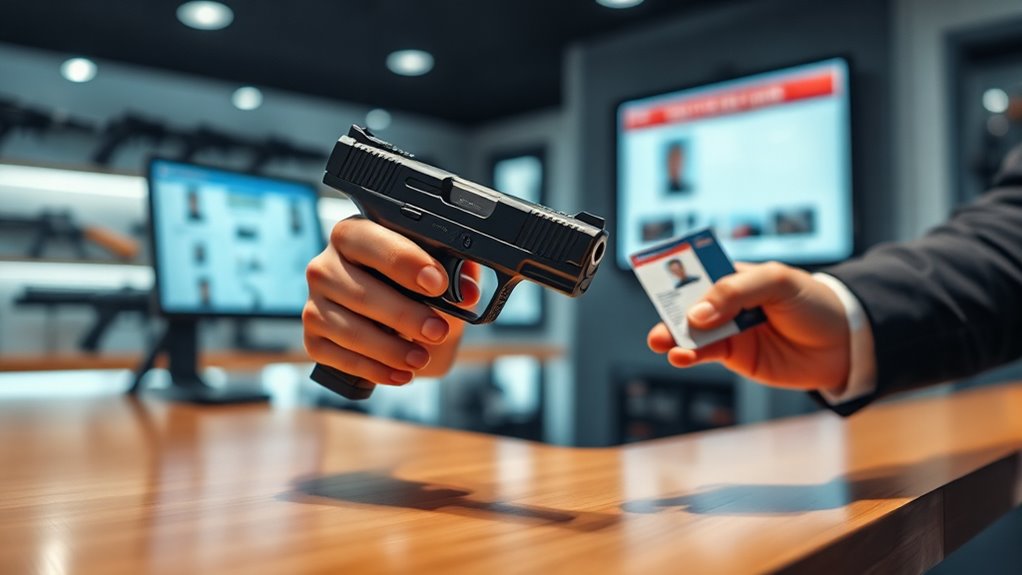
Before you sell a pistol, you need to make sure that the buyer is eligible under federal law. Make sure they aren’t barred due to felony convictions or domestic violence restrictions.
Ensure the buyer is federally eligible, without felony or domestic violence restrictions, before selling a pistol.
Privacy matters here—handle all personal info with care and only collect what’s required. Verify the buyer’s valid government-issued ID matches the NICS/ATF transfer records.
Confirm they can lawfully own the firearm type and that the transfer will go through the required FFL process. Ask about residency and intended possession to ensure the sale complies with jurisdiction rules.
To remain updated on pistol sales and more, sign up for FREE to your inbox newsletters. Taking these steps helps you comply with the Gun Control Act and avoid delays or legal issues.
Complete Required Paperwork for Pistol Sales
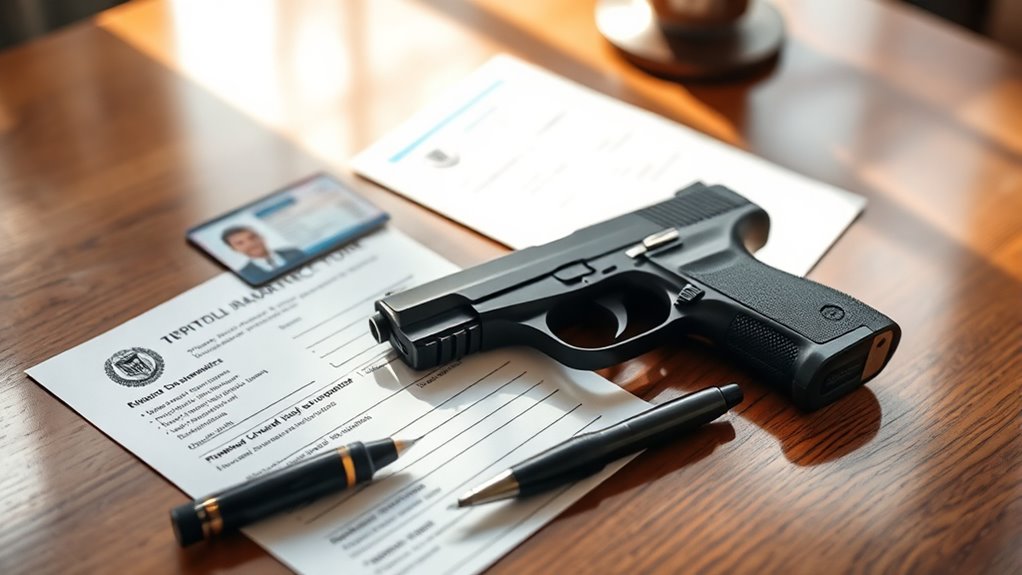
When selling a pistol, you’ll need to complete the necessary forms like ATF Form 4473 and make sure the buyer passes the NICS background check.
If the sale involves NFA items, additional paperwork and tax payments may be required.
Watch out for common errors like missing signatures or incomplete information that can delay the process.
Necessary Forms Overview
Completing the necessary paperwork is essential to legally selling a pistol and avoiding expensive delays or penalties. You’ll need to complete ATF Form 4473 with the buyer’s details and run a NICS background check through the approved system.
If the sale involves an FFL transfer, make sure the licensed dealer handles every step—from verifying the buyer’s identity to completing the required paperwork. Confirm the firearm’s make, model, caliber, and serial number match exactly what’s on the form before submitting.
Keep all records, including the completed Form 4473 and background check results, as required by the FFL’s procedures. Also, it’s important to address any special legal conditions, like trusts or state-specific rules, ahead of time.
Doing this helps ensure a smooth, compliant transfer and can really save you from delays in the sale.
Common Paperwork Errors
In handling pistol sales paperwork, you’ll want to double-check every detail on ATF Form 4473 to prevent common errors that can delay the process. Verify the customer’s name, address, firearm details, and date are accurate and legible.
Match IDs precisely to the form to avoid verification issues. Track background-check information carefully, including any approval or denial numbers.
Don’t forget to complete all required local/state paperwork fully—missing signatures or incomplete firearm details often cause delays. Never accept incomplete paperwork; fix errors before submission to keep the sale on schedule.
| Common Errors | How to Avoid Them |
|---|---|
| Incomplete Form 4473 | Double-check all fields |
| ID Mismatch | Match ID info exactly |
| Missing Background Info | Record approval/denial numbers |
| Incomplete Local/State | Ensure all signatures & details |
Identify Buyer Needs and Comfort With the Pistol
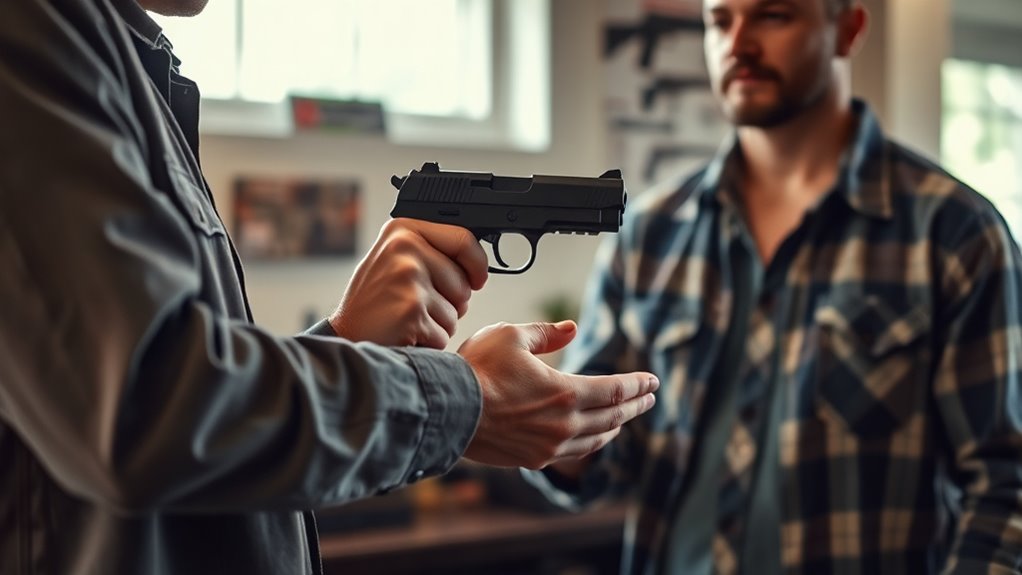
To sell a pistol effectively, start by understanding the buyer’s specific needs and comfort level with the firearm. Ask if the pistol is for concealed carry or range use, then match ammo preferences—defensive loads versus full-metal-jacket rounds—and explain the differences clearly.
Better yet, invite the buyer to handle the pistol, checking grip texture, trigger reach, and finger placement to ensure proper ergonomics. Confirm their shooting experience and frequency to recommend suitable size, recoil, and sight setups.
Address concerns like recoil sensitivity or difficulty acquiring targets by suggesting grip changes or training sights. Before discussing accessories, verify they can safely manage basic handling steps.
Use inbox or mailbox messages and Social Platforms to follow up or clarify these points, ensuring the buyer feels informed and confident.
Help Buyers Choose the Right Pistol
After understanding the buyer’s needs and comfort with the pistol, help them narrow down the best match by focusing on how they plan to use it—whether for home defense, concealed carry, competition, or range practice.
Ask about grip size and recoil tolerance, recommending smaller calibers for first-timers or those needing easier handling. Encourage a hands-on fit check, letting them rack the slide and reach controls to ensure reliable operation.
Explain ammo types—jacketed hollow points for defense, full-metal-jacket for training. Offer an accessory “tray” with holsters, cleaning kits, and sights to complete their setup.
Share insights your colleagues read about companies that manufacture quality pistols. Highlight that advice and some items can be Delivered FREE, making their buying experience smoother and more informed.
Explain Safe Handling and Storage for Pistols
When handling a pistol, always make sure your finger stays off the trigger until you’re ready to fire. Also, keep the muzzle pointed in a safe direction at all times.
When you store the pistol, make sure it’s unloaded and locked away in a secure container or safe. Keep the ammunition stored separately to prevent unauthorized access.
It’s a good idea to check your safety devices regularly. This includes gun locks and quick-access safes, so you know they’ll work when you need them.
Proper Trigger Discipline
Although handling a pistol requires confidence, you must keep your finger off the trigger until your sights are on target and you’re ready to fire. Proper trigger discipline protects you and those around you.
Especially if you’ve known us on Our Social for a long time, you understand how important firearm safety is. Always treat every firearm as loaded and maintain muzzle discipline.
Follow these key steps:
- Keep your finger outside the trigger guard until you’re ready to shoot.
- Use a firm, steady grip and press the trigger smoothly—don’t yank it.
- Confirm the chamber is empty before any handling or cleaning.
Secure Storage Options
Because secure storage is critical for responsible pistol ownership, you should always store your pistol unloaded inside a locked container like a UL-rated gun safe, lockbox, or locking hard case to prevent unauthorized access.
Keep ammunition stored separately if possible.
For quick access, consider a quality handgun safe or lockbox with a biometric or keypad lock—these balance security with immediate retrieval.
Cable or chamber locks can serve as interim measures but should be used alongside a locked container.
Always follow safe handling rules when storing: keep your finger off the trigger, lock the slide to the rear if feasible, and visually and tactilely confirm the chamber is empty before locking.
Choose a storage option sized for your location—bedroom, vehicle, or closet—and ensure it’s sturdy, tamper-resistant, and prevents firearm removal even if accessed.
Regular Safety Checks
To maintain safe handling and storage of your pistol, you should always keep the muzzle pointed in a safe direction and your finger off the trigger until you intend to fire. Before handling, confirm the pistol is unloaded by removing the magazine and checking the chamber both visually and by touch.
Treat every firearm as if it’s loaded, even after use or cleaning. Always re-check before holstering or showing it.
Make regular safety checks part of your routine by inspecting the barrel for obstructions and ensuring controls work smoothly. Also, confirm that safeties and trigger resets function reliably.
It’s a good idea to use locked cases or safes with separate ammo storage. This helps prevent unauthorized access.
These steps protect you and others, making sure you’re a responsible pistol owner.
Demonstrate Basic Operation and Safety Procedures
When you demonstrate a pistol’s basic operation and safety procedures, start by guiding the customer through the key controls like the magazine release, slide stop, and safety if the model has one.
Use only an empty, verified firearm to clearly show how to load and unload safely.
Emphasize muzzle discipline by always pointing the pistol downrange, even during dry-fire practice. Explain why this matters.
Walk them through inserting a full magazine, racking the slide to chamber a round, and checking the chamber visually and by touch.
Teach malfunction-safe handling: keep the muzzle downrange, remove the magazine, lock the slide back, and clear any rounds.
Stress practical habits—keep the finger off the trigger until firing, wear hearing and eye protection, and always confirm the pistol is clear before storage or transport.
Guide Pistol Ammo Selection and Range Use
Although selecting the right ammo might seem simple, matching your pistol ammunition to its intended use is essential for safety and performance.
Start by consulting your firearm’s manual to confirm compatible calibers, bullet weights, and pressure ratings before you buy or shoot.
When planning your range session, keep these in mind:
- Use inexpensive full metal jacket (FMJ) ammo for training; it’s cost-effective but may over-penetrate.
- Choose hollow-point rounds for self-defense—they expand reliably and reduce risk of unintended harm.
- Label and separate your ammo clearly to avoid mixing types and ensure you load only what you intend.
Always begin with a function check on the range—test a few rounds to verify dependability and sight alignment before full practice.
It’s a simple step that can save you a lot of trouble later!
Essential Accessories for Training and Safety
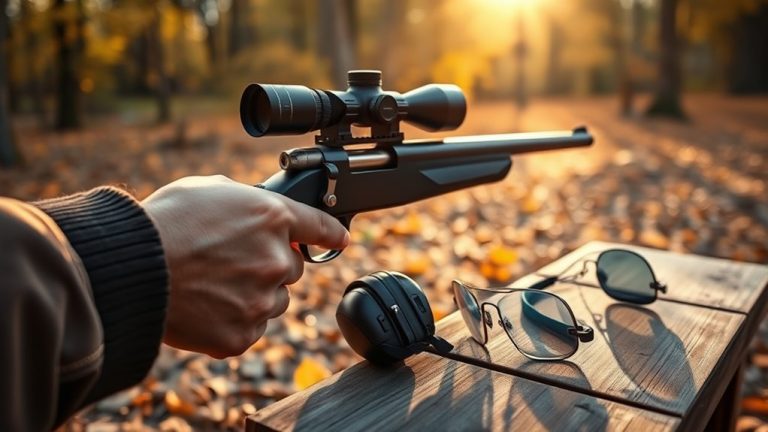
Equip yourself with the right accessories to make certain safe and effective pistol training. Start new shooters with certified training and essential safety gear, including quality hearing protection and ANSI-rated shooting glasses to shield from noise and debris.
Stock both practice ammunition and training tools like dummy rounds or snap caps for dry-fire drills, alongside proper range ammo for live firing. Always provide a basic safety-and-maintenance kit containing a bore-cleaning system, lubricant, microfiber cloths, and a cleaning mat to maintain the pistol after sessions.
Secure the firearm and gear in a locked hard case or quick-access safe when not in use. Add practical items such as a magazine loader and a checklist card covering range rules and cleaning steps. These small additions help reduce mistakes and make your future visits smoother and more enjoyable.
Review Pistol Maintenance and Cleaning
You’ll need the right cleaning supplies, like proper solvents, brushes, and lubricants, to keep your pistol in top shape. Establish a regular maintenance routine to avoid buildup and ensure reliable operation.
Taking these steps not only preserves your firearm but also makes it more appealing to buyers. It’s a simple way to keep your pistol working smoothly and looking great!
Cleaning Supplies Essentials
Five essential cleaning supplies will make maintaining your pistol straightforward and effective. You’ll need these tools to ensure your firearm stays dependable and looks its best before selling.
- Bore solvent and patches: Use a bore-safe solvent on patches to clean the barrel thoroughly. Follow with dry patches until they come out spotless. It’s all about getting that barrel squeaky clean.
- Nylon or brass-bristle brushes: These help remove stubborn carbon buildup without damaging surfaces. They’re especially good for slide rails and contact points.
- Quality gun oil: Apply a thin film after cleaning to protect moving parts. Just be careful not to overdo it—you don’t want to attract grit.
Don’t forget a dry cloth for wiping down your pistol and a safe place to field-strip it. With these essentials, your cleaning will be efficient, making your pistol ready for the next owner.
Maintenance Routine Tips
Keeping your pistol in top condition goes beyond just having the right cleaning supplies—it requires a consistent maintenance routine. After each range session, do a basic field strip and wipe down with a dry patch first. Apply solvent only where carbon buildup is heavy, like the chamber and barrel interior.
Clean the bore thoroughly using a bore brush and patches until they come out mostly clean. Focus on consistent patch color.
Inspect high-wear areas—recoil spring, slide rails, extractor, and firing pin. Lightly lubricate only recommended contact points to prevent fouling.
After reassembly, run an unloaded function check to ensure smooth cycling. Commit to a simple schedule: light cleaning every outing and deeper cleaning when accuracy drops or buildup appears.
And don’t forget—always use eye protection and a dedicated cleaning mat. It makes the whole process safer and easier.
Offer a Trial Plan and Answer Buyer Questions
When helping a buyer choose a pistol, offering a clear trial plan lets them gain hands-on experience while building confidence. Start with a simple range session covering safe handling and 50–100 rounds split between self-defense and full-metal-jacket ammo.
A clear trial plan builds confidence through hands-on experience and safe handling with varied ammunition.
Explain key differences clearly before questions arise, so they understand when to use each ammo type. Guide them by asking:
- Is this for concealed carry or home defense?
- Do you prefer appendix, belt, or shoulder carry?
- What accessories will you need right away?
Provide a starter kit with essentials like a holster, cleaning kit, hearing protection, and safety glasses. This way, they’re ready to act.
Schedule a quick follow-up to address comfort, reliability, and any accessory needs based on their trial experience. It’s all about making sure they feel confident and prepared.
Frequently Asked Questions
Is It Legal to Sell a Handgun Privately?
You can sell a handgun privately only if both you and the buyer are legally eligible, and you follow your state’s laws. Some states require background checks or FFL transfers, so always check your local regulations first.
It’s important to know the rules before making a sale. Different places have different requirements, so don’t skip this step. Better safe than sorry!
What Does “Mexican Carry” Mean?
“Mexican carry” means you carry your pistol without a holster, muzzle angled forward at your hip for fast access.
It’s risky, so you should consider safety and legality before trying this quick-draw style.
Just keep in mind, it’s not the safest way to carry and might even be against the law where you live. Always think twice before going this route.
Can I Fill Out Form 4473 at Home?
You can fill out parts of Form 4473 at home, but you must sign and complete it in person at the FFL’s location.
The dealer needs to verify your identity and run the background check during transfer. So, make sure to bring your ID and be ready for that step when you go in.
How Much Do Gun Stores Pay for Guns?
Gun stores usually pay you between 30% and 60% of a gun’s resale value, depending on demand, condition, and completeness.
Expect lower offers if the pistol needs repairs or lacks original parts and paperwork. It really comes down to how much work the store thinks they’ll have to put into it before selling.
Conclusion
Now that you’ve mastered the essential steps to selling a pistol, you might think you’re done—but the real moment of truth is just ahead. Will your buyer feel confident, safe, and ready to own their new firearm responsibly?
Your guidance doesn’t stop at the sale; it’s about building trust and ensuring safety every step of the way. Keep these steps in mind, and watch how your expertise transforms a simple transaction into something truly meaningful.
Selling a pistol isn’t just about handing over the firearm—it’s about making sure your buyer understands safety, legal responsibilities, and proper handling. When you follow these essential steps, you’re promoting responsible ownership and contributing to a safer community.
So, stay patient, be clear, and always prioritize safety. That’s how you turn a pistol sale into a positive experience for everyone involved.