How Heavy Is a Rifle €“ a Guide to Weighing Your Firearm
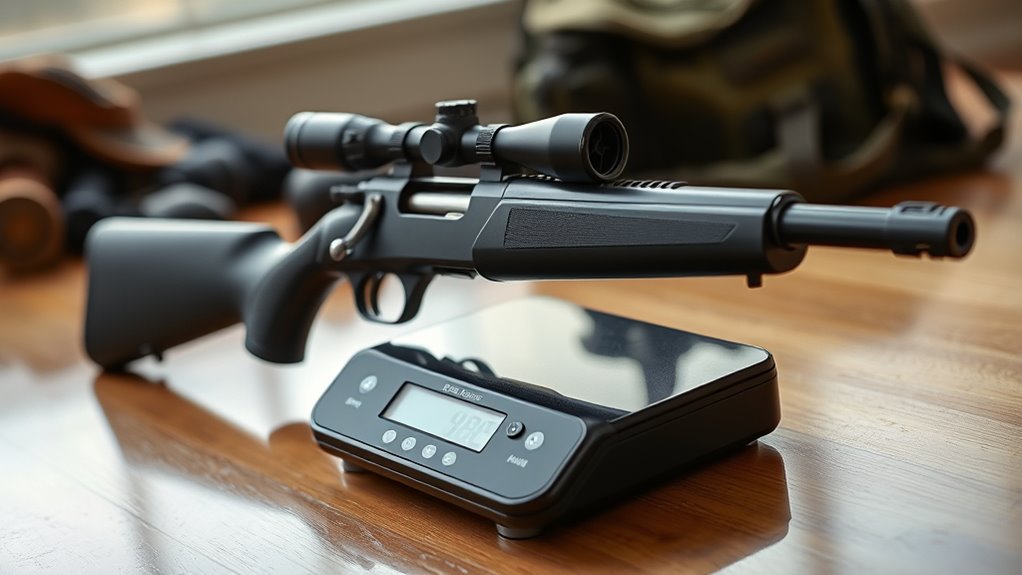
To weigh your rifle accurately, use a calibrated digital scale and make sure the rifle is fully assembled with all accessories attached. This way, you get the true weight of your firearm.
Place it on a stable surface and avoid holding it by hand to prevent fluctuations that can throw off your measurement.
Always weigh your rifle under similar conditions for reliable results. Consistency is key when tracking your firearm’s weight over time.
Knowing your rifle’s precise weight is super helpful. It can improve how you handle your gun, boost accuracy, and help control recoil.
Plus, it makes customizing or choosing the right firearm easier.
Understanding how weight impacts your shooting performance and setup will give you an edge every time you hit the range. So, take the time to get it right—it’s worth it!
Key Takeaways
- Use a precise digital scale and weigh the fully assembled rifle with all accessories for accurate measurement. Place the rifle on a stable surface and never hold it by hand during weighing to avoid fluctuations.
- Try to maintain consistent conditions, like the time of day and environment, so your weight results are repeatable and reliable.
- Accurate rifle weight affects handling, recoil management, and shooting performance. This helps guide you in choosing the right firearm.
- Balancing the weight ensures optimal shooting comfort, accuracy, and maneuverability, depending on what you plan to use the rifle for.
How to Weigh Your Rifle Accurately: Tools, Calibration, and Steps
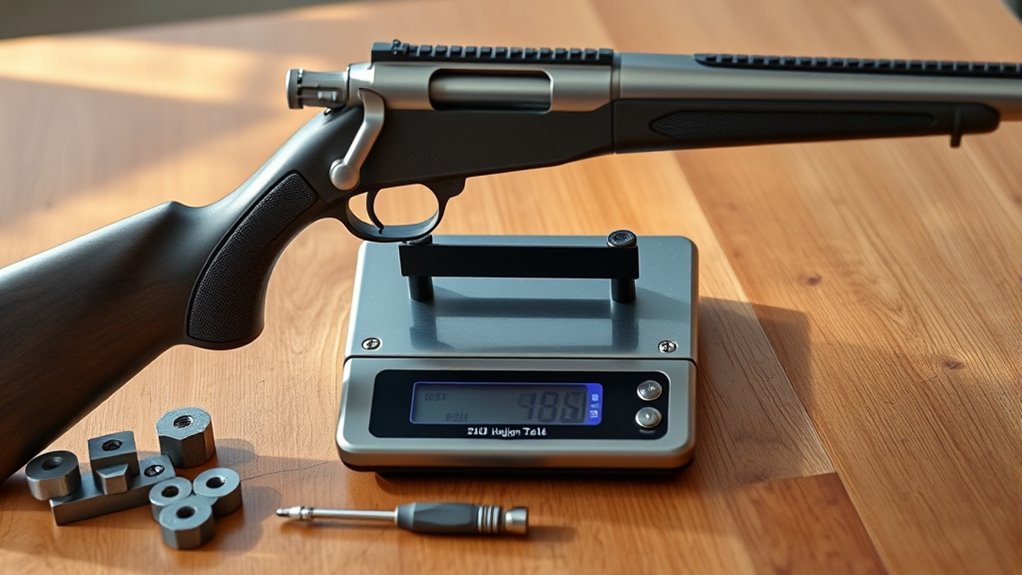
When you want to weigh your rifle accurately, start by using a precise digital scale designed specifically for firearms. Place your rifle on a stable surface to avoid fluctuations during weight measurement—never hold it by hand.
For proper weighing, include all accessories like scopes, bipods, and slings to reflect the true firearm weight as you’d use it in the field. Regular calibration of your scale with certified weights is essential to maintain accuracy over time.
Try to weigh your rifle under consistent conditions, such as the same time of day and similar environmental factors. This helps ensure reliable comparisons.
Following these steps will help you achieve precise, repeatable measurements. That way, you can feel confident knowing your rifle’s exact weight every time you need it.
How Rifle Weight Affects Handling, Accuracy, and Recoil
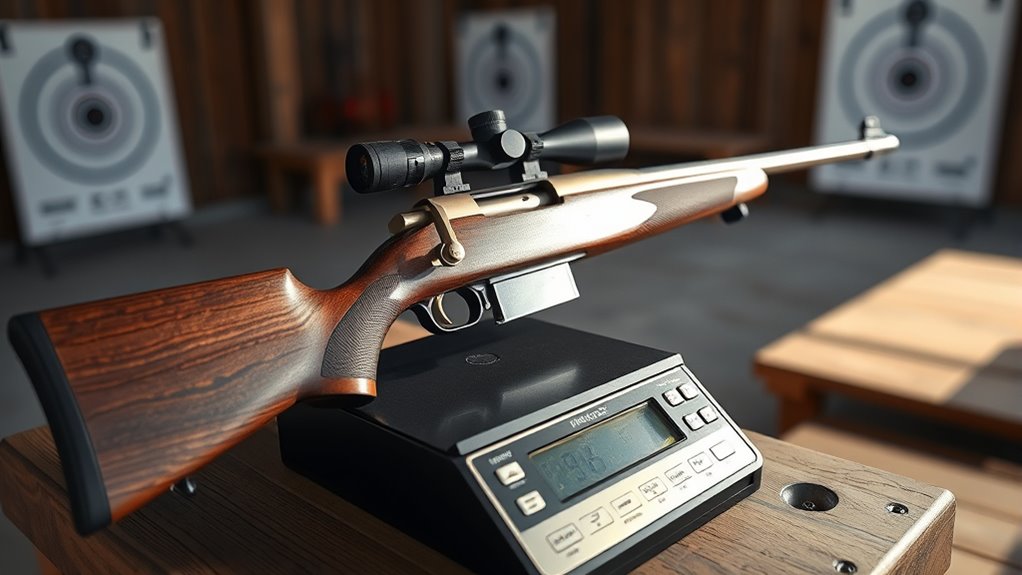
Knowing your rifle’s exact weight is more than just a number—it directly influences how the firearm handles, its accuracy, and the recoil you’ll experience. A heavier rifle weight helps stabilize your shots by absorbing more recoil, boosting shooting comfort and improving accuracy by roughly 33% when increasing from 6 to 8 pounds.
On the flip side, lighter rifles often cause sharper recoil, risking flinching and reducing shot precision. The balance point and weight distribution also play vital roles in handling; a well-balanced rifle lets you aim quicker and maintain better control.
However, too much weight can hurt maneuverability and tire you out during long sessions. Understanding these factors helps you choose a rifle that fits your shooting style and maximizes performance.
Frequently Asked Questions
Is 7.5 Lbs Heavy for a Rifle?
No, 7.5 lbs isn’t heavy for a rifle; it’s actually quite manageable. You’ll find it’s balanced enough for carrying without tiring you quickly, making it a solid choice for most hunting or shooting activities.
Is a 10 Lb Rifle Too Heavy?
Is a 10 lb rifle too heavy? It depends—if you’re trekking all day, it might wear you down fast. But if stability and recoil control matter more, you’ll appreciate its solid, steady feel.
Is 8 Pounds Too Heavy for a Hunting Rifle?
No, 8 pounds isn’t too heavy for a hunting rifle. You’ll find it offers good stability and recoil control, making your shots steadier. Just consider your strength and how far you plan to carry it.
Are Heavier Rifles More Accurate?
Heavier rifles aren’t just a bit more accurate—they’re like snipers with iron will! You’ll get less recoil and steadier shots, but don’t overdo it; too heavy, and you’ll struggle to stay steady yourself.
Conclusion
Now that you know how to weigh your rifle accurately and why its weight matters, the real question is—what will you do with that knowledge?
Will you fine-tune your setup for better handling and accuracy, or overlook this essential step and miss out on improved performance? The choice is yours.
But remember: the weight of your rifle isn’t just a number—it could change everything the next time you take your shot. Understanding how heavy a rifle is helps you optimize balance, reduce fatigue, and enhance precision.
So, whether you’re adjusting your gear for hunting, competition, or casual shooting, knowing your firearm’s weight is key to getting the most out of every shot. Don’t underestimate the impact of this simple measurement on your overall shooting experience.