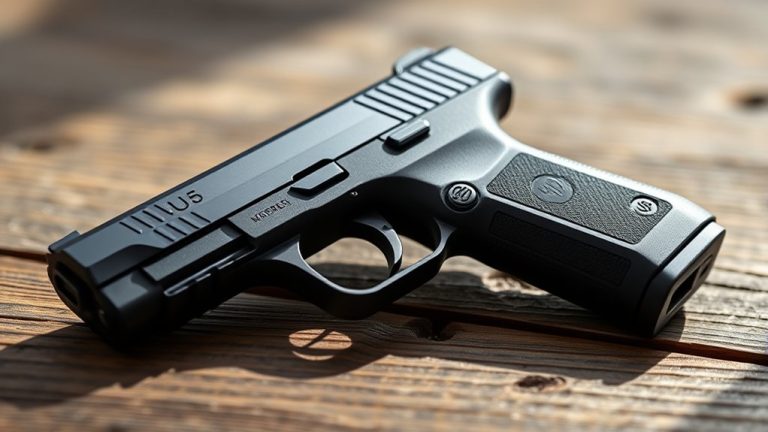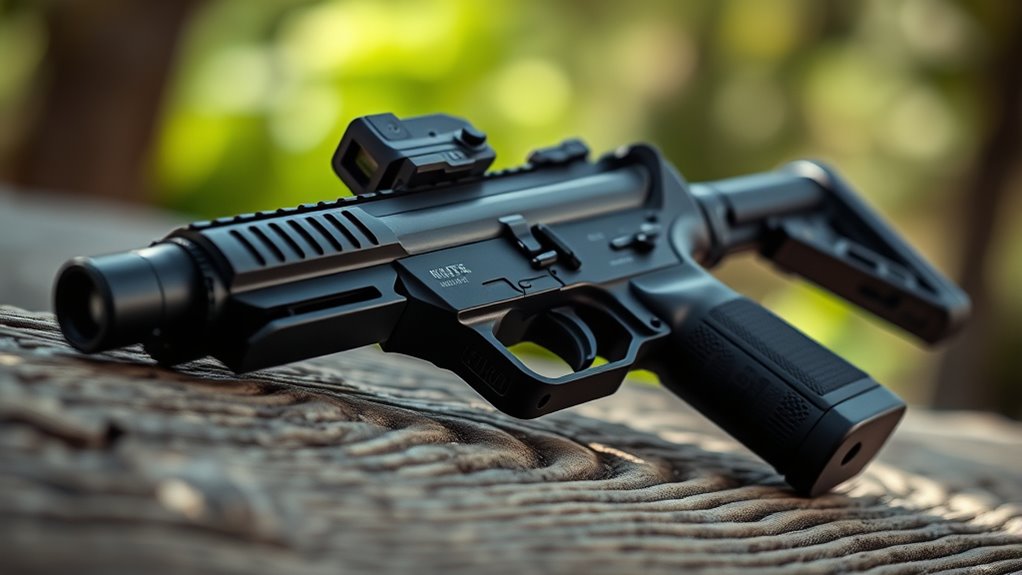
What Is an AR Pistol?
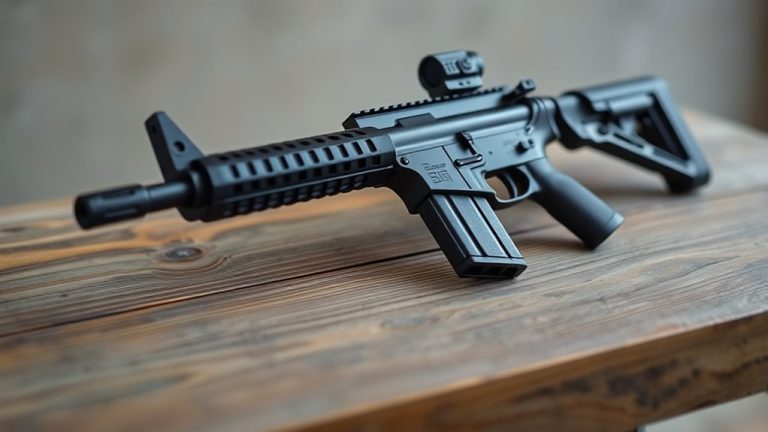
An AR pistol is a compact firearm built on the AR-15 platform, but with a shorter barrel under 16 inches and no shoulder stock. This specific design classifies it legally as a pistol, which is pretty important for understanding its unique status.
You’ll often find AR pistols designed for maneuverability in tight spaces, making them ideal for tactical or defensive use.
Unlike standard AR-15 rifles, an AR pistol doesn’t have a stock. Instead, it usually features a stabilizing brace to help with control and accuracy.
Plus, there’s a lot of flexibility — from caliber choices to accessory options — so you can customize performance and handling to fit your needs. Keep exploring to learn how to pick the right AR pistol setup that works best for you!
Key Takeaways
- An AR pistol is a firearm built on the AR-15 platform with a barrel shorter than 16 inches and no shoulder stock. It’s legally classified as a pistol because of its shorter barrel and the lack of a traditional stock.
- These AR pistols are all about maneuverability and compactness, making them great for tactical and defensive situations, especially in tight spaces.
- Common calibers include 5.56 NATO, .300 Blackout, 9mm, and 7.62x39mm. Barrel lengths usually range between 7.5 and 11.5 inches.
- They often come with stabilizing braces, threaded barrels, and customizable accessories. These features boost their functionality and make handling easier.
What’s an AR Pistol? How It Differs From an AR-15 Rifle
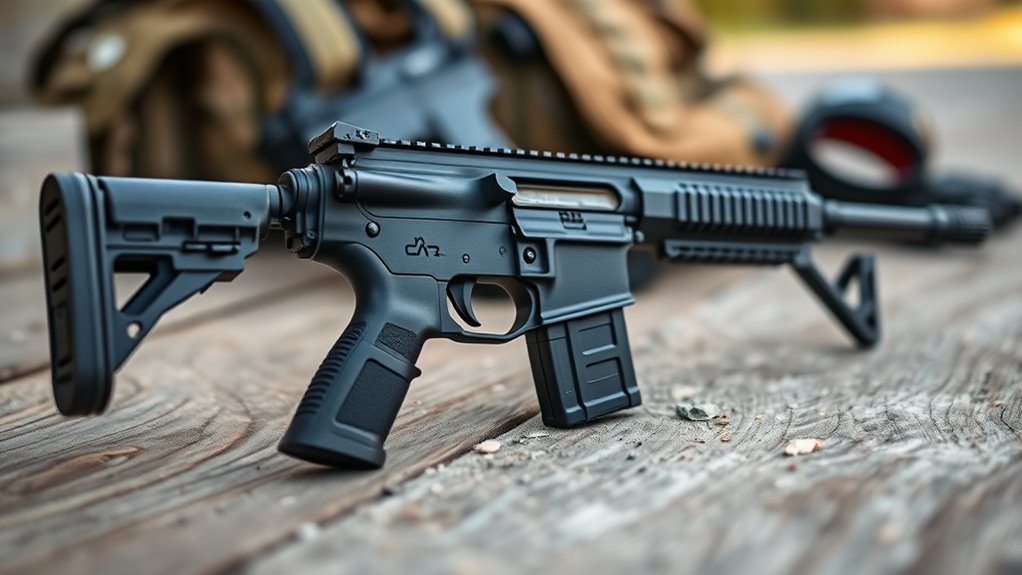
Although an AR pistol looks similar to an AR-15 rifle, it’s legally classified differently because it has a barrel shorter than 16 inches and lacks a shoulder stock. Built on the AR-15 platform, an AR pistol’s short barrel and overall length place it under pistol classification according to firearm regulations.
The absence of a stock—sometimes replaced by a stabilizing brace—distinguishes it clearly in the rifle vs pistol debate. If you add a stock to an AR pistol, it may become an AR-15 rifle or even a short-barreled rifle (SBR), requiring proper registration.
Understanding these differences is essential for legal classification. AR pistols offer maneuverability for close quarters, whereas AR-15 rifles prioritize accuracy and shoulder support, thanks to their longer barrels and stocks.
Choosing Calibers, Configurations, and Accessories for Your AR Pistol
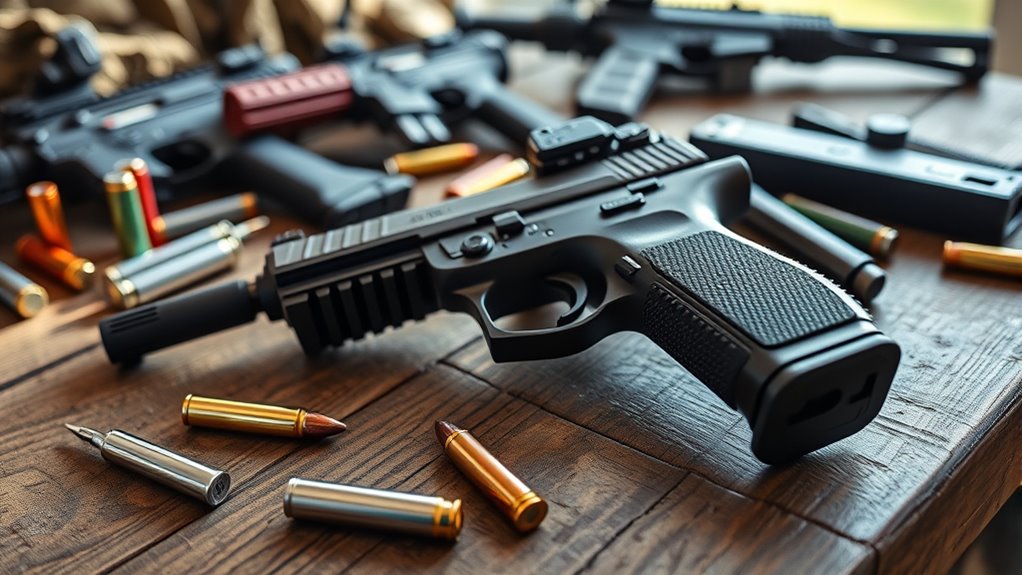
When choosing calibers, configurations, and accessories for your AR pistol, you’ll want to match them to your specific needs and preferences. Consider calibers like 5.56 NATO, .300 Blackout, 9mm, or 7.62x39mm, each offering distinct performance.
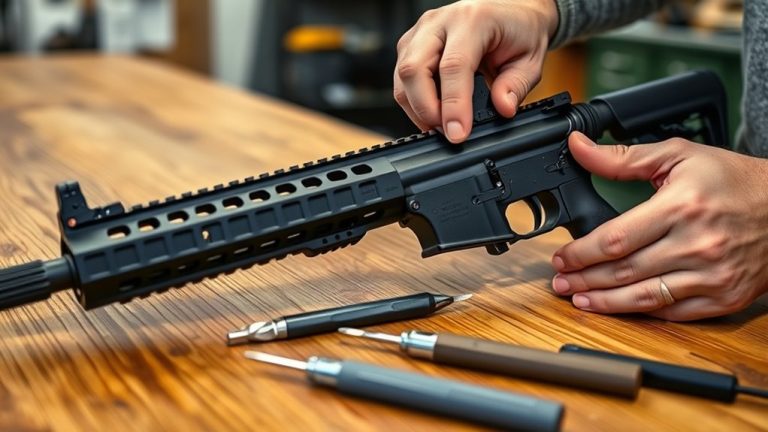
Your configuration choices include barrel length, usually between 7.5 and 11.5 inches, handguard style, and optic mounts for customization. Accessories enhance function and handling.
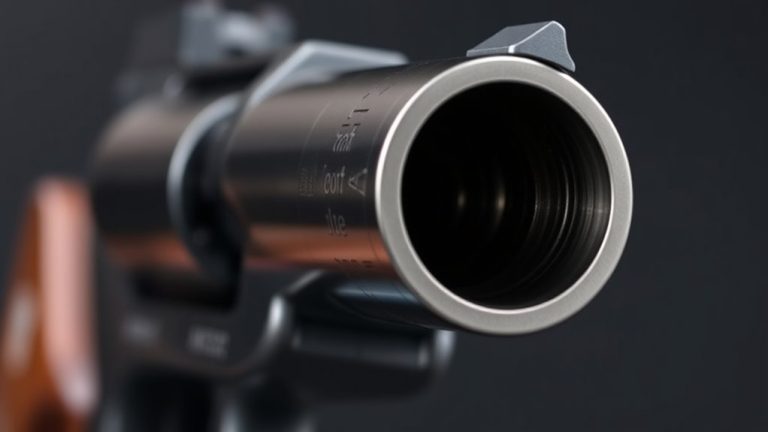
Select a stabilizing brace to improve maneuverability while staying legal. You might want to choose a threaded barrel if you’re thinking about suppressors or muzzle devices.
Adding tactical lights can be a game-changer for low-light situations. Also, pick handguards with rail options to mount optics or accessories.
Balancing these factors ensures your AR pistol fits your intended use, whether for defense, sport, or tactical needs. It’s all about making the setup work best for you.
Frequently Asked Questions
What Is the Difference Between an AR-15 and an AR Pistol?
You’ll notice an AR-15 has a longer barrel and a stock for shoulder firing, while an AR pistol features a shorter barrel and uses a stabilizing brace instead of a stock, changing how you legally classify and handle it.
ARe AR Pistols Legal to Carry?
AR pistols are legal to carry in many states, but you’ll need to check local laws carefully. Some places require permits, registrations, or specific features, so don’t assume you can carry one without restrictions or approval.
What Is the Point of an AR Pistol?
You’ll appreciate that over 60% of AR pistol owners choose them for maneuverability in tight spaces. They deliver rifle-level performance without the bulk, making them ideal for home defense, tactical use, and easy customization.
What Is the Difference Between a Glock and an AR?
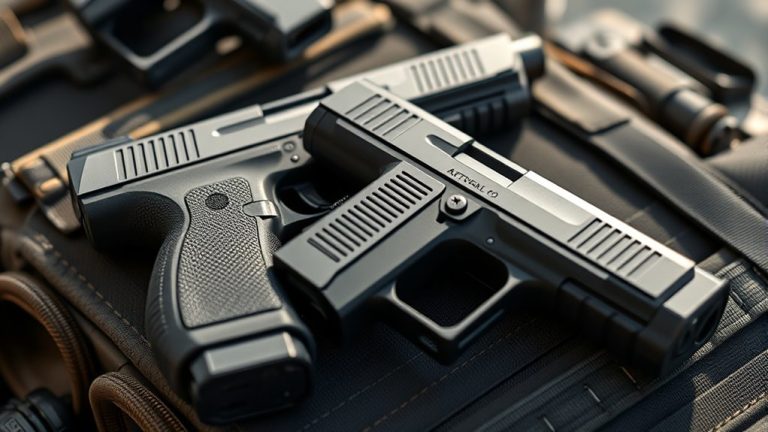
You’ll notice a Glock is a compact, striker-fired handgun built for simplicity and concealment, while an AR is a modular rifle platform offering customization and versatility. They differ in design, caliber options, and legal classifications.
Conclusion
In the world of firearms, an AR pistol is your compact lightning bolt—powerful, agile, and ready to strike. Unlike its rifle cousin, it fits snugly in your hands and maneuvers through tight spaces with ease.
Choosing the right caliber and accessories turns it into your personalized thunderstorm. Whether for home defense or sport, understanding your AR pistol lets you wield precision and power like a true marksman.
When you know how to handle an AR pistol, you’re always prepared for what’s next. It’s not just about firepower; it’s about control, speed, and adaptability. So, if you want a firearm that delivers compact strength and versatility, an AR pistol is the way to go. It’s the perfect blend of size, power, and customization for anyone looking for a reliable and effective firearm option.