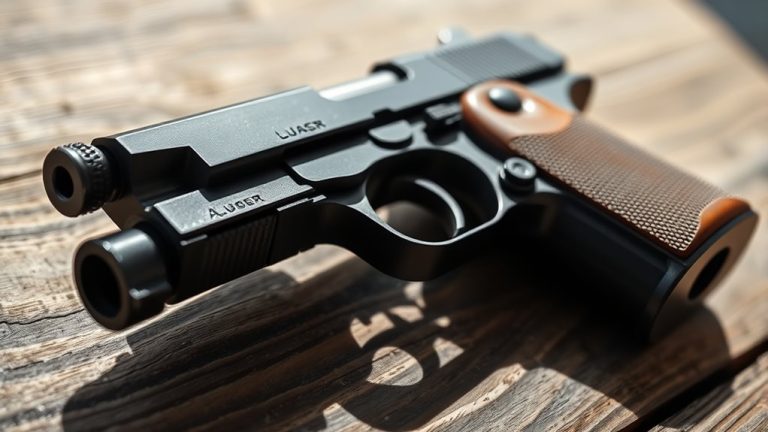
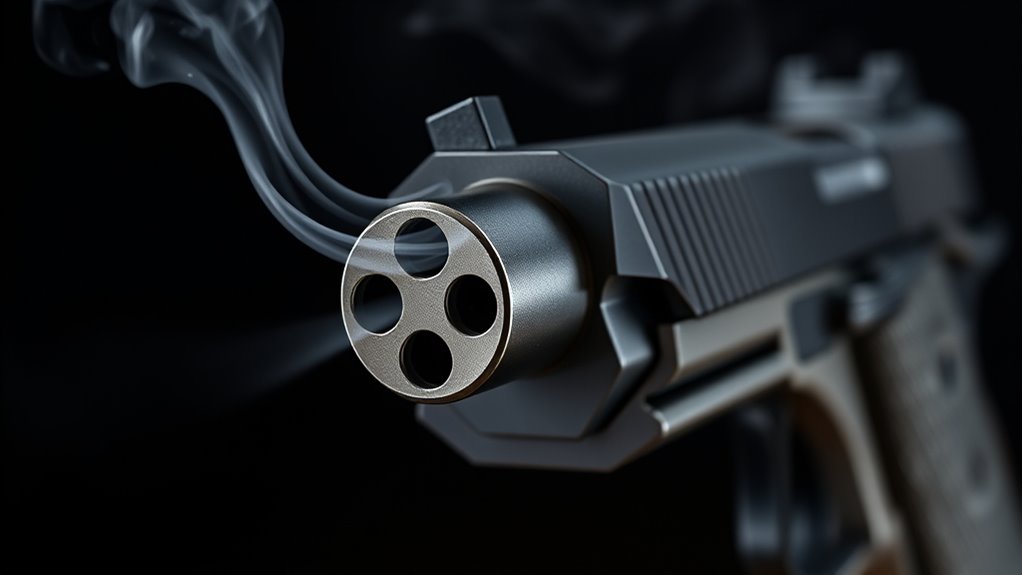
How Does a Pistol Compensator Work?
A pistol compensator works by redirecting propellant gases upward through ports or vents, which helps counteract muzzle rise when you fire. This clever design uses the upward gas flow to generate forces that push the barrel down.
So, it helps you maintain control and reduce recoil during rapid fire.
With less muzzle climb, you’ll get quicker follow-up shots and better accuracy. How the compensator’s size, port placement, and design affect performance plays a key role in maximizing your shooting stability and precision.
It’s pretty fascinating once you dive into the details.
Keep exploring to fully understand how these factors come together to make your shooting experience smoother and more controlled. You’ll see why a good compensator is a game-changer for any pistol shooter.
Key Takeaways
- A pistol compensator redirects propellant gases upward through ports to counteract muzzle rise.
- Venting gases create downward force, reducing barrel climb during rapid fire.
- Port size and placement determine how well the gases are redirected and how much muzzle control you get.
- By controlling muzzle rise, compensators help reduce recoil and improve shot stability.
- This enhanced stability means you can take faster follow-up shots.
- It also leads to better overall shooting accuracy.
How a Pistol Compensator Redirects Gases to Control Muzzle Rise

When you fire a pistol, the compensator redirects the propellant gases upward through strategically placed ports or vents. This venting gas from a ported barrel allows the compensator to effectively counter muzzle rise by redirecting gases upward.
As these gases escape, they generate a backward and downward force that stabilizes the barrel, reducing muzzle climb during rapid fire. You’ll notice that this recoil management helps keep your shots more controlled and consistent.
The compensator’s design—specifically the size, placement, and number of ports—determines how well it redirects gases to fight muzzle rise. By venting gas in this way, the compensator minimizes upward barrel movement, allowing you to maintain better control over your pistol during fast shooting sequences.
How a Compensator Affects Recoil and Accuracy

By controlling muzzle rise through gas redirection, a compensator also directly influences recoil and shooting accuracy. When the compensator vents gases upward, it counteracts the natural muzzle flip, reducing barrel movement and recoil.
This recoil reduction keeps your firearm more stable, allowing for quicker target reacquisition and improved shot consistency, especially during rapid fire. The upward gas flow dampens muzzle rise, making follow-up shots more precise.
However, while compensators enhance control, improper gas venting can slightly affect bullet trajectory, impacting accuracy. Modern compensator designs minimize these effects, so you get better control without sacrificing precision.
Frequently Asked Questions
What Is the Downside of a Pistol Compensator?
You’ll face reduced muzzle velocity, bright gases that impair night vision, and increased burn risk from upward venting. Plus, compensators cause more fouling, require extra cleaning, and might lower bullet impact in critical situations.
How Much Louder Is a Compensated Pistol?
Think of your compensated pistol as a roaring engine—it’s about 2 to 4 decibels louder than a regular one. You’ll notice the extra noise, especially indoors, but it’s nothing like the quiet of a suppressor.
Is a Compensator on a 9mm Worth It?
Yes, a compensator on your 9mm is worth it if you want faster follow-up shots and better control. Just remember, it adds length and requires upkeep, so weigh those factors before deciding.
What Is the Point of a Compensator on a Pistol?
You want control, you want speed, you want accuracy. A compensator on your pistol reduces recoil and muzzle flip, helping you stay on target, shoot faster, and improve your overall shooting performance effortlessly.
Conclusion
You might think a pistol compensator only tames recoil, but it does much more—it redirects explosive gases to control muzzle rise, letting you stay on target faster.
While recoil feels like a wild force pushing back, the compensator turns that power into precision. By balancing these opposing forces, it transforms chaos into control.
Sometimes, the key to handling power isn’t fighting it—it’s guiding it. A pistol compensator not only reduces recoil but also improves shooting accuracy by managing muzzle movement. This clever redirection of gases helps you maintain better control and faster follow-up shots. In short, a pistol compensator enhances your shooting experience by turning raw power into smooth, manageable performance.